Mario McNeill
Murderer Joshua Wayne Andrews
Murderer · USA · 2000
Joshua Wayne Andrews was a serial killer accused of killing several people in V…
5 victims
Joshua Wayne Andrews
Murderer · USA · 2000
Joshua Wayne Andrews was a serial killer accused of killing several people in V…
5 victims
 Leon Davis Jr.
Murderer · USA · 2007
Leon Davis Jr. was sentenced to death on April 29, 2011, for the execution-styl…
5 victims
Leon Davis Jr.
Murderer · USA · 2007
Leon Davis Jr. was sentenced to death on April 29, 2011, for the execution-styl…
5 victims
 Raymond Lee Oyler
Murderer · USA · 2006
Raymond Lee Oyler was convicted for starting the 2006 Esperanza fire in Riversi…
5 victims
Raymond Lee Oyler
Murderer · USA · 2006
Raymond Lee Oyler was convicted for starting the 2006 Esperanza fire in Riversi…
5 victims
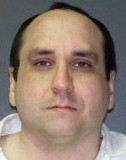 Terry Lee Hankins
Murderer · USA · 2000
Terry Lee Hankins was convicted by a jury of capital murder and was sentenced t…
5 victims
Terry Lee Hankins
Murderer · USA · 2000
Terry Lee Hankins was convicted by a jury of capital murder and was sentenced t…
5 victims
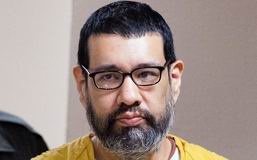 Anthony Garcia
Murderer · USA · 2008
Anthony Garcia was a former doctor who was found guilty on all counts including…
4 victims
Anthony Garcia
Murderer · USA · 2008
Anthony Garcia was a former doctor who was found guilty on all counts including…
4 victims
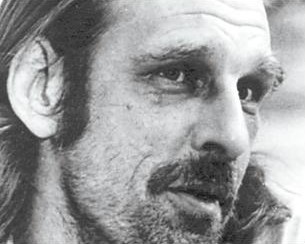 Richard Lee Whitley
Murderer · USA · 1980
July 25, 1980 — Richard Lee Whitley killed Phoebe Parsons, age 63, in her home…
1 victim
Richard Lee Whitley
Murderer · USA · 1980
July 25, 1980 — Richard Lee Whitley killed Phoebe Parsons, age 63, in her home…
1 victim
 Thomas Harrison Provenzano
Murderer · USA · 1984
21 July 2000 — Thomas Harrison Provenzano was executed by lethal injection in F…
1 victim
Thomas Harrison Provenzano
Murderer · USA · 1984
21 July 2000 — Thomas Harrison Provenzano was executed by lethal injection in F…
1 victim
 Gerald Gallego
Serial killer · USA · 1978
Gerald Armond Gallego (July 17, 1946 – July 18, 2002) was an American serial ki…
10 victims
Gerald Gallego
Serial killer · USA · 1978
Gerald Armond Gallego (July 17, 1946 – July 18, 2002) was an American serial ki…
10 victims
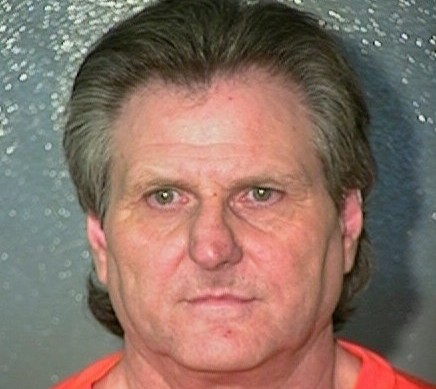 David Lamar Anthony
Murderer · USA · 2001
David Lamar Anthony (born 1948), better known as David Anthony, was convicted o…
3 victims
David Lamar Anthony
Murderer · USA · 2001
David Lamar Anthony (born 1948), better known as David Anthony, was convicted o…
3 victims
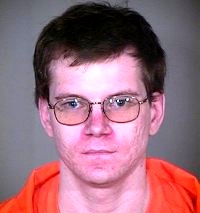 Christopher Hargrave
Murderer · USA · 2002
Christopher Hargrave worked at Jack in the Box from April to May of 2002 and ha…
3 victims
Christopher Hargrave
Murderer · USA · 2002
Christopher Hargrave worked at Jack in the Box from April to May of 2002 and ha…
3 victims
- Gender
- male
- Country
- USA
- Location
- Fayetteville, Cumberland County, North Carolina, USA
- Date of birth
- April 30, 1980
- Age at first offence
- 29
- Characteristics
- child abuse, kidnapping, rape
- Victim profile
- Shaniya Davis, 5
- Method of murder
- Suffocation
- Date(s) of murder
- November 10, 2009
- Years active
- 2009
- Date of arrest
- 3 days after
- Status
-
Sentenced to death
Sentenced to death on May 29, 2013
Case record: Mario Andrette McNeill
People
- Mario Andrette McNeill (also referred to as Mario McNeill): Fayetteville man; accused and then convicted of first-degree murder and related offenses connected to the death of 5-year-old Shaniya Davis.
- Shaniya Davis (also Shaniya Nicole Davis): victim; 5 years old.
- Bradley Lockhart: Shaniya’s father.
- Carey Lockhart-Davis: Shaniya’s aunt (described as not related to Antoinette Davis); appeared on CBS’ “Early Show” to beg for Shaniya’s safe return before Shaniya’s body was found.
- Cheyenne Locklear: Shaniya’s half-sister.
- Shaniya’s half-sister: wept Tuesday as difficulty dealing with Shaniya’s death was described for jurors.
- Juanita Bell: McNeill’s mother.
- Brenda Davis: identified as Shaniya’s aunt in the context of the hotel handoff described by McNeill; texts were exchanged with McNeill.
- Antoinette Nicole Davis: Shaniya’s mother; charged in connection with Shaniya’s death; prosecutors were not seeking the death penalty against her.
- Robby Hicks: Assistant Cumberland County District Attorney; made a closing argument urging the death penalty.
- Billy West: District Attorney; made a closing argument.
- Rita Cox: Assistant District Attorney; told jurors about the medical and forensic aspects described in closing argument.
- Butch Pope: defense attorney.
- Terry Alford: co-counsel for the defense.
- Jim Ammons: Superior Court Judge.
- Chris Corcione: retired Fayetteville police Sgt. who testified as a witness summing up McNeill’s videotaped interview with police.
- Charles Kimble: Fayetteville police officer (later assistant chief for the Fayetteville Police Department); testified about the search.
- Elizabeth Culver: Fayetteville police Detective; testified about picking up McNeill.
- Matthew Argyle: maintenance worker for Comfort Suites; testified about seeing McNeill leaving with Shaniya.
- Chad Royal: State Bureau of Investigation agent who documented the site where Shaniya’s body was found.
- Thomas Clark: Dr.; former deputy chief medical examiner for North Carolina; testified as medical examiner.
- Allen Rogers: lawyer representing McNeill at the time; provided information leading to the search focus.
- Cornel Espirit: canine handler whose dog found Shaniya’s body.
- FBI agent (unidentified): testified regarding interview and cellphone records/texts.
- Theresa Chance: spokeswoman for Fayetteville Police Department.
- Tom Bergamine: Police Chief.
- Ed Grannis: Cumberland County District Attorney mentioned in jurisdictional discussions.
Offences and convictions
McNeill was convicted by an eight-man, four-woman jury of:
- first-degree murder
- first-degree kidnapping
- sexual offense of a child
- indecent liberties with a child
- human trafficking and sexual servitude in connection with her death
McNeill had been acquitted of raping her by an earlier jury verdict.
Timeline
- November 2009 — Shaniya Davis died; McNeill was later convicted for the death.
- Nov. 16, 2009 — Shaniya’s body was found in a kudzu patch off N.C. Highway 87 on the Lee-Harnett county line.
- six days after her mother reported her missing — Shaniya’s body was found.
- Nov. 10, 2009 — Antoinette Nicole Davis reported Shaniya missing from their Fayetteville home.
- Nov. 15, 2009 — Charles Kimble testified he received a phone call from Allen Rogers with information about where to search.
- May 6, 2013 — Testimony described the process for cutting Shaniya from the kudzu patch with chainsaws; hotel worker testimony tied McNeill to the Comfort Suites.
- May 7, 2013 — Testimony described McNeill’s statement to police that he “was waiting to get a call to come and kill her,” followed by discussion that he later corrected himself.
- May 8, 2013 — Medical examiner testimony addressed sexual assault findings and suffocation; cellphone analysis testimony placed McNeill at the mobile home park and at the Sanford motel.
- May 15, 2013 — Police interview details were presented to the jury, including repeated denials by McNeill and later admission about the hotel after text messages.
- May 16, 2013 — McNeill elected not to present any evidence in his death penalty trial.
- May 21, 2013 — Closing arguments were heard; prosecutors asked jurors to convict, and defense counsel argued the prosecution’s case was incomplete.
- May 23, 2013 — A jury convicted McNeill of kidnapping and killing Shaniya but acquitted him of raping her.
- Wednesday (May 29, 2013 sentencing date) — A Cumberland County jury deliberated less than 40 minutes before deciding McNeill should die.
- May 29, 2013 — McNeill was sentenced to death.
Background
Shaniya Davis was 5 years old when she died.
The case involved jurisdictional questions over which county would handle the murder case. It was explained that prosecutors had to prove where the girl was killed to establish legal jurisdiction. Prosecutors in Cumberland and Lee counties met, and Fayetteville police and Cumberland County District Attorney Ed Grannis met again before the Cumberland County District Attorney’s Office took the lead and resulted in the charges against McNeill.
Investigators said Shaniya’s mother, Antoinette Nicole Davis, sold her daughter to McNeill to pay off a drug debt. Antoinette Davis was later charged with multiple counts connected to the case, and prosecutors were not seeking the death penalty against her.
The offence
Shaniya’s body was recovered after she had been reported missing from her home. Her death was later described in court as:
- suffocation (external airway obstruction, or asphyxiation)
- injuries described as consistent with a sexual assault shortly before she died
The medical examiner testified that there were abrasions around Shaniya’s vagina that were “consistent with a sexual assault” and that a bruise on her cheek could have been left by a hand as she was suffocated. The examiner testified there was “no evidence that Shaniya was strangled” and that it would have taken her killer a few minutes to suffocate her. The examiner also acknowledged on cross-examination that he could not state with any degree of certainty when she died and that the injuries could have occurred several hours before she was killed.
Investigation
Investigators located evidence tying McNeill to Shaniya through:
- a security video at a Sanford hotel
- hair from a hotel comforter and a blanket found in a trash can outside the girl’s home
- soil from the gas pedal of McNeill’s car, described as consistent with soil from the site where Shaniya’s body was found
A witness described the recovery site as a kudzu patch where vegetation was so dense that the body had to be cut out with chainsaws. The SBI agent described that she was lying partially on her right side with her feet extended toward an area with water, and that vines were left on the body so they were not destroyed before the medical examiner could collect evidence.
The investigation included an extensive search. The police officer who led the search testified that a phone call from McNeill’s lawyer at the time helped narrow the search area. A canine handler testified the dog found the body in the kudzu patch partially under a log.
Police also addressed attorney-client privilege issues connected to a tip from McNeill’s attorney that led to the location of Shaniya’s body. A Superior Court Judge ruled that prosecutors could tell jurors about the information and that McNeill waived attorney-client privilege by giving police a statement.
Defense counsel requested a mistrial related to photos found on McNeill’s computer, arguing they were irrelevant and would suggest they were illegal. The judge denied the request. The judge also admonished people attending trial who were described as acting in an inappropriate manner during the jury’s viewing of a video.
Arrest
McNeill was arrested after witnesses identified him as the man holding Shaniya in surveillance images from a Sanford hotel. Fayetteville police Detective Elizabeth Culver testified that he came willingly to police headquarters and that he turned to his then-girlfriend before leaving and said, “You know what this is about.”
It was stated that McNeill had been held in isolation at the Cumberland County Detention Center on a first-degree kidnapping charge since his initial arrest. McNeill surrendered after the release of hotel security video showed him carrying Shaniya on the morning of her disappearance.
Trial
Jury deliberations and verdicts
- In the trial that resulted in the guilt verdict described for May 23, 2013, a jury deliberated for about 7½ hours over two days before finding McNeill guilty of first-degree murder, first-degree kidnapping, sexual offense of a child, indecent liberties with a child, human trafficking and sexual servitude in the death of Shaniya Davis, and acquitted him of raping her.
- In the death sentencing proceeding on May 29, 2013, the jury deliberated less than 40 minutes before deciding McNeill should die. The decision followed a conviction that had taken almost eight hours over two days.
McNeill showed no emotion as verdicts were read in the courtroom.
McNeill declined to make a statement in court after sentencing.
Courtroom demeanor and statements by counsel, judge, and prosecutors
Assistant Cumberland County District Attorney Robby Hicks made closing arguments urging the jury to impose the death penalty:
“I submit to you, without hesitation, that the only punishment appropriate in this case – for these crimes – is the death penalty,”
District Attorney Billy West described McNeill as showing no remorse and included closing-argument language about kidnapping and murder:
“He showed no regard for her innocence when he kidnapped her from her home in the middle of the night,”
“He showed no regard for her life when he murdered her and left her along desolate Walker Road.”
Assistant District Attorney Rita Cox described the death as:
“a slow, agonizing death,”
and described:
“carcass wasteland for her burial site.”
Defense attorney Terry Alford asked for a mistrial after prosecutors tried to introduce evidence of photos found on McNeill’s computer, arguing relevance and illegality concerns:
“Do you realize how close you are (to a mistrial)?”
and also: “Is the sole purpose of this witness that he found nothing?”
Assistant Cumberland County District Attorney Rita Cox responded:
The judge denied the motion, saying:
“Focus on what information you want to get from this witness,”
District Attorney Billy West told jurors not to be swayed by McNeill’s silence, including the statement:
“It may be to invoke sympathy, it may be a simple act of defiance or it may be manipulation,”
“I ask you to follow the law in this case.
“There's a lot he'd like you to forget,”
West added:
“He wants you to forget that he had sex with Shaniya after he struck out with the 26 women he texted. ... He wants you to forget that he suffocates the life out of Shaniya Davis.”
Cox said:
“Don't let it manipulate you into feeling sympathy for the defendant,”
At sentencing, Judge Jim Ammons addressed McNeill:
“May God have mercy on your soul,”
“You did not have to kill that child.”
The judge addressed Shaniya’s family:
“I can't give you justice,”
“The jury has given you what we as humans – the best our humans can do – to give you justice. Justice would be if I reversed all of this, and I can't.”
Defense counsel Butch Pope described the defense’s inability to present mitigating evidence when McNeill had not allowed testimony on his behalf:
“As defense lawyers, we can't help but wonder if that would have made a difference, if we would have been able to present the mitigating evidence,”
Pope also stated:
“If McNeill would have allowed the attorneys to present testimony on his behalf, it may have "put on a human face" and possibly kept him off death row,
McNeill expressed his position about testimony and sentencing:
“My goal was freedom. I lost my freedom. What does it matter after that?”
Assistant Cumberland County District Attorney Robby Hicks, in closing argument context, was quoted urging the death penalty. District Attorney Billy West and Cox were quoted in their closings regarding evidence and interpretation of McNeill’s silence.
Police interview evidence and statements
Retired Fayetteville police Sgt. Chris Corcione testified about McNeill’s videotaped interview and described that McNeill was in denial mode early and that interviewers tried to plant a story to keep him talking:
“Early on in the interview, it was clear Mr. McNeill was in denial mode,”
He said:
“At one point in the interview, I thought it would be a good idea to plant a seed in his mind that someone told him to take the child,”
Corcione explained:
“I wanted him to grab onto that story and use that to legitimize the fact that he had the child.”
Corcione also described:
In the interview, Corcione asked:
“You killed that baby, didn't you?”
McNeill responded:
“No, no, no,”
Corcione later said:
“No reasonable person would take a strange 5-year-old person from the front porch,”
Corcione also said:
“You killed that little girl because you had to get rid of her because she's evidence of the crime.”
McNeill responded again:
As the FBI agent testified about the police interview, the agent said McNeill stated:
“He was waiting to get a call to come and kill her.”
The FBI agent described a later correction:
“He actually said he was waiting to come and kill her. When we tried to get him to expand on that, he wouldn't.”
During the interview, McNeill said:
Later in the interview, Corcione described:
“If there was a time in your life you need to be perfectly honest, it's now.”
Corcione also said:
“A long time ago, I stopped worrying about what everybody thinks,”
as part of an exchange.
McNeill said about the case:
“What you're doing now is you're making it worse – one lie after another,”
was attributed to Corcione, while McNeill’s own denial and later changes were described by the witness testimony.
The FBI agent testified that investigators pressed McNeill and that, at one point, the FBI agent said:
“We needed to keep him talking to get a location for Shaniya Davis – that was or goal,”
and described McNeill’s behavior:
“He kept changing his story,”
“He would sometimes giggle. He would sigh, yawn. He was shutting down.”
McNeill’s later claim in the interview was that Shaniya’s aunt sent him a text message asking him to pick Shaniya up and that he planned to hand her off to relatives who would ensure she went to school.
An FBI agent later testified on cellphone records and timeline placement, including that calls put McNeill at the mobile home park about 3 a.m. and at the Sanford motel about four hours later, and that by a little after 8:30 a.m. the signal bounced off a cell tower near N.C. 87 about 6 miles from where Shaniya’s body was found.
Witness testimony and evidence
Hotel witnesses described McNeill taking Shaniya to a Sanford hotel:
- A hotel clerk testified McNeill checked into Comfort Suites with Shaniya about an hour earlier.
- Matthew Argyle testified he saw McNeill coming out of the rear of the building with the girl lying on his shoulder covered with a blanket and that McNeill did not say anything back when Argyle said hello.
- Argyle testified he then watched as the car pulled out of the parking lot and described McNeill looking back and forth.
A witness described the process of cutting Shaniya out of the kudzu patch and showing crime scene photos and a 14-minute video to the jury.
Sentencing
On May 29, 2013, McNeill was sentenced to death after the jury deliberated less than 40 minutes.
The sentencing proceeding followed an earlier conviction. It was stated that McNeill was the first person to be sentenced to death in Cumberland County in six years.
Appeals
No appeals information was included in the provided record.
Outcome
McNeill was sentenced to death on May 29, 2013.
An earlier jury verdict had convicted him of first-degree murder, first-degree kidnapping, sexual offense of a child, indecent liberties with a child, human trafficking and sexual servitude in the death of Shaniya Davis, while acquitting him of raping her.
Aftermath
After sentencing, Shaniya’s father, Bradley Lockhart, berated McNeill:
“The media glorifies you as you walk in with smirks and smiles,”
Lockhart also said:
“I'm not going to worship you. I'm going to pray for you.”
Lockhart added:
“I think of those last seconds, and you were the last thing my daughter got to look at.”
McNeill’s mother, Juanita Bell, showed no emotion on Wednesday.
Shaniya’s body was found on Nov. 16, 2009, six days after she was reported missing from the Fayetteville mobile home. It was described as suffocated with injuries consistent with sexual assault shortly before she died.
It was stated that McNeill became the 153rd inmate on North Carolina’s death row.
It was stated that the last person from Cumberland County sentenced to death was Eugene Johnny Williams, convicted in 2007 of killing two people in a dispute over a stolen motorcycle.
No executions were carried out in the state since 2006.
Other details
McNeill had surrendered to police after they identified him from a security video as having taken Shaniya to a Sanford hotel shortly after she disappeared.
McNeill demanded that jurors watch his full six-hour interview with police and insisted jurors hear the full interview despite warnings from his attorneys and Judge Jim Ammons that they would learn about his previous conviction for shooting three people and various drug arrests.
It was described that McNeill told police he took Shaniya to the hotel at the request of her aunt and then handed her off to someone he thought was related to her.
Defense counsel argued that prosecutors could not prove where Shaniya was assaulted or when she died and stated that McNeill’s DNA was not found on Shaniya.
Investigators testified that McNeill had talked to police a few days later after being seen with the girl at a Sanford hotel because he thought he could manipulate them.
McNeill’s lawyers argued that prosecutors’ evidence tied him to Shaniya through security video, hair, and soil samples, and that McNeill did not present any evidence in his defense during the trial.
Spotted an error, or have more information about this case?