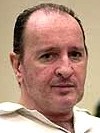
Thomas Harrison Provenzano
Murderer Brian Kevin Rosenfeld
Murderer · USA · 1985
Brian Kevin Rosenfeld Brian Kevin Rosenfeld was sentenced to three concurrent l…
23 victims
Brian Kevin Rosenfeld
Murderer · USA · 1985
Brian Kevin Rosenfeld Brian Kevin Rosenfeld was sentenced to three concurrent l…
23 victims
 Marvin Gray
Murderer · USA · 1975
Marvin Gray was convicted killer who claimed responsibility for 23 slayings and…
23 victims
Marvin Gray
Murderer · USA · 1975
Marvin Gray was convicted killer who claimed responsibility for 23 slayings and…
23 victims
 Yahweh ben Yahweh
Murderer · USA · 1980
Yahweh ben Yahweh was born and legally named Hulon Mitchell Jr. (October 27, 19…
23 victims
Yahweh ben Yahweh
Murderer · USA · 1980
Yahweh ben Yahweh was born and legally named Hulon Mitchell Jr. (October 27, 19…
23 victims
 Russell Ellwood
Murderer · USA · 1991
Russell Ellwood was a former taxi driver. Authorities suspected him of killing…
20 victims
Russell Ellwood
Murderer · USA · 1991
Russell Ellwood was a former taxi driver. Authorities suspected him of killing…
20 victims
 Ernst Wagner
Spree killer · Germany · 1913
Ernst August Wagner (September 22, 1874 – April 27, 1938) was a German spree ki…
14 victims
Ernst Wagner
Spree killer · Germany · 1913
Ernst August Wagner (September 22, 1874 – April 27, 1938) was a German spree ki…
14 victims
 Jerome Henderson
Murderer · USA · 1985
Jerome Henderson was sentenced to death on August 5, 1985. The clemency report…
1 victim
Jerome Henderson
Murderer · USA · 1985
Jerome Henderson was sentenced to death on August 5, 1985. The clemency report…
1 victim
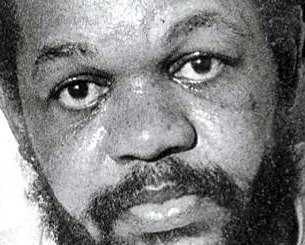 Wilbert Lee Evans
Murderer · USA · 1981
Wilbert Lee Evans Wilbert Lee Evans was sentenced to die for shooting Deputy Sh…
1 victim
Wilbert Lee Evans
Murderer · USA · 1981
Wilbert Lee Evans Wilbert Lee Evans was sentenced to die for shooting Deputy Sh…
1 victim
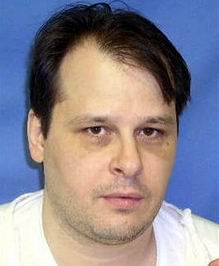 Kevin Scott Varga
Murderer · USA · 1998
Kevin Scott Varga was a white male executed in Texas on May 12, 2010, for the 1…
2 victims
Kevin Scott Varga
Murderer · USA · 1998
Kevin Scott Varga was a white male executed in Texas on May 12, 2010, for the 1…
2 victims
- Gender
- male
- Country
- USA
- Location
- Orange County, Florida, USA
- Date of birth
- J une 6, 1949
- Age at first offence
- 35
- Characteristics
- revenge
- Victim profile
- William Wilkerson, 60 (bailiff)
- Method of murder
- Shooting
- Date(s) of murder
- January 10, 1984
- Years active
- 1984
- Date of arrest
- Same day
- Status
-
Executed
Executed by lethal injection in Florida on July 21, 2000
Timeline
- 21 July 2000 — Thomas Harrison Provenzano was executed by lethal injection in Florida; he was pronounced dead at 7 p.m.
- 20 June 2000 — A stay of execution request was received at 6 p.m.; the Florida Supreme Court told Governor Jeb Bush at 6:44 p.m. that it denied the request; the execution began eight minutes later.
- 22 June 2000 — Execution coverage described Provenzano as having been pronounced dead at 7 p.m. the previous day.
- 21 June 2000 — A report described Provenzano’s execution as occurring at Florida State Prison in Starke.
- June 1999 — Florida heard a petition from Provenzano arguing that the electric chair was a cruel and unusual punishment.
- September 21, 1999 — The state made plans to execute Provenzano four times; three reprieves occurred; an execution was scheduled for Friday at 7:01 a.m. in the electric chair.
- July 7 — Provenzano’s execution was set for July 7.
- July 9 — Provenzano was scheduled for execution July 9 after a two-day delay.
- July 8 — Allen Lee “Tiny” Davis went to the electric chair.
- September 14 — A stay was ordered until Sept. 14 for the electric chair challenge and a competency appeal.
- September 14 — Provenzano’s execution was scheduled in the electric chair.
- September 24 — The Florida Supreme Court gave Provenzano a 10-day extension of the stay from Sept. 14 to Sept. 24.
- Early August 1984 — A trial judge ruled the electric chair was constitutional.
- January 10, 1984 — Provenzano walked into the Orange County Courthouse armed with a shotgun, an assault rifle, a revolver, and a knapsack carrying ammunition and opened fire.
- January 9, 1984 — Provenzano appeared at the courthouse wearing black combat boots, army fatigue pants, a long olive drab army coat, a red bandana, and a shoulder bag.
- August 1, 1983 — Officers Shirley and Epperson of the Orlando Police Department arrested Provenzano for disorderly conduct.
- June 21, 1984 — The source narrative is present as a formatting artifact; the case events tied to the 1984 courthouse attack are described on January 10, 1984.
Background
Thomas Harrison Provenzano was an unemployed electrician. He was 51 at the time of the execution. He was also described as believing he was Jesus Christ.
Provenzano was convicted of shooting death of bailiff William Wilkerson at the Orange County courthouse. He was in court for a hearing on a disorderly conduct charge when he went on a rampage in 1984. The disorderly conduct charge had been brought five months earlier.
Provenzano was sentenced to death for a shooting at the Orange County Courthouse in Orlando, Florida in 1984 that killed bailiff William Arnie Wilkerson. Another bailiff, Harry Dalton, suffered brain damage and was partially paralyzed, dying from his injuries seven years later. Provenzano also shot correctional officer Mark Parker, who was paralyzed from the neck down.
A trial judge concluded in December that Provenzano believed the reason he faced execution was because he was Jesus Christ. The judge ruled that was not a strong enough reason under Florida law to spare him because Provenzano also knew that he killed Wilkerson.
Under state law, condemned killers could be executed even if they were mentally ill unless they did not understand they were about to be executed and why.
In 1999, Florida heard a petition from Provenzano that argued that the electric chair was a cruel and unusual punishment.
A description of Florida’s death penalty process noted that by the time an inmate following Davis was to be executed, Florida inmates sentenced to death could choose between lethal injection and the electric chair, and everyone executed in Florida following Davis thus far (as of October 2007) chose lethal injection.
Provenzano spent almost 16 years on Death Row before being executed at Florida State Prison in Starke on 21 June 2000. He was described as the 48th murderer executed in Florida since Florida’s reintroduction of the death penalty in 1976.
The offence
Provenzano walked into the Orange County Courthouse on January 10, 1984 armed with a shotgun, an assault rifle, a revolver and a knapsack carrying ammunition, all hidden under a large Army-style jacket. He muttered threats against two police officers who had charged him with disorderly conduct five months earlier, then began firing when two bailiffs approached to search him.
Bailiff William Wilkerson was killed. Bailiff Henry Dalton suffered brain damage, was partially paralyzed, and died seven years later. Correctional Officer Mark Parker was paralyzed from the attack.
William “Arnie” Wilkerson, 60, was immediately killed. Harry Dalton, 53, was shot in the head and was paralyzed; he died seven years later with brain damage. Mark Parker, 19 at the time of the shooting, was left paralyzed and remained paralyzed from the shoulders down.
At the time of sentencing information, the trial court followed the jury’s recommendation and imposed the sentence of death for the first-degree murder.
Provenzano was convicted of two counts of attempted first-degree murder and one count of first-degree murder. The trial judge also sentenced Provenzano to consecutive thirty-year sentences for each count of attempted first-degree murder.
Investigation
On August 1, 1983, officers Shirley and Epperson of the Orlando Police Department arrested Provenzano for disorderly conduct. The disorderly conduct charge became an obsession with Provenzano.
From the day he was arrested until January 10, 1984, Provenzano continually followed and threatened to kill the arresting officers.
Provenzano purchased a .38 caliber revolver, 12 gauge shotgun, a .45 caliber semi-automatic weapon, and had pockets sewn into the inside lining of his jacket in order to conceal the weapons.
Arrest
He appeared for a disorderly conduct trial.
Trial
On January 9, 1984, Provenzano appeared at the courthouse wearing black combat boots, army fatigue pants, a long olive drab army coat, a red bandana and a shoulder bag. Provenzano left without incident when told he had arrived a day early for his disorderly conduct trial.
On January 10, 1984, Provenzano arrived early and was heard to have said: "I can't wait until those two policemen walk in. I'll show them," and "I'm going to do it. This is where [these] guys get their ass kicked."
Provenzano entered Judge Conser's courtroom at about 9:30 carrying a red knapsack and wearing the same jacket with inside pockets sewn. Bailiff Parker stopped Provenzano at the door and told him he would have to leave the knapsack outside or have it searched. Provenzano took his knapsack to his car. The knapsack contained a gun stock for his .45 caliber weapon and ammunition for the .38 caliber revolver. Provenzano returned to the courtroom without his knapsack at 10:15.
Provenzano approached the bench when his case was called. Judge Conser instructed Provenzano to return to the spectator portion of the courtroom until his attorney arrived. Bailiff Dalton was instructed to search Provenzano. Dalton then approached him saying he was going to have to be searched and that he was his friend. Correction Officer Parker exited the courtroom and reentered directly behind Provenzano.
As the defendant reached in his pocket, Dalton went to grab him and was shot in the face by Provenzano, who screamed, "You're not my friend, M_____ F_____!"
Provenzano then chased and fired at least two shots at Parker. Everyone in the courtroom took cover. The people in Judge Coleman's adjacent courtroom heard the shots.
Bailiff Wilkerson, the bailiff in charge of Judge Coleman's courtroom, exited the courtroom into the hallway where the shooting was taking place. Shortly thereafter, gunshots were heard and a chase ensued.
Provenzano took a military stance in the corner of the hallway where he yelled, "I'm going to kill you, M_____ F_____, I'm going to kill all of you."
Provenzano ducked into room 436, a lunchroom for bailiffs, and took a barricade position with the shotgun pointing into the hall. Corporal A.C. Jacobs of the Orange County Sheriff's Office shot Provenzano in the back through a window.
Provenzano was armed with a 12 gauge shotgun, a .45 caliber assault rifle, and a .38 caliber revolver, all loaded with live ammunition. Dalton and Parker were both shot and injured by Provenzano. Wilkerson was shot and killed by Provenzano.
Appellant alleged numerous errors occurred at both the guilt and sentencing phases of the trial. The appellate court found no errors and affirmed the conviction and death sentence.
Sentencing
The trial court followed the jury’s recommendation and imposed the sentence of death for the first-degree murder.
A trial judge concluded in December that Provenzano believed the reason he faced execution was because he was Jesus Christ, but ruled that was not a strong enough reason under Florida law to spare him because Provenzano also knew he had killed Wilkerson.
Appeals
Provenzano’s conviction and death sentence were affirmed on direct appeal: Provenzano v. State, 497 So.2d 1177 (Fla. 1986) (Direct Appeal). The court had jurisdiction under Art. V, § 3(b)(1), Fla. Const.
The Florida Supreme Court ruled that Provenzano’s sanity must be evaluated in an evidentiary hearing, and it directed that he be evaluated in such a hearing. The court supported its decision with Chief Justice Major Harding and Justices Leander Shaw, Harry Lee Anstead, Barbara Pariente, R. Fred Lewis and Peggy Ann Quince, while Justice Charles Wells dissented.
The Supreme Court was reviewing an earlier determination regarding the electric chair challenge.
A trial judge ruled in early August that the electric chair was constitutional. Another judge ruled that Provenzano’s actions might be bizarre but that he was competent to be executed.
A law required that Governor Jeb Bush appoint three psychiatrists to examine Provenzano after Provenzano won a two-day delay because of his claim of insanity. The psychiatrists concluded that Provenzano "has the mental capacity to understand the nature of the death penalty and the reasons why it was imposed on him.''
Provenzano’s lawyers sought a delay pending an investigation into Florida's last execution.
Outcome
Provenzano was executed by lethal injection in Florida.
On 20 June 2000, the U.S. Court of Appeals in Atlanta lifted a stay without commenting on its reasons for either imposing or ending the stay. Intravenous needles had already been placed in his arms when prison officials learned of the stay.
Provenzano’s execution was delayed again Wednesday while the Florida Supreme Court reviewed a stay request received at 6 p.m., a half hour before he was scheduled to die. At 6:44 p.m., the Florida Supreme Court told Governor Jeb Bush that it denied the request. The execution began eight minutes later.
Provenzano looked at his attorney, Michael Reiter, and said: "Thanks for everything, Mike."
He was described as wearing a white T-shirt with a sheet pulled up to his armpits and moving his feet back and forth a minute after the injection began and pursing his lips as if blowing toward the ceiling. His face turned bright red and later became grayish-purple after his heart stopped.
At 7 p.m., Provenzano was pronounced dead. Execution witness Mark Parker watched from his wheelchair as Provenzano was pronounced dead. Department of Corrections spokesman C.J. Drake said the execution "went flawlessly."
Execution witnesses described fear in Provenzano’s eyes, including Mark Parker saying: "He was pretty damned scared," and Lawson Lamar saying: "I saw fear in his eyes and that fear was because he was going to meet his maker." Another described statement attributed to Lawson Lamar included: "He put himself on that gurney."
Provenzano had been scheduled to die at 6 p.m., with the execution proceeding eight minutes after the Supreme Court’s denial.
Aftermath
Mark Parker was paralyzed from the neck down and remained in a wheelchair; he had undergone nine surgeries since the shooting. Parker watched the execution and was described as saying: "I was happy to get it over with. He got off better than the other two victims did," and "I'm still going to be paralyzed in the morning when I wake up." Parker also stated: "I was happy to get it over with. He got off better than the other two victims did," and: "It's a shame it took almost 16 years to the day to get this all done." He also said: "Tell me in the Bible where you see Jesus walking around carrying three concealed weapons," and: "I don't say that word," and: "I don't let anyone say it around me." Parker said he had been waiting to watch Provenzano die.
Harry Dalton’s son Gary Dalton and daughter Teresa Olrich were quoted as saying they were glad the appeals process was over but it did not erase memories. Gary Dalton said: "It brings back everything that happened. For him, it ended today. For us, it will never end," and earlier described a quote: "The game is over. There are no winners in this game."
William Wilkerson’s niece, Cathy Parlin, issued comments about the delays and the appeals process. She said: "Why do they keep us both suffering, dragging it on like this?" and: "This is ridiculous. And you know what I really feel? Like I should shoot that cop over there so I can get a free college education, food, clothes, all of it for free like he (Provenzano) has."
Provenzano’s sister Catherine Forbes of Orlando asked Governor Jeb Bush in a letter Tuesday to spare her brother. She wrote: "As you know, Thomas is severely mentally ill," and "He believes he is Jesus Christ and that he is going to be executed because people hate Jesus." Forbes also wrote before the execution: "Let me say from the outset that my heart goes out to the people who were killed or injured by my brother . . . . If it was in my power to restore your lives, I would do so in an instant . . . . But I have to wonder, where is the justice in killing a sick human being?"
A response from Governor Jeb Bush to Provenzano’s lawyer said Bush found no reason to alter the sentence.
A statement attributed to Floridians for Alternatives to the Death Penalty included: "We acknowledge the pain and suffering of Provenzano's victims, and we join with the Pope and all people of faith in asking Governor Bush to look into his own heart, and to lead us with compassion and understanding," and: "The death penalty is not a solution. It's merely a band aid on the symptoms of our violent society."
A statement of Floridians for Alternatives to the Death Penalty included: "We also acknowledge the pain and suffering of the family of Thomas Provenzano, who are also victims of this unfortunate tragedy. On Tuesday at 6pm, they too will become the family of a loved one who has died unnaturally and unnecessarily as a result of violence. Must the people of Florida be again made party to the premeditated homicide of a defenseless human being?"; "By all accounts, the evidence is clear that Thomas Provenzano is mentally ill. Had treatment been available to him when he was diagnosed, and when help was sought, he almost certainly would not have become homicidal. Now the state seeks to treat him not on a hospital bed, but on an execution gurney instead. This clearly demonstrates the social, moral and fiscal failings of the bad public policy known as the death penalty. We seek prevention and treatment, not revenge in the form of extreme punishment."; and: "Floridians for Alternatives to the Death Penalty calls on Governor Jeb Bush to stop being a politician on this issue, and instead to be a leader. We call on Governor Bush to grant clemency to Thomas Provenzano. Furthermore, in light of renewed evidence that the fairness and integrity of Florida's death penalty process is seriously flawed, we call for a moratorium on executions pending a full review of Florida's capital punishment process."
The Florida Catholic Conference issued an appeal for clemency and a stay and included the statement: "The Bishops of Florida appeal to Governor Bush for clemency and a stay of the death sentence of Thomas H. Provenzano scheduled for execution at 6:00 p.m. on 20 June 2000."; "His crimes involved great evil and his victims and their families have been terribly wronged."; "It may satisfy an understandable desire for vengeance, but retribution cannot justify taking a human life."; "We renew our call for a moratorium on executions and join with Pope John Paul II in a re-commitment to end the death penalty."; and: "We urge clemency for Thomas H. Provenzano."
A report quoted execution-related remarks and discussion including: "All of these courts in all these years of proceedings have determined that Thomas Provenzano was competent to be executed," and a press secretary identified as Elizabeth Hirst.
Provenzano’s attorney Mary Kane was quoted as saying: "Mr. Provenzano truly believed that he was Jesus Christ."
Walter Moore with the Coalition to Abolish the Death Penalty was quoted as saying: "The world hates Jesus...he was Jesus...that's why he was being executed."
Psychiatrist Dennis Platt was quoted saying: "They may think they are being punished for any number of reasons none of which apply to the case," and: "Yet if they knew exactly what they were doing then I think they are very responsible and should be held responsible."
A group of 13 death penalty protesters held a silent vigil as 6:30 approached, and five candles were lit as drizzle dissipated. The Rev. Fred R. Ruse of St. Matthew Catholic Church returned to Starke after learning of the lifted stay and said: "It is another example of why Florida should place a moratorium on all capital punishment." Ruse also said: "It is time for the governor to sit down and come up with a better solution for this, and it's an insult to the finest minds in terms of correctional expertise that this ever happens."
Other details
Provenzano declined to have dinner before the execution.
A description of Provenzano’s execution chamber account included that his supporters claimed he should be spared because he had a delusional belief that he was Jesus Christ and did not understand what was happening to him.
A report described Mark Parker as calling the delays the "s-word" and stated: "I don't say that word," and "I don't let anyone say it around me."
The same report described Parker saying: "I'd have rather seen him in the electric chair," and Parker describing lethal injection as "too gentle a passing," and like putting a pet to sleep.
The same report described Parker’s life with paralysis, including that he played computer strategy games and used a stick between his teeth to operate the computer.
In a 1999 context, Michael Minerva was mentioned as having witnessed Jerry White's execution and was quoted describing White’s body stiffening and being thrust upward and backward, and hearing air moving through White's lips and throat, though he could not tell whether the air was going in or out.
In the 1999 context, Florida inmates sentenced to death could choose between lethal injection and the electric chair, and all inmates executed in Florida following Davis thus far had chosen lethal injection. The text also described that the execution by lethal injection of Bennie Eddie Demps caused many problems, including claims that staff took too long to prepare and "butchered" him by cutting his groin and leg while looking for a vein to insert an intravenous tube.
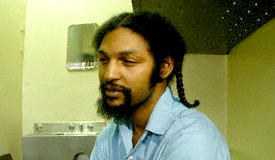
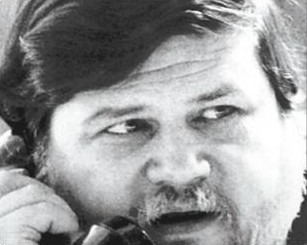
Spotted an error, or have more information about this case?