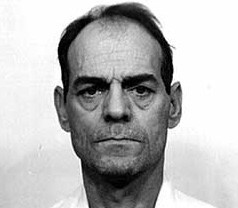
Johnny Meadows
Serial killer? John Norman Collins
Serial killer? · USA · 1967
John Norman Collins was implicated in a series of killings targeting students a…
8 victims
John Norman Collins
Serial killer? · USA · 1967
John Norman Collins was implicated in a series of killings targeting students a…
8 victims
 Jerry Frank Townsend
Serial killer? · USA · 1973
Jerry Frank Townsend was sentenced to seven concurrent life sentences in 1980.…
6 victims
Jerry Frank Townsend
Serial killer? · USA · 1973
Jerry Frank Townsend was sentenced to seven concurrent life sentences in 1980.…
6 victims
 Major Morris
Serial killer? · USA · 1972
Major Morris was a male with the motive listed as sex. He was described as a “l…
6 victims
Major Morris
Serial killer? · USA · 1972
Major Morris was a male with the motive listed as sex. He was described as a “l…
6 victims
 Warren Leslie Forrest
Serial killer? · USA · 1974
Warren Leslie Forrest was described as 25 years old, 5’9” tall, 155 lbs, with l…
6 victims
Warren Leslie Forrest
Serial killer? · USA · 1974
Warren Leslie Forrest was described as 25 years old, 5’9” tall, 155 lbs, with l…
6 victims
 Erno Soto
Serial killer? · USA · 1972
Erno Soto was found incompetent for trial and was committed to a mental institu…
4 victims
Erno Soto
Serial killer? · USA · 1972
Erno Soto was found incompetent for trial and was committed to a mental institu…
4 victims
 Roger Leroy Johnson
Mass murderer · USA · 2001
Roger Leroy Johnson was a 48-year-old California man suspected of killing a gra…
4 victims
Roger Leroy Johnson
Mass murderer · USA · 2001
Roger Leroy Johnson was a 48-year-old California man suspected of killing a gra…
4 victims
 Edgar Arias Tamayo
Murderer · USA · 1994
Edgar Arias Tamayo Tamayo was sentenced to death on November 18, 1994. He was e…
1 victim
Edgar Arias Tamayo
Murderer · USA · 1994
Edgar Arias Tamayo Tamayo was sentenced to death on November 18, 1994. He was e…
1 victim
 Mary Ann Holder
Mass murderer · USA · 2011
Mary Ann Holder carried out a shooting spree and committed suicide by shooting…
5 victims
Mary Ann Holder
Mass murderer · USA · 2011
Mary Ann Holder carried out a shooting spree and committed suicide by shooting…
5 victims
 Steven Avery
Murderer · USA · 2005
Steven Avery was accused of luring Teresa Halbach, a young photographer working…
1 victim
Steven Avery
Murderer · USA · 2005
Steven Avery was accused of luring Teresa Halbach, a young photographer working…
1 victim
 Teresa Alvarez
Murderer · USA · 2011
Teresa Alvarez was 25 when she was found guilty of first-degree murder and sent…
1 victim
Teresa Alvarez
Murderer · USA · 2011
Teresa Alvarez was 25 when she was found guilty of first-degree murder and sent…
1 victim
- Gender
- male
- Country
- USA
- Location
- Odessa, Texas, USA
- Date of birth
- 1937
- Age at first offence
- 31
- Characteristics
- rape, spree killer
- Victim profile
- Gloria Green / Linda Cougat / Dorothy Smith / Ruth Maynard
- Method of murder
- Strangulation / Shooting
- Date(s) of murder
- 1968 / 1971
- Years active
- 1968–1971
- Date of arrest
- December 1971
- Status
-
Imprisoned
Sentenced to 99 years in prison after pleading guilty in 1972 to murdering Gloria Green; petition for a writ of habeas corpus was dismissed and the denial of habeas corpus relief was affirmed by the United States Court of Appeals for the Fifth Circuit on Feb. 10, 1986
Case record: Johnny Meadows
Background
Johnny J. E. Meadows was a convicted murderer. A later appellate decision described him as having “expended much energy in seeking to overturn his conviction.”
The offence
A series of sadistic murders terrorized the female population of Odessa, Texas, and surrounding towns between October 1968 and June 1971.
- On October 19, 1968, an Odessa barmaid, Linda Cougat, vanished from a local laundromat. Two months later her violated body was discovered in a field northwest of town. Her hands were bound behind her back with one of her own nylon stockings, and the other was wrapped tightly around her throat.
- On November 5, 1968, motel owner Dorothy Smith was found shot to death in her apartment at Monahans, Texas. Her hands were bound with television cable.
- On July 16, 1970, Eula Miller was found nude in her Odessa flat. She was a victim of multiple stab wounds.
- Nancy Miller was abducted from her home in Kermit on September 16, while her children slept peacefully in an adjoining room. Her skeletal remains were discovered on an oil lease south of town in June 1971.
- The first victim of 1971 was Ruth Maynard, wife of an Odessa policeman. She was reported missing on January 9 and was found February 15, a few miles from the site where Linda Cougat was dumped in 1968.
- On June 17, when Gloria Green disappeared from her secretarial job in Kermit, Texas, lawmen realized they had a crisis.
- The case was broken in December when Texan Johnny Meadows was jailed in Aztec, New Mexico, on unrelated charges.
Investigation
Meadows started telling tales of murder after his unrelated jail time in Aztec, New Mexico. Ector County Sheriff A.M. Gambrel flew in from Texas to interrogate Meadows.
Cash changed hands during the interrogation: $2,000 paid from Gambrel’s pocket to the suspect’s wife. Meadows gave directions to a vacant lot in South Odessa, where investigators found the skeletal remains of Gloria Green beneath a rotting mattress.
Deputies announced that Meadows had also signed confessions in the deaths of Linda Cougat, Dorothy Smith, and Ruth Maynard.
The appellate decision later described a separate confession to the murder of Mrs. Gloria Sue Green. It stated that Meadows was indicted for that murder in February 1982 and that, shortly after a transfer between jurisdictions, he waived the right to have his attorney Jerry Loftin present and then signed a confession.
Arrest
Meadows was jailed in Aztec, New Mexico, on unrelated charges. The appellate record also described that Meadows was arrested in Ector County, Texas, and that the case was soon transferred to Tarrant County.
Shortly after the transfer, Meadows called the sheriff of Ector County, expressing a desire to talk. Two Ector County officers went to Fort Worth. Upon meeting them, Meadows waived the right of having his attorney, Jerry Loftin, present. Loftin spoke with Meadows privately for about twenty minutes after interrupting the meeting unknowingly.
Trial
In 1972, Meadows pled guilty to murdering Gloria Green.
Two days later, he pled guilty to murder with premeditation and received a life sentence, according to the later appellate decision describing the 1982 indictment and the circumstances leading to the confession and plea.
In 1986, the United States Court of Appeals for the Fifth Circuit considered the denial of Meadows’s petition for a writ of habeas corpus. It noted that on a previous appeal it had “affirmed the denial of habeas corpus relief in part, but vacated in part and remanded the case to district court with instructions to determine whether Meadows was coerced into confessing the crime and whether the alleged coercion could have tainted his guilty plea.”
The appellate decision included an account of the confession process:
- Meadows initiated contact with Ector County officers.
- Meadows knew he did not have to see the officers.
- Meadows rejected his attorney’s advice by knowingly and voluntarily signing the confession.
- Loftin noted no signs of physical or mental coercion and was satisfied that Meadows understood the consequences of his actions.
Jurek v. Estelle, 623 F.2d 929 (5th Cir.1980) (en banc), provides the standard of review in considering a district court's denial of habeas corpus relief sought on the ground of a confession's involuntariness. Jurek instructs us not to “overturn specific findings of fact made by the district court unless they are clearly erroneous.” Id. at 932. We must, however, scrutinize the entire record and make an independent determination of the ultimate issue of voluntariness. Id. at 931, quoting Beckwith v. United States, 425 U.S. 341, 348, 96 S.Ct. 1612, 48 L.Ed.2d 1 (1976). In performing this duty, we may substitute our own judgment even absent a conclusion of clearly erroneous rulings. Id. at 932.
Sentencing
Meadows was sentenced to 99 years in prison after pleading guilty to murdering Gloria Green in 1972.
The later appellate decision also stated that Meadows received a life sentence after pleading guilty to murder with premeditation.
Appeals
Meadows filed a petition for a writ of habeas corpus. On a previous appeal, the Fifth Circuit affirmed the denial of habeas corpus relief in part, vacated in part, and remanded for determination of whether Meadows was coerced into confessing and whether alleged coercion could have tainted his guilty plea. Meadows v. Estelle, 746 F.2d 810 (5th Cir.1984).
On remand, Judge Mahon found nothing improper with either the confession or the guilty plea and again dismissed Meadows’s petition.
On Feb. 10, 1986, the United States Court of Appeals for the Fifth Circuit affirmed the district court’s judgment and affirmed the dismissal of Meadows’s petition.
The appellate decision stated:
- “Convicted of murder in 1972 and sentenced to life imprisonment, Meadows has since expended much energy in seeking to overturn his conviction.”
- “Because no coercion was found, the guilty plea made two days later was deemed untainted.”
- “Because Meadows clearly had a fair chance to present his case, his assertion is meritless.”
- “We see no cause to grant a writ of habeas corpus; the district court's judgment is therefore AFFIRMED.”
Outcome
- In 1973, charges were filed in the Cougat and Maynard cases, but both indictments were dismissed in the summer of 1973.
- Ten years later, when Meadows made his first bid for parole, ex-Sheriff Gambrell testified in opposition to the killer’s release and warned the parole board that Meadows would “kill within forty-eight hours of the time he's paroled.” Meadows’s parole application was denied.
- In 1984, J.R. Nash examined the Odessa case in Open Files and declared it “unsolved.” The material also stated that Nash ignored the conviction and confessions of incarcerated slayer Johnny Meadows and attributed fourteen murders to the “Texas Strangler,” including Meadows victims Cougat and Maynard in the list of women slaughtered by “the most murderous sex fiend in modern Texas history.”
Aftermath
Meadows’s parole application was denied after ex-Sheriff Gambrell testified against his release.
In 1986, the habeas corpus relief sought on grounds of confession coercion was rejected and the denial was affirmed. The appellate decision emphasized the trial court’s findings about voluntariness, including that Meadows initiated contact, knew he did not have to see the officers, and rejected his attorney’s advice by signing the confession knowingly and voluntarily.
Other details
The later appellate decision used the following case details:
- Michael Newton, An Encyclopedia of Modern Serial Killers - Hunting Humans 782 F.2d 489
- Johnny J.E. MEADOWS, Petitioner-Appellant, v. O.L. McCOTTER, Director, Texas Department of Corrections, Respondent-Appellee.
- No. 85-1127, United States Court of Appeals, Fifth Circuit.
- Appeal from the United States District Court for the Northern District of Texas.
- Before GEE, RANDALL, and DAVIS, Circuit Judges.
- PER CURIAM.
Case details also included an entry of “SEX: M RACE: W TYPE: T MOTIVE: Sex. MO: Lust killer of adult females DISPOSITION: 99 years on guilty plea to one count, 1972.”
Spotted an error, or have more information about this case?