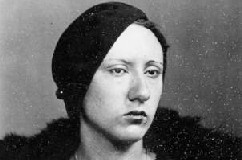
Violette Nozière
Murderer The Marquise de Brinvilliers
Murderer · France · 1664
Marie-Madeleine-Marguerite d'Aubray, Marquise de Brinvilliers (c. 1630–1676) wa…
54 victims
The Marquise de Brinvilliers
Murderer · France · 1664
Marie-Madeleine-Marguerite d'Aubray, Marquise de Brinvilliers (c. 1630–1676) wa…
54 victims
 Florence Rey
Murderer · France · 1994
Florence Rey was born August 25, 1975. She was 19 years old at the time of the…
4 victims
Florence Rey
Murderer · France · 1994
Florence Rey was born August 25, 1975. She was 19 years old at the time of the…
4 victims
 Simone Weber
Murderer · France · 1980
Simone Weber was 60 years old at trial. She was described as “round and dowdy”…
2 victims
Simone Weber
Murderer · France · 1980
Simone Weber was 60 years old at trial. She was described as “round and dowdy”…
2 victims
 Charlotte Corday
Murderer · France · 1793
Marie-Anne Charlotte Corday d'Armont (July 27, 1768 – July 17, 1793), known by…
1 victim
Charlotte Corday
Murderer · France · 1793
Marie-Anne Charlotte Corday d'Armont (July 27, 1768 – July 17, 1793), known by…
1 victim
 Denise Labbé
Murderer · France · 1954
Denise Labbé was convicted of the murder of her 2-year-old daughter, Catherine.…
1 victim
Denise Labbé
Murderer · France · 1954
Denise Labbé was convicted of the murder of her 2-year-old daughter, Catherine.…
1 victim
 Gabriel Socley
Murderer · France · 1935
Gabriel Socley was sentenced to death for the rape, and the later status of the…
1 victim
Gabriel Socley
Murderer · France · 1935
Gabriel Socley was sentenced to death for the rape, and the later status of the…
1 victim
 Kermit Gosnell
Murderer · USA · 2006
Kermit Barron Gosnell was an American physician from Philadelphia. He ran an ab…
4 victims
Kermit Gosnell
Murderer · USA · 2006
Kermit Barron Gosnell was an American physician from Philadelphia. He ran an ab…
4 victims
 Colin Campbell Ross
Murderer ? · Australia · 1921
5 March 1920 — Ross asked Lily Mae Brown to marry him and produced a revolver a…
1 victim
Colin Campbell Ross
Murderer ? · Australia · 1921
5 March 1920 — Ross asked Lily Mae Brown to marry him and produced a revolver a…
1 victim
 David F. Dawson
Murderer · USA · 1986
David F. Dawson was executed by lethal injection in Delaware on April 26, 2001.…
1 victim
David F. Dawson
Murderer · USA · 1986
David F. Dawson was executed by lethal injection in Delaware on April 26, 2001.…
1 victim
 Madumetsa Jack Mogale
Serial killer · South Africa · 2008
Madumetsa Jack Mogale (born 1968/9) was a South African serial killer dubbed th…
16 victims
Madumetsa Jack Mogale
Serial killer · South Africa · 2008
Madumetsa Jack Mogale (born 1968/9) was a South African serial killer dubbed th…
16 victims
 Antonyo Gipson
Murderer · USA · 2006
Defendant: Antonyo Gipson (23), of the 1100 block of North Kedvale Avenue · All…
3 victims
Antonyo Gipson
Murderer · USA · 2006
Defendant: Antonyo Gipson (23), of the 1100 block of North Kedvale Avenue · All…
3 victims
- Gender
- female
- Country
- France
- Location
- Paris, France
- Date of birth
- January 11, 1915
- Age at first offence
- 18
- Characteristics
- parricide, poisoner
- Victim profile
- Jean-Baptiste Nozière (her father)
- Method of murder
- Poisoning (veronal)
- Date(s) of murder
- August 21, 1933
- Years active
- 1933
- Date of arrest
- 7 days after
- Status
-
Died in custody
Sentenced to death on October 13, 1934; commuted to life imprisonment on December 24, 1934; released on August 29, 1945; died on November 26, 1966
Case overview
Violette Nozière was convicted of parricide in 1934 for poisoning her parents in Paris. She was sentenced to death and later received a commutation to life imprisonment, before being released in 1945. She died on November 26, 1966.
Timeline
- August 21, 1933 — Violette Nozière gave her parents drinks laced with a lethal dose of barbiturates. Her father died and her mother survived in a deeply drugged sleep.
- August 29, 1933 — Count Henri Dubec reported to the Surete that he had arranged a date with a girl dressed all in black who called herself Christiane d'Arfeui; Violette was identified and arrested at a subway station during the date.
- October 13, 1934 — A jury found Violette Nozière guilty and Judge Peyre sentenced her to die on the guillotine.
- December 24, 1934 — President Lebrun commuted her death sentence to life imprisonment on Christmas Day.
- August 29, 1945 — Violette Nozière was released.
- November 26, 1966 — Violette Nozière died.
Background
Violette Nozière was 18 years old and the only daughter of an engine driver and a housewife who lived in a two-room apartment in the working-class 12th Arrondissement of Paris. She had attended high school and had even, briefly, had a place at Paris’s most prestigious girls’ school, the Lycée Fénelon. Neighbours judged her as “not serious,” and they connected her behaviour to the image of dangerously independent newly “emancipated” young women.
Public and press commentary included claims about her dating and activities, including assertions that she started dating at 15 or 16 and that she associated with “effete” Latin Quarter students. Journalists described her parents as “upstanding citizens” and as “excellent people who bled themselves dry,” emphasizing their efforts to raise their daughter above their own working-class status.
Violette’s social circle and reported conduct became part of the public portrayal of the case. She had been described as telling men that she was trying to seduce her father as “a railway executive” and her mother as “a head saleswoman in the couture house of Paquin.” The account also described her forays into prostitution with older, wealthier Right Bank businessmen.
An early response in the broader public included hundreds of French people writing to the investigating magistrate to express outrage, demand the death penalty, and in a small number of cases share stories about childhood sexual abuse while begging for mercy. The case was also described as being taken up by political extremes, and it became a national obsession.
The story line became embraced culturally. A writer in Paris-Midi said: “Violette Nozière will remain in our memories a sad and lovely ode to perversity,” and also said: “She is the inverted muse of youth, the scarlet idol of a capsized world, the flower of evil of our age.”
Surrealists were described as fervently believing Violette’s incest allegations and as seeing the case as a way to skewer conformity, the bourgeois family, and the forces of order. The poet Paul Éluard wrote: “Violette dreamt of undoing / And undid / The hideous vipers’ knot of blood connections,” in a volume of poetry and artwork published by the Surrealists in her honor.
The offence
On the night of August 21, 1933, Violette Nozière arrived at the apartment of M. Mailleul and his wife after midnight, knocking and screaming. She told them: “Oh, it’s terrible!” and later: “I can't go back there!” She said: “It’s Mama and Papa!” and stated that “They're dead! The place is full of gas!” She told the assembled neighbours: “I just came home. I've been staying with friends, you know. As soon as I opened the door, I smelled the gas! I called and there was no answer.” She then said: “I ran through the apartment and found Papa's body on the bedroom floor, and Mama stretched out in the bed. I shook them, but they're dead!”
The scene initially suggested suicide involving gas. However, investigators later concluded that her father had died from a massive dose of veronal (another name for the sleeping drug barbital). Her mother was also suffering from a lethal dose of veronal and was on the threshold of death when she reached Hospital Saint-Antoine.
Investigators found veronal traces in wine-glasses and also found a note signed by “Dr. Doron” addressed to the elder Nozieres instructing them to take powders enclosed. Violette’s mother later accused her of poisoning. The accusation was that Violette had administered the veronal under guise of powders prescribed by Dr. Doron for headaches. The case also included allegations that Violette forced additional liquid containing still more veronal into her parents’ mouths while they lay semi-conscious.
Violette’s account of motive included claims that her father had been raping her for the past six years. In her confession after her arrest, she said she had meant to kill only her father and had given her mother a mild dose, and she also described a motive involving an alleged assault on a trip to the country. She said she was pregnant by him, and that he had threatened to kill her if she told anyone. Doctors reported that she was not pregnant, and investigators concluded the incident could not have happened at the time and place she described.
Missing money was also recorded: 3,000 francs waiting to be banked was missing from the dresser, and 1,000 francs was missing from the hem of her dress.
Investigation
Assistant Police Chief Gaston Mozer of the Seine Prefecture arrived to conduct the routine investigation and formal report. At first, the case appeared to be a suicide pact: gas turned on by the middle-aged couple and their decision to die together. Neighbours offered no motive for suicide, aside from the claim that the Nozières had been upset over Violette leaving home about a month earlier “to live her own life.”
The investigation pursued the missing detail of who was at the kitchen table, because supper dishes and remnants of food remained, set “for three persons,” though no third diner was known. The concierge was said to have been sitting outside until about 10 p.m., and neither Violette nor anyone else except known tenants was said to have entered or left.
A key report arrived the next morning: doctors at Saint-Antoine reported that the surviving mother was suffering not from inhaling gas but from a “huge, more than lethal dose of veronal.” The amount of gas inhaled was described as negligible, and it was said that she had already been drugged when she inhaled the gas. An autopsy of M. Nozière was ordered by M. Lanom, juge d'instruction, and conducted by Dr. Paul of the Institute of Forensic Medicine. It was concluded that he died from a massive dose of veronal.
The matter then shifted to the Surete Nationale, described as the Police Judiciaire, and Inspector Marcel Guillaume took personal charge. A search of the death apartment found traces of veronal in two wine-glasses, while fingerprints on the third glass were too smudged for identification. The kitchen waste-basket contained a note signed by “Dr. Doron” addressed to the elder Nozieres, instructing them to take enclosed powders. Detectives also found a packet of love letters addressed to Violette Noziere from one Louis Pierre, with some letters discussing marriage. A return address in the Quartier Latin was given, and later letters were written from a summer resort at Sables-d'Olonne.
When interviewed, Dr. Doron said the note on his stationery was a forgery. He also said he did not know the elder Nozieres, but that he had been treating Violette for anemia.
Police located Louis Pierre. They found no one home at his studio apartment, but the concierge and neighbours said the tenant was Pierre, a young law student and son of well-to-do parents. He was described as dabbing in the arts and living a wild life, while his flashy girlfriend was said to be Violette, who frequently stayed with him. Investigators identified a blonde girl, Madeleine Debize, described as Violette’s closest girl friend.
Madeleine Debize told Inspector Guillaume: “Violette and I were at a party with some student friends last night, that would be Monday night,” and she described their schedule: “We had dinner about 5 o'clock in a little brasserie up the street here. Then we all went dancing at the Bal Tabarin. We were tired and left the party early, about 11 o'clock, and Violette said she thought she'd go home to her parents' place for the night.” She added: “I don't know what you're after her for, but I can swear she never left my sight the whole night. I had a special reason to stick close to her, because I was broke and Violette happened to have a roll of money. In fact, she loaned me 100 francs when she left me on the Boulevard Saint-Germain. That was just about 11.30.” She also provided additional detail: Violette had lunch with “a young artist in a cafe on the Boulevard Haussmann,” spent most of the afternoon “riding around the cafes of the Quartier with two Egyptian students in their new car,” and then had gone back to the Rue de Madagascar.
While the hunt for Violette continued, neighbours described her past and quarrels with her parents and also claimed she had been running around with men since she was 12 or 13. The investigation uncovered that her father had about 180,000 francs in the bank, which would go to Violette if both parents died.
Louis Pierre returned to Paris voluntarily and submitted to questioning. He and Violette were described as friends for about a year. He said that when her parents forbade her seeing him and found his letters, he promised marriage and Violette moved into his studio. Pressed on her activities, he admitted that Violette was getting money from other men and helping support him when his parents cut down his allowance. He told investigators: “I haven't seen her since last week, and I don't know where she is,” and added: “but she mentioned a funny thing in a letter just the other day. She said she had inherited some money, and was going to buy a car and come to get me!”
Investigators initially considered it impossible for Violette to have poisoned her parents Monday evening due to multiple witnesses placing her elsewhere. It was said that it appeared she last visited the Rue de Madagascar Sunday afternoon and spent Sunday night in Montmartre cafes, dancing and drinking until dawn. However, the case shifted after her mother recovered and accused Violette of poisoning them.
Further details attributed to her mother established that poisoning took place after dinner Sunday afternoon when Violette dined with them, not Monday night as had been assumed. It was said that the couple lay in a coma for about 30 hours before M. Nozière died. Inspector Guillaume was described as exclaiming: “That girl has the cunning of a devil.” He said she drugged her parents Sunday afternoon and left them to die, then established her alibi for Monday night and came back at midnight to turn on the gas to make it look as though it had just happened.
Her mother also related that Violette persuaded her parents to take the powders in their wine-glasses immediately after dinner. It was said that after stricken within minutes, they went to bed on Violette’s advice and that while semi-conscious Violette said the doctor told her to give them baking soda, and she forced a liquid down their mouths that contained still more veronal.
Arrest
On August 29, more than a week after the murder, Count Henri Dubec reported to the Surete that he met and made a date with a girl dressed all in black who called herself Christiane d'Arfeui, whom he believed was Violette.
A squad of detectives closed in when the slim brunette showed up at a subway station for their date. Violette was arrested and admitted the poisoning of her parents. She said she had meant to kill only her father and gave her mother a mild dose.
Trial
Violette was brought to trial for murder before Judge Peyre at the Seine Assizes. It was stated that her various confessions were introduced and that a “parade of witnesses” condemned her. The defence attorney argued that her passion drove her to poison the parents who stood in her way.
At the last minute, her mother took the stand to plead mercy for her daughter. The jury found Violette guilty on October 13, 1934, and Judge Peyre sentenced her to die on the guillotine.
Sentencing and commutation
Judge Peyre sentenced Violette Nozière to death on October 13, 1934. President Lebrun commuted the sentence to life imprisonment on December 24, 1934, described as occurring on Christmas Day.
The account also discussed that no woman had been executed in France since 1887, when Jeanne Thomas and her husband were beheaded for burning Jeanne’s mother in a fireplace.
Outcome and aftermath
Violette Nozière was released on August 29, 1945. After undergoing a Catholic “rebirth” in prison, her story was described as being embraced as a symbol of redemption in Vichy-era France. She died on November 26, 1966.
A civil suit was also described: Mme Noziere filed a civil suit against Violette for slandering the dead. Violette denied taking her parents’ money and claimed 3,000 francs had been given by an elderly professor of the Sorbonne, a claim that was described as proved false. Public feeling was described as strong enough that a mob attempted to storm the Petite-Roquette prison, and Violette was removed under heavy guard.

Spotted an error, or have more information about this case?