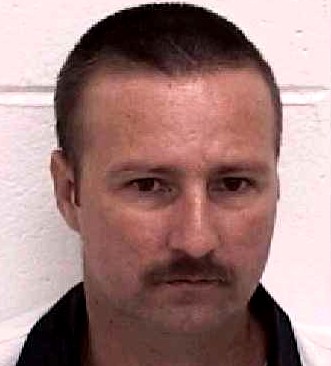
Jimmy Meders
Murderer Russell Ellwood
Murderer · USA · 1991
Russell Ellwood was a former taxi driver. Authorities suspected him of killing…
20 victims
Russell Ellwood
Murderer · USA · 1991
Russell Ellwood was a former taxi driver. Authorities suspected him of killing…
20 victims
 Robert Martines Perez
Murderer · USA · 1994
Name: Robert Martines Perez · Other name used in proceedings: Robert Martinez P…
15 victims
Robert Martines Perez
Murderer · USA · 1994
Name: Robert Martines Perez · Other name used in proceedings: Robert Martinez P…
15 victims
 Billy Frank Vickers
Murderer · USA · 1993
Billy Frank Vickers Vickers was executed by lethal injection in Texas on Januar…
14 victims
Billy Frank Vickers
Murderer · USA · 1993
Billy Frank Vickers Vickers was executed by lethal injection in Texas on Januar…
14 victims
 William Woratzeck
Murderer · USA · 1980
Defendant: William Lyle WORATZECK Victim: Linda Louise Leslie · March 6, 1980 —…
1 victim
William Woratzeck
Murderer · USA · 1980
Defendant: William Lyle WORATZECK Victim: Linda Louise Leslie · March 6, 1980 —…
1 victim
 Troisville Sykes
Homicide · USA · 1883
Troisville Sykes. Kate Townsend was Troisville Sykes’s mistress. She owned a ho…
1 victim
Troisville Sykes
Homicide · USA · 1883
Troisville Sykes. Kate Townsend was Troisville Sykes’s mistress. She owned a ho…
1 victim
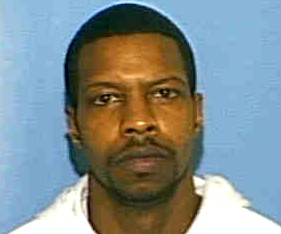 Adremy Dennis
Murderer · USA · 1994
Adremy Dennis was convicted in Summit County, Ohio, of aggravated murder with d…
1 victim
Adremy Dennis
Murderer · USA · 1994
Adremy Dennis was convicted in Summit County, Ohio, of aggravated murder with d…
1 victim
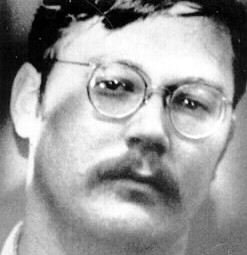 Edmund Kemper
Serial killer · USA · 1964
Edmund Emil Kemper III was born December 18, 1948. He was also known as “The Co…
10 victims
Edmund Kemper
Serial killer · USA · 1964
Edmund Emil Kemper III was born December 18, 1948. He was also known as “The Co…
10 victims
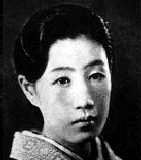 Sada Abe
Murderer · Japan · 1936
Sada Abe ( 阿部 定 , Abe Sada ) was a Japanese woman who erotically asphyxiated he…
1 victim
Sada Abe
Murderer · Japan · 1936
Sada Abe ( 阿部 定 , Abe Sada ) was a Japanese woman who erotically asphyxiated he…
1 victim
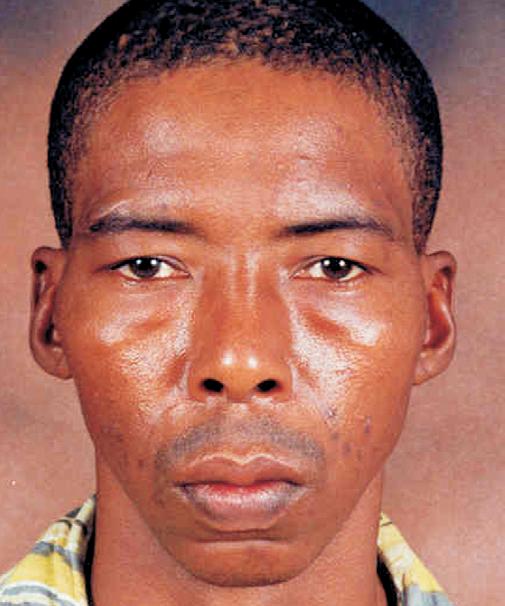 Samuel Sidyno
Spree killer · South Africa · 1998
Samuel Sidyno was a serial killer whose murders involved the Pretoria Zoo area.…
7 victims
Samuel Sidyno
Spree killer · South Africa · 1998
Samuel Sidyno was a serial killer whose murders involved the Pretoria Zoo area.…
7 victims
- Gender
- male
- Country
- USA
- Location
- Glynn County, Georgia, USA
- Date of birth
- 1961
- Age at first offence
- 36
- Characteristics
- robbery
- Victim profile
- Don Anderson, 47 (convenience store clerk)
- Method of murder
- Shooting
- Date(s) of murder
- October 14, 1997
- Years active
- 1997
- Date of arrest
- Next day
- Status
-
Sentenced to death
Sentenced to death on May 5, 1989
Case record
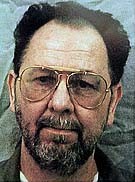
Jimmy Fletcher Meders, 36, was convicted in Glynn County of malice murder and armed robbery and was sentenced to death.
The offence
The murder occurred early in the morning of October 14, 1987. Don Anderson, 47, was shot twice as he lay on the floor after being robbed of $38. The killing occurred after Meders entered a convenience store with Greg Creel.
Meders spent the afternoon and evening of October 13, 1987, in the company of three other men: his employer, Randy Harris; Harris’ cousin Bill Arnold; and a friend of the latter, Greg Creel. The four began drinking that afternoon and continued drinking into the evening. Harris eventually parted company with the other three to entertain a teenage girl in a motel room.
Meders and the other two borrowed Harris’ car and spent a few hours bar-hopping. At 2:30 a.m., Creel stated he was hungry. They stopped at a convenience store. Arnold stayed in the car, while Creel and Meders entered the store. Creel went to the back of the store to warm a package of sausage-biscuits in the microwave oven. Meders made a small purchase.
When the cashier opened the register, Meders shot the victim in the chest with a .38 caliber revolver. The victim hit the wall and fell to the floor. Meders then shot him again, in the head.
Creel ran out of the store to the car when the first shot was fired, leaving his food behind. After removing the money from the cash drawer (and triggering a silent alarm in the process), Meders joined the other two before they could leave without him.
They drove to a trailer park, where Arnold and Creel got out. After offering the other two a share of the take—which they declined—Meders left them and drove to Harris’ motel room. He woke Harris and told him he had “just blowed a man’s head off over thirty-eight dollars.”
Investigation and evidence
Some of the “bait” money from the store, whose serial numbers had been recorded, was found in Meders’ wallet after he was arrested. Seventeen food stamps were found in the pocket of his coat. The murder weapon was found under the mattress of his waterbed.
Arrest and pre-trial matters
Meders was arrested later on October 14, 1987. He was indicted on December 16, 1987.
Before trial, Meders’ attorney filed a motion seeking funds for an examination by a “private psychiatrist, psychologist or other medical expert to determine his sanity at the time of the alleged offenses with which he is charged and his ability to aid his attorneys in his defense.”
At a hearing on this motion, Meders testified personally and contended he had a nervous breakdown on November 12, 1988 (slightly more than a year after his arrest). He saw a doctor who prescribed medicine for depression and anxiety. He testified that he was worried about his wife and children and his personal life, and was concerned about “the circumstances of what I am facing . . . I don’t know what is going to happen in this case.”
He understood that the purpose of the hearing was to see if the judge was going to “grant a private or a state physician.”
On cross-examination, he testified that he knew the difference between right and wrong and that he had no problem communicating with his attorneys. His cross-examination ended as follows:
Q. (By the State): . . . I want to make sure I understand the position you are taking. The fact that you have been over to Mental Health and talked to those folks, that has helped you some, is that right, would that be fair to say?
A. Really the only way it has helped me is he give me a medication to make me sleep.
Q. Okay, and what you are asking the court to do is appoint a psychiatrist to treat you in terms of the depression you are having and the anxiety and you are asking for a private one rather than a state-sponsored one? A. Yes, sir.
Q. Okay, . . . you are not incompetent, are you?
A. No, sir, not really.
The defendant was the only witness.
Arguing that psychiatrists employed by the state were unfit, Meders’ attorney asked the court to authorize a “private psychiatrist to conduct a diagnostic examination of the defendant.” The court declined to award funds for a private psychiatrist but authorized an evaluation by “one of the psychiatrists on the state staff.”
Nothing further was raised on this issue until after the jury was selected. During a Unified Appeal Procedure hearing before any evidence was presented, Meders’ attorney reminded the court of his motion for psychiatric examination and told the court he had not yet heard from the psychiatrist. Both the court and the state had received a copy of the psychiatrist’s report. The court asked the defendant’s attorney if he would “like to take a minute to read that right now?”
The defendant’s attorney responded:
Mr. Davis [for the defendant]: Well, I would just like to ask Mr. Johnson, it would serve, serve my purpose to just, if he would state in his place, does the copy state, or does the report, rather, state that the defendant is compos mentis, that he is, that he is able to stand trial?
Mr. Johnson [for the state] stated:
As I understand the report, Your Honor, it does say quite a bit, but boiling it down to the, the two main points, it does say that he is competent to stand trial at this time and it appears that he was competent at the time the act was, that the act occurred. So, but I will, we have gone to have that xeroxed right now, and we will give it to Mr. Davis before we leave right now.
Mr. Davis responded:
Well, that serves my purpose, Your Honor.
The foregoing was all the record showed about the contents of the report.
Meders conceded he did not file a plea of incompetence to stand trial.
Meders also filed a motion to quash the indictment. On March 1, 1989, judges of the Brunswick Judicial Circuit approved and published a rule of court establishing a plan for the selection of jurors by electronic means pursuant to OCGA 15-12-42. The plan established procedures to compile lists of grand and traverse jurors, update the lists, and draw grand jurors and traverse jury venires. The Data Processing Center of Glynn County was designated as a “necessary component” of the plan and was given responsibility for storing the lists on “magnetic computer tape,” for programming the computer to randomly select names from the lists when called upon by a judge of the superior court, and for furnishing printouts of the lists and of the jurors selected from those lists.
Meders alleged that the indictment was null and void because the grand jury returned it was not selected according to the 1981 rule of court. Evidence on the motion showed that after February 1987, the Data Processing Center was relieved of its responsibilities for jury data storage and retrieval (for reasons not appearing on the record), and its computer tapes were given to the clerk of superior court, with the data programmed into a UNISYS computer system set up in the clerk’s office.
The source stated that, under the original system, selection of grand jurors and traverse jury venires was completely random, while under the new system selection was random except that the UNISYS system was programmed to select grand juries and traverse jury venires with the same racial composition as the lists from which the selection occurred.
Trial and trial issues
The appellant, Jimmy Fletcher Meders, was convicted in Glynn County of malice murder and armed robbery, and was sentenced to death.
The source included multiple appellate enumerations of error regarding pre-trial and trial procedure:
- The trial court declined to conduct a further hearing on Meders’ competence to stand trial sua sponte. The defendant was evaluated and the evidence showed he understood the nature and object of the proceedings against him and was capable of assisting his attorney with his defense.
- The trial court refused to provide funds for an independent psychiatrist. The court reasoned that the state staff evaluation found him to have been sane at the time of the crime and competent to stand trial and nothing before the court reasonably indicated that his sanity would be a significant factor at trial.
- The trial court admitted the contents of Meders’ wallet in evidence without objection.
- The defendant did not object at trial to the prosecutor’s closing argument, and the appellate review found the prosecutor’s arguments did not result in the death sentence being imposed under the influence of passion, prejudice, or other arbitrary factor.
- A Unified Appeal Procedure conference addressed defense witnesses. Meders stated that defense witnesses who could have corroborated his testimony could not be located because he had only four days notice of the trial. The court gave him an opportunity to perfect the record.
- There was no error in admission of material and relevant photographs of the victim.
- There was no error in admission of the defendant’s pretrial statements.
- Three grand jurors allegedly knew the defendant and did not like him provided no ground for reversal.
- The Unified Appeal Procedure was not unconstitutional on its face or as applied.
- The appellate court addressed questions raised by Meders’ attorneys about effectiveness of trial counsel and remanded for further proceedings on effectiveness. The source stated that Meders asked for a remand on competence to stand trial, and that the appellate brief injected concern about effectiveness.
Sentencing
Meders was sentenced to death in April 1989.
The current status stated that Meders was sentenced to death on May 5, 1989.
Appeals
The case was named MEDERS v. THE STATE.
The source included a Supreme Court of Georgia reference: Supreme Court of Georgia, February 28, 1990; Docket number S89P0175.
The source also described that Meders’ state appeal challenging the fairness of his trial had been pending since April 1993.
The source stated that the appellate court granted the state’s request for a remand to give Meders an opportunity to litigate the effectiveness issue and that, if necessary, counsel would be appointed for the defendant on remand.
Outcome
Meders remained under a sentence of death.
Other details
The record stated that Meders spent the afternoon and evening of October 13, 1987, drinking with Randy Harris, Bill Arnold, and Greg Creel. Harris departed with a teenage girl to entertain her in a motel room. Meders and the other two borrowed Harris’ car and bar-hopped. At 2:30 a.m., they stopped at a convenience store, Arnold stayed in the car, and Creel and Meders entered.
The source stated that Meders’ current attorneys claimed the other two men did the robbery and killing while a drunken Meders was in the back of the store. Police said two men with Meders were not involved in the killing and were not prosecuted.
The source stated that all three men had prior felony convictions.
The source also included procedural and docket notes: the trial began on April 3, 1989 and ended on April 7, 1989. A motion for new trial was filed on April 24, 1989, heard on May 30, 1989, and denied June 8, 1989. The record was docketed in this court on June 22, 1989. After extensions of time were granted, the case was argued orally on October 10, 1989.
Timeline
- October 13, 1987 — Meders spent the afternoon and evening drinking with Randy Harris, Bill Arnold, and Greg Creel.
- 2:30 a.m., October 14, 1987 — They stopped at a convenience store; Creel warmed sausage-biscuits; Meders made a small purchase before the cashier opened the register.
- Early morning, October 14, 1987 — Don Anderson was shot in the chest and head during the robbery at the convenience store.
- October 14, 1987 — Meders was arrested later that day.
- December 16, 1987 — Meders was indicted.
- March 1, 1989 — Meders filed a motion to quash the indictment.
- April 3, 1989 — The trial began.
- April 7, 1989 — The trial ended.
- April 24, 1989 — A motion for new trial was filed.
- May 30, 1989 — The motion for new trial was heard.
- June 8, 1989 — The motion for new trial was denied.
- June 22, 1989 — The record was docketed in the Supreme Court of Georgia.
- October 10, 1989 — The case was argued orally.
- February 28, 1990 — MEDERS v. THE STATE was decided by the Supreme Court of Georgia.
- May 5, 1989 — Meders was sentenced to death.
Spotted an error, or have more information about this case?