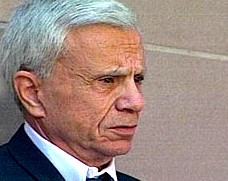
Robert Blake
Murderer? Richard Allen Williams
Murderer? · USA · 1992
Boone County Prosecutor Kevin Crane dismissed the charges in August 2003 after…
10 victims
Richard Allen Williams
Murderer? · USA · 1992
Boone County Prosecutor Kevin Crane dismissed the charges in August 2003 after…
10 victims
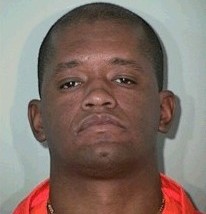 Andre Minnitt
Murderer? · USA · 1992
Andre Minnitt was convicted of crimes connected to the El Grande Market slaying…
3 victims
Andre Minnitt
Murderer? · USA · 1992
Andre Minnitt was convicted of crimes connected to the El Grande Market slaying…
3 victims
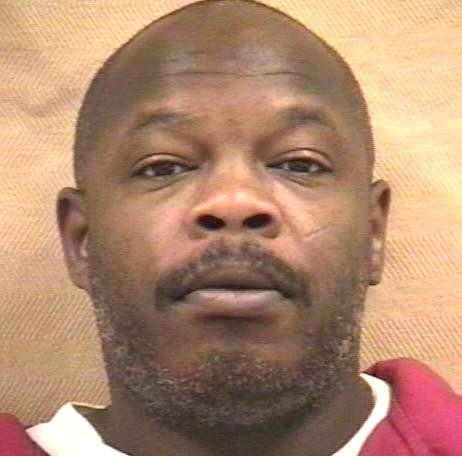 Glen Edward Chapman
Murderer? · USA · 1992
Defendant: Glen Edward Chapman Legal case references: In the Supreme Court of N…
2 victims
Glen Edward Chapman
Murderer? · USA · 1992
Defendant: Glen Edward Chapman Legal case references: In the Supreme Court of N…
2 victims
 James Campbell
Murderer? · USA · 1997
September 1997 — James Campbell’s first trial ended with a hung jury. · January…
2 victims
James Campbell
Murderer? · USA · 1997
September 1997 — James Campbell’s first trial ended with a hung jury. · January…
2 victims
 Jerry Hobbs
Murderer? · USA · 2005
Jerry Hobbs III was the father of Laura Hobbs, an 8-year-old girl. He was also…
2 victims
Jerry Hobbs
Murderer? · USA · 2005
Jerry Hobbs III was the father of Laura Hobbs, an 8-year-old girl. He was also…
2 victims
 Charles Mayhew
Murderer? · USA · 1998
Charles “Chuck” Mayhew Jr. (age 49; son of Charles “Charlie” Mayhew Sr.) · Char…
1 victim
Charles Mayhew
Murderer? · USA · 1998
Charles “Chuck” Mayhew Jr. (age 49; son of Charles “Charlie” Mayhew Sr.) · Char…
1 victim
 Emanuel Johnson
Murderer · USA · 1988
Emanuel Johnson was convicted of First-Degree Murder and was sentenced to death…
2 victims
Emanuel Johnson
Murderer · USA · 1988
Emanuel Johnson was convicted of First-Degree Murder and was sentenced to death…
2 victims
 Robert Wayne Vickers
Murderer · USA · 1978
Robert Wayne Vickers Robert Wayne Vickers was executed by lethal injection in A…
2 victims
Robert Wayne Vickers
Murderer · USA · 1978
Robert Wayne Vickers Robert Wayne Vickers was executed by lethal injection in A…
2 victims
 Joshua Daniel Bishop
Murderer · USA · 1994
Joshua Daniel Bishop was 22 years old when he was sentenced to death in Baldwin…
1 victim
Joshua Daniel Bishop
Murderer · USA · 1994
Joshua Daniel Bishop was 22 years old when he was sentenced to death in Baldwin…
1 victim
 Deryl Dedmon
Murderer · USA · 2011
Deryl Dedmon led a group of white teenagers who assaulted and killed James Crai…
1 victim
Deryl Dedmon
Murderer · USA · 2011
Deryl Dedmon led a group of white teenagers who assaulted and killed James Crai…
1 victim
 Aaron Foust
Murderer · USA · 1997
Aaron Christopher Foust (TDCJ #999268) was convicted for the capital offense of…
1 victim
Aaron Foust
Murderer · USA · 1997
Aaron Christopher Foust (TDCJ #999268) was convicted for the capital offense of…
1 victim
- Gender
- male
- Country
- USA
- Location
- Los Angeles, Los Angeles County, California, USA
- Date of birth
- September 18, 1933
- Age at first offence
- 68
- Characteristics
- —
- Victim profile
- Bonny Lee Bakley, 44 (his wife of six months and the mother of his 4-year-old daughter)
- Method of murder
- Shooting (Walther P-38 9 mm pistol)
- Date(s) of murder
- May 4, 2001
- Years active
- 2001
- Date of arrest
- April 18, 2002
- Status
-
Acquitted / overturned
Acquitted by a jury on March 16, 2005; civil jury found Robert Blake liable for the wrongful death of his wife and ordered him to pay US$30 million in damages to her children on November 18, 2005; appeals court upheld the civil case verdict on April 26, 2008 but cut Blake's penalty assessment in half.
Case identification
Robert Blake, an American actor most famous for starring in the U.S. television series Baretta, was acquitted by a jury on March 16, 2005 of the murder of Bonny Lee Bakley, his wife of six months and the mother of his 4-year-old daughter. A civil jury later found Blake liable for the wrongful death of Bakley and ordered him to pay US$30 million in damages to her children.
Timeline
- May 4, 2001 — Bonny Lee Bakley was shot in the head while she sat in Blake's car on a residential street near Vitello's Restaurant in Studio City; Blake later claimed he returned briefly to the restaurant to retrieve a revolver he had accidentally left behind.
- November 7, 2001 — An episode of the TV crime show Law & Order, titled Formerly Famous, aired on NBC, inspired by Blake’s story.
- April 18, 2002 — Robert Blake was arrested and charged in connection with the murder of his wife; his longtime bodyguard Earle Caldwell was also arrested and charged with conspiracy in connection with the murder.
- April 22, 2002 — Blake was charged with one count of murder with special circumstances, eligible for the death penalty, and with two counts of solicitation of murder and one count of murder conspiracy.
- April 25, 2002 — The Los Angeles District Attorney’s office announced it would not seek the death penalty against Blake if convicted; prosecutors would seek life in prison without parole.
- April 27, 2002 — After Blake posted US$1 million bail, Caldwell was released.
- May 1, 2002 — A judge denied bail for Blake.
- March 13, 2003 — Blake was granted bail set at US$1.5 million and allowed to go free to await trial.
- March 16, 2005 — A jury found Blake not guilty of the murder of Bonny Lee Bakley and of one of two counts of soliciting a former stuntman to murder her.
- March 17, 2005 — Another solicitation count was dropped after the jury was deadlocked 11-1 in favor of acquittal.
- November 18, 2005 — A civil jury found Blake liable for the wrongful death of his wife and ordered him to pay US$30 million in damages to her children.
- December 14, 2005 — The wrongful-death award was reported as ordered at US$30 million.
- February 3, 2006 — Blake filed for bankruptcy.
- February 28, 2007 — M. Gerald Schwartzbach filed an appeal brief in the civil case.
- April 26, 2008 — An appeals court upheld the civil case verdict but cut Blake's penalty assessment in half.
- April 9, 2010 — The state of California filed a tax lien against Blake for $1,110,878 with the Los Angeles County recorder of Deeds for unpaid back taxes.
The offence
On May 4, 2001, Bonny Lee Bakley was shot in the head while she waited in Blake’s car on a residential street near Vitello’s Restaurant in Studio City, after the couple had dined. Blake claimed he had returned briefly to the restaurant to retrieve a revolver he had accidentally left behind and returned to find her dead.
Blake’s licensed revolver was not the murder weapon. The gun used in the killing was a World War II-era Walther P-38, which was found in a Dumpster near the crime scene. Police were unable to trace the Walther P-38 to Blake.
Blake maintained that someone else killed Bakley when he briefly left her alone. Detectives were unable to recover direct evidence to link Blake to Bakley’s murder, and no prints, no witnesses, and no confessions were recovered that directly connected him.
The defence presented that Bakley’s victims could have pulled the trigger. Jurors also rejected a theory that Blake was so desperate to retain custody of the couple’s infant daughter, Rosie, that he pulled the trigger himself when he could not convince the two stuntmen to kill Bakley.
Investigation
The case involved a dire lack of physical evidence linking Blake to Bakley’s murder, including DNA, prints, and gunshot residue. In the criminal trial, some jurors later said they did not know if Blake was involved but could not conclude beyond a reasonable doubt that he pulled the trigger.
Detectives were unable to recover any direct evidence to link Blake to Bakley’s murder; the district attorney’s office later said the jury disagreed with the prosecution’s view of the evidence.
The final break in the case came when a retired stuntman, Ronald “Duffy” Hambleton, agreed to testify against Blake. Hambleton alleged that Blake tried to hire him to kill Bonnie Lee Bakley.
Another retired stuntman, Gary McLarty, also came forward with a similar story. Hambleton’s motives were questioned during the criminal trial, including testimony about a history of drug-influenced delusional behavior.
During civil-appeal-related allegations, an LAPD Internal Affairs investigation was reported to have been opened regarding the lead detective in the original murder case, Detective Ron Ito. The complaint alleged that the detective failed to investigate leads that persons other than Robert Blake could have been responsible for the murder of Bonnie Lee Bakley. The complaint was filed by M. Gerald Schwartzbach and civil trial witness Brian Allan Fiebelkorn, and Fiebelkorn testified that associates of Christian Brando may have been responsible for the murder.
Arrest
Robert Blake was arrested on April 18, 2002 in connection with the murder of his wife, Bonny Lee Bakley. Earle Caldwell, Blake’s longtime bodyguard, was also arrested and charged with conspiracy in connection with the murder.
Blake’s arrest came almost one year after the May 4, 2001 murder. Blake posted US$1 million bail, and Caldwell was released on April 27, 2002; a judge denied bail for Blake on May 1, 2002.
Trial
Criminal trial charges and pleas
On April 22, Blake was charged with:
- one count of murder with special circumstances, eligible for the death penalty,
- two counts of solicitation of murder,
- one count of murder conspiracy.
Blake pled not guilty to all charges. Caldwell was charged with a single count of murder conspiracy and also pled not guilty.
Developments during trial
The prosecution argued that Blake’s alibi was too loose, with time to spare for getting rid of evidence. A retired stuntman, Ronald “Duffy” Hambleton, testified that Blake asked him to “snuff” his wife.
The jury was later reported to have asked to rehear testimony from three witnesses who saw Blake within 10 to 15 minutes of Bakley’s shooting death. The jury also requested to rehear testimony from Hambleton.
Hambleton’s testimony was described as central to the state’s case, but the jury found it unconvincing. Hambleton said Blake asked him to kill his wife, and the jury heard testimony about Hambleton’s history of drug-influenced delusional behavior.
Juror Thomas Nicholson called Hambleton’s testimony unreliable and described it as “prolific” lying. Blake’s defence also had expert testimony from Ronald Siegel about the long-term effects of methamphetamine and cocaine use, which the foreman described as compelling.
The jury was split 11-1 in favor of acquittal on the undecided solicitation count. After a sidebar, the judge dismissed the count in the interest of justice.
A second solicitation count involved claims by another stuntman, Gary “Whiz Kid” McLarty, who also said Blake spoke with him about killing his wife. Nicholson said McLarty’s testimony was “so disjointed, so irregular” that it “had no bearing on anything.” McLarty’s son and wife testified that years of cocaine abuse made McLarty paranoid and delusional.
Blake did not take the stand in his defense during the criminal trial.
Outcome at trial
On March 16, 2005, the jury found Blake not guilty of the murder of Bonny Lee Bakley and not guilty of one of the two solicitation counts. The other solicitation count was dropped after the jury was deadlocked 11-1 in favor of acquittal, and the judge dismissed it in the interest of justice.
District Attorney Steve Cooley criticized the acquittal, calling Blake a “miserable human being” and saying the jurors were “incredibly stupid.” Blake’s defence team and members of the jury responded that the prosecution had failed to prove its case. Trial analysts agreed with the jury’s verdict.
Sentencing
No criminal sentence was imposed because the jury acquitted Blake on March 16, 2005, and the remaining solicitation count was dismissed after the jury was deadlocked in favor of acquittal.
Appeals
No criminal appeal outcome appeared in the provided material.
In the civil case:
- An appeals court upheld the civil case verdict on April 26, 2008 and cut Blake’s penalty assessment in half.
- Blake’s attorneys protested that jurors improperly discussed the Michael Jackson and O.J. Simpson verdicts during deliberations, and the appeals judge ruled that such discussions were not improper.
Outcome
Criminal outcome (March 16, 2005)
- The jury acquitted Robert Blake of the murder of Bonny Lee Bakley.
- The jury acquitted Blake of one of two counts of soliciting a former stuntman to murder Bakley.
- The other solicitation count was dropped after the jury was deadlocked 11-1 in favor of acquittal.
Civil outcome (November 18, 2005)
Bakley’s children filed a civil wrongful-death suit against Blake. On November 18, 2005, a civil jury found Blake liable for the wrongful death of his wife and ordered him to pay US$30 million in damages to her children.
In the civil suit, the burden of proof was described as lower than in the criminal trial. The civil verdict was reached after deliberations spanning 28 hours over eight days, and nine votes were needed for a verdict. Ten of the 12 jurors agreed Blake was liable, and nine of the 12 agreed to the US$30 million sum. One juror said the panel did not know whether Blake was the triggerman or not, stating, “We’re not sure,” and “We just don’t know.”
The civil verdict stood in contrast to the criminal acquittal, where a panel of 12 jurors unanimously found Blake not guilty of Bakley’s murder.
Civil jurors cited a lack of direct evidence and credibility issues with the prosecution’s key witnesses during criminal trial deliberations, and the jury in the criminal case described lack of evidence including no gunshot residue and no blood on clothing.
Blake’s bodyguard Earle Caldwell was not found liable in the civil case by a vote of 10 to two, after the civil suit asserted Caldwell was responsible through a conspiracy with Blake.
Aftermath
Following the criminal acquittal, Blake walked out of court as a free man and borrowed a pair of cutters from a cameraman to slice off the electronic monitor strapped around his right ankle. He handed it to his attorney, who held it up in a victory gesture. Blake said, “It don’t feel bad,” when asked how freedom felt.
Blake broke down when hearing the verdict, sighed and wept heavily, hugged his defence lawyer, and sat trembling at the defence table before being allowed to leave the courtroom. Blake had been under house arrest throughout the 10-week trial and did not take the stand in his defence.
Bonny Lee Bakley’s daughter, Holly Gawron, broke down in tears when the verdict was read and continued crying as the courtroom was cleared.
After the civil verdict, Blake appeared emotionless as the finding was read, and his attorney Peter Ezzell shook his head; both men left the courthouse without commenting.
The wrongful-death suit was filed in April 2002 by Bakley’s four surviving children. One of the children’s attorneys, Eric Dubin, said, “These kids lost their mom, and this got overlooked over the years. This was a real family. This was a real person.” Dubin also said that Blake was “not O.J.” Simpson, and quoted, “I have every reason to believe [Robert Blake] will make good on this judgment.”
A quote attributed to Johnnie Cochran was included in Blake’s response outside the courthouse, stating: “You’re innocent until proven broke.”
Blake later maintained a low profile and expressed that he might return to acting to help himself financially. He filed for bankruptcy on February 3, 2006 with debts of $3,000,000 for unpaid legal fees and state and federal taxes after the criminal and civil trials.
Blake had a tax lien filed against him by the state of California on April 9, 2010 for $1,110,878 with the Los Angeles County recorder of Deeds for unpaid back taxes.
People
Robert Blake (defendant)
Robert Blake (born September 18, 1933) was an American actor most famous for starring in the U.S. television series Baretta. His stage name followed an acting childhood name “Mickey Gubitosi,” and his birth name was Michael James Vincenzo Gubitosi.
He was born in Nutley, New Jersey, to Giacomo Gubitosi (1906-1956) and Elizabeth Cafone (b. 1910). His brother was James Gubitosi (1930-1995) and his sister Giovanna Gubitosi. His father was born in Italy and arrived in the United States in 1907. His mother was an Italian-American born in New Jersey. His parents married in 1929.
His family included work as a die setter for a can manufacturer in 1930 (James), and the couple began a song-and-dance act. In 1936, the three children began performing billed as “The Three Little Hillbillies.” They moved to Los Angeles, California, in 1938 to work as movie extras.
Blake’s acting career as a child included appearing as Toto in the MGM movie Bridal Suite (1939) starring Annabella and Robert Young. He appeared in MGM’s Our Gang short subjects under his real name, replacing Eugene “Porky” Lee, appearing in 40 shorts between 1939 and 1944 and becoming the series’ final lead character. MGM discontinued Our Gang in 1944, releasing the final short in the series, Dancing Romeo, on April 29.
In 1942, he acquired the stage name Bobby Blake, and his character in the series was renamed “Mickey Blake.” He played “Little Beaver” in the Red Ryder Western series at Republic Pictures in twenty-three movies until 1947.
He had roles in The Big Noise (1944), Humoresque (1946), and The Treasure of the Sierra Madre (1948). Blake described an unhappy childhood and said he was abused by his alcoholic father.
Blake’s school-related history included he entered public school at age ten and could not understand why other children were hostile to him; he had fights leading to expulsion. At fourteen he ran away from home, after which he had reportedly difficult years.
As an adult actor, he entered the army in 1950. When he returned to Southern California, he entered Jeff Corey’s acting class and began turning his life around. In 1956 he was billed as Robert Blake for the first time and in 1959 turned down the role of Little Joe Cartwright in Bonanza.
He had starring roles and television work including The Purple Gang (1960), In Cold Blood (1967) as Perry Smith, Tell Them Willie Boy Is Here (1969), and Electra Glide in Blue (1973). He had roles including a part as John List in Judgment Day: The John List Story (1993). He played Tony Baretta in Baretta (1975 to 1978), and he received an Emmy Award. Baretta trademarks included a pet cockatoo, “Don’t do the crime if you can’t do the time,” and a theme song “Keep Your Eye on the Sparrow” written by Dave Grusin and Morgan Ames and performed by Sammy Davis, Jr.
He also starred in the miniseries Blood Feud (1983) as Jimmy Hoffa. In Money Train (1995) and Lost Highway (1997) he had character parts. He starred in another television series called Hell Town in which he played a priest working in a tough neighbourhood.
Blake’s biography included that he had a short stormy relationship with Bonny Lee Bakley beginning in 1999 with a one-night stand that developed into a bitter love triangle with Christian Brando when Bakley tricked Blake into getting her pregnant.
Sondra Kerr (spouse)
He and actress Sondra Kerr were married in 1962 and divorced in 1983. They had two children: actor Noah Blake (born 1965) and Delinah Blake (born 1966).
Bonny Lee Bakley (victim)
Bonny Lee Bakley was a 44-year-old mother of four. She was described as a successful mail-order pornographer who had conned several men. In 1999 she met Blake; she had a history of exploiting older men for money, especially celebrities. She was seeing Christian Brando during her relationship with Blake.
Bakley became pregnant and told Brando and Blake they were the father. Initially, Bakley named the baby “Christian Shannon Brando” and stated Brando was the father. Bakley wrote letters describing her motives to Blake. Robert Blake ordered her to take a DNA test to prove the paternity.
Blake and Bakley married on November 19, 2000 after DNA tests proved he was the biological father. It was Blake’s second marriage and Bakley’s tenth. Although they were married, the relationship was described as unconventional, including that Bakley lived in a small guest house behind her husband’s house in the Studio City area of the San Fernando Valley.
Bakley was taken to an Italian dinner at Vitello’s Restaurant on Tujunga Avenue in Studio City on May 4, 2001. Afterward, she was murdered by a gunshot to the head while sitting in the car, which was parked on a side street around the corner from the restaurant.
Holly Gawron (Bakley’s daughter)
Holly Gawron was Bonny Lee Bakley’s daughter. She broke down in tears when the verdict was read in the criminal case and did not stop crying even as the courtroom was cleared.
Earle Caldwell (bodyguard; civil defendant)
Earle Caldwell was Blake’s longtime bodyguard. Caldwell was accused of conspiring with Blake to commit the murder and was charged with a single count of murder conspiracy. In the civil suit, the jury found Caldwell not liable by a vote of 10 to two.
Other people and quotations
Ronald “Duffy” Hambleton (stuntman witness)
Ronald “Duffy” Hambleton was a retired stuntman who claimed Blake asked him to “snuff” his wife and who testified against Blake. Jurors heard testimony about Hambleton’s history of drug-influenced delusional behavior, and the foreman dismissed his testimony entirely, calling him a “prolific liar.”
Juror Thomas Nicholson said: “You couldn't put the gun in his hand.” Nicholson said: “There was no [gun shot residue], no blood on the clothing — there was nothing.” Nicholson said: “I wouldn't trust a drug addict.” Nicholson also dismissed Hambleton’s testimony and said he was a “prolific liar.”
Ronald Siegel (defence expert)
An expert named Ronald Siegel testified about the long-term effects of methamphetamine and cocaine use. The foreman described Siegel as one of the most compelling witnesses to take the stand.
Thomas Nicholson (juror foreman)
Juror foreman Thomas Nicholson called the case “flimsy” and “disjointed.” Nicholson also said: “You couldn't put the gun in his hand.” and “There was no [gun shot residue], no blood on the clothing — there was nothing.” He called Hambleton a “prolific liar,” said, “I wouldn't trust a drug addict,” and said McLarty’s testimony had “no bearing on anything.”
Nicholson said: “so disjointed, so irregular” that it “had no bearing on anything.”
Lori Moore (juror)
Juror Lori Moore said: “We just didn't have enough evidence to say whether or not he did it.”
Cecilia Maldonado (juror)
Juror No. 7, Cecilia Maldonado, said: “Whether or not he's a celebrity ... had nothing to do with it,” when addressing claims about Blake’s stardom.
Steve Cooley (district attorney)
District Attorney Steve Cooley criticized the acquittal, calling Blake a “miserable human being” and describing the jurors as “incredibly stupid.”
Peter Ezzell (defence attorney)
Peter Ezzell was Blake’s attorney in the criminal case. After the civil verdict was read, Ezzell shook his head and both men left the courthouse without commenting.
M. Gerald Schwartzbach (attorney)
M. Gerald Schwartzbach was described as Blake’s attorney in the criminal trial and later filed an appeal brief in the civil case. He filed the complaint alleging Detective Ron Ito failed to investigate leads that others could have been responsible for the murder.
Brian Allan Fiebelkorn (civil trial witness)
Brian Allan Fiebelkorn was a civil trial witness who testified that associates of Christian Brando may have been responsible for the murder of Ms. Bakley.
Detective Ron Ito (lead detective; internal affairs investigation)
Detective Ron Ito was identified as the lead detective in the original murder case in allegations related to an LAPD Internal Affairs investigation.
Gary “Whiz Kid” McLarty (stuntman witness)
Gary “Whiz Kid” McLarty was a retired stuntman who claimed Blake spoke with him about killing Bakley. Nicholson said McLarty’s testimony was “so disjointed, so irregular” and “had no bearing on anything.”
Christian Brando (person connected to paternity claim and theory)
Christian Brando was referenced as the son of actor Marlon Brando and was involved in the paternity dispute. The defence theory suggested Mark Jones, a homeless pal of Christian Brando’s, may have killed Bakley to impress his famous friend.
Mark Jones (homeless pal; alleged alternative perpetrator)
Mark Jones was described as a homeless pal of Christian Brando’s. The defence suggested Jones may have killed Bakley to impress his famous friend. Jones committed suicide in the months after Bakley’s death.
Noah Blake and Delinah Blake (children)
Noah Blake was born in 1965 and Delinah Blake was born in 1966.
Rosie (infant daughter; later adopted)
Rosie was the couple’s infant daughter. She was later legally adopted by Blake’s adult daughter from a previous marriage. Rosie legally stood to gain $7.5 million from the US$30 million civil judgment, to be divided among Bakley’s four children.
Earle Caldwell’s legal status in criminal case
Criminal charges initially filed against Caldwell were dropped, and a criminal charge was not pursued after.
Family relationships and personal life
Blake met Bonny Lee Bakley in 1999. Bakley was seeing Christian Brando during her relationship with Blake and later became pregnant. Blake and Bakley’s relationship involved a love triangle and a bitter dispute over paternity, followed by DNA testing that confirmed Blake’s parentage. They married on November 19, 2000, and Bakley lived in a small guest house behind her husband’s house in the Studio City area of the San Fernando Valley.
Civil suit details
Bakley’s four surviving children filed a wrongful death suit in April 2002 seeking damages for the loss of their mother’s love and companionship. None of the children were in court Friday for the verdict.
The civil jury deliberated and reached a decision that Blake likely caused Bakley’s death by killing her himself or getting someone else to do it. One juror told reporters: “No matter how bad a person she may have been, you don't have the right to take somebody's life,” and also asked: “How do you put a price on somebody's love?”
In the civil proceeding, Blake gave seven days of testimony, and the jury foreman later described Blake’s testimony on the stand as a “worst enemy” to him. The jury also said Blake’s “unprofessional” composure on the stand and inconsistent recollections about his actions on the night of the murder hurt his credibility.
Blake’s civil finding stood even though jurors in the criminal trial had said they could not conclude beyond a reasonable doubt that he pulled the trigger.
Blake’s attorney Peter Ezzell shook his head after the civil finding was read. Eric Dubin remarked, “It's a good day for justice,” after the civil verdict.
Methods, evidence, and credibility points mentioned during deliberations
Jurors described the case as lacking direct evidence, including no gunshot residue and no blood on clothing. They also cited credibility issues with prosecution key witnesses, including Ronald “Duffy” Hambleton, whose testimony was dismissed as “prolific” lying, and Gary “Whiz Kid” McLarty, whose testimony was described as “so disjointed, so irregular” and having “no bearing on anything.”
Jurors also considered that no prints, no witnesses, and no confessions were found that directly connected Blake to the murder. Jurors later said they could not place a gun in his hand, and they referenced the absence of [gun shot residue] and blood.
Jurors also heard testimony from three witnesses who saw Blake within 10 to 15 minutes of Bakley’s shooting death. Jurors also requested this testimony to be replayed during deliberations.
Spotted an error, or have more information about this case?