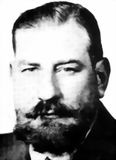
John Donald Merrett
Homicide - Murderer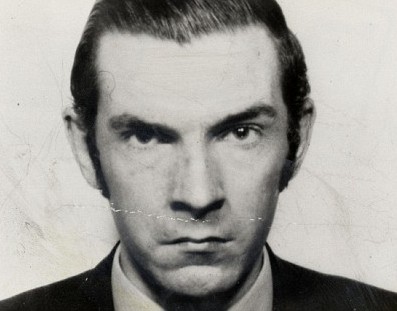 Graham Young
Homicide - Murderer · United Kingdom · 1962
Graham Young was convicted as a “Teacup Poisoner” for poisoning multiple people…
3 victims
Graham Young
Homicide - Murderer · United Kingdom · 1962
Graham Young was convicted as a “Teacup Poisoner” for poisoning multiple people…
3 victims
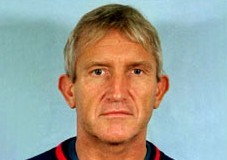 Kenneth Noye
Homicide - Murderer · United Kingdom · 1983
Kenneth Noye was a British criminal. Noye was involved in laundering the procee…
2 victims
Kenneth Noye
Homicide - Murderer · United Kingdom · 1983
Kenneth Noye was a British criminal. Noye was involved in laundering the procee…
2 victims
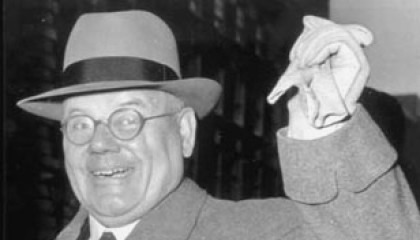 John Bodkin Adams
Serial killer ? · United Kingdom · 1935
John Bodkin Adams was a British general practitioner and euthanasia enthusiast,…
163 victims
John Bodkin Adams
Serial killer ? · United Kingdom · 1935
John Bodkin Adams was a British general practitioner and euthanasia enthusiast,…
163 victims
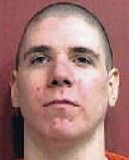 Douglas Turner
Homicide - Murderer · USA · 1987
Douglas Turner was a juvenile who was released from an alcohol treatment progra…
9 victims
Douglas Turner
Homicide - Murderer · USA · 1987
Douglas Turner was a juvenile who was released from an alcohol treatment progra…
9 victims
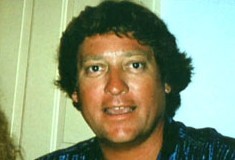 Carl Brandt
Homicide - Murderer · USA · 1971
Carl “Charlie” Brandt · Jan. 3, 1971 — Carl Brandt killed his pregnant mother a…
6 victims
Carl Brandt
Homicide - Murderer · USA · 1971
Carl “Charlie” Brandt · Jan. 3, 1971 — Carl Brandt killed his pregnant mother a…
6 victims
 Dwaine Little
Homicide - Murderer · USA · 1964
Name: Dwaine Little (Dwain Lee Little) · Birth year: 1948 · Little raped and ki…
5 victims
Dwaine Little
Homicide - Murderer · USA · 1964
Name: Dwaine Little (Dwain Lee Little) · Birth year: 1948 · Little raped and ki…
5 victims
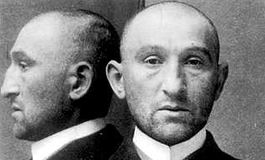 Oscar Slater
Murderer? · United Kingdom · 1908
Oscar Joseph Slater (8 January 1872 – 1948) was a victim of miscarriage of just…
1 victim
Oscar Slater
Murderer? · United Kingdom · 1908
Oscar Joseph Slater (8 January 1872 – 1948) was a victim of miscarriage of just…
1 victim
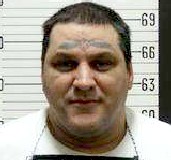 Stephen Hugueley
Murderer · USA · 1986
Name: Stephen Lynn Hugueley Stephen Lynn Hugueley was sentenced to death on Sep…
3 victims
Stephen Hugueley
Murderer · USA · 1986
Name: Stephen Lynn Hugueley Stephen Lynn Hugueley was sentenced to death on Sep…
3 victims
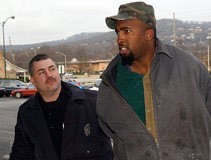 Emanuel Patterson
Mass murderer · USA · 2003
Emanuel Burl Patterson was 23 at the time of the shootings. Police said Patters…
4 victims
Emanuel Patterson
Mass murderer · USA · 2003
Emanuel Burl Patterson was 23 at the time of the shootings. Police said Patters…
4 victims
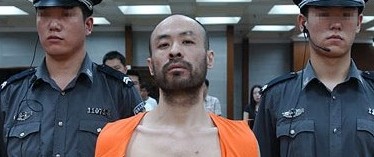 Fu Hegong
Serial killer · China · 2002
October 21, 2004 — Fu Hegong sneaked into Beixin Kindergarten in Dongcheng Dist…
5 victims
Fu Hegong
Serial killer · China · 2002
October 21, 2004 — Fu Hegong sneaked into Beixin Kindergarten in Dongcheng Dist…
5 victims
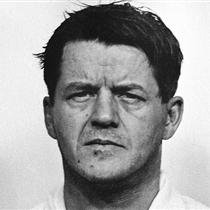 Joseph Stanley Faulder
Murderer · USA · 1975
Joseph Stanley Faulder was executed by lethal injection in Texas on June 17, 19…
1 victim
Joseph Stanley Faulder
Murderer · USA · 1975
Joseph Stanley Faulder was executed by lethal injection in Texas on June 17, 19…
1 victim
 Jerome Butler
Murderer · USA · 1973
Jerome Butler was executed by lethal injection in Texas on April 21, 1990. · Ju…
2 victims
Jerome Butler
Murderer · USA · 1973
Jerome Butler was executed by lethal injection in Texas on April 21, 1990. · Ju…
2 victims
- Gender
- male
- Country
- United Kingdom
- Location
- Scotland/England, United Kingdom
- Date of birth
- August 17, 1908
- Age at first offence
- 18
- Characteristics
- drug dealer, parricide
- Victim profile
- His mother, Bertha Merrett, 55 / H is wife, Veronica Bonnar, 43, and her mother, Lady Mary Menzies, 72
- Method of murder
- Shooting / Drowning - Strangulation
- Date(s) of murder
- 1926 / 1954
- Years active
- 1926–1954
- Date of arrest
- —
- Status
-
Died in custody
Suicide by gunshot on Feb. 17, 1954
Case identification
John Donald Merrett (also known as Ronald Chesney) was born in New Zealand in 1908. He later used the name Chesney.
Timeline
- 1926 — Merrett was charged with murdering his mother and fraudulently passing off her cheques; he was found not proven on the murder charge.
- Feb. 17, 1954 — Merrett was found dead after shooting himself.
- 16 Feb 1954 — Merrett's body was found in a wood near Cologne.
- February 1 (year stated as the following year from the mother’s death in the provided narrative) — John Donald Merrett stood in the dock of the High Court charged with murdering his mother and fraudulently passing off her cheques.
- October 1927 — Merrett was discharged from prison.
Background
Merrett’s father walked out on his mother in 1924. His mother decided to return to England and enrolled him in a public school, where he did very well with his studies. He was kicked out of the school as a result of doing well with talking scores of women into bed.
Merrett and his mother then moved to Edinburgh, where he developed a liking for women who worked as strippers and escorts. He began to forge his mother’s signature on cheques. He was caught when her bank manager wrote to her, concerned about the size of her overdraft.
Merrett then shot his mother. He tried to pass it off as a suicide, explaining that she had serious money worries. The police found out about the cheques. The narrative says the police concluded a motive because the mother’s annual income would be transferred to her son.
While in prison, his mother’s friend Mrs Bonnar visited him, did not believe he was a murderer, and invited him to stay with her after his sentence. After that, Merrett changed his name to Chesney and stayed with Mrs Bonnar. He later married her daughter Vera.
The narrative says Chesney received a windfall after his grandfather died, leaving him £50,000. He gave £8,400 to Vera and then spent the rest of the money trying to find out how best to be a successful criminal. It describes that he tried thieving, more forgery, smuggling, blackmail, fraud, and was pretty good at all of them, but “wasn’t much good at saving”.
It also describes that he was flat broke about 20 years later, remembered the £8,400 he had given to his estranged wife Vera, and decided to get it back.
The offence
1926 — killing of his mother
The narrative says Merrett’s mother was shot to death with a .25 automatic. It also says that later on she was in a hospital under guard after a suspected attempt to take her own life, and that she died.
The narrative includes a courtroom context in which Merrett stood trial for the alleged murder of his mother, but he escaped conviction for murder and was instead sent to prison for forgery.
1954 — killing of his wife and her mother-in-law
The narrative says that in Ealing he got his wife drunk on gin and drowned her in the bath, hoping it would appear an accident. It says Lady Menzies had seen him and it was necessary for him to dispatch her as well.
The narrative says he killed Lady Menzies by battering and then strangling her. It says he fled back to the continent and an international alert was raised.
It further describes that the victims were his estranged wife Vera and Vera’s mother (Lady Menzies). It states that Vera’s mother stopped him on his way out of the building and he killed her as well.
Investigation
The narrative describes forensic links after the deaths in Ealing. It states that forensic examination of Merrett’s clothing discovered fibres that linked him with the killings.
It says police investigated the deaths of the two women in Ealing, describing one as strangled in the hall and the other drowned in her bath.
It also says that police in London concluded he was responsible for both women and that a search began for Merrett, alias Chesney. The narrative says detectives pieced together details of the £10,000 “survivor-takes-all” settlement, the not proven acquittal on the murder charge in 1926, his criminal career, and alcohol in the drowned wife’s body.
Arrest / custody / death
1926 — trial context
The narrative says Merrett was arrested after forgery was discovered and that he was found guilty of forgery while the murder charge was “not proven”.
16 Feb 1954 — death and body recovery
The narrative states that on 16th February Merrett’s body was found in a wood near Cologne. It says he had taken his own life by shooting himself.
It states that he wrote a note to his mistress before taking his own life: "After all that lies behind me, I have no chance." It further states that he shot himself by putting a bullet through his head.
Forensic comparison after his death
The narrative says London detectives asked for the badly scratched arms as proof, “almost from beyond the grave”. It states that flesh from Chesney’s arms, torn from just above the wrists, had been found under the fingernails of "Lady" Menzies.
Trial
1926 — murder charge and verdict
The narrative says Merrett stood trial in the High Court in Edinburgh for the alleged murder of his mother and for forgery, including fraudulently passing off her cheques.
It states that the jury’s verdict on the murder charge was “Not Proven.” It also states that the jury unanimously found for the Crown on the cheques.
The narrative says that when the murder charge was “not proven,” the matter of the cheques remained and Merrett was sent to prison.
It says Merrett was represented by defence counsel Craigie Aitchison, KC, and that the trial judge reminded the jury that they were sitting not in a court of morals but in a court of law.
The narrative says the jury deliberated for 55 minutes after hearing seven days of evidence.
Quotes from the narrative (verbatim)
The narrative includes the following quoted statements:
- Merrett’s account to the daily cleaning woman: "Rita, my mother has shot herself''.
- A later statement attributed to Merrett’s mother: “Something burst in my head, just like a pistol shot. Did Donald not do it? He is such a naughty boy''.
- A statement attributed to Merrett to the maid: "wasting my mother's money''
- A note attributed to Merrett to his mistress: "After all that lies behind me, I have no chance."
Sentencing
The narrative states that Merrett was convicted of forgery in relation to his mother’s cheques and was sentenced to 12 months, described as the outcome after the jury found against him on the cheques after the murder charge was “not proven”.
It also states that he disappeared from view after the sentence and was discharged in October 1927.
Appeals / other proceedings
No appeal outcome was stated in the provided material beyond the “not proven” verdict and the forgery conviction.
Outcome
The narrative states:
- In the trial for the alleged murder of his mother, Merrett was not proven on the murder charge in 1926, while he was convicted on the cheques issue.
- In the later killings in Ealing, the narrative states that Merrett was a fugitive and that he died by suicide by gunshot in Germany after being linked through forensic evidence.
It also states that his body was found near Cologne on 16 February, and it records suicide on Feb. 17, 1954.
Aftermath
The narrative states that after Merrett’s death, London detectives asked for proof from his scratched arms, with flesh found under the fingernails of Lady Menzies.
It also includes a description of memorabilia and artefacts kept in Scotland Yard’s Black Museum, stating that Merrett’s forearms disarticulated at the elbows were placed in formaldehyde in a container.
It further places him in a context comparing artefacts from other cases mentioned in the narrative, including John George Haigh and Dr Hawley Harvey Crippen.
Other details
The narrative provides additional biographical and criminal-history detail, including:
- Merrett was described as having a “talent for forgery” and as forging his mother’s signature on cheques.
- It describes alleged fraud and forgery involving cheque theft and continued forging even after the mother was removed to hospital.
- It states he later had an international criminal career involving smuggling and drug dealing, and that it described him as a “smuggler” who killed his mother in 1926 and later killed his estranged wife and mother-in-law in 1954.
- It includes the relationship and victim details: Vera was the wife, and Lady Menzies was Vera’s mother-in-law and was killed as well.
- It says Merrett escaped to Germany after the killings in Ealing and then took his own life.
It also includes a physical description from the provided narrative of Ronald Chesney as “Black-bearded, with a gold earring in his pierced right ear and gold bangles jangling at his wrists”, and that he claimed to be a pirate and said: "Smuggling."
Spotted an error, or have more information about this case?