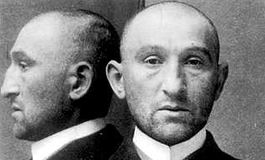
Oscar Slater
Murderer? Barry George
Murderer? · United Kingdom · 1999
Barry George was also known as Barry Bulsara. He was born on 15 April 1960 in H…
1 victim
Barry George
Murderer? · United Kingdom · 1999
Barry George was also known as Barry Bulsara. He was born on 15 April 1960 in H…
1 victim
 Derek Bentley
Murderer? · United Kingdom · 1952
Derek William Bentley (30 June 1933 – 28 January 1953) was a British teenager h…
1 victim
Derek Bentley
Murderer? · United Kingdom · 1952
Derek William Bentley (30 June 1933 – 28 January 1953) was a British teenager h…
1 victim
 Florence Maybrick
Murderer? · United Kingdom · 1899
Florence Elizabeth Maybrick (Florence Maybrick) was an American woman convicted…
1 victim
Florence Maybrick
Murderer? · United Kingdom · 1899
Florence Elizabeth Maybrick (Florence Maybrick) was an American woman convicted…
1 victim
 Harold Greenwood
Murderer? · United Kingdom · 1919
Harold Greenwood (1874 – 17 January 1929) was an English solicitor who was accu…
1 victim
Harold Greenwood
Murderer? · United Kingdom · 1919
Harold Greenwood (1874 – 17 January 1929) was an English solicitor who was accu…
1 victim
 Dr. Bennett Clark Hyde
Murderer? · USA · 1909
Dr. Bennett Clark Hyde was accused in Kansas City of murdering members of the S…
3 victims
Dr. Bennett Clark Hyde
Murderer? · USA · 1909
Dr. Bennett Clark Hyde was accused in Kansas City of murdering members of the S…
3 victims
 Adelaide Bartlett
Murderer? · United Kingdom · 1886
Adelaide Bartlett was tried for the murder of her husband, Thomas Edwin Bartlet…
1 victim
Adelaide Bartlett
Murderer? · United Kingdom · 1886
Adelaide Bartlett was tried for the murder of her husband, Thomas Edwin Bartlet…
1 victim
 Hu Wanlin
Homicide · China · 1997
Hu Wanlin (胡万林), born 1949, was from Mianyang, Sichuan Province. · 1993 — While…
146 victims
Hu Wanlin
Homicide · China · 1997
Hu Wanlin (胡万林), born 1949, was from Mianyang, Sichuan Province. · 1993 — While…
146 victims
 Dmitry Voronenko
Serial killer · Russia · 2006
Dmitry Voronenko was a Ukrainian man who was convicted of murder and rape. He r…
4 victims
Dmitry Voronenko
Serial killer · Russia · 2006
Dmitry Voronenko was a Ukrainian man who was convicted of murder and rape. He r…
4 victims
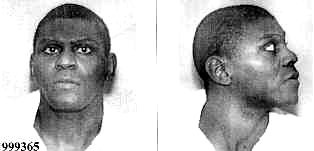 Exzavier Stevenson
Murderer · USA · 2000
Exzavier Lamont Stevenson (TDCJ Number 999365) was born on 06/06/1968. He was r…
2 victims
Exzavier Stevenson
Murderer · USA · 2000
Exzavier Lamont Stevenson (TDCJ Number 999365) was born on 06/06/1968. He was r…
2 victims
 Juan Fernando Hermosa Suarez
—
Juan Fernando Hermosa Suárez A partir del 22 de noviembre de 1991 se registró u…
Juan Fernando Hermosa Suarez
—
Juan Fernando Hermosa Suárez A partir del 22 de noviembre de 1991 se registró u…
 Ynobe Matthews
Serial killer · USA · 1999
Ynobe Matthews was convicted of capital murder in June 2001 and was sentenced t…
6 victims
Ynobe Matthews
Serial killer · USA · 1999
Ynobe Matthews was convicted of capital murder in June 2001 and was sentenced t…
6 victims
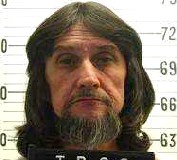 Olen Hutchison
Murderer · USA · 1988
Olen Edward Hutchison, also known as Olen “Eddie” Hutchison, was the defendant.…
1 victim
Olen Hutchison
Murderer · USA · 1988
Olen Edward Hutchison, also known as Olen “Eddie” Hutchison, was the defendant.…
1 victim
- Gender
- male
- Country
- United Kingdom
- Location
- Glasgow, Scotland, United Kingdom
- Date of birth
- January 8, 1872
- Age at first offence
- 36
- Characteristics
- abuser
- Victim profile
- Marion Gilchrist, 83
- Method of murder
- Hitting with a hammer
- Date(s) of murder
- December 21, 1908
- Years active
- 1908
- Date of arrest
- —
- Status
-
Died in custody
Sentence to death in May 1909; commuted to life imprisonment with hard labour; released in 1928 with £6,000 compensation; died in 1948
Background
Oscar Joseph Slater (8 January 1872 – 1948) was a victim of miscarriage of justice. He was born Oscar Leschziner in Oppeln, Upper Silesia, Germany, to a Jewish family. Around 1893, to evade military service, he moved to London, where he worked as a bookmaker using various names, including Anderson, before settling on Slater for official purposes. He was prosecuted for malicious wounding in 1896 and assault in 1897 but was acquitted in both cases.
In 1899 he moved to Edinburgh, and by 1901 was living in Glasgow. He claimed to be a gymnastics instructor, a dentist, and a dealer in precious stones, but he was known to police as a pimp and gangster who associated with thieves, burglars, and receivers of stolen goods.
The offence
In December 1908, Marion Gilchrist, an 83-year-old spinster, was beaten to death in a robbery at West Princes Street, Glasgow. Her maid had popped out for 10 minutes. It was stated that Marion Gilchrist had £3,000 of jewelry hidden in her wardrobe, but the robber was disturbed by a neighbour and all that was taken was a brooch.
In a separate narrative, it was stated that the killing of 83-year-old spinster Marion Gilchrist occurred on December 21, 1908 in Glasgow. Helen Lambie, the sole servant of Marion Gilchrist, left her employer for a few minutes to get a newspaper. Arthur Adams, who lived in the apartment directly below Marion Gilchrist, said he and his sisters heard three knocks on the ceiling. Adams went to investigate. When Adams arrived at Marion Gilchrist’s door he rang the bell; although no one came to the door he heard noises inside the apartment. Adams returned downstairs, but his sisters urged him to check on Marion Gilchrist one more time. He returned upstairs and was in front of the door when Helen Lambie returned from her errand. At about this time they glimpsed a man in the building’s hallway, and Adams told Helen what had been going on and together they entered the apartment. They discovered that Marion Gilchrist had been bludgeoned to death; her personal papers had been rifled and a diamond brooch was stolen. A public outcry followed the brutal murder, and the police and the public wanted the crime to be solved quickly and the murderer put behind bars.
Investigation
Slater was a subject of suspicion because he had left for New York five days after the murder. It was stated that before the murder a caller to Gilchrist’s house had been looking for someone called “Anderson”, and that Slater had previously been seen trying to sell a pawn ticket for a brooch. The police soon realised that the pawn ticket was a false lead, but they still applied for Slater’s extradition. Slater was advised that the application would probably fail, but decided to return voluntarily to Scotland.
In the separate narrative, it was stated that Slater lived near Miss Gilchrist, he was known to the police for running an illegal gambling operation, and he had recently pawned a diamond brooch. It was also stated that soon after the murder Slater left the country under an assumed name, and that once Slater was discovered in America and made aware of the accusations against him, he willingly returned.
It was stated that police believed that, after coaching by the authorities, witnesses—including Helen Lambie—were sure that they had seen Slater leaving the scene of the murder. It was also stated that the police believed they found the murder weapon after a small hammer was found in Slater’s possession.
A secret enquiry was launched in 1914 by the then Scottish Secretary McKinnon Wood. It was said to be a “farce” and “Gilbertian”, and that Detective Trench was sacked and then framed for reset by the Glasgow Police. It was also stated that the case remains the worst miscarriage of justice in Scottish legal history, and that several senior police officers (Stevenson, Orr, Ord), John Neil Hart the Fiscal, and several Liberal Lord Advocates, as well as the judge Lord Guthrie and politicians, were described as actively colluding to retain the conviction. It was further stated that the enquiry found the conviction was sound and, instead, Trench was dismissed from the force and prosecuted on a trumped-up charges.
Arrest
It was stated that Slater was advised about the likely failure of extradition proceedings but returned voluntarily to Scotland to stand trial.
In the separate narrative, it was stated that Slater had left for New York on board the liner Lusitania using a false name, and that he and his mistress Andree Antoine, a prostitute, were booked on the voyage as Mr and Mrs Otto Sando. It was also stated that when New York detectives boarded the vessel they arrested Slater for murder and that in his pocket they found a diamond brooch. It was further stated that three witnesses—Miss Lambie, Mr Adams, and a 14-year-old girl, Mary Barrowman—traveled across the Atlantic, and that the two women identified Slater as the man they had seen.
Trial
The defence witnesses provided Slater with an alibi and confirmed that he had announced his visit to America long before the murder. Slater was convicted by a majority of nine to six (five “not proven” and one “not guilty”).
Sentencing
In May 1909, Slater was sentenced to death, with the execution to take place before the end of the month. However, it was stated that the trial judge, Lord Guthrie, organised a petition signed by 20,000 people, and the secretary for Scotland, Lord Pentland, issued a conditional pardon and commuted the sentence to life imprisonment.
In the separate narrative, it was stated that Slater was sentenced to death and then commuted to life imprisonment and taken to Peterhead Jail.
Appeals
It was stated that the Scottish lawyer and amateur criminologist William Roughead published Trial of Oscar Slater the following year, highlighting flaws in the prosecution. The circumstantial evidence against Slater included his “flight from justice.” It was also stated that the jury had been made aware of his entire past life, and that the identification evidence was described as fleeting and otherwise unreliable, prejudiced, tainted, or coached. It was stated that Slater was conspicuously contrasted with nine off-duty policemen in his identification parade.
In 1912, Sir Arthur Conan Doyle published The Case of Oscar Slater, described as a plea for a full pardon for Slater. It was also stated that in 1914 Thomas MacKinnon Wood ordered a Private Inquiry into the case. A detective in the case, John Thompson Trench, provided information which had allegedly been concealed from the trial by the police.
Criminal Appeal (Scotland) Act 1927 was also stated as having been involved, described as an Act (17 & 18 Geo. V) passed to extend the jurisdiction of the recently established Scottish Court of Criminal Appeal to convictions before the original shut-off date of 1926. It was stated that Slater’s conviction was quashed in July 1928 on the ground that the judge had not directed the jury about the irrelevance of Slater’s previous character.
A separate narrative stated that Slater could apply for compensation from the government for years of wrongful imprisonment after being cleared, and that Slater was released on license rather than pardoned, so the case had to be reopened and retried.
Outcome
Slater was released only in 1928 with £6,000 compensation. In July 1928, Slater’s conviction was quashed on the stated ground about jury directions.
It was also stated that those responsible for Miss Gilchrist’s murder were never brought to justice, and that the crime was almost certainly the joint enterprise of two or three male relatives (including a doctor/academic and a lawyer protected by legal and political connections).
Aftermath
As an enemy alien, Slater was interned for a brief time at the start of WWII. He died in 1948.
Detective-Lieutenant Trench had died in 1919, aged fifty, and never lived to see justice done. It was also stated that the lessons of the Slater miscarriage were considered as late as 1976 by the Devlin Committee review on the limitations of identity parades.
In Glasgow rhyming slang, “See you ‘Oscar’” was stated to rhyme Slater with later.
Additional details about message and interventions were included: it was stated that in 1925 William Gordon was released from Peterhead Prison in Scotland and smuggled out a message from fellow prisoner Oscar Slater. The message, written on waterproof paper and hidden under Gordon’s tongue, was a plea for help to be delivered to Sir Arthur Conan Doyle. Conan Doyle first heard the name Oscar Slater years earlier when Slater was sentenced to death for the murder of Marion Gilchrist.
A quotation was given from the secretary of state for Scotland dated November 8, 1927:
"Oscar Slater has now completed more than eighteen and a half years of his life sentence, and I have felt justified in deciding to authorize his release on license as soon as suitable arrangements can be made."
There was a quotation attributed to Conan Doyle about reversing the conviction:
"How the verdict could be that there was no fresh cause for reversing the conviction is incomprehensible. The whole case will, in my opinion, remain immortal in the classics of crime as the supreme example of official incompetence and obstinacy."
There was also a quotation attributed to Conan Doyle in a letter to Slater:
"You seem to have taken leave of your senses. If you are indeed responsible for your actions, then you are the most ungrateful as well as the most foolish person whom I have ever known."
Further compensation details were stated: Slater was cleared of all charges and awarded £6,000 in compensation; Conan Doyle and others gave money to Slater for legal fees; it was stated that Conan Doyle assumed Slater would reimburse supporters for legal fees, but Slater thought it was ridiculous that he had to pay court costs and should not pay them back. Conan Doyle was stated not to need the £1,000 he had given for Slater’s legal fees.
A separate narrative included that in 1927, William Park published The Truth About Oscar Slater, and that Solicitor General for Scotland Alexander Munro MacRobert reported to Sir John Gilmour that it was no longer proven that Slater was guilty; it was stated that Slater was released after more than 18 years in prison. It was also stated that Slater was later pardoned and given £6000 compensation, and it was separately stated that Slater was released, not pardoned, requiring the case to be reopened and retried.
Potential suspects were discussed as non-final suggestions: William Park was said to have claimed evidence pointed to Miss Gilchrist’s nephew, Dr Francis Charteris, being the killer, and it was stated that Dr Charteris went on to become a professor at St Andrews University. Another suggestion was stated that authors over the years leaned towards another of Miss Gilchrist’s family called Wingate Birrell, described as the fiance of the maidservant Helen Lambie, who was out of the house for the short time it took for her employer to be killed.
Influential people and publications were listed: Sir Edward Marshall Hall; Ramsay MacDonald; (eventually) Viscount Buckmaster; and Sir Arthur Conan Doyle; it was stated that Arthur Conan Doyle published The Case of Oscar Slater in 1912, and that in 1914 Thomas MacKinnon Wood ordered a Private Inquiry. It was also stated that William Roughead published Trial of Oscar Slater the following year after 1909.
Victim identification and robbery details were repeated in narrative form: Marion Gilchrist’s maidservant was named Helen Lambie; a neighbour and witness was named Arthur Adams; and a witness described as a 14-year-old girl was named Mary Barrowman. Slater’s real name was given as Oscar Leschnizer in that narrative, and it was stated that Slater had used false names including Anderson, and that he traveled under an assumed name. Andree Antoine was stated as Slater’s mistress, described as a prostitute.
Spotted an error, or have more information about this case?