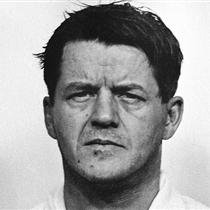
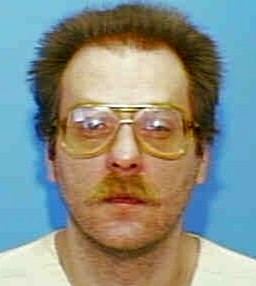
Joseph Stanley Faulder
Murderer Ervil LeBaron
Murderer · USA · 1972
Ervil Morrell LeBaron (1925 to August 16, 1981) was the leader of a polygamous…
35 victims
Ervil LeBaron
Murderer · USA · 1972
Ervil Morrell LeBaron (1925 to August 16, 1981) was the leader of a polygamous…
35 victims
 Brian Kevin Rosenfeld
Murderer · USA · 1985
Brian Kevin Rosenfeld Brian Kevin Rosenfeld was sentenced to three concurrent l…
23 victims
Brian Kevin Rosenfeld
Murderer · USA · 1985
Brian Kevin Rosenfeld Brian Kevin Rosenfeld was sentenced to three concurrent l…
23 victims
 Marvin Gray
Murderer · USA · 1975
Marvin Gray was convicted killer who claimed responsibility for 23 slayings and…
23 victims
Marvin Gray
Murderer · USA · 1975
Marvin Gray was convicted killer who claimed responsibility for 23 slayings and…
23 victims
 Yahweh ben Yahweh
Murderer · USA · 1980
Yahweh ben Yahweh was born and legally named Hulon Mitchell Jr. (October 27, 19…
23 victims
Yahweh ben Yahweh
Murderer · USA · 1980
Yahweh ben Yahweh was born and legally named Hulon Mitchell Jr. (October 27, 19…
23 victims
 Clarence Hill
Murderer · USA · 1982
Clarence Hill was executed by lethal injection in Florida on September 20, 2006…
1 victim
Clarence Hill
Murderer · USA · 1982
Clarence Hill was executed by lethal injection in Florida on September 20, 2006…
1 victim
 Laurie Bembenek
Murderer · USA · 1981
Lawrencia “Bambi” Bembenek (August 15, 1958 – November 20, 2010) was known as L…
1 victim
Laurie Bembenek
Murderer · USA · 1981
Lawrencia “Bambi” Bembenek (August 15, 1958 – November 20, 2010) was known as L…
1 victim
 Paul David Johnson
Murderer · USA · 1984
Paul David Johnson was convicted on one count in Tennessee in 1984 and later re…
2 victims
Paul David Johnson
Murderer · USA · 1984
Paul David Johnson was convicted on one count in Tennessee in 1984 and later re…
2 victims
 Ronald Gene Simmons
Mass murderer · USA · 1987
Ronald Gene Simmons was a retired United States Air Force sergeant. Over the Ch…
16 victims
Ronald Gene Simmons
Mass murderer · USA · 1987
Ronald Gene Simmons was a retired United States Air Force sergeant. Over the Ch…
16 victims
 Timothy Alexander Robinson
Murderer · USA · 1988
02/28/89 — Timothy Alexander Robinson was indicted on counts including First-De…
4 victims
Timothy Alexander Robinson
Murderer · USA · 1988
02/28/89 — Timothy Alexander Robinson was indicted on counts including First-De…
4 victims
 Walter Key Williams
Murderer · USA · 1981
Walter Key Williams grew up in San Antonio’s poor East Side. His childhood neig…
2 victims
Walter Key Williams
Murderer · USA · 1981
Walter Key Williams grew up in San Antonio’s poor East Side. His childhood neig…
2 victims
- Gender
- male
- Country
- USA
- Location
- Gregg County, Texas, USA
- Date of birth
- October 19, 1937
- Age at first offence
- 38
- Characteristics
- robbery
- Victim profile
- Inez Phillips (female, 75)
- Method of murder
- St abbing with knife
- Date(s) of murder
- July 8, 1975
- Years active
- 1975
- Date of arrest
- April 1977
- Status
-
Executed
Executed by lethal injection on June 17, 1999 in Texas; declined to make a last statement
Overview
Joseph Stanley Faulder was executed by lethal injection in Texas on June 17, 1999. He declined to make a last statement.
The offence
On the morning of July 9, 1975, the body of Inez Phillips, a widow seventy-five years of age, was found on a bed in her home in Gladewater, Texas, by her maid. A butcher knife was found thrust six and a half inches into her chest, tape covered her mouth, and her arms were bound.
The medical examiner testified that the victim had a number of bruises on the left side of her body and legs, on her face, on a wrist, and on her fingers. Five small puncture wounds were on her right shoulder. The stab wound to the chest penetrated through a cartilaged area of a rib and the heart, almost to the back bone. The back of the victim's skull had a two inch long depressed fracture, consistent with a "heavy blow" from a blackjack (a club encased in leather). Both the stab wound and the skull fracture were sufficient to cause death.
In 1974, the victim had a floor safe installed in a closet in her home. One of the employees involved in installing the floor tile which concealed the safe was James Moulton.
Faulder was convicted of the murder of Inez Phillips committed in the course of aggravated robbery, a capital offense.
Events leading to the victim's death
James Moulton confirmed that he performed floor work on the victim's house in 1974. He testified that he went with Lynda McCann, also known as Stormy Summers, to a bar on June 27, 1975, where he met Doyle Hughes and Faulder for the first time. Faulder bragged about being a safecracker. Moulton told him about the victim's safe, sketched a diagram, and told them that only the seventy-five year old woman lived there. Moulton drove the four of them to see the victim's house.
Moulton testified that he was not involved in the actual burglary and murder. He testified that he called a police hotline to give information on the case, and that Hughes was not involved in the discussions regarding the offense. Moulton pleaded guilty to conspiracy to burglarize a house and received a five year sentence, but the sentence was not part of a plea bargain.
Doyle Hughes testified that he met Faulder in April or May of 1975, and that Faulder lived with Hughes and Hughes' mother for about two weeks between that time and July of 1975. Two or three weeks before the murder, Hughes went with Faulder to a bar, where he met, for the first time, Moulton and Lynda. Hughes saw Moulton draw a diagram of the victim's house and mention that there was supposed to be some money or jewelry in it. Moulton drove the four of them to the victim's house that night and described how they could tie up the victim and open the safe. Although Hughes did not participate in the conversation, Faulder said he could open the safe, and Lynda said she was behind on her rent.
A week later, Hughes was at Lynda's house with Moulton, Faulder, and Lynda's husband when Faulder showed Hughes a pistol. Lynda McCann confirmed that she met Faulder and Hughes for the first time when she went to the bar with Moulton on June 27th. She confirmed that Moulton drew a map of the victim's house, that there was a discussion of a burglary, that Faulder said he could crack safes, and that they all drove to the victim's house that night. She added that Hughes did not participate in the conversations regarding the proposed burglary.
Lynda testified that Faulder stayed at her house around July 5th and told her that, if anyone asked about the house they had looked at, she was to tell them Faulder had forgotten about it.
On July 8th, Faulder told Lynda he wanted her to go with him to check out the house again and see if it felt right. Faulder, who had no car, had obtained a car which had been "hot-wired." The two drove to a convenience store, which Faulder entered with a gun to determine if it looked right for a robbery. Faulder decided against that robbery.
After declining Lynda's request to take her home, Faulder proceeded to the victim's house. When they arrived at the victim's house, the two approached the house, at Faulder's instructions, and Lynda knocked on the door. When no one answered, Lynda asked Faulder to leave, but he said no, and they walked to the back of the house. Faulder possessed a pistol and a blackjack at the time.
When Lynda knocked on the back door, the victim opened the door slightly and Faulder then forced his way inside with the gun in his hand. Faulder told the victim that she would not be hurt if she cooperated, and made her go to her bedroom. Faulder questioned her about the safe, but she said there was nothing in it and that she did not remember the combination. However, she directed Faulder to where the combination was written down.
Faulder left the gun with Lynda while he went to open the safe. While they waited, Lynda put the gun down to calm the victim, but Phillips grabbed for the weapon, they struggled over it, and it went off. Faulder returned, angry because of the gunshot and because there was nothing in the safe. Faulder put tape over the victim's mouth and told Lynda to leave the room.
Shortly thereafter, Lynda began to hear thumps and moaning. Lynda then saw Faulder obtain a long knife from the kitchen and heard one more thump from the bedroom. Faulder then came out with a bag and they left.
While driving away from the scene, Faulder said that he knew the victim was dead because he had stabbed her. Faulder also threw the blackjack out the car window.
When they returned home, Lynda told her husband, Harold Ernest "Ernie" McCann, that they had been to the victim's house and that she was dead. Lynda testified that the charges against her were eventually reduced to conspiracy to commit burglary of a habitation and that she had pleaded guilty in exchange for her testimony and a sentence of ten years probation.
Ernie McCann testified that Faulder stayed with him and Lynda, and that he overheard them talking about criminal activity. He testified that he heard Faulder say something like "I might have to knock her in the head." He testified that he was also present when Lynda and Faulder came home on July 8th and Lynda said, "She is dead." He testified that he saw Faulder had a bag with him which was filled with jewelry.
McCann followed Faulder to a gas station where Faulder left his car and rode back with McCann. McCann testified that Faulder told him that "there was an accident, that they didn't mean to kill the woman," but that she fell on a knife and then they hit her in the head because she was still alive. McCann also confirmed that Faulder had possessed a blackjack and a pistol.
Background
Joseph Stanley Faulder was a Canadian citizen and was also described as a native of Jasper, Alberta. At the time of his execution he was 61 years old. He had been involved in civil litigation in state and federal court regarding the clemency policies of the Texas Board of Pardons and Paroles.
Investigation
No evidence of drug or alcohol use in connection with the instant offense was presented.
Trial
Indictment and capital conviction
Faulder was originally indicted on June 1, 1977, in the 124th Judicial District Court of Gregg County, Texas, in Cause No. 11,139-B, for the murder of Inez Phillips committed in the course of aggravated robbery, a capital offense.
Faulder was convicted of the capital offense and sentenced to death.
Reversal of first conviction and sentence
In 1979, the Texas Court of Criminal Appeals reversed Faulder's conviction and sentence, concluding that police had obtained a confession from Faulder in violation of constitutional protections.
In 1980, the United States Supreme Court denied a petition for writ of certiorari filed by the State.
Retrial and second capital conviction
The State retried Faulder, with a change of venue to Angelina County. Faulder was again found guilty of the capital offense and was sentenced to death on July 10, 1981.
His conviction and sentence were affirmed by the Court of Criminal Appeals on September 30, 1987.
Punishment phase testimony
At the punishment phase of trial, the State presented two witnesses who testified that Faulder had a bad reputation in his community for being a peaceful and law abiding citizen.
Psychiatrist Clay Griffith testified that a defendant who committed such acts had an anti-social personality and would kill again, based upon a hypothetical question derived from the facts of the case.
Psychiatrist James Grigson similarly testified from a hypothetical that the individual would continue to commit acts of violence.
Psychiatrist James Hunter testified from a hypothetical that the individual would be highly likely to engage in continued acts that would be a danger to society.
Sentencing
Faulder was sentenced to death twice: first after his initial conviction, and again after his retrial. His second capital conviction and death sentence were on July 10, 1981.
Appeals
Direct appeals and habeas corpus
Faulder filed for state habeas review in 1991 and 1992, including an application and three amended applications. After an evidentiary hearing, the state trial court recommended the denial of habeas relief on November 23, 1992, and the Court of Criminal Appeals denied relief.
On December 2, 1992, Faulder filed a federal petition for writ of habeas corpus in the United States District Court for the Eastern District of Texas. After an evidentiary hearing, the federal district court denied relief on March 31, 1995. On appeal, the United States Court of Appeal for the Fifth Circuit affirmed.
The Supreme Court denied Faulder's petition for writ of certiorari on November 18, 1996.
Additional state habeas applications and certiorari
On May 30, 1997, Faulder filed another application for state writ of habeas corpus. The Court of Criminal Appeals denied relief on September 16, 1998, and denied Faulder's motion for reconsideration on October 21, 1998.
The Supreme Court denied Faulder's petition for writ of certiorari on January 25, 1999.
Prior to that time, Faulder had filed another application for state writ of habeas corpus, which was dismissed by the Court of Criminal Appeals the following day.
On June 4, 1999, Faulder filed another application for state writ of habeas corpus. As of June 8, 1999, the application was pending before the Court of Criminal Appeals.
Federal clemency-related litigation
Faulder filed a federal action on December 8, 1998, in the United States District Court for the Western District of Texas, Austin Division. After a hearing, the federal district court denied relief on December 9, 1998. As of June 8, 1999, an appeal was pending in the Fifth Circuit.
In state court, a Travis County state district court denied relief on January 8, 1999, after a hearing. That decision was affirmed by the Third Court of Appeals on May 18, 1999.
In 178 F.3d 343, Joseph Stanley Faulder, Plaintiff-Appellant, v. Texas Board of Pardons & Paroles, Et Al., Defendants-Appellees, No. 99-50130, June 10, 1999, the United States Court of Appeals for the Fifth Circuit affirmed the district court’s rejection of Faulder's due process challenge to the procedures used by the Texas Board of Pardons and Paroles. Faulder's motion to stay execution was DENIED.
In 81 F.3d 515, Joseph Stanley Faulder, Petitioner-Appellant, v. Gary L. Johnson, Director, Texas Department of Criminal Justice, Institutional Division, Respondent-Appellee, No. 95-40512, April 10, 1996, the United States Court of Appeals for the Fifth Circuit affirmed the denial of Faulder's petition for writ of habeas corpus seeking relief from his death sentence, and AFFIRMED the judgment of the district court while VACATING the stay of execution.
Outcome
Faulder was executed by lethal injection in Texas on June 17, 1999.
Aftermath
Statement at execution
At the time of execution, the Texas Attorney General media advisory provided information on the execution. Faulder declined to make a last statement.
Timing of execution
Joseph Stanley Faulder was pronounced dead at 6:18 p.m., six minutes after the flow of lethal drugs began.
Clemency decisions
The Texas Board of Pardons and Paroles voted 18 to 0 on Wednesday to deny Faulder's request for reprieve or commutation of sentence. A one-time 30-day delay was described as possible under Governor Bush’s authority, though it was not granted.
Clemency and international law issues raised in litigation and appeals
Faulder’s attorneys argued that after his arrest he was never told he could seek legal assistance from Canadian authorities as allowed under international law. The Canadian government filed documents in Faulder's appeals protesting his treatment and won backing of U.S. Secretary of State Madeleine Albright in calling for a reprieve. Federal courts rejected Faulder's appeals, and state officials refused requests that could have blocked the execution.
Quotes reproduced verbatim
Attorney General John Cornyn was quoted:
"You O.K.?" and later: "No statements." and additionally: "12 jurors have spoken by convicting Mr. Faulder and sentencing him to death" and: "10 different courts and more than 38 judges have reviewed a total of 17 appeals, each time rejecting his appeal and affirming the capital murder conviction." and: "Too often we lose sight of the horrific circumstances of the crime and the tragic plight of the victims and their families," and: Governor George W. Bush was quoted as refusing to issue a one-time 30-day reprieve: "There is no new evidence that questions the jury's verdict that he is guilty of this crime,"
A State Department spokesman was quoted:
"We continue to regret the long delay between the time Mr. Faulder was arrested and when Canadian consulate officials learned of the case," and: "But under our system, we've exhausted all of our possibilities and recognize that the final decision is in the hands of the state."
Odis Hill was quoted:
"He has had every legal resource that any individual could ever ask for or enjoy under our Constitution,"
Mary Robinson, the U.N. High Commissioner for Human Rights, wrote in a letter:
"I urge you to use your influence with a view to stopping the execution and initiating a thorough review of this case," and: "The loss of life resulting from the execution of death sentence is irreparable," and: "I have received reports alleging several irregularities in Mr. Faulder's trial and appeals process, among these being the fact that he was not informed of his rights under the Vienna Convention on Consular Relations to seek assistance from his consulate after his arrest," and: "It is further reported that immediately after his arrest Mr. Faulder was interrogated for four days during which time he was denied access to legal counsel," and: "It appears that after these 4 days he was also made to sign a confession without the presence of a lawyer."
A spokeswoman for Gov. George W. Bush was quoted:
"Canada is a friend and neighbor of the United States and we hope Canadians understand that Governor Bush has taken an oath to uphold the laws of Texas, including the death penalty."
Faulder was quoted:
"I'm at peace with my maker," and: "I'm ready to go."
Other details
Prior criminal history and professional reputation evidence
During the punishment phase of trial, witnesses testified that Faulder had a bad reputation for being peaceful and law abiding.
Procedural history details included in the record
Faulder’s involvement in state and federal clemency policy litigation included a state court denial on January 8, 1999 and an affirmance by the Third Court of Appeals on May 18, 1999.
Federal appellate procedural outcomes
In the federal habeas appeal (95-40512), the Fifth Circuit AFFIRMED and VACATED the stay of execution.
In the clemency procedure due process appeal (99-50130), the Fifth Circuit AFFIRMED and DENIED a motion to stay execution.
Execution chamber observations and last-word interaction
Faulder coughed twice, let out 2 gasps and then stopped moving. He nodded to his lawyer, Sandra Babcock, as she walked into the death chamber. Sandra Babcock stood right against the glass and asked Faulder, "You O.K.?" He didn't respond. When the warden asked Faulder whether he had any last words, Faulder shook his head and said, "No statements."
Spotted an error, or have more information about this case?