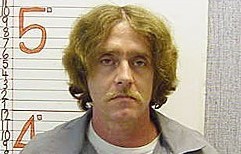
John Middleton
Murderer Brian Kevin Rosenfeld
Murderer · USA · 1985
Brian Kevin Rosenfeld Brian Kevin Rosenfeld was sentenced to three concurrent l…
23 victims
Brian Kevin Rosenfeld
Murderer · USA · 1985
Brian Kevin Rosenfeld Brian Kevin Rosenfeld was sentenced to three concurrent l…
23 victims
 Russell Ellwood
Murderer · USA · 1991
Russell Ellwood was a former taxi driver. Authorities suspected him of killing…
20 victims
Russell Ellwood
Murderer · USA · 1991
Russell Ellwood was a former taxi driver. Authorities suspected him of killing…
20 victims
 Robert Martines Perez
Murderer · USA · 1994
Name: Robert Martines Perez · Other name used in proceedings: Robert Martinez P…
15 victims
Robert Martines Perez
Murderer · USA · 1994
Name: Robert Martines Perez · Other name used in proceedings: Robert Martinez P…
15 victims
 Billy Frank Vickers
Murderer · USA · 1993
Billy Frank Vickers Vickers was executed by lethal injection in Texas on Januar…
14 victims
Billy Frank Vickers
Murderer · USA · 1993
Billy Frank Vickers Vickers was executed by lethal injection in Texas on Januar…
14 victims
 Leon Jermain Winston
Murderer · USA · 2002
Leon Jermain Winston was a male identified as Black. He was an inmate on Virgin…
2 victims
Leon Jermain Winston
Murderer · USA · 2002
Leon Jermain Winston was a male identified as Black. He was an inmate on Virgin…
2 victims
 Jade Olmstead
Murderer · USA · 2012
Jade Olmstead (also named Nichole “Jade” Olmstead) — charged and pleaded guilty…
1 victim
Jade Olmstead
Murderer · USA · 2012
Jade Olmstead (also named Nichole “Jade” Olmstead) — charged and pleaded guilty…
1 victim
 Barry Prudom
Murderer · United Kingdom · 1982
Barry Prudom was the prime suspect in the killings of police officers after pol…
3 victims
Barry Prudom
Murderer · United Kingdom · 1982
Barry Prudom was the prime suspect in the killings of police officers after pol…
3 victims
 Darbara Singh
Serial killer · India · 2004
Darbara Singh was sentenced to death on January 7, 2008. His death sentence was…
17 victims
Darbara Singh
Serial killer · India · 2004
Darbara Singh was sentenced to death on January 7, 2008. His death sentence was…
17 victims
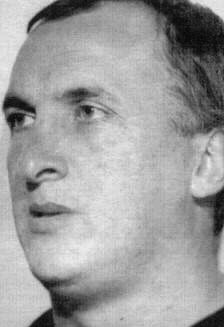 Colin Ireland
Serial killer · United Kingdom · 1993
Name: Colin Ireland · Also known as / tabloid name: London's "Gay Slayer" · Cri…
5 victims
Colin Ireland
Serial killer · United Kingdom · 1993
Name: Colin Ireland · Also known as / tabloid name: London's "Gay Slayer" · Cri…
5 victims
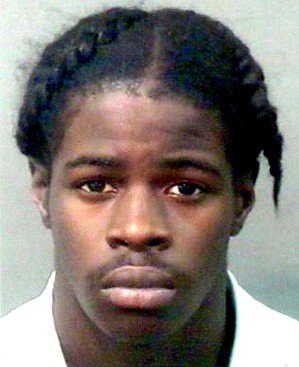 Demarcus Ralls
Murderer · USA · 2002
Demarcus Ralls Demarcus Ralls was 21 during his trial and testified in the pena…
4 victims
Demarcus Ralls
Murderer · USA · 2002
Demarcus Ralls Demarcus Ralls was 21 during his trial and testified in the pena…
4 victims
- Gender
- male
- Country
- USA
- Location
- Harrison County, Missouri, USA
- Date of birth
- November 2, 1959
- Age at first offence
- 36
- Characteristics
- drug dealer
- Victim profile
- Randy Hamilton and Stacey Hodge / Alfred Pinegar
- Method of murder
- Shooting
- Date(s) of murder
- June 11/23, 1995
- Years active
- 1995
- Date of arrest
- —
- Status
-
Executed
Sentenced to death on April 24, 1997; executed by lethal injection on July 16, 2014 in Missouri
Case overview
John Middleton was a user and dealer of methamphetamine.
He was convicted of first-degree murder and sentenced to death. He was executed by lethal injection in Missouri.
Victims
- Randy “Happy” Hamilton
- Stacey Hodge
- Alfred Pinegar
Timeline
- June 10, 1995 — Police arrested several people in Harrison County, Missouri, for possession and sale of methamphetamine; Middleton was not one of the people arrested.
- June 10, 1995 (afternoon, about ten days after the Harrison County arrests) — Middleton told a friend that “the snitches around here are going to start going down.”
- June 11, 1995 (the next day) — Middleton and his girlfriend, Maggie Hodges, met Hamilton and Stacey Hodge on a gravel road; Middleton shot and killed Hamilton and Hodge.
- June 23, 1995 — Alfred Pinegar was killed.
- June 25, 1995 — Hamilton’s car was discovered in the woods where it had been abandoned; Hamilton’s and Hodge’s decomposed bodies were found in the trunk; the car stereo was missing.
- June 26, 1995 (after Pinegar’s murder) — Pinegar’s body was found.
- September 11, 1995 — While Middleton was in jail, Middleton told fellow inmate Douglas Stallsworth that he killed Pinegar because he was afraid Pinegar would “snitch” on him and described details of the murder.
- October 18, 1995 — Middleton was charged by information with first-degree murder and armed criminal action in the Circuit Court of Harrison County.
- October 18, 1995 (later, prior to trial) — The prosecutor voluntarily withdrew the charge of armed criminal action.
- February 24, 1997 — The case went to trial after a change of venue to the Circuit Court of Adair County.
- April 24, 1997 — Middleton was sentenced to death.
- June 10, 1995 (for the drug-related context of the Eighth Circuit factual recitation) — Middleton was described as a local methamphetamine user and dealer not arrested on the June 10 operation.
- June 23, 1995 (in the Eighth Circuit recitation) — Middleton purchased ammunition at Wal-Mart in Bethany with Maggie Hodges and a man believed to be Pinegar, then drove to the vicinity of Ridgeway and killed Pinegar.
- July 10, 1995 — Hamilton’s car was discovered abandoned.
- July 16, 2014 — Missouri executed Middleton by lethal injection; he was pronounced dead at 7:06 p.m. CST.
The offence
Middleton’s drug dealing and “hit list”
Middleton was described as a user and dealer of methamphetamine. After several drug suspects were arrested, Middleton told friends that “snitches around here are going to start going down,” and he named people on a “hit list.”
Middleton identified Alfred Pinegar as being on his “hit list.” Middleton also discussed eliminating “snitches” and informants.
Pinegar murder
On June 23, 1995, Hobbs saw Middleton and Maggie Hodges traveling in a white Chevrolet 4x4 pickup. When Hobbs reached home, Pinegar was missing and the yard had been partly mowed. A twelve-gauge shotgun Pinegar habitually carried and about $200 were missing from the home.
Around noon, Middleton entered a Wal-Mart in Bethany with Hodges and a man presumed to be Pinegar. Middleton asked for six boxes of nine-millimeter shells and two boxes of twelve-gauge “double-ought” buckshot and paid cash. The trio drove several miles northeast of Bethany near Ridgeway and parked in a field.
Pinegar got out and began to run when Middleton raised the twelve-gauge shotgun. Middleton shot Pinegar twice in the back and then delivered the fatal wound by shooting him in the face. Middleton dumped Pinegar’s body over a fence.
Afterward, Middleton and Hodges returned to the Wal-Mart in Bethany to return the nine-millimeter ammunition, and they did not return the twelve-gauge “double-ought” shotgun shells. Booth exchanged the nine-millimeter shells for ammunition of another caliber.
Later that afternoon, Gerald Parkhurst saw Middleton and Hodges standing next to their pickup on a road north of Bethany. Parkhurst agreed to give them a ride, and Hodges and Middleton transferred five or six firearms to the trunk of Parkhurst’s car, including the twelve-gauge shotgun used to kill Pinegar. Parkhurst drove them to Spickard, Missouri, where they unloaded the weapons.
Two days after the murder, John Thomas visited Middleton. Middleton and Thomas discussed possible undercover drug informants and Middleton stated that “something had to be done about them.” Middleton also said he had acquired Pinegar’s twelve-gauge shotgun and that Pinegar “wouldn't be needing it no more.”
On June 26, 1995, Pinegar’s body was found. At the scene, police found a piece of leather fringe, an empty box of twelve-gauge shotgun shells, two expended twelve-gauge shells, a pair of sunglasses with a missing lens, and a small plastic clock with an adhesive square on the back of it.
While in jail, Middleton told Douglas Stallsworth that he killed Pinegar because he was afraid Pinegar would “snitch” on him. Middleton described details of Pinegar’s murder and told Stallsworth that some fringe was missing from his leather jacket and he was worried it had been left at the murder scene.
Hamilton and Hodge murders
After Middleton’s drug dealing and warning about informants, Middleton met Hamilton and Stacey Hodge on a gravel road. Stacey Hodge was Hamilton’s girlfriend.
Middleton shot Hamilton in the back once with an SKS rifle, and shot Stacey Hodge in the back three times. Middleton then shot Hamilton in the head, killing him. Maggie Hodges killed Stacey Hodge by shooting her in the head with another SKS rifle.
Middleton and Hodges placed both bodies in the trunk of Hamilton’s car. Middleton drove the car looking for a place to dispose of the bodies, with Hodges following in a truck.
While driving around, Middleton saw Danny Spurling. Middleton, covered in blood and driving Hamilton’s car, said he had “taken care” of Hamilton. Middleton asked Spurling what to do with the bodies and indicated he might burn them in Hamilton’s old house.
The next morning, Middleton gave Spurling the car stereo from Hamilton’s car and said that “they were really going to freak out when they found those two.” Middleton had a written list of names and asked if Spurling knew anyone on the list.
Hamilton’s car was later discovered abandoned in the woods, with decomposed bodies in the trunk and the car stereo missing.
Bullet fragments taken from Hodge were described as displaying class characteristics consistent with the SKS rifles Middleton gave to an Iowa contact.
Investigation and evidence
Ammunition purchases and forensic linkage
Witness testimony included a sporting goods employee, Wesley Booth, who described the purchase of ammunition at Wal-Mart in Bethany, including six boxes of nine-millimeter shells and two boxes of twelve-gauge “double-ought” buckshot.
Police later linked the shootings to ammunition and rifles through forensic comparisons, including class characteristics described in the record.
Guns and materials
Middleton acquired or was described as possessing Pinegar’s twelve-gauge shotgun and transferred firearms to others, including transferring guns to Dennis Rickert in Iowa, where Rickert later turned the guns over to police.
Police found physical items at Pinegar’s murder scene, including a piece of leather fringe, an empty box of twelve-gauge shotgun shells, two expended twelve-gauge shells, a pair of sunglasses with a missing lens, and a small plastic clock with an adhesive square on the back.
Confessions to other inmates
While awaiting trial, Middleton confessed to fellow jail inmate Douglas Stallsworth in the Harrison County jail. Stallsworth testified that Middleton described the murders, admitted killing Hamilton and Hodge because they were informants, and acknowledged hiding their bodies and taking the rifles to Iowa.
In September 1995, while in jail, Middleton also told Stallsworth about Pinegar’s murder, stating that he was afraid Pinegar would “snitch” about Middleton’s methamphetamine dealing and describing details of the killing.
Arrest and pretrial matters
Middleton was not arrested during the June 10, 1995 Harrison County drug arrests.
After Pinegar’s body was found and identified as a murder, Middleton was arrested for Pinegar’s murder shortly thereafter.
At trial, Middleton did not testify and offered no evidence in his defense.
Escape evidence during awaiting trial in this case
In the Hamilton/Hodge trial proceedings, evidence of Middleton’s escape was admitted. A trooper investigating a noise from the jail found Middleton standing outside the locked cell area.
Middleton argued that his escape did not show consciousness of guilt in the Harrison County case, and he suggested he may have been trying to visit Maggie Hodges, incarcerated on the women’s side, but the court held escape evidence was generally admissible to show consciousness of guilt and left motivation as a jury question.
Trial
Pinegar case (Circuit Court of Adair County)
Middleton was charged by information with first-degree murder and armed criminal action on October 18, 1995 in the Circuit Court of Harrison County. The prosecutor voluntarily withdrew the armed criminal action charge.
Following a change of venue to the Circuit Court of Adair County, the case went to trial on February 24, 1997. The jury found Middleton guilty of first-degree murder.
In the punishment phase, the state presented evidence that Middleton had also murdered Randy Hamilton and Stacey Hodge as part of a plan to eliminate “snitches.” The jury recommended a death sentence and the trial court imposed death for the Pinegar murder.
Evidentiary and procedural appellate rulings on Pinegar case
The Missouri Supreme Court affirmed the judgment. The court addressed multiple issues on direct appeal, including:
- denial of Middleton’s motion to suppress identification testimony of Wesley Booth
- denial of Middleton’s request for disclosure of mental health records of state’s witness Douglas Stallsworth
- rulings related to the state’s guilt-phase closing argument
- denial of Middleton’s motion to suppress evidence seized under a search warrant and evidence seized from a vehicle under the automobile exception
- rulings on cross-examination of defense witness Dr. Murphy during the penalty phase
- acceptance of substitution of an excused juror with an alternate juror during the penalty phase
- rejection of proposed jury instructions concerning mitigating circumstances and rejection of proposed additional penalty phase instructions
- striking venirepersons for cause
- rejection of claims concerning admission of crime scene video and photographs and fragments of teeth and jaw bone
- admission of trace evidence specialist testimony by Kathleen Green
- denial of requests for a second change of venue
- admission of penalty-phase evidence concerning other murders and victim impact testimony of Pinegar’s mother
- denial of additional penalty phase instruction requests and denial of additional continuance requests
- denial of motions concerning first-degree murder definition, jury ages, prosecutorial discretion, and reasonable doubt instruction
- rejection of claims of defects in the transcript and rejection of proportionality and meaningful review arguments
The Missouri Supreme Court affirmed, and the judgment was later further reviewed and affirmed through additional procedural stages.
Sentencing
Middleton was sentenced to death for the Pinegar murder, with death sentences also imposed for the Hamilton/Hodge murders in a separate trial.
The Missouri Supreme Court affirmed Middleton’s convictions and sentences on direct appeal and affirmed denial of post-conviction relief in the subsequent proceedings.
Appeals and post-conviction proceedings
Direct appeals and post-conviction litigation
Middleton appealed both his Pinegar conviction and his Hamilton/Hodge convictions.
Pinegar direct appeal citations
- State v. Middleton, 995 S.W.2d 443 (Mo. 1999)
- State v. Middleton, 998 S.W.2d 520 (Mo. 1999)
- Middleton v. State, 80 S.W.3d 799 (Mo. 2002)
- Middleton v. State, 103 S.W.3d 726 (Mo. 2003)
Federal habeas
- Middleton v. Roper, 498 F.3d 812 (8th Cir. Mo. 2007)
Claims raised and outcomes
In the Pinegar-related post-conviction proceedings, Middleton alleged:
- an undisclosed deal with a key prosecution witness
- ineffective assistance of trial counsel regarding voir dire, guilt-phase defense decisions, mitigation presentation, objections to evidence, closing argument, and jury instructions
- ineffective assistance of appellate counsel
The Missouri Supreme Court affirmed the denial of post-conviction relief.
Outcome
Middleton remained sentenced to death. Missouri executed Middleton after final appeals were resolved.
Execution and final statements
Middleton was given a lethal injection and pronounced dead at 7:06 p.m. CST in Missouri.
Middleton’s final words were:
“You are killing an innocent man.”
The final meal consisted of:
- A cheeseburger
- A pork steak
- French fries
- Apple pie
- A chocolate milk shake
Aftermath
Middleton was executed in Missouri following proceedings that included stays of execution and rulings on mental incapacity for execution. The matter proceeded after those stays were lifted and courts declined further halting of the execution.

Spotted an error, or have more information about this case?