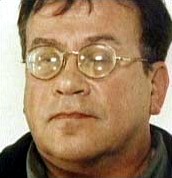
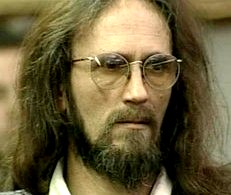
Ronald Mikos
Murderer Robert Martines Perez
Murderer · USA · 1994
Name: Robert Martines Perez · Other name used in proceedings: Robert Martinez P…
15 victims
Robert Martines Perez
Murderer · USA · 1994
Name: Robert Martines Perez · Other name used in proceedings: Robert Martinez P…
15 victims
 Billy Frank Vickers
Murderer · USA · 1993
Billy Frank Vickers Vickers was executed by lethal injection in Texas on Januar…
14 victims
Billy Frank Vickers
Murderer · USA · 1993
Billy Frank Vickers Vickers was executed by lethal injection in Texas on Januar…
14 victims
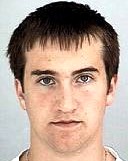 Adam Sapikowski
Homicide · USA · 2005
Adam Sapikowski was a Chapel Hill teenager who pleaded guilty to second-degree…
2 victims
Adam Sapikowski
Homicide · USA · 2005
Adam Sapikowski was a Chapel Hill teenager who pleaded guilty to second-degree…
2 victims
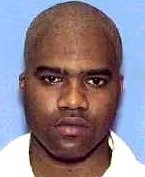 Roderick Newton
Murderer · USA · 1999
Name: Roderick Newton · TDCJ Number: 999348 · Date of Birth: 12/07/1977 · Gende…
1 victim
Roderick Newton
Murderer · USA · 1999
Name: Roderick Newton · TDCJ Number: 999348 · Date of Birth: 12/07/1977 · Gende…
1 victim
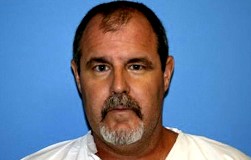 Scott Dekraai
Mass murderer · USA · 2011
Scott Dekraai was arrested after the Seal Beach shooting at the Salon Meritage…
8 victims
Scott Dekraai
Mass murderer · USA · 2011
Scott Dekraai was arrested after the Seal Beach shooting at the Salon Meritage…
8 victims
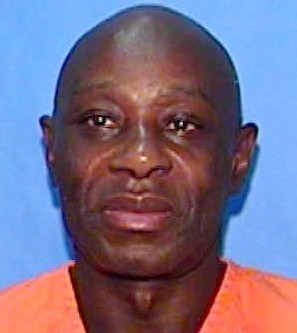 Joe Elton Nixon
Murderer · USA · 1984
Joe Elton Nixon (born August 23, 1961) was an American convicted murderer on De…
1 victim
Joe Elton Nixon
Murderer · USA · 1984
Joe Elton Nixon (born August 23, 1961) was an American convicted murderer on De…
1 victim
 Robert Gattis
Murderer · USA · 1990
Robert Gattis (DOB: 11/18/1961) was a Black male. Gattis was convicted in Octob…
1 victim
Robert Gattis
Murderer · USA · 1990
Robert Gattis (DOB: 11/18/1961) was a Black male. Gattis was convicted in Octob…
1 victim
 Milton Mathis
Murderer · USA · 1998
December 15, 1998 — Esmerelda Lester and her 15-year-old daughter Melanie Almag…
2 victims
Milton Mathis
Murderer · USA · 1998
December 15, 1998 — Esmerelda Lester and her 15-year-old daughter Melanie Almag…
2 victims
- Gender
- male
- Country
- USA
- Location
- Chicago, Illinois, USA
- Date of birth
- December 10, 1947
- Age at first offence
- 55
- Characteristics
- history of mental illness, drug addict
- Victim profile
- Joyce Brannon, 54 (She died just a few days before she was set to testify against him before a Federal Grand Jury)
- Method of murder
- Shooting (.22-caliber revolver)
- Date(s) of murder
- January 27, 2002
- Years active
- 2002
- Date of arrest
- 7 days after
- Status
-
Sentenced to death
Sentenced to death on May 23, 2005
Case identification
Ronald Mikos was a podiatrist referred to by some as the Medicare Murderer. He was born on December 10, 1947 in Chicago, Illinois.
Timeline
- December 2002 — Joyce Brannon, a nurse, was murdered in her basement apartment in the basement of an Evangelical Lutheran Church.
- January 27, 2002 — Prosecutors told the jury that Mikos went to Joyce Brannon’s apartment and emptied his six-shot revolver into her.
- A week later — Mikos was jailed on murder charges.
- Three weeks before Brannon’s murder — Police were called to the house of Shirley King, one of Mikos’s girlfriends, and discovered that Mikos kept multiple firearms in King's residence.
- May 5, 2005 — A jury convicted Ronald Mikos of defrauding Medicare out of more than $1 million by billing the Health and Human Services program for surgeries he never performed.
- May 23, 2005 — A petit jury consisting of six men and six women recommended the death penalty; the verdict was read and the death sentence was imposed.
- August 16, 2007 — The case was argued before the United States Court of Appeals for the Seventh Circuit.
- August 25, 2008 — The appellate decision was issued.
- April 19, 2005 — Testimony began in the murder trial of Ronald Mikos (as described in the run-on narrative).
- A few days before — Joyce Brannon died just a few days before she was set to testify before a Federal Grand Jury.
Background
Ronald Mikos was under investigation for submitting phony bills to Medicare, with prosecutors alleging more than $1 million in bills for more than 6,000 procedures that he never performed. He billed Medicare for routine procedures, including trimming toenails, and also billed for podiatric surgery. Federal investigators proved that Mikos at one time owned a .22-caliber revolver whose rifling produced bullets similar to the rounds found in Joyce Brannon’s body.
Friends and the mother of two of Mikos’s five known children testified that Mikos was a loving father to his three youngest children. His two older children, who were grown adults, did not testify on behalf of their father, and no other direct relative of Mikos testified on his behalf.
The jury listened to taped conversations between Mikos and his son Ronald Mikos, Jr. (a/k/a Adonis Mikos; also called Adonis King). Mikos had repeatedly called Joyce Brannon begging her not to testify against him. Brannon relied on these conversations to her sister, Janet Bunch, who testified against Mikos. Mikos did not testify in his own defense. His girlfriend Stacy Rosenthal testified that he was a loving person and that he could make a positive contribution to society from prison both as an inmate and a father.
Mikos’s defense attorneys Cynthia Giachetti and John Beal told the jury that Mikos suffered from mental defects and that his mind had deteriorated from years of drug abuse and alcoholism. In the trial, the defense also presented psychiatrists to testify that he appeared to have some form of degenerative brain condition that could have affected his judgment.
The offence
Medicare fraud
The jury convicted Ronald Mikos of defrauding Medicare out of more than $1 million by billing the Health and Human Services program from surgeries he never performed. The appellate court described that Medicare does not cover the costs of routine medical procedures and that Mikos performed nothing but routine procedures, such as trimming toenails of people unable to clip their own, yet he billed Medicare for thousands of surgeries.
Investigators became suspicious and Mikos arranged for elderly patients (many not mentally competent) to submit affidavits stating that surgeries had occurred, while trial evidence included testimony from Mikos’s secretary of seven years that he had never performed a single surgery during her time in his employ, and medical specialists who examined these people found no signs of surgery. The appellate decision also described that Mikos wrote affidavits for other patients and had their signatures forged.
A grand jury issued subpoenas to seven of Mikos’s patients. Mikos visited them, trying to dissuade each from testifying. None appeared to testify, and the appellate decision stated that the record did not show whether it was due to Mikos’s persuasiveness or due to their own mental and physical limitations. The appellate court stated that Joyce Brannon was the reason one of the seven did not show up, because she had been shot six times at close range.
Murder of a federal witness
Joyce Brannon, a 54-year-old nurse and church caretaker, was murdered in the basement of an Evangelical Lutheran Church. She was shot six times at point-blank range, including shots to the head and back, with the final shot into the neck at point-blank range. The appellate court stated that police concluded a revolver had been used due to the lack of shell casings.
The appellate decision described that Brannon had retired from her job as a nurse to become the secretary of a church where she lived in the basement. Her grand jury subpoena was found near her body.
Prosecutors argued that Mikos killed Brannon because she was going to testify against him before a Federal Grand Jury, and that an attack or murder of a federal witness was an attack upon the justice system. Prosecutors told the jury that Mikos killed Brannon because he was afraid she would talk and reveal his scam, and because Brannon was proud and determined not to commit perjury.
Investigation
Federal investigators from the Federal Bureau of Investigation and the Department of Health and Human Services proved that Mikos owned a .22-caliber revolver whose rifling produced bullets similar to the rounds found in Brannon’s body. Cell phone records indicated that Mikos was within miles of the crime scene around the time of the murder.
Notes were found on the defendant at the time of arrest indicating that he had been lurking around the church where Brannon lived and worked just days prior to her death. Bullets found in Mikos’s car matched bullets recovered from Brannon’s body. Investigators were unable to find the murder weapon itself, but Mikos owned a book at the time of the crime entitled "How to Hide Anything".
The appellate decision provided additional ballistic and search details. It described the bullets found as .22 long rifle rim-fire, brass-coated rounds with solid round noses, concave bases, and multiple knurled cannelures, with rifling described as having a right-hand twist. Mikos owned a gun that could have fired those bullets, and the police knew this because three weeks before Brannon’s murder, they had been called to the house of Shirley King (one of Mikos’s girlfriends) and discovered multiple firearms in King’s residence. Police took away the guns and ammunition when Mikos could not produce a current firearm owner’s identification card, giving him a detailed inventory. After renewing his card, Mikos retrieved the guns and transferred them to his storage unit at a stand-alone facility.
After the murder, police searched the storage unit and found everything on the inventory down to the last bullet, except for a .22 caliber Herbert Schmidt revolver that fired long rifle ammunition. A search of Mikos’s car turned up a box of Remington .22 long rifle rim-fire, brass-coated rounds with solid round noses, concave bases, and multiple knurled cannelures, and twenty shells were missing from the box. The Schmidt revolver was never found. The car contained one spent casing with a mark made by a hemisphere-shaped firing pin; the appellate decision stated that a Schmidt .22 revolver would have left such a mark.
One member of the church’s staff saw Mikos (or someone who looked like him) at the church a week before Brannon’s murder. The witness described the intruder’s hair as gray, while Mikos’s was not, and police found a bottle of gray hair coloring in Mikos’s car. The car also contained handwritten details of the church’s schedule revealing when a person could enter Brannon’s apartment without being seen.
Data on Mikos’s smart phone showed he had been trying systematically to contact all of his patients who had been subpoenaed to provide records or testimony in the investigation. Records showed he placed and received calls that went through cell towers near Brannon’s church at approximately the time he was identified as being there the week before the murder, and again one and two days before the murder. The appellate decision concluded that a jury could conclude he had been watching for the right opportunity to slip into Brannon’s apartment.
The appellate decision also described that federal agents entered Mikos’s storage unit on the authority of a “sneak and peek” warrant that allowed inspection but not seizure, issued under 18 U.S.C. § 3103a. Agents found so many firearms and ammunition that they could not determine what was there without removing guns and ammo and spreading them on the ground immediately outside the door, where they could be photographed. Agents decided that there was no point in deferring seizure; one of their number was dispatched to obtain a regular warrant, which issued swiftly. The regular warrant was executed approximately four hours after arriving at the storage unit, and the guns and ammo were hauled away.
Arrest
Mikos was jailed on murder charges a week after police identified him as an immediate suspect. Notes were found on him at the time of arrest indicating that he had been lurking around the church where Brannon lived and worked just days prior to her death.
Trial
Charges and counts
The appellate decision stated that after concluding Mikos had slain Joyce Brannon, the jury sentenced him to death under 18 U.S.C. § 1512(a)(1)(A). It also stated that the jury convicted him of other crimes, including fraud, obstruction of justice, attempting to influence a grand jury, and witness tampering, under 18 U.S.C. §§ 1341, 1347, 1503, 1505, 1512(b)(1).
The trial record described that a dispute about the amount of loss required attention later, and that the evidence of fraud and witness tampering was overwhelming and essentially uncontested while the evidence of murder was strong and circumstantial.
Evidence presented
The jury was told that Mikos killed Brannon to keep her from testifying against him in a Medicare fraud case and that her grand jury subpoena was found just a few feet from her body. Prosecutors told jurors that Mikos’s grand jury subpoena was found near her body.
The appellate decision described physical evidence and testimony including that no one saw Mikos do it; the gun was not found; and the killer left no fingerprints. It also described the expert firearm testimony by Paul Tangren, an FBI agent specializing in firearms rifling and ballistics. Tangren testified that a gun’s serial number revealed it to be a “Deputy Combo” model and that an FBI database of weapons maintained by the FBI shows that barrels of Herbert Schmidt Deputy Marshal models have eight grooves with a right-hand twist, matching bullets that killed Brannon. Tangren also testified that Deputy Combo and Deputy Marshal guns are physically identical and that only the trade name differs. Tangren retrieved a Herbert Schmidt Deputy Marshal revolver from the FBI armory, fired it, and verified that the barrel had eight grooves and a right twist.
The appellate decision described Mikos’s argument that his gun was a “Model 21” rather than a “Deputy Combo” or “Deputy Marshal,” and that the Herbert Schmidt Model 21 has only six grooves. Tangren testified that the serial number could have been assigned only to a “Deputy Combo” model.
The appellate decision also discussed Mikos’s appellate arguments about the admissibility of Tangren’s testimony. It described that Mikos insisted the agent was not qualified as an expert under Fed.R.Evid. 702 due to allegedly no scholarly literature and alleged inaccuracy of the FBI database, and it described the court’s reasons for rejecting those arguments.
Closing argument themes
The appellate decision addressed prosecutor arguments about the gun’s disappearance. It described that Mikos contended that asking the jury to infer guilt from the fact that the Schmidt revolver was missing violated the fifth amendment self-incrimination clause. It also described that Mikos characterized the prosecutor’s line of argument as an impermissible comment on his failure to testify, and it stated that the court concluded the inference was based on facts established by evidence independent of the accused’s silence.
The appellate decision described prosecutorial statements that the “only possible explanation for this gun being missing is because [Mikos] doesn't want it brought in here” and that Mikos was playing a “game of hide-and-go-seek”. The appellate opinion described that those statements were interpreted as efforts to hold his conduct against him.
In the dissent portion reproduced in the appellate decision narrative, the dissent quoted the prosecutor’s comments about Mikos’s demeanor and lack of remorse. Those quoted remarks were:
“sitting 20 feet away from you and there's nothing, no remorse whatsoever, because he thinks he got away with it.”
and:
“sorry he got caught, but he's not sorry that he shot [the victim]. The only ramramification of that as he's sitting opposite you right now, nothing else in this man's heart, not a single thing. He has no remorse for what he did.”
The appellate decision also included the prosecutor’s closing argument question about Brannon’s dying:
“What was [Brannon] thinking when she sat there for three to four minutes dying? ․ What was she thinking? She couldn't move, she couldn't cry out, she couldn't run, and the reason she couldn't do those things was due to her disability.”
Jury deliberations and verdict
The petit jury consisted of six men and six women and recommended the death penalty. The jury deliberated for less than three complete days before handing down its verdict. In the penalty phase, the jury found unanimously that Mikos should be sentenced to death and that Brannon suffered from infirmity and had a number of health problems. The appellate narrative stated that the jury found both statutory aggravating factors unanimously and beyond a reasonable doubt.
The appellate decision further described that the jury found three non-statutory aggravating considerations unanimously and beyond a reasonable doubt: that Mikos killed Brannon to prevent her from testifying against him; that the crime caused loss to Brannon’s friends, family, and co-workers; and that Mikos had not demonstrated remorse for his crimes.
The appellate decision described that Mikos asked the jury to find 33 mitigating considerations, and it summarized several of them including:
- Eight members of the jury concluded Mikos had a loving relationship with his son, Ronald Mikos, Jr.
- Nine jurors concluded Mikos’s execution would cause his son “great pain and emotional distress.”
- A single juror concluded that Mikos’s substance abuse had led to mental disorders that were mitigating.
- Two jurors concluded that civil investigations into Mikos’s fraud had caused him stress and led to drug and alcohol abuse, a mitigating consideration.
- Five jurors concluded that delay in completing the civil investigation was a mitigating consideration.
- Only four jurors supported the statement: “Ronald Mikos is a human being.” After making those findings, the jurors voted unanimously that Mikos be executed for killing Joyce Brannon.
Sentencing
On May 23, 2005, the jury recommended the death penalty and the court imposed it under federal law. The narrative stated that under federal law the district judge had no choice but to impose the death sentence.
The appellate decision also described the 24 non-capital convictions and sentences, stating that on each of 15 counts Mikos received 60 months’ imprisonment and on each of 9 remaining counts he received 78 months’ imprisonment; all sentences ran concurrently and included restitution of $1.8 million. It stated that Mikos contested the loss calculation for imprisonment and restitution.
The appellate decision later held that restitution needed correction. It described that the burden of showing loss was on the prosecutor, that evidence of actual loss was not in the record, and that the award of restitution was vacated and had to be recalculated on remand. It distinguished intended loss from restitution based on actual loss and stated that intended loss was $1.8 million because the jury evidence showed Mikos billed Medicare for podiatric surgery he never performed.
Appeals
The appellate decision was issued by the United States Court of Appeals for the Seventh Circuit in a case titled: UNITED STATES v. MIKOS
United States of America, Plaintiff-Appellee, v. Ronald Mikos, Defendant-Appellant. Nos. 06-2375, 06-2376, 06-2421. It stated that the case was argued Aug. 16, 2007 and decided Aug. 25, 2008, with judges EASTERBROOK (Chief Judge) and POSNER and EVANS (Circuit Judges).
Motions and constitutional arguments
The appellate decision addressed multiple issues, including:
- Mikos’s challenge to the admission of evidence seized from his storage unit after a “sneak and peek” warrant, including an argument that moving some guns outside and testing them effected an unauthorized seizure.
- Mikos’s claim that the prosecutor violated the fifth amendment self-incrimination clause by asking the jury to infer guilt from the missing Schmidt revolver.
- Mikos’s challenge to Tangren’s expert testimony under Fed.R.Evid. 702 and the denial of a request to exclude it under Fed.R.Evid. 403.
- Mikos’s claim that the district judge should have granted his motion to hire a ballistics expert David LaMagna at public expense, and the related discussion about the defense expert John R. Nixon.
- Mikos’s request for a jury-selection expert and the district judge’s denial.
- Mikos’s argument that evidence was insufficient to support the jury’s verdict that he murdered Brannon.
The appellate decision also addressed Mikos’s arguments challenging the Federal Death Penalty Act as unconstitutional on multiple grounds, including an indictment clause argument, due process arguments about evidence and hearsay, and a vagueness argument. The appellate court rejected those arguments and concluded there was no constitutional reason Mikos could not be sentenced to death for his premeditated murder of a witness.
The appellate decision discussed constitutional doctrine relating to aggravating factors needing to be charged in indictments, and it discussed Ring v. Arizona and Apprendi v. New Jersey. It stated that the indictment of Mikos included several aggravating factors and that all requirements of Ring and Apprendi had been satisfied. It also discussed that the federal statute was silent on whether aggravating factors were included in an indictment and that the court found no constitutional error because rights under Ring were honored.
Aggravating factors and remorse
The appellate decision summarized the two statutory aggravating factors found unanimously and beyond a reasonable doubt: Mikos substantially planned and premeditated the murder, and Brannon was particularly vulnerable due to infirmity. It also described non-statutory aggravating considerations and rejecting certain challenges.
The appellate narrative addressed disputes about the prosecutor’s comments on “lack of remorse,” including the majority’s view that even if certain portions were problematic, the weight of evidence remained and any error would be harmless.
A separate opinion portion included a dissent that contested the vulnerable victim and lack-of-remorse arguments and contended a new death-penalty hearing was warranted. The dissent stated:
- The prosecutor’s arguments based on victim vulnerability and lack of remorse were unsound.
- It was not possible to find beyond a reasonable doubt that the jury would have sentenced Mikos to death even if those arguments had not been made. The dissent also referenced the victim’s obesity-related conditions and described that vulnerability must relate to the nature of the crime and circumstances of the murder, including discussion that Brannon could not run or resist.
Outcome
The appellate decision affirmed the convictions and the death sentence. It stated the result as: affirmed on all subjects except restitution, which was remanded. It also stated that a restitution award was vacated and had to be recalculated on remand.
Other details
The narrative stated that Mikos was only the second defendant to be condemned to death in the history of Chicago’s Everett M. Dirksen Federal Courthouse. It stated that the first was street gang leader Darryl “Pops” Johnson, who was awaiting execution for the murder of two federal witnesses.
The appellate decision also noted that the jury sentenced Mikos to death after concluding that he had slain Joyce Brannon. It stated that the evidence of fraud and witness tampering was overwhelming and essentially uncontested.
The appellate decision referenced statutory provisions and standards, including 18 U.S.C. § 1512(a)(1)(A) and 18 U.S.C. §§ 1341, 1347, 1503, 1505, 1512(b)(1). It also referenced the Federal Death Penalty Act and procedures under 18 U.S.C. §§ 3591-98 and related sentencing procedures in 18 U.S.C. § 3593(d) and 18 U.S.C. § 3595(c)(2).
The narrative included a statement by Joseph C. Ways, the assistant special agent in charge of the FBI’s Chicago office:
"If Dr. Mikos would have just taken the punishment for which he was being investigated, he would be walking the streets today,"
"He would have been released probably with time served for the Medicare fraud that he committed. Unfortunately, he did not see it that way and he decided to take matters into his own hands."
The narrative included statements issued through the U.S. attorney’s office attributed to Brannon’s sister, mother, and other relatives. It said:
- It was “beyond belief that someone could murder Joyce in such a horrible way.”
- “Those who knew Joyce -- her family, her friends, members of her church, which was her life -- cannot comprehend how anyone could end her life in this way, even someone desperate to escape punishment for other crimes,” they said.
- “We will always remember Joyce and be proud of her for doing what she knew was right even though, tragically, she lost her life for doing so,” they said.
- “We fully support the wisdom and strength of this jury and the tough decisions that they have handed down -- we know it wasn't easy.”
Spotted an error, or have more information about this case?