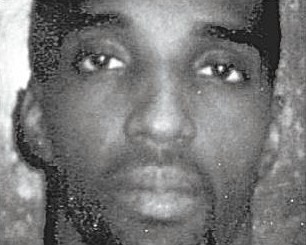
Johnile DuBois
Murderer Brian Kevin Rosenfeld
Murderer · USA · 1985
Brian Kevin Rosenfeld Brian Kevin Rosenfeld was sentenced to three concurrent l…
23 victims
Brian Kevin Rosenfeld
Murderer · USA · 1985
Brian Kevin Rosenfeld Brian Kevin Rosenfeld was sentenced to three concurrent l…
23 victims
 Russell Ellwood
Murderer · USA · 1991
Russell Ellwood was a former taxi driver. Authorities suspected him of killing…
20 victims
Russell Ellwood
Murderer · USA · 1991
Russell Ellwood was a former taxi driver. Authorities suspected him of killing…
20 victims
 Robert Martines Perez
Murderer · USA · 1994
Name: Robert Martines Perez · Other name used in proceedings: Robert Martinez P…
15 victims
Robert Martines Perez
Murderer · USA · 1994
Name: Robert Martines Perez · Other name used in proceedings: Robert Martinez P…
15 victims
 Billy Frank Vickers
Murderer · USA · 1993
Billy Frank Vickers Vickers was executed by lethal injection in Texas on Januar…
14 victims
Billy Frank Vickers
Murderer · USA · 1993
Billy Frank Vickers Vickers was executed by lethal injection in Texas on Januar…
14 victims
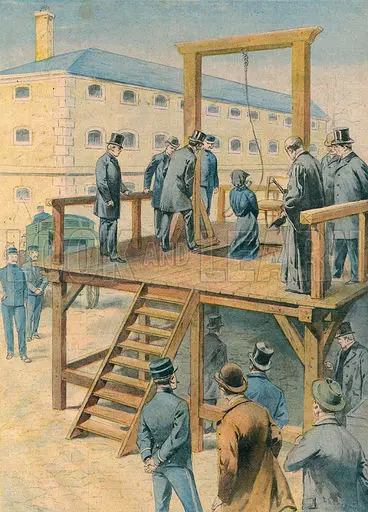 Mary Mabel Rogers
Murderer · USA · 1902
Mary Mabel Rogers (1883 – December 8, 1905) was the last woman legally executed…
1 victim
Mary Mabel Rogers
Murderer · USA · 1902
Mary Mabel Rogers (1883 – December 8, 1905) was the last woman legally executed…
1 victim
 Albert Edward Matheson
Murderer · United Kingdom · 1957
Albert Edward Matheson was employed as a handyman at a hall in Newcastle, where…
1 victim
Albert Edward Matheson
Murderer · United Kingdom · 1957
Albert Edward Matheson was employed as a handyman at a hall in Newcastle, where…
1 victim
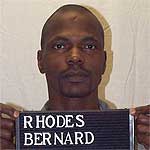 Bernard Rhodes
Murderer · USA · 1997
Bernard Rhodes was convicted of first degree murder and first degree robbery. T…
1 victim
Bernard Rhodes
Murderer · USA · 1997
Bernard Rhodes was convicted of first degree murder and first degree robbery. T…
1 victim
 Brian Wakefield
Murderer · USA · 2001
Brian Wakefield was sentenced to death on March 4, 2004 for killing an elderly…
2 victims
Brian Wakefield
Murderer · USA · 2001
Brian Wakefield was sentenced to death on March 4, 2004 for killing an elderly…
2 victims
 Warren Leblanc
Homicide · Gran Bretaña · 2004
Warren Leblanc, born in 1987 and aged 17, was described as a former friend of 1…
1 victim
Warren Leblanc
Homicide · Gran Bretaña · 2004
Warren Leblanc, born in 1987 and aged 17, was described as a former friend of 1…
1 victim
 Chippa Mateane
Mass murderer · South Africa · 2006
Chippa Mateane was a police superintendent who went on a killing spree in the W…
8 victims
Chippa Mateane
Mass murderer · South Africa · 2006
Chippa Mateane was a police superintendent who went on a killing spree in the W…
8 victims
- Gender
- male
- Country
- USA
- Location
- Portsmouth, Virginia, USA
- Date of birth
- 1967
- Age at first offence
- 24
- Characteristics
- robbery, drugs
- Victim profile
- Philip C. Council, 39 ( mentally handicapped convenience store clerk)
- Method of murder
- Shooting
- Date(s) of murder
- November 20, 1991
- Years active
- 1991
- Date of arrest
- —
- Status
-
Executed
Executed by lethal injection in Virginia on August 31, 1998
Case overview
Johnile DuBois was executed by lethal injection in Virginia on August 31, 1998. He was put to death at the Greensville Correctional Center a few hours after Gov. Jim Gilmore refused a clemency request. DuBois was pronounced dead at 9:09 p.m.
When asked for a final statement, DuBois said: "I send love to my family and friends and everyone who knows them. That's it." He did not apologize to the victim or his family.
Larry Traylor, a Department of Corrections spokesman, said 11 members of the victim's family witnessed the execution. DuBois smiled at 1 of the prison guards as he came into the death chamber and spoke briefly to a minister before making his statement. DuBois received no visits from relatives on Monday, and he was not visited by friends or family yesterday. DuBois requested a special last meal but did not want the menu released to the public.
Outside the prison, four death penalty protesters lighted candles as the execution hour approached.
Timeline
- November 20, 1991 — DuBois and three teen-age accomplices robbed the In-A-Hurry store in Portsmouth; DuBois was the only robber who was armed and shot store employee Philip C. Council in the chest.
- August 31, 1998 — Gov. Jim Gilmore refused a clemency request; the U.S. Supreme Court voted 7-2 to deny DuBois' final appeal and stay request; DuBois was executed by injection at the Greensville Correctional Center and was pronounced dead at 9:09 p.m.
The offence
DuBois and three teen-age accomplices robbed the In-A-Hurry store in Portsmouth on Nov. 20, 1991. DuBois was the only robber who was armed.
Store employee Philip C. Council, 39, suffered from mental handicaps because of a car accident. When Council did not open the cash register quickly enough, the unarmed robbers jumped the counter and beat him. DuBois shot Council in the chest. The robbers made off with $400.
Investigation / background facts relevant to sentencing
DuBois was on parole at the time of the slaying. DuBois was 25 at the time of the robbery and shooting.
DuBois pleaded guilty and cooperated with prosecutors. In exchange for his plea and assistance, a prosecutor/Commonwealth's Attorney Martin Bullock did not argue for the death penalty. Portsmouth Circuit Judge Johnny E. Morrisson/Morrison was not bound by the agreement and sentenced DuBois to death.
In rejecting the clemency petition, Gov. Jim Gilmore said: "Dubois admitted killing Mr. Council and pled guilty to capital murder. The record shows that at all times Dubois was apprised that he could be sentenced to death by the judge."
DuBois was described as a drug dealer. Court records said DuBois earned $2,500 a month selling drugs. The record also said DuBois was the father of nine illegitimate children whom he did not support.
Before the shooting, DuBois had been convicted of larceny, assault, firearm possession, and probation violations. He had previously been convicted of grand larceny in 1987, assault in 1990, and possession of a firearm in 1990. There were two probation violations, and two charges of robbery and attempted robbery against him were not prosecuted.
During sentencing, Portsmouth Circuit Judge Johnny E. Morrisson/Morrison decided that DuBois would continue to be a "danger to others by virtue of his way of life," and sentenced DuBois to death.
Clemency and appeals
The U.S. Supreme Court voted 7-2 to deny DuBois' final appeal and stay request.
Gov. Jim Gilmore refused to stop the execution. In a two-paragraph statement, he said he thoroughly reviewed DuBois' clemency petition but found no reason to intervene. In that statement, Gilmore said: "Upon a thorough review of the petition for clemency, the numerous court decisions regarding this case, and the circumstances of this matter, I decline to intervene," and he declined to intervene.
In 1995, Gilmore, then the attorney general, tried to have DuBois executed after a new federal law limited the amount of time death row inmates have to file appeals. Gilmore said DuBois had missed the appeal deadline and should be immediately executed. A federal appeals court ruled that the law could not be applied retroactively.
Trial
DuBois pleaded guilty. Commonwealth's Attorney Martin Bullock did not argue for the death penalty in exchange for DuBois' plea and assistance.
Sentencing
Morrisson/Morrison sentenced DuBois to death. The sentencing decision proceeded despite the prosecutor's promise not to seek the death penalty.
Outcome / execution
DuBois was executed by injection at the Greensville Correctional Center. Larry Traylor said DuBois was pronounced dead at 9:09 p.m.
After the U.S. Supreme Court denied a stay of execution, DuBois was put to death a few hours after Gov. Jim Gilmore refused clemency.
DuBois' last words were: "I send love to my family and friends and everyone who knows them. That's it."
Larry Traylor said 11 members of the victim's family witnessed the execution. A sister of victim Philip C. Council, Gloria Carr, said: "We promised our mom," followed by: "She never got over it, and we promised her that if she didn’t make it that we would go for her. That was one of the last things she said." Gloria Carr's mother, Elizabeth Council, died in 1996.
Other details
DuBois was described as having no visits from relatives on Monday and not being visited by friends or family yesterday. Tammy Brown, a prison spokesman, said DuBois met with his spiritual advisers yesterday. DuBois turned down a request for an interview last month. DuBois' lawyers, Joseph Bowman and Joseph McCarthy of Alexandria, declined to comment on the unusual case. Robert Lee, a lawyer with the Virginia Capital Representation Resource Center, said DuBois' mother was critically ill and that most of his family lived in Rhode Island and Connecticut.
Four protesters against the death penalty were in a field outside the prison while the execution took place. DuBois' execution was described as the eighth execution in Virginia that year and the 54th since the death penalty was allowed to resume by the U.S. Supreme Court in 1976. Texas, with 156 executions, had executed more condemned prisoners since 1982. Virginia had another four executions scheduled before the end of October. The state executed nine people last year, more than any state except Texas. DuBois' execution was also described as the 44th condemned prisoner to be put to death in the USA that year and the 476th overall since America resumed capital punishment on Jan. 17, 1977.


Spotted an error, or have more information about this case?