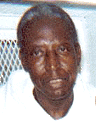
Thomas Miller-El
Murderer Brian Kevin Rosenfeld
Murderer · USA · 1985
Brian Kevin Rosenfeld Brian Kevin Rosenfeld was sentenced to three concurrent l…
23 victims
Brian Kevin Rosenfeld
Murderer · USA · 1985
Brian Kevin Rosenfeld Brian Kevin Rosenfeld was sentenced to three concurrent l…
23 victims
 Marvin Gray
Murderer · USA · 1975
Marvin Gray was convicted killer who claimed responsibility for 23 slayings and…
23 victims
Marvin Gray
Murderer · USA · 1975
Marvin Gray was convicted killer who claimed responsibility for 23 slayings and…
23 victims
 Yahweh ben Yahweh
Murderer · USA · 1980
Yahweh ben Yahweh was born and legally named Hulon Mitchell Jr. (October 27, 19…
23 victims
Yahweh ben Yahweh
Murderer · USA · 1980
Yahweh ben Yahweh was born and legally named Hulon Mitchell Jr. (October 27, 19…
23 victims
 Russell Ellwood
Murderer · USA · 1991
Russell Ellwood was a former taxi driver. Authorities suspected him of killing…
20 victims
Russell Ellwood
Murderer · USA · 1991
Russell Ellwood was a former taxi driver. Authorities suspected him of killing…
20 victims
 Timothy Stemple
Murderer · USA · 1996
Timothy Shaun Stemple was convicted by jury of first degree malic murder (count…
1 victim
Timothy Stemple
Murderer · USA · 1996
Timothy Shaun Stemple was convicted by jury of first degree malic murder (count…
1 victim
 Pierre Jaccoud
Homicide ? · Switzerland · 1958
Pierre Jaccoud (born in 1905) was a Swiss lawyer and politician. He served as “…
1 victim
Pierre Jaccoud
Homicide ? · Switzerland · 1958
Pierre Jaccoud (born in 1905) was a Swiss lawyer and politician. He served as “…
1 victim
 Simon Gonzales
Murderer · USA · 1999
Simon Gonzales Simon J. Gonzales had suicidal tendencies, and his estranged wif…
3 victims
Simon Gonzales
Murderer · USA · 1999
Simon Gonzales Simon J. Gonzales had suicidal tendencies, and his estranged wif…
3 victims
 Dayton Leroy Rogers
Serial killer · USA · 1987
Dayton Leroy Rogers was sentenced to death on June 9, 1989. He was resentenced…
8 victims
Dayton Leroy Rogers
Serial killer · USA · 1987
Dayton Leroy Rogers was sentenced to death on June 9, 1989. He was resentenced…
8 victims
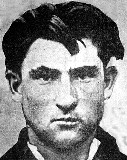 Jules-Alexandre Ughetto
Mass murderer · France · 1928
Paris, 17th September. A woodcutter made a plea at the trial of two lads. He sa…
5 victims
Jules-Alexandre Ughetto
Mass murderer · France · 1928
Paris, 17th September. A woodcutter made a plea at the trial of two lads. He sa…
5 victims
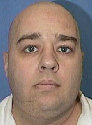 Ivan Ray Murphy
Murderer · USA · 1989
January 9, 1989 — Ivan Ray Murphy and Douglas Stoff went to Lula Mae Denning’s…
1 victim
Ivan Ray Murphy
Murderer · USA · 1989
January 9, 1989 — Ivan Ray Murphy and Douglas Stoff went to Lula Mae Denning’s…
1 victim
- Gender
- male
- Country
- USA
- Location
- Dallas County, Texas, USA
- Date of birth
- April 16, 1951
- Age at first offence
- 34
- Characteristics
- robbery
- Victim profile
- Douglas Walker, 25 ( Holiday Inn clerk)
- Method of murder
- Shooting
- Date(s) of murder
- November 16, 1985
- Years active
- 1985
- Date of arrest
- 5 days after
- Status
-
Sentenced to death
Sentenced to death on February 26, 1986; Supreme Court reversed and ordered a new trial on June 13, 2005
Parties and case identifiers
- Defendant: Thomas Joe Miller-El, convicted of capital murder in Texas state court and sentenced to death.
- Respondent: Gary L. Johnson, Director, Texas Department of Criminal Justice, Institutional Division.
- Court: United States Court of Appeals for the Fifth Circuit.
- Case number: No. 00-10784.
- Date of appellate decision (Fifth Circuit): Aug. 7, 2001.
- Appeal from: United States District Court for the Northern District of Texas.
- Panel: JONES, DeMOSS and PARKER, Circuit Judges.
- Opinion author: DeMOSS, Circuit Judge.
Status and outcome at each stage
Trial outcome (Texas state court)
Thomas Joe Miller-El pleaded not guilty and was tried before a jury on the charge of capital murder during the course of committing a robbery. On March 24, 1986, the jury returned a guilty verdict. During the sentencing phase, the same jury answered in the affirmative to the special issues set forth in the Texas Code. The trial court imposed the sentence of death.
Federal habeas posture (Fifth Circuit, Aug. 7, 2001)
Miller-El sought a Certificate of Appealability ("COA") pursuant to 28 U.S.C. § 2253(c)(2) after both his petition for habeas corpus relief and his request for a COA were denied by the district court. The Fifth Circuit DENY’d the request for a COA.
United States Supreme Court (procedural history described in the provided material)
- The United States Supreme Court reversed and ordered a new trial on June 13, 2005 in Miller-El v. Dretke.
- The provided material also describes that the Supreme Court had previously issued Miller-El v. Cockrell and remanded for further proceedings, including the issue of whether a certificate of appealability should issue.
Timeline
- Nov. 16, 1985 — Douglas Walker, a 25-year-old hotel clerk, died from a gunshot wound to the back after being bound and gagged during an early morning robbery at a Holiday Inn near Dallas/Fort Worth International Airport; Donald Ray Hall, 29, survived the shooting but was left paralyzed.
- Nov. 20, 1985 — Thomas Joe Miller-El was arrested after a shootout in Houston.
- Nov. 22, 1985 — Dorothy Miller-El, Miller-El’s wife and a former worker at the hotel, and Kennard Sonny Flowers were arrested in the robbery-murder.
- December 1985 — Miller-El was indicted on a charge of capital murder after Kennard Sonny Flowers agreed to testify against him.
- March 1986 — During jury selection, a judge denied a defense motion to quash the jury after prosecutors used peremptory strikes to eliminate 10 of 11 eligible black jurors; the seated jury included nine Anglos, one black, one Hispanic and one Filipino; during the trial, Hall identified Miller-El as the shooter; Miller-El was sentenced to die by injection.
- April 1986 — The United States Supreme Court barred race bias in jury selection nationwide in Batson vs. Kentucky and cited a study by The Dallas Morning News showing the near-total exclusion of eligible black jurors by the Dallas County district attorney’s office.
- March 24, 1986 — The jury returned a guilty verdict; during sentencing the jury answered affirmatively to special issues set forth in the Texas Code; the trial court imposed the sentence of death.
- September 1986 — Dorothy Miller-El was convicted of murder and attempted capital murder and received two consecutive life sentences for helping her husband in the hotel robbery; those sentences were later reduced to 15 years each.
- March 1988 — The Texas Court of Criminal Appeals ordered hearings in Dallas to decide whether prosecutors used race bias in excluding eligible black jurors in Miller-El’s trial; two months later the trial judge ruled no racial motive on the part of prosecutors.
- November 1992 — The Texas Court of Criminal Appeals upheld Miller-El’s capital murder conviction.
- November 1992 — Dorothy Miller-El was paroled from prison for her role in the robbery and murder.
- June 17, 1996 — The Texas Court of Criminal Appeals adopted findings of fact and conclusions of law from the trial judge and denied Miller-El’s application for state habeas corpus relief.
- June 17, 1997 — Miller-El filed a petition for habeas corpus relief pursuant to 28 U.S.C. § 2254 in federal district court.
- Aug. 7, 2001 — Fifth Circuit denied Miller-El’s request for a COA.
- February 2002 — Miller-El’s appeals attorneys persuaded the U.S. Supreme Court to stay his execution while the justices heard arguments on race bias in jury selection.
- February 25, 2003 — The U.S. Supreme Court issued an 8-1 decision in favor of Miller-El in Miller-El v. Cockrell.
- December 2004 — The U.S. Supreme Court heard arguments for the second time on whether eligible black jurors were discriminated against and barred from the jury in Miller-El’s death penalty trial.
- June 13, 2005 — The Supreme Court reversed Miller-El’s conviction and ordered a new trial.
- July 8, 2005 — Dallas County District Attorney Bill Hill announced that Miller-El would be tried and that his office would seek the death penalty.
Background
Victim and setting
The robbery-murder occurred at a Holiday Inn South in Texas. Douglas Walker was a hotel clerk. Donald Hall worked at the hotel and survived and testified against Miller-El. The provided material described a Moorish Science Temple Feast arranged by Dorothy Miller-El for November 8-10, 1985, and described that Miller-El was among the attendees.
People present during the robbery-murder
The provided material identified hotel employees working during the relevant time period as:
- Doug(las) Walker
- Donald Hall
- Anthony Motari
- Mohamed Ali Karimijoji
It also described:
- Kennard Sonny Flowers, a younger man who was later identified.
- Dorothy Miller-El, Miller-El’s wife.
The offence
Events on the night of the robbery-murder
Shortly before midnight on November 15, 1985, Dorothy Miller-El returned to the Holiday Inn claiming she was there to pick up her paycheck and was given access to the office area near the vault.
The provided material then described the following sequence:
- Doug(las) Walker was instructed to come out.
- Hall complied with Miller-El’s instructions to empty the cash drawer and place the money on the counter.
- Miller-El ordered Hall to bring any other people in the back out front.
- The two men instructed Hall and Walker to lay on the floor.
- The two men led Hall and Walker to the bellman’s closet, which they ordered opened.
- After removing valuables from the closet and taking Walker’s and Hall’s wallets, Miller-El tied Walker’s hands behind his back, tied his legs together, and gagged him with strips of fabric; Flowers did the same to Hall.
- Walker was laid on his face and Hall was laid on his side.
- Miller-El asked Flowers if he was going to “do it” and Flowers responded that he couldn’t.
- Flowers left.
- Miller-El stood at Walker’s feet, removed Walker’s glasses, and then shot Walker in the back two times.
- Hall closed his eyes after the first shot, heard two more shots, and realized he had also been wounded.
- Hall tried to talk to Walker but only heard him choking.
- When Hall heard familiar voices outside, Hall screamed for help.
Firearms and weapon description
The provided material described:
- Miller-El brandished a semi-automatic “tech” nine millimeter machine gun, with a flash suppressor for night use.
- Flowers had a .45 caliber hand gun.
- The material also later described that after Miller-El’s arrest he was found in possession of an arsenal of weapons, including the “tech” nine millimeter murder weapon.
Investigation and arrest
Officer surveillance and arrests
Several days after the robbery-murder, Officer Cagle was on surveillance of an apartment complex believed to be Dorothy Miller-El’s. The provided material described that he spotted Dorothy and Flowers, then stopped their vehicle with the assistance of back-up units and arrested both.
Search warrants were executed for the residence, and “walkie-talkie” headsets were found.
Miller-El’s arrest and seizure
The provided material described that when Miller-El was later arrested, he was found in possession of an arsenal of weapons, including the “tech” nine millimeter murder weapon.
Trial
Plea and charges
- Miller-El pleaded not guilty.
- He was tried before a jury on the charge of capital murder during the course of committing a robbery.
Jury selection (Batson-related dispute described in the provided material)
During jury selection, a judge denied a defense motion to quash the jury after prosecutors used their peremptory strikes to eliminate 10 of 11 eligible black jurors.
The seated jury described in the provided material included:
- nine whites (described as “Anglos” in the timeline segment),
- one black,
- one Hispanic,
- one Filipino.
Identification testimony
During the trial, Hall identified Miller-El as the shooter.
Sentencing
- On March 24, 1986, the jury answered affirmatively to the special issues set forth in the Texas Code.
- The trial court imposed a sentence of death.
- The provided material also states “Miller-El is sentenced to die by injection.”
Appeals and habeas corpus proceedings
State appellate review and state habeas
- The Texas Court of Criminal Appeals affirmed Miller-El’s conviction and sentence on December 14, 1992 in an unpublished opinion: Miller-El v. State, No. 69,677 (Tex. Crim. App. 1992)(en banc)(unpublished).
- Miller-El filed an application for state habeas relief.
- The state trial court judge entered findings of fact and conclusions of law recommending denial.
- On June 17, 1996, the Texas Court of Criminal Appeals adopted those findings and conclusions and denied the application in Ex parte Miller-El, No. 31,001-01 (Tex. Crim. App. 1996) (unpublished).
- The provided material also describes that the Texas Court of Criminal Appeals ordered hearings in Dallas to decide whether prosecutors used race bias in excluding eligible black jurors in March 1988, and that two months later the trial judge ruled no racial motive on the part of prosecutors.
Federal habeas and certificate of appealability (COA)
- On June 17, 1997, Miller-El filed a petition for habeas corpus relief in federal district court under 28 U.S.C. § 2254.
- On August 12, 1997, he filed an amended petition.
- A magistrate judge issued findings and conclusions recommending denial on January 31, 2000.
- On June 5, 2000, after receiving objections and conducting a hearing, the district court adopted the magistrate’s findings and conclusions and denied the petition.
- The district court subsequently denied a motion to alter or amend on June 21, 2000.
- On August 14, 2000, the district court denied Miller-El’s request for a COA on each of the issues raised.
Fifth Circuit COA request and denial (Aug. 7, 2001)
Miller-El sought a COA on four issues:
- Whether the district court erred in overruling challenges of improper peremptory juror strikes.
- Whether the state court erred in failing to conduct a sua sponte evidentiary hearing on competency to stand trial and finding he was competent to stand trial in 1986.
- Whether the federal district court erred in failing to conduct a hearing regarding competency.
- Whether the district court erred by finding that First and Fourteenth Amendment rights were not violated by admission, during the punishment phase, of evidence relating to affiliation with the Moorish Science Temple faith in violation of Dawson v. Delaware.
The Fifth Circuit applied AEDPA and discussed the COA standard under 28 U.S.C. § 2253(c)(2) and related Supreme Court decisions referenced in the opinion. It then denied the COA request, concluding that Miller-El failed to make a substantial showing of the denial of a constitutional right on all issues.
Appellate reasoning: issues raised in the Fifth Circuit opinion
1) Peremptory strikes and Batson/Swin-related argument
The opinion described Miller-El’s argument that Swain v. Alabama remained applicable for claims evidenced by historic, systematic discrimination against African-Americans, and addressed the effect of Batson v. Kentucky. The opinion described the “three steps” of Batson as recited in the opinion, and described the parties’ positions on burdens and evidentiary formulations.
The Fifth Circuit concluded that the state court findings were not unreasonable and that Miller-El failed to present clear and convincing evidence to the contrary. The court stated that the findings that there was no disparate questioning of the Batson jurors and that the prosecution’s reasons for striking the jurors were due to reluctance and/or reservations concerning the death penalty were supported by the record.
2) Competency claims (Pate v. Robinson / Dusky)
The opinion described that Miller-El was tried about eight weeks following his arrest and that he had been wounded by a gunshot during arrest. It described surgical treatment and complications including weight loss, and multiple evaluations during trial due to medical complaints:
- chest pains, chills, and fever during jury selection resulting in a diagnosis of pneumonia and discharge the same day,
- complaints of delays in receiving medication and a second evaluation with a determination that he did not need more medication,
- treatment for a chest abscess two days before jury selection concluded,
- complaints of pain in his ribs and request to see a doctor,
- a medical evaluation on the evening of the day he was found guilty after complaints of nausea and colostomy bag complications; he was kept overnight and released the next day when the punishment phase began.
The opinion recounted that the trial court found Miller-El competent both on and off pain medication and capable of understanding the proceedings, consulting with attorneys, and assisting in defense preparation; it also referenced that the court found no “bona fide doubt” requiring a competency hearing.
The Fifth Circuit concluded that the district court’s finding that Miller-El was not entitled to a hearing was not unreasonable and that the state court’s determination was reasonable; it denied the COA on this issue.
3) Nunc pro tunc evidentiary hearing request
The opinion stated that because the above conclusions were made, it did not readdress whether a nunc pro tunc evidentiary hearing was required. It further described the standard that required a threshold showing by clear and convincing evidence to raise a threshold doubt about competency.
The Fifth Circuit concluded that Miller-El failed to rebut presumptive correctness of state habeas and district court findings that he was competent in 1986 and that he was not entitled to a nunc pro tunc hearing.
4) Moorish Science Temple association evidence at punishment phase
The opinion addressed Miller-El’s claim that admission of evidence relating to his affiliation with the Moorish Science Temple faith violated the First and Fourteenth Amendments under Dawson v. Delaware.
The Fifth Circuit recounted the Dawson principle that while associational evidence unrelated to the case may be impermissible, there is no “per se” barrier to admission of evidence concerning beliefs and associations at sentencing, including as a legitimate purpose in showing future danger. The opinion then described that it was satisfied that the state court’s decision did not violate due process and that references during punishment phase were appropriate as they related to involvement with other group members heavily armed and who assisted in the offense of conviction. It concluded the state court determination was consistent with and not contrary to Dawson and that it was reasonable.
Other details and quoted material
Quotation during the robbery-murder narrative
The provided material included the following exchange attributed to Miller-El and Flowers:
Definitions of courts’ roles and standard references included in the Fifth Circuit opinion
The Fifth Circuit opinion discussed:
- the “substantial showing” standard for COA,
- Slack v. McDaniel,
- 28 U.S.C. § 2254(e)(1) and the presumption of correctness,
- the strength of the presumption when the trial court and state habeas court were the same,
- and that doubts about whether a COA should issue must be resolved in favor of the petitioner in capital cases.
Aftermath (as described in the provided material)
- The provided material described that on June 13, 2005, the Supreme Court reversed and ordered a new trial.
- It also described that on July 8, 2005, Dallas County District Attorney Bill Hill announced that Miller-El would be tried and that the office would seek the death penalty.


Spotted an error, or have more information about this case?