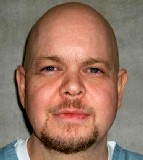
Timothy Stemple
Murderer Russell Ellwood
Murderer · USA · 1991
Russell Ellwood was a former taxi driver. Authorities suspected him of killing…
20 victims
Russell Ellwood
Murderer · USA · 1991
Russell Ellwood was a former taxi driver. Authorities suspected him of killing…
20 victims
 Robert Martines Perez
Murderer · USA · 1994
Name: Robert Martines Perez · Other name used in proceedings: Robert Martinez P…
15 victims
Robert Martines Perez
Murderer · USA · 1994
Name: Robert Martines Perez · Other name used in proceedings: Robert Martinez P…
15 victims
 Billy Frank Vickers
Murderer · USA · 1993
Billy Frank Vickers Vickers was executed by lethal injection in Texas on Januar…
14 victims
Billy Frank Vickers
Murderer · USA · 1993
Billy Frank Vickers Vickers was executed by lethal injection in Texas on Januar…
14 victims
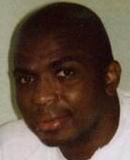 Charles Mamou
Murderer · USA · 1998
Name: Charles Mamou · TDCJ Number: 999333 · Date of birth: 12/06/1974 · Receive…
2 victims
Charles Mamou
Murderer · USA · 1998
Name: Charles Mamou · TDCJ Number: 999333 · Date of birth: 12/06/1974 · Receive…
2 victims
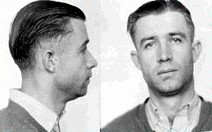 David Benjamin Knight
Murderer · USA · 1935
Howard C. Speakman and Judge Earl Anderson were involved in the case. Deputy C.…
1 victim
David Benjamin Knight
Murderer · USA · 1935
Howard C. Speakman and Judge Earl Anderson were involved in the case. Deputy C.…
1 victim
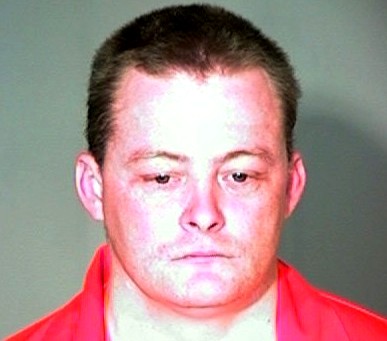 John Edward Sansing
Murderer · USA · 1998
John Edward Sansing was convicted in Superior Court (Maricopa) of first-degree…
1 victim
John Edward Sansing
Murderer · USA · 1998
John Edward Sansing was convicted in Superior Court (Maricopa) of first-degree…
1 victim
 Lorenzo Fayne
Serial killer · USA · 1989
Lorenzo Fayne grew up in Milwaukee and lived in the 2400 block of W. Lloyd St.…
6 victims
Lorenzo Fayne
Serial killer · USA · 1989
Lorenzo Fayne grew up in Milwaukee and lived in the 2400 block of W. Lloyd St.…
6 victims
 Marco Antonio Montez
Murderer · USA · 1987
Marco Antonio Montez was convicted of aggravated murder and sentenced to death,…
1 victim
Marco Antonio Montez
Murderer · USA · 1987
Marco Antonio Montez was convicted of aggravated murder and sentenced to death,…
1 victim
- Gender
- male
- Country
- USA
- Location
- Tulsa County, Oklahoma, USA
- Date of birth
- April 9, 1965
- Age at first offence
- 31
- Characteristics
- attempt to collect insurance money, parricide
- Victim profile
- His wife, Trisha Stemple, 30
- Method of murder
- Beating with a baseball bat and running over her with a pickup
- Date(s) of murder
- October 24, 1996
- Years active
- 1996
- Date of arrest
- —
- Status
-
Executed
Executed by lethal injection in Oklahoma on March 15, 2012
Other details
Timothy Shaun Stemple was convicted by jury of first degree malic murder (count one), conspiracy to commit first degree murder (count two), and attempted first degree murder (count three) in Tulsa County District Court, Case Number CF-96-5169, before the Honorable B.R. Beasley, Associate District Judge. After the sentencing stage, the jury found the existence of two aggravating circumstances: “the person committed the murder for remuneration or the promise of remuneration, or the person employed another to commit the murder for remuneration or promise of remuneration;” and “the murder was especially heinous, atrocious or cruel.” The jury set punishment at death on count one, ten years on count two, and twenty-two years on count three.
Stemple concocted a plan to terminate the life of his wife, Trisha Stemple, and to collect her life insurance proceeds. Stemple was having an extra-marital affair with Dani Wood. Dani Wood had a sixteen year old cousin, Terry Hunt. According to Hunt, Stemple offered him $25,000 to $50,000 to help kill Trisha (if they collected the insurance money).
Hunt recruited another person, Nathanial Helm to assist in the plan. Helm and Hunt went to Wal-Mart where they purchased a baseball bat and plastic wrap. The plastic wrap was wrapped around the bat to keep the bat from getting bloody.
On October 10, 1996, Hunt and Helm went to the designated location on highway 75 and waited for Stemple and his wife to arrive. Later, Stemple drove up and told Helm and Hunt that Trisha was ill and he could not get her to accompany him.
Two weeks later, Stemple arranged for Hunt to drive Stemple's pickup to a particular location on highway 75 and leave the hood up. Stemple and Trisha arrived in their black Nissan Maxima. Stemple began working on the truck and Trisha stood next to the truck. Hunt came up behind Trisha and hit her in the head with the bat. The blow did not render Trisha unconscious, so Stemple took the bat and hit her several more times.
Stemple and Hunt then placed Trisha's head in front of the front tire of the pickup and attempted to run over her head, however, the tire would not roll over Trisha's head so her head was pushed along the pavement. After this, Trisha tried to get up. Stemple grabbed the bat and hit her several more times. The pair then placed Trisha's body under the truck and drove over her chest. After this Trisha rose up on her elbows, so Stemple hit her again several times with the bat.
Stemple then went back to the black Nissan and drilled a hole in the front tire to make it look as if Trisha's car had a flat. One expert testified that the hole in the tire had spiral striations consistent with drilling. Stemple and Hunt left in the pickup, but decided to turn around to make sure Trisha was dead. When they got back to the spot where they left Trisha, they noticed that she had crawled into the grass beside the road. Stemple then sped up and ran over Trisha as she lay in the grass.
Trisha's body was found later that morning, after Stemple called reporting that she was missing. The autopsy evaluation revealed that Trisha had fractures to her arm, ribs, pelvis, vertebrae and skull. The medical examiner concluded that Trisha died from blunt force trauma to the head.
While in the Tulsa County jail awaiting trial, Stemple made numerous notes including confessions, lists of witnesses, etc. Inmates testified that Stemple tried to get them to arrange the death of several witnesses. The inmates also testified that Stemple gave them a copy of his confession. Included in these writings were sample letters for witnesses Terry Hunt and Dani Wood, detailing their involvement and exculpating him from the crime. Hunt and Wood were to be coerced into rewriting and signing the letters by persons hired by the other inmates.
Stemple claimed that he was at home when Trisha left during the middle of the night. Stemple testified that he believed that Wood was responsible for the murder of Trisha.
Timeline
- March 15, 2012 — Timothy Shaun Stemple was executed by lethal injection in Oklahoma; he was pronounced dead at 6:11 p.m., after lethal injection began at 6:05 p.m.
- January 20, 2000 — The Oklahoma Court of Criminal Appeals issued its opinion in Stemple v. State.
Background
Trisha Stemple was murdered on October 24, 1996. She was beaten with a plastic-covered baseball bat and run over by a pickup truck along a Tulsa highway. Her death was originally investigated as a hit-and-run auto-pedestrian collision, but investigators began to suspect foul play as they examined the evidence. Her body was found alongside the highway after Stemple reported her missing. A drill hole was made in one of Trisha Stemple's car tires to make it appear that she had car trouble.
Human blood was found on the plastic that was on the bat, but it was too deteriorated to determine whose it was. A forensic expert consulted by Stemple's family said Trisha Stemple's injuries were consistent with being hit by a vehicle and run over but that there was no evidence she was beaten. The medical examiner first thought she died after being hit by a car, but there was “no primary point of impact below the knees as is usual in the typical auto-pedestrian collision,” according to prosecutors' report in the case.
In 1997, a jury convicted Stemple of brutally beating to death his wife and running over her with a pickup, aided by a teenage accomplice.
The offence
Stemple and his accomplices planned to kill Trisha Stemple and to collect her life insurance proceeds. Hunt testified that Stemple's plan involved making it appear the incident was a car jacking and told them to “get down,” and that the assault was designed to look like either a robbery or a hit and run.
During the attack, Hunt testified that Trisha Stemple was conscious during much of the assault. Hunt said he struck the woman with a bat twice and Stemple hit her in the back of the head about 20 to 30 times, and that Stemple tried to drive over his wife's head with the pickup truck. Hunt also testified that he tried to place a wheel on her chest. After the initial attack, Trisha managed to drag herself onto grass along the highway. Hunt testified that they returned and struck her with the truck, traveling about 60 mph.
Court records indicated that Trisha Stemple tried to get up after Stemple attempted to drive the truck's tires over her head. Stemple got out of the truck, walked over to her and said: “Don't worry, Trish. The ambulance is on its way.” Stemple then grabbed the bat again and hit her in the back of the head eight to 12 more times, according to court records.
Trisha's skull, neck bone and pelvis were crushed, and 17 ribs were broken.
Investigation
After Trisha Stemple's body was found, investigators initially investigated the death as a hit-and-run auto-pedestrian collision. Investigators later began to suspect foul play.
Arrest
Stemple was in the Tulsa County jail awaiting trial, where he made numerous notes including confessions and lists of witnesses.
Trial
Stemple was convicted by jury of first degree malic murder (count one), conspiracy to commit first degree murder (count two), and attempted first degree murder (count three) in Tulsa County District Court, Case Number CF-96-5169, before the Honorable B.R. Beasley, Associate District Judge, presiding.
Jury selection issues
Stemple complained that he was deprived of his right to be present at every critical stage by being absent from an in camera hearing regarding comments made by a spectator to venire member Heffernan. Heffernan indicated during voir dire that a spectator had stated an opinion about the case to him and that the statement did not taint him in any way. Heffernan was not removed by either side, nor by the court.
The in camera hearing included testimony by the spectator, Marita Ries, who said that she was sitting next to Heffernan and possibly said that “this is a terrible case.” Ries was admonished to keep her opinions to herself. Stemple was not present at this hearing, and his attorney advised the trial court that he waived his client's right to be present.
The Oklahoma Court of Criminal Appeals found that Stemple's absence during the in camera hearing was not prejudicial and concluded there was no error.
Discovery and testimony issues
Stemple argued that the State failed to comply with discovery rules by not informing him that Terry Hunt had changed his story. The Oklahoma Court of Criminal Appeals discussed discovery requirements and concluded that any perceived error was cured where the trial court sustained objections and admonished the jury. The court found that the failure to disclose information was not fatal to the case and that additional information did not substantially change the evidence against Stemple.
Stemple also complained about the introduction of testimony from James Johnson that was not provided in discovery. The trial court sustained Stemple's objection and the evidence was excluded. The court concluded there was no violation because a written statement by Johnson had been provided.
Stemple additionally complained about the testimony of William Compion regarding insurance scams. Stemple's objection to Compion's testimony was sustained, and the Oklahoma Court of Criminal Appeals concluded reversal was not required because Stemple did not ask the jury be admonished.
Video tape and right to counsel issues
Stemple argued that the introduction of a videotape, State's exhibit number 87, showing that he exercised his right to remain silent and his right to consult an attorney violated due process rights. The Oklahoma Court of Criminal Appeals reviewed the tape content under plain error analysis.
The court recounted verbatim statements from the videotape as follows:
Stemple began by saying, “I feel as though I should have an attorney ․ because how ugly this looks on me.”
Stemple said he feared the police were going to try and pin the murder on him because he had plenty of motive; the large insurance policy and the extramarital affair. He explained that he knew that a red pickup was seen in the area of the crime and he recently owned a red pickup. He said he knew people saw him out there because he was out there in the area that night. Stemple stated, “I want to help but he does not want to “screw” himself. He says that he will be selective in the questions that he answers.”
The officers assured Stemple that they were not going to arrest him, but they read the Miranda 1 warning to him anyway. Stemple asked, “I better get an attorney.”
He again said that he wanted to help and asked, “can I make an appointment for a later time.”
The detectives said that would be up to him and his attorney. They told him “you know what happened.” Stemple replied, “I do.” Stemple then said, “I'm gonna get an attorney.” The interview ended.
The Oklahoma Court of Criminal Appeals concluded the portion of the tape before Stemple was read the Miranda warning was admissible and that Stemple did not unequivocally invoke his rights.
Prosecutorial conduct and other objections
The Oklahoma Court of Criminal Appeals addressed other claims raised by Stemple, including alleged improper remarks during trial and sentencing stage comments met with contemporaneous objections and jury admonitions.
The court also discussed allegations concerning cross-examination and questioning, including questions about pending charges of a witness and questions about whether other witnesses were lying, and concluded that admonitions to the jury cured any error and that none of the comments rose to plain error.
Attempted murder conviction and reversal of that count
Stemple argued insufficient evidence to support the attempted murder charge. The Oklahoma Court of Criminal Appeals agreed. The court concluded that what existed was mere preparation and that there was no overt act toward the commission of murder. It held that Stemple's conviction for attempted murder must be reversed and remanded with instructions to dismiss.
Because the attempted murder conviction was dismissed, Stemple's double jeopardy claim regarding attempted murder and conspiracy to commit murder was moot.
Sentencing
After the sentencing stage, the jury found two statutory aggravating circumstances and set punishment at death on count one, ten years on count two, and twenty-two years on count three.
The Oklahoma Court of Criminal Appeals conducted mandatory sentence review and found that the death sentence was not imposed under the influence of passion, prejudice, or any other arbitrary factor, and found sufficient evidence supported the aggravating circumstances. The court concluded that the facts of the case warranted the penalty of death.
Appeals
In Stemple v. State, No. F-98-201, the Oklahoma Court of Criminal Appeals issued its opinion on January 20, 2000. The court reversed and remanded the attempted murder conviction with instructions to dismiss. It found no error warranting reversal of the convictions or sentences for the remaining counts and affirmed the judgment and sentence on the remaining counts.
Stemple maintained his innocence throughout the trial and appeals process.
Clemency
At a clemency hearing, Stemple declined to address Pardon and Parole Board members and declined to offer last words at the execution.
The Pardon and Parole Board denied his plea for clemency.
Human rights and innocence-related advocacy sought a stay of execution. The Innocence Project urged the governor to stay the execution and called for additional DNA testing. A medical testimony dispute regarding Stemple's accomplice's account of the 1996 attack was sought to be heard in court.
Outcome
Timothy Shaun Stemple was executed by lethal injection in Oklahoma on March 15, 2012, at the state prison in McAlester. He was pronounced dead at 6:11 p.m. after lethal injection began at 6:05 p.m.
His accomplice, Terry Hunt, was serving a life sentence. Hunt testified at trial and, in a later prison interview, said he was disappointed Stemple did not confess when given the opportunity at the clemency hearing. Hunt said, “I'm not innocent and Shaun is not innocent,” and described involvement including striking the woman with a bat twice and describing Trisha Stemple as conscious during much of the attack.
Aftermath
After the execution, Trisha Stemple's sister Deborah Ruddick-Bird said: “Today is not about Shaun. It's about justice, finality and closure for my gorgeous sister, Trisha, and my family.” She also said, “Today we put a period at the end of a chapter that held us captive for far too long.”
Stemple's mother, Lia Stemple, told The Associated Press by phone after the execution: “The state of Oklahoma murdered an innocent man today,” “I don't want vengeance but I want the truth to be known so this doesn't happen to another family. My son was a noble man.”
Stemple's family and anti-death penalty groups mounted a last-minute campaign that failed to convince Gov. Mary Fallin to grant a stay of execution.
Stemple's final meal request was a large stuffed-crust pizza with extra cheese, half pepperoni and half Canadian bacon, and a 2-liter bottle of orange soda with ice.
Stemple's daughter Lauren Stemple witnessed the execution along with Stemple's parents and two sisters. Several of Trisha Stemple's family members also witnessed the execution, along with retired Tulsa homicide detective Mike Huff and Tulsa County Sheriff Stanley Glanz.

Spotted an error, or have more information about this case?