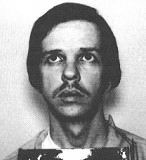
Dayton Leroy Rogers
Serial killer Rodney Alcala
Serial killer · USA · 1977
Rodney James Alcala (born August 23, 1943) was also known as Rodrigo Jacques Al…
100 victims
Rodney Alcala
Serial killer · USA · 1977
Rodney James Alcala (born August 23, 1943) was also known as Rodrigo Jacques Al…
100 victims
 Glen Edward Rogers
Serial killer · USA · 1993
Glen Edward Rogers was a spree killer whose cross-country rampage in 1994-95 le…
70 victims
Glen Edward Rogers
Serial killer · USA · 1993
Glen Edward Rogers was a spree killer whose cross-country rampage in 1994-95 le…
70 victims
 Michael Swango
Serial killer · USA · 1981
Michael Swango (Joseph Michael Swango) was a physician and American serial kill…
60 victims
Michael Swango
Serial killer · USA · 1981
Michael Swango (Joseph Michael Swango) was a physician and American serial kill…
60 victims
 Efren Saldivar
Serial killer · USA · 1989
Efren Saldivar (born 30 September 1969) was an American serial killer who murde…
50 victims
Efren Saldivar
Serial killer · USA · 1989
Efren Saldivar (born 30 September 1969) was an American serial killer who murde…
50 victims
 Gary Ridgway
Serial killer · USA · 1982
Gary Leon Ridgway Ridgway was born 18-February-1949 in Salt Lake City, UT. He w…
49 victims
Gary Ridgway
Serial killer · USA · 1982
Gary Leon Ridgway Ridgway was born 18-February-1949 in Salt Lake City, UT. He w…
49 victims
 Charles Cullen
Serial killer · USA · 1984
Charles Cullen (born February 22, 1960) was a former nurse and the most prolifi…
45 victims
Charles Cullen
Serial killer · USA · 1984
Charles Cullen (born February 22, 1960) was a former nurse and the most prolifi…
45 victims
 Henry Eugene Hodges
Murderer · USA · 1989
Defendant: Henry Eugene Hodges (appellant) · Victim: Ronald A. Bassett (Nashvil…
3 victims
Henry Eugene Hodges
Murderer · USA · 1989
Defendant: Henry Eugene Hodges (appellant) · Victim: Ronald A. Bassett (Nashvil…
3 victims
 Lester Kills On Top
Murderer · USA · 1987
Lester Kills On Top No A027079 was incarcerated at Montana State Prison in Deer…
1 victim
Lester Kills On Top
Murderer · USA · 1987
Lester Kills On Top No A027079 was incarcerated at Montana State Prison in Deer…
1 victim
 Dean Corll
Serial killer · USA · 1970
Dean Corll was shot dead by his accomplice Elmer Henley on August 8, 1973. Dean…
27 victims
Dean Corll
Serial killer · USA · 1970
Dean Corll was shot dead by his accomplice Elmer Henley on August 8, 1973. Dean…
27 victims
 Elizabeth Fenning
Attempted murder? · United Kingdom · 1815
Elizabeth Fenning was executed by hanging on July 26, 1815. Elizabeth Fenning (…
0 victims
Elizabeth Fenning
Attempted murder? · United Kingdom · 1815
Elizabeth Fenning was executed by hanging on July 26, 1815. Elizabeth Fenning (…
0 victims
 Linsey Blansett
Murderer · USA · 2014
Lindsey Nicole Blansett was accused of killing her 10-year-old son, Caleb, in W…
1 victim
Linsey Blansett
Murderer · USA · 2014
Lindsey Nicole Blansett was accused of killing her 10-year-old son, Caleb, in W…
1 victim
 Della Sutorius
Murderer · USA · 1996
Della Faye Hall Hoeffer Beyer Bassett Britteon Sutorius was an American woman w…
1 victim
Della Sutorius
Murderer · USA · 1996
Della Faye Hall Hoeffer Beyer Bassett Britteon Sutorius was an American woman w…
1 victim
- Gender
- male
- Country
- USA
- Location
- Clackamas County, Oregon, USA
- Date of birth
- September 30, 1953
- Age at first offence
- 34
- Characteristics
- rape, torture, convicted rapist
- Victim profile
- Cynthia "Dee Dee" Diane DeVore, 21 / Maureen Ann Hodges, 26 / Reatha Marie Gyles, 16 / Nondace "Noni" Kae Cervantes, 26 / Lisa Marie Mock, 23 / Christine Lotus Adams , 35 / Jennifer Lisa Smith, 25 / An eighth victim believed killed by Rogers was found but never identified, and Rogers was never charged in her death
- Method of murder
- St abbing with knife
- Date(s) of murder
- 1987
- Years active
- 1987
- Date of arrest
- August 7, 1987
- Status
-
Sentenced to death
Sentenced to death on June 9, 1989; resentenced to death on March 8, 2006
Case record: Dayton Leroy Rogers
STATUS
Dayton Leroy Rogers was sentenced to death on June 9, 1989. He was resentenced to death on March 8, 2006.
Background
Dayton Leroy Rogers was born in 1953. His family eventually ended up in Oregon. Rogers had a criminal background dating back to the age of 16 when he was caught with a friend shooting at passing cars and trying to break windshields. His first serious offense occurred at the age of eighteen when he stabbed his 15-year-old girlfriend in the stomach. He was placed on probation for the knife attack.
At 19, he attacked and stabbed a 15-year-old girl on their second date. Rogers had been married for less than a month at the time. He pleaded guilty to the lesser charge of 2nd degree assault and was placed on 4 years probation.
At 20, Rogers attacked two teenage girls with a beer bottle. Prosecutors petitioned the court to revoke probation, but the judge found him not guilty by reason of insanity. He was committed to the Oregon State Hospital in March 1974 and was formally released in December of the same year.
Three months later, he met Sherry Miller. Now divorced, he married her in October 1975.
In December of the same year, Rogers raped an 18-year-old girl and was indicted in January. He was allowed to remain free pending a May trial. In February, he assaulted two teenage girls and raped one of them. He pleaded not guilty because of mental disease.
In May, he was acquitted of the December rape charge. In June, his parole for the old knife attack was revoked. In August, he was acquitted for the latest rape charge but was convicted of two counts of coercion and sentenced to five years. Rogers was paroled in January 1982 after serving five and a half years. One year later, his parole supervision was terminated.
Rogers was described as having a history of mental illness and as having an “extreme danger to the community, particularly to young women,” with “both sexually and physically violent” conduct.
Rogers was also described as a mechanic by trade who ran a small engine repair business, learned skills he needed to become a mechanic in prison, and organized Adventist church services at the prison, where he played guitar.
The offence
Lane County case (stabbing of a 15-year-old girl)
Rogers allegedly took a 15-year-old girl to a wooded area to have sex, then stabbed her in the abdomen. The victim survived and later told police that Rogers proposed marriage immediately after he stabbed her.
During closing arguments in Rogers’ 1989 murder trial, Clackamas County Deputy District Attorney Andrejs I. Eglitis addressed Rogers’ sexual appetite, including a fetish with women’s feet. Eglitis contended that Rogers sawed off the feet of three of his victims and let them bleed to death. Eglitis insisted Rogers delighted in torturing women.
Murder of Jennifer Lisa Smith (Denny’s parking lot)
On August 7, 1987, Rogers was arrested in connection with the stabbing death of Jennifer Lisa Smith. Smith’s nude body was found in a parking lot of a Denny’s restaurant in Oak Grove, in a Clackamas County suburb.
The body was pronounced dead on arrival at Emanuel Hospital and Health Center in Portland after attempts at resuscitation.
Rogers pleaded self-defense. In the trial for Smith’s death, Rogers retained Attorney Arthur B. Knauss of Oregon City to represent him. He pleaded innocent to the charges and was held without bail.
The prosecution alleged that Rogers murdered Smith during the course of rape, kidnapping, sexual abuse, and torture, and also alleged that Rogers killed Smith to cover up the other crimes.
At trial, Rogers testified that he paid Smith $40 for a sexual encounter involving bondage. He explained that when he got out of the truck to urinate, after having bound Smith’s hands and feet with shoelaces, she slipped out of her bindings and took a knife from the glove box. Rogers testified that Smith held the knife to his throat, told him “Do it or die,” and demanded his wallet. He testified that he fought back, eventually obtained the knife, stabbed Smith multiple times, and after she jumped from the truck he chased her across the parking lot.
The jury convicted Rogers of aggravated murder on February 20, and he was sentenced to life imprisonment, with a minimum of 30 years to serve before consideration for parole.
Molalla Forest killings (seven victims)
On August 31, 1987, Everett Banyard, 46, a crossbow hunter, found a badly decomposed nude body of a young woman while on a steep, brushy slope of a privately-owned timber farm southeast of Molalla. Searchers from the Clackamas County Sheriff’s Office and a local Explorer Scout post found six more decomposed bodies over the next five days.
All were women and were nude when found. They bore signs of stabbing, torture, and mutilation. Some victims’ feet had been removed at the ankle with what appeared to be a blade with a serrated edge. One victim had been cut approximately two-thirds of the way through the bone, with the remainder broken off.
The investigators identified six known victims:
- Lisa Mock, age 23
- Maureen Hodges, age 26
- Christine Adams, age 35
- Nondace Cervantes, age 26 (also referred to as Noni Kae Austin)
- Reatha Gyles, age 16
- Cynthia DeVore, age 21
One victim remained unidentified.
Rogers was indicted on aggravated murder charges for the deaths of Reatha Gyles, Lisa Mock, Noni Cervantes, Cynthia DeVore, Christine Adams, and Maureen Hodges. He was not charged in the death of the unidentified victim.
Rogers was found guilty of aggravated murder on all counts. The jury deliberated after sentencing phase testimony in Rogers’ 1989 trial and returned a verdict finding deliberate murder and a continuing threat to society.
Investigation
After Jennifer Smith’s death, witnesses chased Rogers’ pickup truck. A witness reported the truck’s license number. Deputies tracked Rogers using automobile registration records. Turner learned the registered owner was 33-year-old Dayton Leroy Rogers, with an address in the 10500 block of South Heinz Road in Canby, Oregon.
Detective John T. Turner and Mike Machado arrived at the crime scene. Turner took the license plate number (Oregon CYW 194) and ran it through the Oregon State Department of Motor Vehicles computer.
Rogers was taken to the Clackamas County Jail in Oregon City, where he was held on suspicion of murder. Smith was identified as 25-year-old Jennifer Lisa Smith, mother of two, with a last known address in the 4800 block of North Albina Avenue in Portland. Smith had an arrest record for prostitution and indecent exposure.
A relative reported Rogers sometimes worked odd hours at his auto-repair shop in the 11600 block of Pacific Court in Woodburn, and Turner arrived at Rogers’ shop at approximately 5:35 a.m. Rogers answered the door with bloodshot eyes. Detective Turner smelled alcohol and concluded Rogers had been drinking but was not drunk. When Turner told Rogers he and deputies were there as part of a homicide investigation, Rogers allowed them inside.
Turner asked to search. Rogers said: “Go ahead and search the place,” and “Search the truck, too, if you want to.”
Turner observed Rogers’ right hand was bandaged and asked about it. Rogers stated he had been using a hacksaw that slipped and cut his hand, and he had gone to Willamette Falls Hospital in Oregon City to have the wound treated.
Rogers’ pickup was the same seen fleeing the scene. Turner noted the engine was too hot to touch when he attempted to touch the valve cover.
During evidence collection, investigators returned to Rogers’ Woodburn auto-repair shop and sifted ashes from a wood stove in Rogers’ office. They found remnants of a burned tennis shoe, and later analysis determined that metal parts found in the wood stove closely matched the metal parts of the shoe discovered in the parking lot where Jennifer Smith was murdered. Investigators also found pieces of colored glass, rhinestones, and star-shaped grommets inside the stove, with sources unknown.
Investigators searched Rogers’ truck after it was impounded. Criminalists found blood inside the cab and numerous knife cuts on the dashboard, upholstery, ceiling, and passenger door. They found a single fingerprint matching Jennifer Smith’s right ring finger on the outside handle of the passenger door. They also found a small green band in the bed of the pickup that was determined to have come from ready-to-drink orange juice.
Detectives questioned the emergency room doctor at Willamette Falls Hospital in Oregon City and learned that the cuts were smooth and clean, like wounds caused by a knife blade.
Investigators assembled a photo lay-down of six photographs of men with similar appearances and showed it to eyewitness Michael Fielding, who identified Dayton Rogers as the man he saw stop briefly under a streetlight as he fled the Denny’s restaurant parking lot.
Detectives interviewed prostitutes and learned that Rogers often told them his name was Steve. They also learned Rogers claimed to be a professional gambler, said he was from Las Vegas or Reno, and offered $40 to $80 for a sexual scenario involving bondage. They testified that Rogers undressed them, bound their hands and feet at the wrists and ankles with materials such as rope, dog collars, wire, nylon stockings, and shoe laces, and that he subjected some victims to intense physical pain, torture, and mutilation.
A prostitute told detectives that Rogers had a foot fetish and found women’s arches sexually arousing. Another point noted was that Jennifer Smith was barefoot when her body was found.
From the definitive autopsy of Jennifer Smith, Deputy State Medical Examiner Dr. Karen Gunson determined:
- At least 11 knife wounds, 10 of which were very deep
- Eight stab wounds to the front of Jennifer’s body, including one that severed a major artery on the left side of her chest and was likely the cause of death
- Slashing wounds to both breasts
- Two deep stab wounds to the abdomen that pierced her stomach
- A V-shaped stab wound in her back that pierced her liver
- A possible explanation that the V-shaped wound might have been caused by two stabs that had overlapped
- Slash wounds to both hands cutting to the bone, described as defensive injuries
- Her throat had been slit
- Two quarter-inch-wide bruises around both wrists, interpreted as indicating she had been tied up, possibly with the shoelaces found at the crime scene, and “a significant amount of pressure” must have been applied to her wrists for such bruising to occur
In the Molalla Forest investigation, Detective Turner spotted miniature vodka bottles and disposable orange juice bottles of the same kind found in Rogers’ pickup when he walked around the forest site.
Arrest
Rogers was arrested on August 7, 1987, in connection with the stabbing death of 25-year-old Jennifer Lisa Smith. He was arrested a few minutes after Turner observed Rogers’ suspicious demeanor and matched vehicle appearance and license plate identification.
Trial
First trial: murder of Jennifer Lisa Smith
The first trial began in February 1988 in Clackamas County Circuit Court Judge Patrick D. Gilroy’s courtroom. Deputy District Attorney Andrejs I. Eglitis told the jury that Rogers murdered Jennifer Smith by design. Eglitis called Rogers a “vicious predator” who killed for a “sexual thrill.”
Eglitis stated: “You'll find that the reason he went to downtown Portland was...to satisfy what you will find to be his bizarre sexual appetite. You'll find that his sexual appetite included bondage, masturbation, and intent to inflict intense physical pain.”
Rogers’ attorney Arthur Knauss admitted that Rogers killed Jennifer Smith and contended he did so in self-defense. Knauss argued Smith spotted more than $200 in Rogers’ wallet at a convenience store to buy orange juice, decided to rob the defendant at knifepoint, and a struggle led to stabbing and death “purely by accident.”
At trial, jurors heard testimony from witnesses who said they heard the victim scream in intense pain for approximately two minutes before her body was discovered.
A prior victim from 1972 testified about Rogers’ stabbing. She said: “We'd hold hands and swing around and talk and smile...Then we sat down, and we were talking and he tickled my legs and told me to close my eyes...Then I felt the plunge.”
She also said: “I thought a rattlesnake had bit me--if it wasn't that, I thought a horse had kicked me. I looked down and saw the knife in my abdomen and the blood coming out.”
She testified that Rogers told her: “I just couldn't trust you anymore.”
She testified: “She explained that Rogers told her he just couldn't trust her any more and was afraid that she might turn him in for having sex with her while she was underage.”
She further testified: “Then I felt the plunge.”
She said: “Then I sat down, and we were talking and he tickled my legs and told me to close my eyes...Then I felt the plunge.”
She also testified that Rogers told her to promise to tell police she stabbed herself accidentally. She said: “I said, 'Dayton, I love you.' He began to tell me he would marry me and do anything, if she promised to tell the police she stabbed herself accidentally.”
She testified: “Fearing that he would finish her off, she lied to him and told him she loved him...Then, she added, she changed her mind and told police the truth.”
Another witness testified about an incident on February 20, 1976. She testified that Rogers pulled over and took a knife from the glove compartment and that she “hogtied” her. She said: “I was scared he was, you know, he was going to kill me...He said he had to kill me because he was afraid I'd go to the police.”
A corrections officer, Janet K. Anderson, testified about interviewing Rogers in September 1982. Anderson testified: “I asked him if he were to do this all over again, if he would do anything differently. He indicated...there would not be a witness next time.”
Anderson also testified about a letter that was read in part to the jury. The letter included: “Mr. Rogers' intentions appear sincere to maintain counsel and to remain crime-free,” Anderson wrote in a letter to the State Board of Parole, part of which was read to the jury. “Mr. Rogers does not appear to be a threat to the community.”
Rogers testified in his own defense. He said he paid Jennifer Smith $40 for a sexual encounter involving bondage. He testified that after he got out to urinate and had bound Jennifer’s hands and feet with shoelaces, she slipped out of her bindings and took a knife from the glove box. He testified that she held the knife to his throat and ordered him not to move and to give her his wallet. He testified: “Do it or die,”
He further testified: “I got a hold of it and used the knife on her...I was just going back and forth in virtually any direction I could,”
He testified about stabbing and the struggle: “Both of our feet entangled...She went down backward, and I fell down on top of her. On the way down, that's when I stabbed her in the upper area here,”
During closing arguments at the first trial, Knauss argued about punishment and whether he should receive the death penalty, and the jurors returned after four hours and announced unanimous findings that the murder was deliberate and an unreasonable response to provocation. Judge Gilroy immediately sentenced Rogers to life in prison.
Detective John Turner and colleagues were devastated by the sentence because they knew life imprisonment could still permit parole.
Second trial: Molalla Forest killings
The second trial began after the first trial, with an indictment dated May 4, 1988. It included aggravated murder charges for deaths of Reatha Gyles, Lisa Mock, Noni Cervantes, Cynthia DeVore, Christine Adams, and Maureen Hodges. Jury selection began February 6, 1989. The trial opened March 30, 1989 in the courtroom of Clackamas County Circuit Judge Raymond R. Bagley Jr.
Eglitis outlined the case for the jurors, contending that a knife identical to the one used to kill Jenny Smith was found near the Molalla forest victims’ bodies. Eglitis described torture and grisly details, including that Noni Cervantes had been eviscerated from a machete inserted in the area of her vagina and sliced up the middle to the sternum.
The trial included testimony from women who survived sexual abuse and torture by Rogers. One former prostitute testified about her fifth and final date. She said: “He got out of the truck, and went over to the side where you could see over the forest. He said how beautiful it was. I went back to the truck and started to get undressed. He came up behind me and started to put the bondage devices on. When I told him they were too tight, that they were cutting into my wrists, he said that's what he wanted to do...He started biting on my breasts...He was biting and tearing. I told him to please stop. 'That's too rough! This isn't right!' I cried and I begged for him to stop. And the more I pleaded and begged, the worse the abuse got...When I screamed too loudly, he became concerned and put something up against my neck, which I assumed was a knife. He told me to be quiet, or else I'd really have something to cry about. I didn't say anything, and I tried to stifle the sobs as much as I could.”
When asked what she did while he attacked her, she said: “Just existing.”
A relative of Rogers testified about how she helped establish the engine repair business and closed it down after Rogers’ arrest. The relative testified about finding suspicious items in the wood stove inside Rogers’ shop.
Floria Adams, Christine Adams’ fifteen-year-old daughter, testified that star-shaped grommets found in Rogers’ wood stove came from her mother’s pants. She recognized the studs and testified sobbing.
Bob Thompson, an Oregon State Police criminologist, explained the discovery of pieces of colored glass in Lisa Mock’s hair and similarity to glass parts found inside Rogers’ wood stove. Thompson also testified that hairs inside Rogers’ pickup were macroscopically and microscopically similar to head hairs compared from the remains of Lisa Mock, Noni Cervantes, and Cynthia DeVore.
In Eglitis’ closing argument, he stated: “This man is obsessed, totally consumed in a sexual way with a woman's feet and dominance. What is the ultimate act of dominance? It is to remove that foot. We submit that is what happened in the Molalla forest.”
Eglitis also stated: “If there is a signature to a crime, under those circumstances you can look at the signature, and see the identity of the killer. This evidence is the mark of Zorro. It's the signature. The defendant, ladies of the jury, not only committed these murders, but he might as well have written his name on the victims' corpses.”
A jury found Rogers guilty of aggravated murder on all counts.
Sentencing phase (Molalla Forest killings)
At the sentencing phase, a vocational instructor, James B. Hupy, testified about teaching Rogers mechanical skills during his imprisonment for a 1976 attack on two Keizer, Oregon high school girls. Another vocational instructor, James E. Miller, testified about playing table tennis together at Seventh-Day Adventist social gatherings before Rogers’ arrest, and testified that Dayton helped organize Adventist church services at the prison.
Psychologist James R. Adams testified about violent acts under specific conditions such as intoxication and sexual arousal involving bondage and a foot fetish, and a feeling of being cheated emotionally or sexually, with a helpless woman victim and confidence of not being caught.
John B. Cochran, senior forensics psychologist at the Oregon State Hospital, testified that Rogers would pose a continuing threat even in prison and described a homosexual relationship, contending that without availability of women as victims it would be a matter of time before he began selecting male victims.
Cochran said: “If you compare it with normal, everyday sexual experiences, there just is no comparison.”
Cochran elaborated that serial killers fantasize about murder so frequently that killing becomes second nature.
In arguments, Christopher Burris argued for sparing Rogers’ life, citing Rogers’ prison record and model behavior, including no conflicts with other inmates, and argued that the crimes were not carried out in a deliberate state of mind.
Eglitis characterized Rogers as a walking time bomb and said Rogers could fool psychologists and psychiatrists. Eglitis said: “He can in every respect, including his appearance, walk among you without giving any indication of the horrors that are within him. Dayton Leroy Rogers is a walking time bomb. He is an act of criminal violence looking for a place to happen. He's capable of fooling psychologists. He's capable of fooling psychiatrists. I hope to God he's not capable of fooling you.”
On Wednesday, June 7, 1989, after more than seventeen hours of grueling deliberation, the jury voted unanimously that Rogers murdered his victims deliberately and without reasonable, if any, provocation and that he would be a continuing threat to society whether behind prison walls or on the outside.
Judge Bagley sentenced Dayton Leroy Rogers to death by lethal injection.
Sentencing
For the murder of Jennifer Lisa Smith, Rogers was sentenced to life imprisonment with a minimum of 30 years to serve before consideration for parole.
For the Molalla Forest killings, Rogers was sentenced to death by lethal injection on June 9, 1989.
In June 2000, Rogers’ cases were remanded to the Circuit Court for resentencing. The status later reflected resentencing to death on March 8, 2006.
Appeals
The Oregon Supreme Court upheld Rogers’ convictions. His death sentence was overturned by the Oregon Supreme Court in the spring of 2000 for the second time. Rogers was to return to court at a later time for another sentencing phase.
Outcome
Rogers was convicted of:
- Aggravated murder in the death of Jennifer Lisa Smith; he was sentenced to life imprisonment.
- Aggravated murder on all counts for the Molalla Forest killings, and was sentenced to death by lethal injection.
The Molalla Forest case included seven victims, with one unidentified. One unidentified victim remained uncharged.
Aftermath
Rogers remained on death row at the Oregon State Penitentiary. He was allowed twenty minutes out of every twenty-four hours to shower, shave, and exercise.
Some surviving victims started new lives and worked to overcome drug habits and become productive citizens. Molalla Victim #6 remained unidentified, and there were no new leads to her identity.
Rogers had not spoken to authorities since invoking his rights against self-incrimination shortly after arrest for the murder of Jenny Smith, and again when Detective Machado tried to question him about the Molalla forest murders. He showed no remorse for his crimes.
One narrative said that the Molalla forest victims were found in a wooded area near Molalla, and that investigations initially did not focus on Rogers because he was in jail on a different murder charge.
The narrative also said Rogers received 13 death sentences for six different cases or victims, and that the seventh victim was still unidentified and Rogers had yet to be forthcoming with information.
Spotted an error, or have more information about this case?