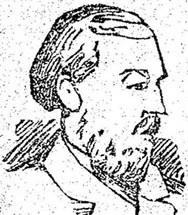
William Henry Bury
Murderer Albert Milsom
Murderer · United Kingdom · 1896
Albert Milsom (33) was executed by hanging at Newgate Prison on June 9, 1896. ·…
1 victim
Albert Milsom
Murderer · United Kingdom · 1896
Albert Milsom (33) was executed by hanging at Newgate Prison on June 9, 1896. ·…
1 victim
 Eugéne-Marie Chantrelle
Murderer · United Kingdom · 1878
Eugéne-Marie Chantrelle was a French-born school teacher who lived in Edinburgh…
1 victim
Eugéne-Marie Chantrelle
Murderer · United Kingdom · 1878
Eugéne-Marie Chantrelle was a French-born school teacher who lived in Edinburgh…
1 victim
 George Lamson
Murderer · United Kingdom · 1881
George Lamson was an English physician who, after the Crimean War, suffered fro…
1 victim
George Lamson
Murderer · United Kingdom · 1881
George Lamson was an English physician who, after the Crimean War, suffered fro…
1 victim
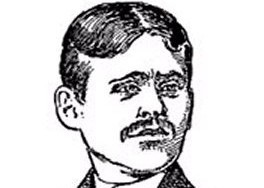 Israel Lipski
Murderer · United Kingdom · 1887
Israel Lipski Israel Lipski (1865 - 1888) was born Israel Lobulsk. He was of Po…
1 victim
Israel Lipski
Murderer · United Kingdom · 1887
Israel Lipski Israel Lipski (1865 - 1888) was born Israel Lobulsk. He was of Po…
1 victim
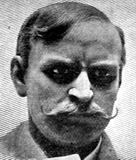 James Canham Read
Murderer · United Kingdom · 1894
James Canham Read was a middle-aged married bookkeeper at the London Docks. He…
1 victim
James Canham Read
Murderer · United Kingdom · 1894
James Canham Read was a middle-aged married bookkeeper at the London Docks. He…
1 victim
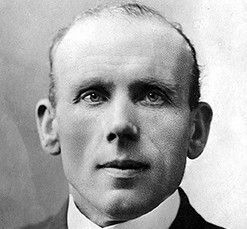 John Henry George Lee
Murderer · United Kingdom · 1884
John Henry George Lee, better known as John “Babbacombe” Lee (1864 – c. 1945),…
1 victim
John Henry George Lee
Murderer · United Kingdom · 1884
John Henry George Lee, better known as John “Babbacombe” Lee (1864 – c. 1945),…
1 victim
 Masumi Hayashi
Mass murderer · Japan · 1998
Masumi Hayashi (林 真須美, Hayashi Masumi, born July 22, 1961) was a Japanese woman…
4 victims
Masumi Hayashi
Mass murderer · Japan · 1998
Masumi Hayashi (林 真須美, Hayashi Masumi, born July 22, 1961) was a Japanese woman…
4 victims
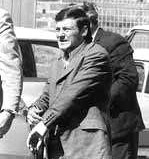 Archibald McCafferty
Serial killer · Australia · 1973
Archibald Beattie McCafferty was sentenced to three life sentences in 1974 and…
4 victims
Archibald McCafferty
Serial killer · Australia · 1973
Archibald Beattie McCafferty was sentenced to three life sentences in 1974 and…
4 victims
 Jesse Timmendequas
Murderer · USA · 1994
Jesse Timmendequas (born April 15, 1961) raped and murdered his neighbor, seven…
1 victim
Jesse Timmendequas
Murderer · USA · 1994
Jesse Timmendequas (born April 15, 1961) raped and murdered his neighbor, seven…
1 victim
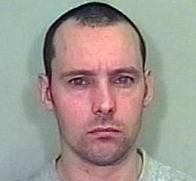 Anthony Morley
Murderer · United Kingdom · 2008
Anthony Morley (born 1972) was an English model and convicted murderer. He won…
1 victim
Anthony Morley
Murderer · United Kingdom · 2008
Anthony Morley (born 1972) was an English model and convicted murderer. He won…
1 victim
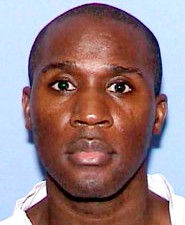 Curtis Moore
Murderer · USA · 1995
Curtis Moore was convicted of capital murder in Texas and was sentenced to deat…
3 victims
Curtis Moore
Murderer · USA · 1995
Curtis Moore was convicted of capital murder in Texas and was sentenced to deat…
3 victims
- Gender
- male
- Country
- United Kingdom
- Location
- England/Scotland, United Kingdom
- Date of birth
- May 25, 1859
- Age at first offence
- 29
- Characteristics
- parricide, mutilation
- Victim profile
- Rose Mylett / His wife, Ellen Elliot
- Method of murder
- Strangulation
- Date(s) of murder
- December 20, 1888 / February 5, 1889
- Years active
- 1888–1889
- Date of arrest
- February 6, 1889
- Status
-
Executed
Executed by hanging in Dundee on April 24, 1889
Overview
William Henry Bury was executed by hanging in Dundee on April 24, 1889. He was born 25 May 1859 in Stourbridge, Worcestershire (England). He was executed for the murder of his wife, Ellen Elliot.
Timeline
- May 1860 — Mary Bury (née Hendy) was committed to the Worcester County & City lunatic asylum suffering from melancholia.
- 30 March 1864 — Mary Bury died aged 33.
- August 1859 — Henry Bury died in a horse and cart accident when William was only three months old.
- 1884/5 — William worked for Osbourne, a lock manufacturer in Lord Street, Wolverhampton, until 1884/5.
- Summer 1887 — William was back in the Midlands making a living as a hawker, selling items such as lead pencils and toy rings on the streets in Snow Hill, Birmingham.
- October 1887 — William was 28 years old when he arrived in Bow, London; he found work as a sawdust hawker to James Martin.
- November 1887 — William Henry Bury arrived in the East End of London.
- April 1888 — William and Ellen Bury married.
- February 1888 — Bury attacked Annie Millwood in Spitalfields using a knife, slashing her legs and genitals; she survived.
- 28 March 1888 — Ada Wilson, an elderly seamstress, was attacked in her home; Bury demanded money and stabbed her twice in the throat; she survived.
- 7 April 1888 — Bury attempted to cut the throat of his wife; she fought him off.
- 20 December 1888 — Bury cornered and attacked Rose Mylett; he strangled her slowly and dumped her body in Clarke’s Yard.
- December 1888 — Bury told his landlord at 3 Spanby Road that he was thinking of emigrating to Brisbane, Australia and asked him to make 2 wooden crates for the journey.
- January 1889 — The Burys relocated to the town of Dundee.
- 21 January 1889 — The Burys arrived at 43 Union Street, Dundee.
- 29 January 1889 — The Burys moved to 113 Princes Street, a basement flat under a shop.
- 8 February 1889 — Bury spent the whole day in court, taking notes and listening attentively.
- 10 February 1889 — Bury walked into the Dundee Central Police Station and reported his wife’s suicide to Lieutenant James Parr.
- 24 April 1889 — Bury was sentenced to hang and was executed by hanging in Dundee.
Background
William Henry Bury lost both parents in infancy. His father, Henry, died in a horse and cart accident when William was only three months old in August 1859. His mother, Mary Bury (née Hendy), was committed to Worcester County & City lunatic asylum suffering from melancholia in May 1860 and remained there until her death aged 33 on 30 March 1864.
William was the youngest of three, with one brother and a sister who had both died by the time he moved to London. He was raised and provided with a solid education by a close family friend and attended the Blue Coat Orphanage in Stourbridge.
At the age of sixteen, William found work as a factors clerk in a warehouse at Horsley Fields, Wolverhampton. He worked for Osbourne, a lock manufacturer in Lord Street, Wolverhampton until 1884/5. His whereabouts for the next few years were not known. During the summer of 1887 he was back in the Midlands as a hawker, selling items such as lead pencils and toy rings on the streets in Snow Hill, Birmingham.
The offence
Attacks before the murder of his wife
In February 1888, Bury attacked Annie Millwood in Spitalfields. He used a knife to slash her legs and genitals; she survived.
Ada Wilson, an elderly seamstress, was attacked in her home on the night of March 28. Bury demanded money and stabbed her twice in the throat for no apparent reason; she survived.
On the night of April 7, Bury attempted to cut the throat of his wife, Ellen Elliot. She fought him off. Ellen had found out that Bury slept with his knife under his pillow.
The narrative also stated that Bury became aware he had contracted syphillis and had infected his wife.
Murder of Ellen Elliot
On 5 February 1889, Bury attacked Ellen in the basement of their flat in Dundee and strangled her with a piece of rope. Lying on her back, he used his knife to slice open her abdomen and rip out her intestines. He then stuffed her body in a trunk and kept it hidden in the basement. From this point, he plotted the best way to dispose of Ellen’s mutilated corpse.
Bury later went to the police and reported that his wife had been murdered by an assailant while in their home. Police searched the flat and found the remains of Ellen Bury. They did not accept Bury’s story, and he was arrested and charged with the murder of his wife.
Other killings described in the narrative
On 20 December 1888, the narrative stated that Bury cornered a young woman named Rose Mylett and attacked her in a violent rage. He strangled her slowly and dumped her body in Clarke’s Yard, a short walk from his home. The narrative stated he had not brought his knife for the job and described a sexual satisfaction from strangling Rose.
Investigation and police
Bury was taken upstairs to see Lt. David Lamb. Parr told Lamb: “Bury had a wonderful story to tell”. Parr remained to hear the re-telling of Bury’s story, but the ‘Jack the Ripper’ reference was omitted. Parr also said that he stabbed his wife’s body only once.
Detectives from London travelled north to quiz Bury about his movements in London. After an interview, they did not consider him a realistic suspect.
At Bury’s flat, the mutilated remains of Ellen were discovered stuffed into the wooden box Bury had commissioned in London. The narrative also described chalk graffiti saying “jack ripper is at the back of this door” and “jack ripper is in this seller” (sic) on a door.
Arrest and charges
Bury was arrested by the police and charged with the murder of his wife.
Trial
Bury was tried for the murder of his wife in a hearing lasting 13 hours. The jury found him guilty.
Sentencing
On 24 April 1889, Bury was sentenced to hang.
Outcome
Bury was executed by hanging in Dundee on April 24, 1889, a few days after the sentence. The narrative said Bury showed no remorse for his crimes and remarked to the hangman just before the rope was put around his neck: “I suppose you think you are clever to hang me.”
Other details
People and relationships
- Ellen Elliot (32) — Bury’s wife and victim. She was described as a barmaid, prostitute, and the daughter of a publican.
- James Martin — Bury’s employer as a sawdust collector; Martin also ran what was described as a brothel at 80 Quickett Street. Bury took lodgings with Martin and his wife.
- Annie Millwood (38) — attacked in Spitalfields in February 1888; she survived.
- Ada Wilson — elderly seamstress attacked in her home on the night of March 28; she survived.
- Rose Mylett — attacked on 20 December 1888; her body was dumped in Clarke’s Yard.
- Lieutenant James Parr — received Bury’s report at the Dundee Central Police Station on 10 February 1889.
- Lt. David Lamb — visited after Parr’s involvement; Parr told Lamb: “Bury had a wonderful story to tell”.
- Marjorie Smith — ran the shop above Bury’s Princes Street flat in Dundee and asked questions about Jack the Ripper.
- David Walker — a brief acquaintance in Dundee who said Bury threw down a newspaper when asked about Jack the Ripper.
- William Beadle — described as a ripperologist who made a strong case suggesting Bury may have been Jack the Ripper.
- Ellen — described as having said statements about Jack the Ripper.
Statements and quotations about Jack the Ripper suspicion
Marjorie Smith asked: “What sort of work you Whitechapel folk have been about, letting Jack the Ripper kill so many people”?. Bury went silent. Ellen said: “Jack the Ripper is quiet now”. She later told another neighbour: “Jack the Ripper is taking a rest”.
Mrs Smith lent Bury a chopper and asked: “Surely you are not Jack the Ripper?” Bury replied: “I do not know so much about that.”
Bury was alleged to have made comments to Lt. Parr in the Dundee police station where he said he was “Jack the Ripper” or “ a Jack the Ripper”.
David Walker said Bury threw down a newspaper he was reading when asked if there was “anything about Jack the Ripper” in it.
The narrative described Bury’s time in Bow near Whitechapel during the period October 1887 to January 1889 as placing him fairly near the Whitechapel murders at the appropriate time, and it described his wife murder method as not dissimilar to the murders of Mary Ann Nichols and Martha Tabram according to some observers.
Place and lodging details
Bury took lodgings with Martin and his wife, who ran a brothel on Quickett Street. The narrative stated Bury had moved to London and worked as a sawdust collector for James Martin after previously working as a horse butcher.
In London, the narrative stated Bury was caught by his landlady at 3 Swaton Road kneeling on his bride of 5 days attempting to cut her neck with a knife. He was thrown out of this address for “violence and bad language”.
In December 1888, Bury told his landlord at 3 Spanby Road he was thinking of emigrating to Brisbane, Australia and asked him to make 2 wooden crates.
In Dundee, the narrative stated that the Burys travelled as 2nd class passengers on the steamer Cambria on their trip north. They arrived at 43 Union Street, Dundee on the morning of 21 January 1889 and stayed for eight days. They then moved to 113 Princes Street, a basement flat under a shop on 29 January 1889.
Court and police conduct details
The narrative stated that on 8 February 1889 Bury spent the whole day in court taking notes and listening attentively. On 10 February 1889 he reported his wife’s suicide to Lieutenant James Parr.
The narrative stated that Bury said they had been drinking heavily the night before her death and that he had woken in the morning to find his wife’s body on the floor, with the rope around her neck. It stated he did not attempt to summon a doctor, but after looking at the body was seized with rage and thrust a knife several times into Ellen’s abdomen.
Execution identification and timing within the narrative
The narrative included William Henry Bury (25 May 1859 – 24 April 1889) and stated he was executed in Dundee for the murder of his wife Ellen. It also stated the hanging was carried out a few days after the sentencing date.
Spotted an error, or have more information about this case?