
Robert Edward Maury
Serial killer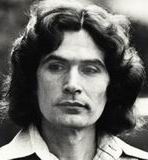 Rodney Alcala
Serial killer · USA · 1977
Rodney James Alcala (born August 23, 1943) was also known as Rodrigo Jacques Al…
100 victims
Rodney Alcala
Serial killer · USA · 1977
Rodney James Alcala (born August 23, 1943) was also known as Rodrigo Jacques Al…
100 victims
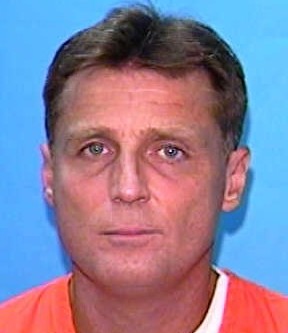 Glen Edward Rogers
Serial killer · USA · 1993
Glen Edward Rogers was a spree killer whose cross-country rampage in 1994-95 le…
70 victims
Glen Edward Rogers
Serial killer · USA · 1993
Glen Edward Rogers was a spree killer whose cross-country rampage in 1994-95 le…
70 victims
 Donald Leroy Evans
Serial killer · USA · 1975
Donald Leroy Evans (born July 5, 1957) was an American serial killer who murder…
60 victims
Donald Leroy Evans
Serial killer · USA · 1975
Donald Leroy Evans (born July 5, 1957) was an American serial killer who murder…
60 victims
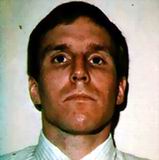 Michael Swango
Serial killer · USA · 1981
Michael Swango (Joseph Michael Swango) was a physician and American serial kill…
60 victims
Michael Swango
Serial killer · USA · 1981
Michael Swango (Joseph Michael Swango) was a physician and American serial kill…
60 victims
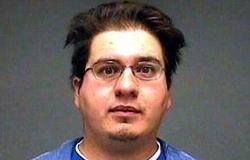 Efren Saldivar
Serial killer · USA · 1989
Efren Saldivar (born 30 September 1969) was an American serial killer who murde…
50 victims
Efren Saldivar
Serial killer · USA · 1989
Efren Saldivar (born 30 September 1969) was an American serial killer who murde…
50 victims
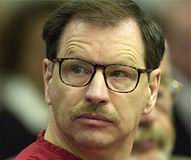 Gary Ridgway
Serial killer · USA · 1982
Gary Leon Ridgway Ridgway was born 18-February-1949 in Salt Lake City, UT. He w…
49 victims
Gary Ridgway
Serial killer · USA · 1982
Gary Leon Ridgway Ridgway was born 18-February-1949 in Salt Lake City, UT. He w…
49 victims
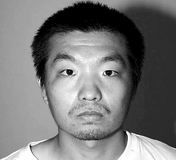 Yang Jia
Mass murderer · China · 2008
Yang Jia (Chinese: 杨佳 ; pinyin: Yáng Jiā ; born 27 August 1980 – 26 November 20…
6 victims
Yang Jia
Mass murderer · China · 2008
Yang Jia (Chinese: 杨佳 ; pinyin: Yáng Jiā ; born 27 August 1980 – 26 November 20…
6 victims
 David Dewayne Johnson
Murderer · USA · 1989
David Dewayne Johnson was convicted of capital murder and was sentenced to deat…
1 victim
David Dewayne Johnson
Murderer · USA · 1989
David Dewayne Johnson was convicted of capital murder and was sentenced to deat…
1 victim
 Linda Carty
Murderer · USA · 2001
Linda Anita Carty (age 42 at crime; DOB: 10-5-1958), defendant; woman possessin…
1 victim
Linda Carty
Murderer · USA · 2001
Linda Anita Carty (age 42 at crime; DOB: 10-5-1958), defendant; woman possessin…
1 victim
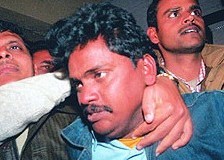 Surender Koli
Serial killer · India · 2005
Surender Koli was the domestic help of businessman Moninder Singh Pandher in th…
19 victims
Surender Koli
Serial killer · India · 2005
Surender Koli was the domestic help of businessman Moninder Singh Pandher in th…
19 victims
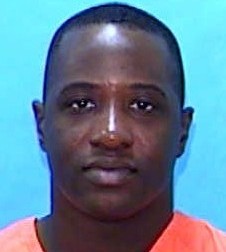 Antonio Melton
Homicide - Murderer · USA · 1990
Antonio Melton was sentenced to death on May 19, 1992. He was born on 12/29/72.…
2 victims
Antonio Melton
Homicide - Murderer · USA · 1990
Antonio Melton was sentenced to death on May 19, 1992. He was born on 12/29/72.…
2 victims
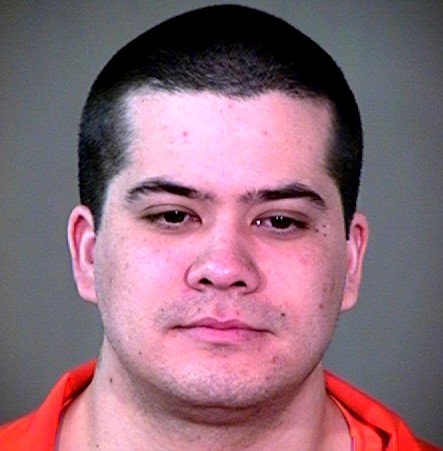 Cody Martinez
Murderer · USA · 2003
Cody James Martinez was sentenced to death on November 18, 2005. Martinez and h…
1 victim
Cody Martinez
Murderer · USA · 2003
Cody James Martinez was sentenced to death on November 18, 2005. Martinez and h…
1 victim
- Gender
- male
- Country
- USA
- Location
- Shasta County, California, USA
- Date of birth
- 1956
- Age at first offence
- 29
- Characteristics
- rape, robbery
- Victim profile
- Averill Weeden / Dawn Berryhill / Belinda Jo Stark
- Method of murder
- Strangulation
- Date(s) of murder
- 1985 - 1987
- Years active
- 1985–1987
- Date of arrest
- —
- Status
-
Sentenced to death
Sentenced to death on October 27, 1989
Case details
Robert Edward Maury was sentenced to death on October 27, 1989.
Timeline
- October 27, 1989 — In Shasta County, Robert Edward Maury was sentenced to death for the murders of Averill Weeden, Belinda Jo Stark and Dawn Berryhill between 1985 and 1987.
- April 25, 2003 — The state Supreme Court upheld the death sentence for a Redding man who sought to collect rewards from the sponsors of a tipster hotline for calling in the locations of three bodies over a two-year period and was later charged with killing the victims himself.
- 2003 — The high court rejected Maury’s claim that the police violated his Fourth Amendment rights by taping some of his calls to Secret Witness without obtaining a warrant.
- 2003 — The case was People v. Maury, 03 S.O.S. 2072.
Background
Robert Edward Maury was referred to as “a Redding man” who sought to collect rewards from the sponsors of a tipster hotline for calling in the locations of three bodies over a two-year period and was later charged with killing the victims himself.
Justice Ming Chin wrote for a unanimous court.
The offence
Robert Edward Maury was sentenced to death for the murders of Averill Weeden, Belinda Jo Stark and Dawn Berryhill between 1985 and 1987.
The high court said there was plenty of circumstantial evidence to prove that Maury committed the murders, in addition to having robbed one victim, attempted to rape another, and forcibly raped another woman.
Maury was convicted by a Shasta Superior Court jury of all of the crimes in a 1989 trial.
The murders were described as involving “strangled women ( Averill Weeden, Dawn Berryhill and Belinda Jo Stark) and collected "secret witness" rewards for directing police to their corpses”.
Investigation
Police said they first focused on Maury after the disappearance of his roommate, Averill Weeden, in 1985.
Police were unable to prove at the time that Maury killed her, or that it was Maury who called in the location of the body to Secret Witness of Shasta County about a month later.
Secret Witness was established by a local civic association and gave rewards for information about local crimes on the recommendation of an advisory board made up of law enforcement officials.
The caller who inquired about a possible reward for information about the Weeden murder never claimed it.
But a Secret Witness employee who took the call testified that the same person called about one of the murders and about several other crimes.
Maury identified himself by name in some of the calls.
Maury was observed by police when he picked up $500 at a designated pickup point as a reward for calling in the location of the body of the third murder victim.
The prosecution case included fingerprint evidence.
Prosecutors included testimony that Maury had bragged about strangling a woman.
A bartender’s identification of Maury placed him in the bar with the third victim, a woman Maury claimed to have never met in his life.
Prosecutors also presented evidence that Maury made numerous inconsistent statements about Weeden’s whereabouts following her disappearance.
Arrest
The material did not describe a specific arrest.
Trial
A Shasta Superior Court jury convicted Maury of all of the crimes in a 1989 trial.
Maury claimed he was innocent.
At the penalty phase, Maury read a statement to jurors telling them that since they felt he was guilty, they should return a death verdict.
Jurors obliged.
Judge William R. Lund denied the automatic motion to modify the sentence and condemned Maury to death.
Appeals
The material described the high court’s review of the convictions and death sentences.
Outcome
The state Supreme Court upheld the death sentence.
The high court rejected Maury’s claim that the police violated his Fourth Amendment rights by taping some of his calls to Secret Witness without obtaining a warrant.
The high court said Secret Witness was maintained by a private association not subject to the Fourth Amendment, and Maury could not have reasonably expected the police to respect his privacy once they were told that a caller to the tip line might be reporting crimes he himself had committed.
Citing testimony from board members, Justice Chin wrote:
“To guarantee anonymity to such a criminal would be contrary to the purpose of the Secret Witness program, i.e., to solve crimes.”
Other details
Michael Newton was listed in the material as “An Encyclopedia of Modern Serial Killers - Hunting Humans” and “home last updates contact”.
Motive was given as “Sex./CE” and “MOTIVE: Sex.”
Sex./CE mo was described as “Strangled women ( Averill Weeden, Dawn Berryhill and Belinda Jo Stark) and collected "secret witness" rewards for directing police to their corpses”.
Disposition was given as “Condemned, 1989”.
Maury was included in the case listing as People v. Maury, 03 S.O.S. 2072.
Spotted an error, or have more information about this case?