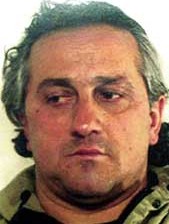
Rufus Junior Mincey
Murderer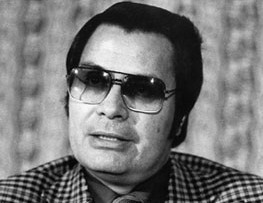 Jim Jones
Murderer · Guyana · 1978
James Warren "Jim" Jones (May 13, 1931 – November 18, 1978) was the American fo…
900 victims
Jim Jones
Murderer · Guyana · 1978
James Warren "Jim" Jones (May 13, 1931 – November 18, 1978) was the American fo…
900 victims
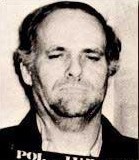 Ervil LeBaron
Murderer · USA · 1972
Ervil Morrell LeBaron (1925 to August 16, 1981) was the leader of a polygamous…
35 victims
Ervil LeBaron
Murderer · USA · 1972
Ervil Morrell LeBaron (1925 to August 16, 1981) was the leader of a polygamous…
35 victims
 Marvin Gray
Murderer · USA · 1975
Marvin Gray was convicted killer who claimed responsibility for 23 slayings and…
23 victims
Marvin Gray
Murderer · USA · 1975
Marvin Gray was convicted killer who claimed responsibility for 23 slayings and…
23 victims
 Yahweh ben Yahweh
Murderer · USA · 1980
Yahweh ben Yahweh was born and legally named Hulon Mitchell Jr. (October 27, 19…
23 victims
Yahweh ben Yahweh
Murderer · USA · 1980
Yahweh ben Yahweh was born and legally named Hulon Mitchell Jr. (October 27, 19…
23 victims
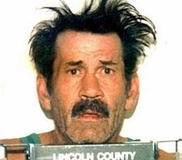 Bobby Jack Fowler
Murderer · Canada · 1973
Bobby Jack Fowler (June 12, 1939 – May 15, 2006) was an American who was a nati…
20 victims
Bobby Jack Fowler
Murderer · Canada · 1973
Bobby Jack Fowler (June 12, 1939 – May 15, 2006) was an American who was a nati…
20 victims
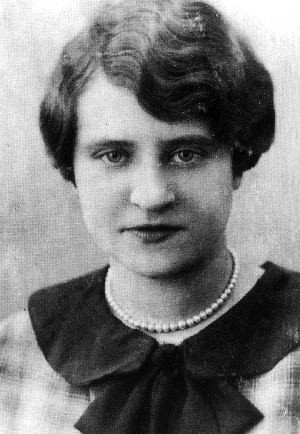 James Joseph Power
Murderer · United Kingdom · 1927
James Joseph Power was sentenced to death at Birmingham Assizes by Mr Justice S…
1 victim
James Joseph Power
Murderer · United Kingdom · 1927
James Joseph Power was sentenced to death at Birmingham Assizes by Mr Justice S…
1 victim
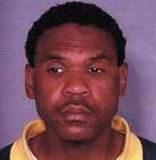 Mac Minister
Murderer · USA · 2005
Mac Minister was an American rapper. His real name was Andre Dow. He was 37 yea…
2 victims
Mac Minister
Murderer · USA · 2005
Mac Minister was an American rapper. His real name was Andre Dow. He was 37 yea…
2 victims
 Big Lurch
Murderer · USA · 2002
Big Lurch was born Antron Singleton c. 1975, in Fort Worth, TX, although some s…
1 victim
Big Lurch
Murderer · USA · 2002
Big Lurch was born Antron Singleton c. 1975, in Fort Worth, TX, although some s…
1 victim
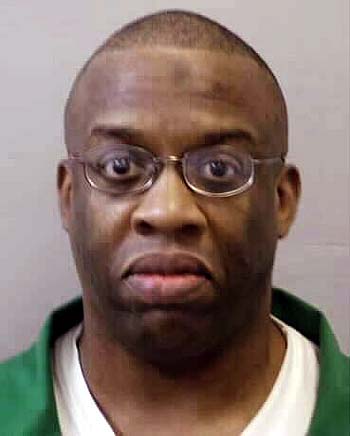 James Earl Reed
Murderer · USA · 1994
James Earl Reed was convicted of murdering Joseph Lafayette and Barbara Lafayet…
2 victims
James Earl Reed
Murderer · USA · 1994
James Earl Reed was convicted of murdering Joseph Lafayette and Barbara Lafayet…
2 victims
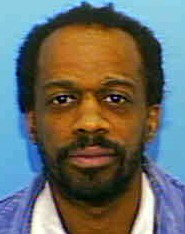 Lewis Williams
Murderer · USA · 1983
Lewis Williams was tried in the Cuyahoga County Court of Common Pleas and found…
1 victim
Lewis Williams
Murderer · USA · 1983
Lewis Williams was tried in the Cuyahoga County Court of Common Pleas and found…
1 victim
- Gender
- male
- Country
- —
- Location
- —
- Date of birth
- ???
- Characteristics
- drugs
- Victim profile
- Barry Headricks ( undercover narcotics agent )
- Method of murder
- Shooting Loca tion : Tucson, Arizona, USA
- Date(s) of murder
- October 28, 1974
- Years active
- 1974
- Date of arrest
- Same day
- Status
-
Imprisoned
Sentenced to 25-year prison term in 1975
Case record: Rufus Junior Mincey
Background
Rufus Junior Mincey was a heroin dealer in Tucson. During an undercover “buy-bust,” undercover narcotics agent Barry Headricks was killed in an apartment where shots were fired and Mincey was also wounded in the exchange.
Mincey was convicted of murder connected to the death of Headricks and also convicted of drug sales and possession charges.
The offence
Headricks had been introduced to Charles Ferguson as “Brian the Chemist” by a police informant. Ferguson acted as a middleman for Mincey, who was dealing heroin from his apartment in Tucson.
During the operation, Headricks and Ferguson entered Mincey’s apartment. After field testing confirmed the powder was heroin, Headricks said he was leaving to get his money man to complete the transaction. Headricks noted that Ferguson was armed and that some other people in the apartment were armed.
After Headricks returned with an agent identified in records only as “Schwartz” acting as the money man, the operation went bad and shots were fired in the bedroom where the heroin and Mincey were. Mincey fired seven shots, hitting the officer five times. Headricks shot six times, hitting Mincey and the woman Deborah Johnson.
One of Mincey’s shots passed through a wall and struck Ferguson, who was in custody in the living room. After being shot, Headricks emerged from the bedroom, reported that Mincey “was down,” and collapsed. Fellow agents summoned first aid, but Headricks died shortly afterward at an area hospital.
Investigation
At the time, Tucson police department rules required that all shootings be investigated by members of the department’s homicide squad.
Detective Reyna led the homicide investigation unit. Reyna arrived a few minutes after the shooting had stopped and after the people in the apartment were under the control of narcotics agents. The length of time between the end of the shooting and Reyna’s arrival at 3:28 p.m. was not clearly established at trial.
After injured parties and suspects were removed from the scene, Reyna, two I.D. technicians, and a graphic arts specialist began photographing and filming the apartment and its contents. The apartment was diagrammed, visible items were tagged, given identification numbers, and then removed. This work continued until approximately 7 p.m.
A dispute existed about how soon after Reyna’s arrival the victims were removed from the scene.
Trial testimony stated that Reyna checked with a deputy district attorney regarding the need for a search warrant to proceed with the search of the apartment. Reyna was told he did not need a warrant unless police left the scene and later returned.
During the subsequent search, which lasted four days, police conducted an extensive warrantless search. Justice Potter Stewart later described the scope of the search as follows:
“The officers opened drawers, closets, and cupboards, and inspected their contents; they emptied clothing pockets; they dug bullet fragments out of the walls and floors; they pulled up sections of the carpet and removed them for examination,” Justice Potter Stewart wrote in his summary of the case. “Every item in the apartment was closely examined and inventoried, and 200 to 300 objects were seized. In short, Mincey’s apartment was subjected to an exhaustive and intrusive search. No warrant was ever obtained.”
Arrest
Headricks was killed and Mincey was wounded in the exchange during the raid.
Murder and drug-related charges were brought in Arizona against Mincey following the incident.
Trial
Charges
Mincey was indicted for first-degree murder, assault with a deadly weapon (for shooting Ferguson), and drug sales and possession charges.
Pre-trial motions
Before trial, Mincey attempted to have evidence excluded and sought to suppress his hospital bed interrogation on the grounds that the evidence had been illegally obtained.
The trial court declined to prohibit the introduction of the evidence. It ruled that Arizona’s “exigent circumstances” exception permitted the search after a homicide occurred at the scene. The trial court opinion referenced the U.S. Supreme Court’s formulation in Schneckloth v. Bustamonte:
“Searches conducted without a warrant issued upon probable cause are ‘per se unreasonable * * * subject only to a few specifically established and well-delineated exceptions.’”
Schneckloth v. Bustamonte, 412 U.S. 218.
First trial
Mincey was convicted of all charges in the first trial and sentenced to life in prison without parole for 25 years.
He appealed. The Arizona Supreme Court overturned the murder conviction but upheld the narcotics convictions.
The Arizona Supreme Court held that the four-day warrantless search did not violate the Fourth Amendment when officers were legally on the premises in the first instance. It stated:
“We hold a reasonable, warrantless search of the scene of a homicide — or of a serious personal injury with likelihood of death where there is reason to suspect foul play — does not violate the Fourth Amendment to the United States Constitution where the law enforcement officers were legally on the premises in the first instance,”
The case was remanded for retrial on the murder charges, while Mincey proceeded with a federal habeas corpus appeal on the remaining drug charges. The case then reached the U.S. Supreme Court.
U.S. Supreme Court decision on the search
Justice Powell wrote for the court. The court reasoned that because investigating detectives knew Headricks was seriously injured, began searching promptly upon arrival, and searched only for evidence establishing the circumstances of death or “relevant to motive and intent or knowledge (narcotics, e. g.),” the warrantless search would not have violated the Fourth and Fourteenth Amendments. The opinion states:
We cannot agree. …The Arizona Supreme Court did not hold that the search of the petitioner’s apartment fell within any of the exceptions to the warrant requirement previously recognized by this Court, but rather that the search of a homicide scene should be recognized as an additional exception. …A warrantless search must be “strictly circumscribed by the exigencies which justify its initiation,” Terry v. Ohio , and it simply cannot be contended that this search was justified by any emergency threatening life or limb. All the persons in Mincey’s apartment had been located before the investigating homicide officers arrived there and began their search. And a four-day search that included opening dresser drawers and ripping up carpets can hardly be rationalized in terms of the legitimate concerns that justify an emergency search.
The decision concluded there was no “murder scene” exception to the requirement that police obtain a warrant before searching someone’s home, and it found the conviction invalid because it was based on evidence seized during the warrantless search of his home.
Second trial
A second trial was prepared in 1979 following court instructions regarding jury instructions and admissible evidence.
In the first trial, Mincey had been charged with murder “which is committed in avoiding or preventing lawful arrest.”
During closing arguments, the prosecutor emphasized Arizona jury instructions for that charge:
“If a person has knowledge, or by the exercise of reasonable care should have knowledge , that he is being arrested by a peace officer, it is the duty of such a person to refrain from using force (or any weapon) to resist such arrest. However, if you find that the peace officer used excessive force in making the arrest, it is not the duty of such person to refrain from using reasonable force to defend himself against the use of such excessive force.”
Mincey’s counsel argued that those instructions were unfair based on legislative intent allowing the death penalty for murder to avoid arrest.
The Arizona high court agreed that the original murder conviction had been voided and held that the scienter requirement required knowledge that the victim was a law enforcement officer. It stated:
“We hold that the scienter requirement (state of mind) for first degree murder ‘which is committed in avoiding or preventing lawful arrest,’ is knowledge that the victim was a law enforcement officer. That is, a defendant is guilty … if the murder is committed while knowingly avoiding or preventing a lawful arrest. This holding is based on the words of the statute and the legislative intent. “The case went to the jury on an alternative theory of negligence (’knew or by exercise of reasonable care should have known’). Under these circumstances we have no way of knowing on what basis the jury determined appellant’s guilt.”
At the second trial, Mincey was convicted of second degree murder and the drug charges. He appealed, and the Arizona Supreme Court overturned the murder conviction again.
Mincey argued that the prosecution had unfairly shifted the burden of proof of the defendant’s intent from the state to the defense. The jury instruction language about intent included:
“A person is presumed to intend to do that which he voluntarily and wilfully does in fact do, and is also presumed to intend the natural, probable and usual consequences of his use of a dangerous weapon likely to kill. If the use of such dangerous weapon does in fact cause great bodily harm or death it is presumed that such harm or death was intended by the assailant. “Any such presumption as I have mentioned, however, maybe [sic] overcome by contrary evidence, and any such evidence is sufficient to overcome it which creates in the minds of the jurors a reasonable doubt that the defendant’s intent was so presumed, but in the absence of evidence to the contrary, the presumption must prevail.”
Following a U.S. Supreme Court decision finding shifting the burden of overcoming a presumption of intent unconstitutional, the Arizona Supreme Court reversed the second-degree murder conviction, stating Mincey should not have been required to prove he did not intend to kill when he emptied his clip at Headricks.
Third trial
In 1982, Mincey was convicted again of second degree murder.
He was sentenced to the same 25-to-life term.
He appealed to the Arizona Supreme Court again, arguing that there was insufficient evidence to sustain the second-degree murder conviction. The state argued that Mincey knew Brian the Chemist was a cop when he opened fire, and Mincey argued self-defense.
The Arizona Supreme Court affirmed the convictions.
Appeals
The case involved multiple appellate steps concerning evidence obtained in the warrantless search and concerning murder-related jury instructions and proof of intent.
The U.S. Supreme Court decision was Mincey v. Arizona. It was associated with the following decision metadata:
- Place: Washington, D.C.
- Date of Decision: 21 June 1978
- Decision: there is no “murder scene” exception to the requirement that police obtain a warrant before searching someone’s home, and thus the appellant’s conviction was invalid because it was based on evidence seized during a warrantless search of his home.
- Significance: the court severely limited the ability of police officers to conduct searches of murder scenes without first obtaining a search warrant; after Mincey, police may do no more than search for possible victims at the scene until they have obtained a search warrant.
The appeals included:
- Arizona Supreme Court reversal of the original murder conviction while upholding narcotics convictions.
- Remand for retrial on murder charges.
- Federal habeas corpus appeal on remaining drug charges.
- Arizona Supreme Court reversal after issues with the scienter requirement for murder “which is committed in avoiding or preventing lawful arrest,” requiring knowledge that the victim was a law enforcement officer.
- Arizona Supreme Court reversal after jury instruction burden-shifting regarding intent.
- Arizona Supreme Court affirmation after the third trial.
The Attorney General who supervised the state’s appeal of the drug search case was future governor, Secretary of the Interior and presidential candidate Bruce Babbitt.
Sentencing
After the first trial, Mincey was sentenced to life in prison without parole for 25 years.
After the third trial in 1982, Mincey was sentenced to the same 25-to-life term.
Timeline
- 28 October 1978 — Undercover police officers in Tucson, Arizona conducted a raid at an apartment occupied by Rufus Mincey; shots were fired and one officer was killed; Mincey was also wounded.
- 21 June 1978 — Mincey v. Arizona was decided by the United States Supreme Court.
- 1979 — The state prepared to try Mincey a second time following court instructions regarding jury instructions and admissible evidence.
- 1982 — Mincey was convicted again of second degree murder and sentenced to the same 25-to-life term.
Outcome
Mincey was convicted of second degree murder and was also convicted on drug charges in the third trial. The Arizona Supreme Court affirmed the convictions after the third trial.
The U.S. Supreme Court decided that the warrantless search of Mincey’s apartment violated the Fourth Amendment and rejected a “murder scene” exception.
Other details
Charles Ferguson acted as a middleman for Mincey and was introduced to Headricks as part of the operation. Headricks was introduced as “Brian the Chemist” to Ferguson by a police informant.
Seven other agents and an assistant county DA lurked nearby, listening to the transaction through a transmitter Headricks wore.
At least three other people besides Rufus Mincey were present in the apartment. One of them was John Hodgman, who was described as a heroin user.
At Mincey’s request, Hodgman took a trash bag laden with used drug paraphernalia out to a dumpster as an excuse to look around. Hodgman observed Ferguson talking to one, possibly two other men.
The account of what happened at the hallway door involved disputes between police and Hodgman. The police claimed Hodgman, opening the door a crack, noticed another agent and clearly saw his badge. Hodgman said he saw only Headricks, Schwartz, and the head of another armed man, with no badge or uniform.
The police version stated that Headricks entered the apartment in a “low voice,” saying “police” before entering. Hodgman said Headricks did not announce that he was a law enforcement officer, and he delayed the other officers’ entry while Headricks went into the bedroom.
One of the women present, Deborah Johnson, was shot and subsequently crawled into a closet.
Arizona Department of Corrections records indicated he served his time quietly, with a couple of minor incidents.
Bruce Babbitt supervised the state’s appeal of the case that reached the U.S. Supreme Court.
Related legal authorities
The case discussion referenced:
- United States v. Rabinowitz, 339 U.S. 56 (1950).
- Mapp v. Ohio, 367 U.S. 643 (1961).
- Ker v. California, 374 U.S. 23 (1963).
- Chimel v. California, 395 U.S. 752 (1969).
- Payton v. New York, 445 U.S. 573 (1980).
- Terry v. Ohio (referenced regarding the requirement that a warrantless search be strictly circumscribed by the exigencies justifying it).
- Schneckloth v. Bustamonte, 412 U.S. 218 (referenced regarding warrant requirement and exceptions).
- Mincey v. Arizona (the U.S. Supreme Court case).
Spotted an error, or have more information about this case?