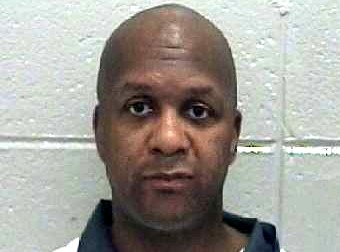
Kenneth Dan Bright
Murderer Brian Kevin Rosenfeld
Murderer · USA · 1985
Brian Kevin Rosenfeld Brian Kevin Rosenfeld was sentenced to three concurrent l…
23 victims
Brian Kevin Rosenfeld
Murderer · USA · 1985
Brian Kevin Rosenfeld Brian Kevin Rosenfeld was sentenced to three concurrent l…
23 victims
 Yahweh ben Yahweh
Murderer · USA · 1980
Yahweh ben Yahweh was born and legally named Hulon Mitchell Jr. (October 27, 19…
23 victims
Yahweh ben Yahweh
Murderer · USA · 1980
Yahweh ben Yahweh was born and legally named Hulon Mitchell Jr. (October 27, 19…
23 victims
 Russell Ellwood
Murderer · USA · 1991
Russell Ellwood was a former taxi driver. Authorities suspected him of killing…
20 victims
Russell Ellwood
Murderer · USA · 1991
Russell Ellwood was a former taxi driver. Authorities suspected him of killing…
20 victims
 Robert Martines Perez
Murderer · USA · 1994
Name: Robert Martines Perez · Other name used in proceedings: Robert Martinez P…
15 victims
Robert Martines Perez
Murderer · USA · 1994
Name: Robert Martines Perez · Other name used in proceedings: Robert Martinez P…
15 victims
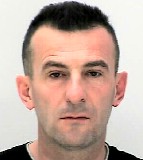 Ibrahim Shkupolli
Mass murderer · Finland · 2009
31 December 2009 — The Sello mall shooting occurred in the morning shortly afte…
5 victims
Ibrahim Shkupolli
Mass murderer · Finland · 2009
31 December 2009 — The Sello mall shooting occurred in the morning shortly afte…
5 victims
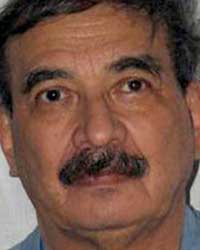 Robert Diaz
Serial killer · USA · 1981
Robert Rubane Diaz (also known as David Robert Diaz), American nurse; convicted…
12 victims
Robert Diaz
Serial killer · USA · 1981
Robert Rubane Diaz (also known as David Robert Diaz), American nurse; convicted…
12 victims
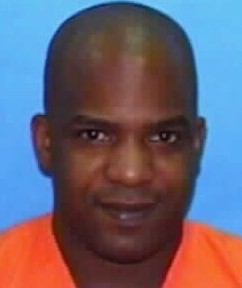 Henry Alexander Davis
Murderer · USA · 1987
Henry Alexander Davis was tried in the Tenth Judicial Circuit, Polk County. The…
1 victim
Henry Alexander Davis
Murderer · USA · 1987
Henry Alexander Davis was tried in the Tenth Judicial Circuit, Polk County. The…
1 victim
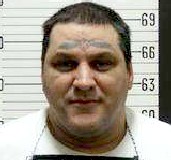 Stephen Hugueley
Murderer · USA · 1986
Name: Stephen Lynn Hugueley Stephen Lynn Hugueley was sentenced to death on Sep…
3 victims
Stephen Hugueley
Murderer · USA · 1986
Name: Stephen Lynn Hugueley Stephen Lynn Hugueley was sentenced to death on Sep…
3 victims
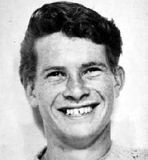 Leigh Robinson
Murderer · Australia · 1968
Leigh Robinson murdered Valerie Dunn, his teenage girlfriend, in 1968. He was o…
2 victims
Leigh Robinson
Murderer · Australia · 1968
Leigh Robinson murdered Valerie Dunn, his teenage girlfriend, in 1968. He was o…
2 victims
- Gender
- male
- Country
- USA
- Location
- Muscogee County, Georgia, USA
- Date of birth
- 1960
- Age at first offence
- 29
- Characteristics
- robbery, crack addict
- Victim profile
- R.C. Mitchell, 74, and Fannie Monroe Mitchell, 69 (his grandparents)
- Method of murder
- St abbing with knife
- Date(s) of murder
- October 30, 1989
- Years active
- 1989
- Date of arrest
- —
- Status
-
Life imprisonment
Sentenced to death on August 2, 1990; resentenced to life in prison in March 1995
Case overview
Kenneth Dan Bright, 36, was sentenced to death in Muscogee County for the October 30, 1989 robbery and murder of his grandparents, R.C. Mitchell, 74, and Fannie Monroe Mitchell, 69. At the time of the killings, Bright was a crack addict on parole and had been released less than eight months earlier from a mental hospital.
The trial court convicted Bright of the murder of his two grandparents and of possession of a controlled substance. The jury sentenced Bright to death for the murders, and the trial court sentenced Bright to 15 years in prison on the possession offense. The Supreme Court affirmed Bright’s convictions but reversed his death sentence. BRIGHT v. THE STATE. S94P1617. (265 Ga. 265) (455 SE2d 37) (1995).
Timeline
- October 30, 1989 — Kenneth Dan Bright committed the robbery and murders of his grandparents, R.C. Mitchell and Fannie Monroe Mitchell.
- February 5, 1990 — Bright was indicted.
- May 18, 1990 — The trial court held an ex parte hearing on Bright’s motion requesting expert assistance at public expense.
- July 9-12, 1990 — Bright was tried.
- July 12, 1990 — The jury found Bright guilty and recommended that he receive the death penalty.
- August 2, 1990 — Bright was sentenced to death.
- August 9, 1990 — Bright filed a motion for new trial.
- September 4, 1990 — The court reporter certified the trial transcript.
- October 17, 1990 — Bright amended his motion for new trial.
- August 12, 1991 — Bright filed a motion seeking to disqualify the judge who tried the case from presiding over the motion for new trial hearings.
- September 18, 1991 — A new judge was appointed to hear the motion to disqualify.
- December 10, 1991 — Bright amended his motion for new trial again.
- August 27, 1992 — The trial judge appointed to hear the motion to disqualify denied that motion.
- August 27 and October 21, 1993 — The original trial judge held a hearing on the motion for new trial.
- May 6, 1994 — The trial court denied the motion for new trial.
- June 6, 1994 — Bright filed his notice of appeal.
- November 7, 1994 — The case was orally argued.
- March 17, 1995 — The Supreme Court decided the case.
- March 1995 — Bright was resentenced to life in prison.
- March 30, 1995 — Reconsideration was denied.
The offence
Bright was convicted of:
- the murder of his two grandparents, R.C. Mitchell (74) and Fannie Monroe Mitchell (69); and
- possession of a controlled substance.
The evidence authorized a rational trier of fact to conclude that Bright stabbed his grandmother twenty-one times, with the fatal wound being a stab wound directly into the heart sac, and that Bright stabbed his grandfather twelve times, with the most severe and probably fatal wound being a stab wound that fractured the tenth and eleventh ribs causing the ribs to tear the spleen.
Investigation and arrest
After the victims were discovered, one of the victims’ neighbors told police that she had seen a car matching the description of Bright’s mother’s car at the scene of the murders and that she had seen there a man whom she believed to be the victims’ grandson or nephew. Bright’s mother confirmed the description of her car and told police that Bright had taken the car without permission. Bright’s brother told police that Bright could have hurt his grandparents.
Based on this information, investigating officers issued a lookout for Bright’s mother’s car and requested that Bright be stopped for questioning. Later, an officer identified the car and called for backup. When backup arrived, the officer stopped the car and Bright got out. The officer asked Bright for identification. Bright reached under the seat of the car, and the officer drew his gun. The officer asked Bright to raise his hands; seeing Bright was not holding a weapon, the officer put his gun away. The officer then frisked Bright.
Meanwhile, another officer discovered on the window ledge outside the door of the car an object recognized as a crack pipe containing residue of crack cocaine. The second officer placed Bright under arrest for possession of a controlled substance. After Bright was arrested, police obtained various physical items from Bright’s body and car, including blood-stained money and clothing, and obtained statements from Bright following his arrest.
Trial
Guilt and punishment phases
Bright was convicted of the murder of his two grandparents and of possession of a controlled substance. The jury sentenced Bright to death for the murders, and the trial court sentenced Bright to 15 years in prison for the possession offense.
Evidence sufficiency for the murders
The Supreme Court concluded the evidence was sufficient to satisfy Jackson v. Virginia, 443 U. S. 307 (99 SC 2781, 61 LE2d 560) (1979).
Motion for expert assistance under Ake and Roseboro
Bright contended the trial court erred by failing to provide independent expert assistance at state expense for purposes of preparing his defenses at the guilt and punishment phases. The Supreme Court found no error as to the guilt phase but found Bright made the required threshold showing to obtain assistance at the punishment phase, and it reversed his death sentence.
Defence motion and supporting materials
Before trial, the defense filed a motion requesting funds to obtain expert assistance to evaluate Bright’s mental health at the time of the offence, to assist in preparing for trial, and to assist in investigating and presenting evidence in mitigation at the penalty phase. The motion included records showing that in February 1989 Bright had been a patient at the Columbus Department of Mental Health and Substance Abuse. Those records reflected that Bright sought treatment due to depression, use of crack cocaine, and suicidal thoughts stemming from depression about past actions. They also reflected that Bright completed high school and had an average ability to read and write; that he was depressed about past actions, expressed suicidal plans, and had poor impulse control; and that he had no perceptual disturbances (no “hallucinations,” no “illusions,” and no “depersonalization and derealization of ideas”). The records stated that Bright had appropriate continuity of thought and no language impairment; that his behavior was appropriate for the situation; that his memory was good; and that he was aware of his substance abuse and verbalized his need for help.
On a form evaluating a patient’s level of need for treatment for mental illness, mental retardation, or dependency on alcohol or drugs, the clinical worker did not list a level of need for mental illness or mental retardation but listed Bright as a patient most-in-need of treatment for cocaine abuse. The classification meant that the substance abuse caused Bright “social, emotional, developmental, and/or physical disabilities”; that Bright would be “unable to function” without “state supported services”; that he had a long history of dysfunction; that he needed long term treatment; and that he presented a “[s]ubstantial risk of harm to self or others.” Bright was treated by social workers and prescribed an anti-depressant drug by a physician.
In support of the motion, Bright also submitted medical records of the Muscogee County Jail following booking for the murder of his grandparents, including a report that Bright was biting his fingers until they bled; was coming off crack cocaine; and might need referral to a local psychiatric institute.
Bright further attached a copy of a study published in the American Journal of Psychiatry concluding that of 15 death row inmates chosen for evaluation because of their impending execution dates and not because of evidence of “neuropsychopathology,” all 15 had histories of severe head injuries and suffered from some forms of neurological and psychological dysfunctions that could have been significant for purposes of mitigation at their trials.
Bright stated in an affidavit that he had been hit in the head with a brick when he was eleven years old and still has a lump and a loss of hair from that injury; that he ran into a car when he was eight years old and injured his forehead and has a scar from that injury; and that he had been hit by a baseball bat on his left eyebrow when he was twelve years old and has a scar from that injury as well. Bright contended that the American Journal of Psychiatry study, coupled with evidence of head injuries, meant he might have undiagnosed, unrecognized neurological problems.
Bright attached copies of two statements he made to police after the crimes. In both statements, Bright stated that he went to his grandparents’ house to borrow $20 to buy some crack cocaine. Bright stated that his grandmother would not give him the money because she could tell he had been using drugs and drinking alcohol. Bright stated that he got nervous when his grandmother started to call his mother and said she was going to call Bright’s mother and tell her of Bright’s drug and alcohol use and that Bright was driving her car. Bright contended that when his grandmother started to call his mother, he “lost control because of his intoxication” and started stabbing his grandparents.
In his first statement, Bright concluded: “I'm not no killer. [T]hings just got out of hand. . . . Because of drugs I am guilty. I hope that this world can have mercy on me because I'm sorry.”
Bright also stated in an affidavit that his mother killed his father when he was six years old; that he was his father’s favorite child; that Bright then went to live with his grandmother until his mother was cleared of charges; and that throughout his life his mother accused him of being just like his father. Bright alleged he struggled with this accusation and dealt with it by taking drugs in junior high school. Bright stated he had no animosity toward his grandparents and had no understanding of how he could have killed them.
Bright argued that his only defence on the merits was his mental condition at the time of the killings, and he would ask for a verdict of not guilty by reason of insanity or guilty but mentally ill. Bright contended that these factors demonstrated he needed to present evidence as to his mental condition, mental history, drug abuse, social history, and neurological history as mitigating factors at the death penalty phase.
Expert types and fees requested
Bright’s motion named a neurologist available for a neurological examination, with fees of $120 for a preliminary examination, $500 for a CT scan, and $200 for an EEG test.
The motion named a toxicologist to testify regarding the effect of crack cocaine on Bright’s central nervous system and mental condition, with fees of $400 to review records and $150 per hour to testify, with testimony including travel time to take approximately six hours.
The motion also listed a clinical psychologist who would conduct a full examination for $640 and testify for $150 per hour, with testimony lasting about two hours. Bright argued that without experts in neurology, psychology, and toxicology, he would not be able to present a defence at the guilt or punishment phases of the trial.
Ex parte hearing and court-ordered psychiatric examination
Pursuant to Brooks v. State, a defendant contending entitlement to expert assistance at public expense was entitled to an ex parte hearing on the motion. The trial court held an ex parte hearing on Bright’s motion on May 18, 1990. Immediately before that ex parte hearing, the trial court held a hearing pursuant to Uniform Superior Court Rules 31.4 and 31.5. Those rules required that a defendant give a prosecutor notice of intent to raise an insanity defense, which Bright did in the case.
As a result of the hearings, the trial court required Bright to submit to an evaluation by a state-employed psychiatrist pursuant to OCGA 17-7-130.1 (the “court expert” or “court psychiatrist”) but denied Bright’s motion to obtain expert assistance at public expense. The court indicated it would consider whether the court psychiatrist’s report showed Bright needed expert assistance at public expense after the report returned.
The written order pursuant to 17-7-130.1 ordered the Department of Human Resources to conduct an examination of Bright and to provide a report regarding Bright’s competency to stand trial and his mental capacity to distinguish between right and wrong at the time of the alleged crimes to the court, Bright’s lawyer, and the District Attorney. Bright refused to cooperate with the court expert and never obtained expert assistance to assist him at trial.
Supreme Court ruling on expert assistance
The Supreme Court held:
- Bright did not make an adequate showing for expert assistance at the guilt phase, including for a psychiatrist, neurologist, or toxicologist.
- Bright did make the required threshold showing for expert assistance at the punishment phase.
Regarding guilt phase need, the Supreme Court stated that Bright could possibly have used expert assistance to establish an insanity defence or a voluntary intoxication defence. The court described that to establish insanity Bright would have to show he lacked ability to distinguish between right and wrong at the time of the alleged crimes. It also described that to establish voluntary intoxication Bright would have to show the intoxication resulted in alteration of brain function to negate intent, and that the alteration must be more than temporary.
The court stated that while Bright offered evidence of serious drug abuse history, depression stemming from guilt over past actions, drug abuse on the night of the crimes, and a troubled family history, the evidence did not demonstrate inability to distinguish between right and wrong or a permanent brain function alteration. It further noted evidence Bright was of average intelligence, had a good memory, had no hallucinations or illusions, had good continuity of thought, and was aware of his substance abuse and expressed desire for help. It therefore concluded the evidence did not adequately demonstrate Bright’s mental condition (inability to distinguish right from wrong or inability to form intent due to permanent brain function alteration) would be a significant issue at the guilt phase.
On neurological impairment, the Supreme Court concluded the evidence of head injuries coupled with the American Journal of Psychiatry study did not demonstrate neurological impairment would be a significant issue at the guilt phase and that concluding it would be significant would amount to speculation. It therefore held the trial court did not err by denying Bright’s request for expert assistance at the guilt phase.
For the punishment phase, the Supreme Court concluded Bright’s evidence regarding depression, suicidal thoughts, poor impulse control, severe drug dependency, and severe intake of drugs and alcohol on the night of the crimes was sufficient, in combination with his contention he impulsively murdered two grandparents with whom he had a good relationship, to meet his burden to show his capacity to understand the cruelty of the acts would be a significant issue at the penalty phase. It further concluded an expert would have assisted Bright in preparing evidence in mitigation and found that a toxicologist and a psychiatrist could have provided valuable assistance. It found a different conclusion for the neurologist request because Bright had not demonstrated how a neurologist would be of assistance regarding the punishment-phase issues.
Other legal issues at trial
Voluntary intoxication jury instruction
Bright challenged the trial court’s charge on voluntary intoxication on the ground it relieved the state of its burden to prove intent. The Supreme Court recited the voluntary intoxication instruction given to the jury. It then rejected Bright’s argument that the instruction required a finding of intent upon a finding of voluntary intoxication. The Supreme Court concluded the instruction, coupled with the standard instruction on the state’s burden of proving the requisite intent, informed the jury that if the state proved intent, the defendant could not be excused based on voluntary intoxication, and it found no merit to this enumeration of error.
The instruction quoted in the decision was: “Our law provides that voluntary intoxication shall not be an excuse for any criminal act. It provides further that if a person's mind, when unexcited by intoxicants, is capable of distinguishing between right and wrong and reason and acting rationally, and he voluntarily deprives himself of reason by consuming intoxicants and while under the influence of such intoxicants, he commits a criminal act, he is criminally responsible for such act to the same extent as if he were sober. Whether or not the defendant was voluntarily intoxicated at or during the time alleged in this indictment is a matter solely for you, the jury, to determine.”
Preliminary hearing claim
Bright contended that the lack of a preliminary hearing required reversal of his conviction. The Supreme Court rejected this argument, citing that it would not overturn a conviction for denial of a commitment hearing on direct appeal or collateral attack, and it found no merit.
Motions to suppress evidence (search and seizure)
Bright argued that statements and physical evidence should be suppressed as fruits of an illegal seizure and raised issues concerning his arrest and the discovery of drug paraphernalia, including a crack pipe. The Supreme Court held the initial stop and brief detention were not tantamount to an arrest, describing that a stop pursuant to a lookout required specific and articulable facts rather than probable cause, and it concluded the officers had ample specific and articulable facts to justify the stop. It also held that the subsequent observation of the crack pipe and crack cocaine residue provided probable cause for the arrest for possession of a controlled substance.
It rejected Bright’s reliance on a case involving suspected marijuana residue on a tobacco pipe rather than cocaine residue on a distinctive crack pipe.
Custodial statements challenged as involuntary
Bright contended that the court erred by denying suppression of custodial statements on the ground that the first inculpatory statement taken 16 hours after his arrest was involuntary and that later statements were fruits of the original involuntary statement. Bright argued incapacity due to being awake for 34 hours, unceasing interrogation, misleading and coercive statements including a threat of a possible death sentence, lack of consultation with family, friends, or an attorney, stress and distraught condition, and effects of cocaine and alcohol withdrawal. Bright also complained about being taken to the scene of the murders where he and officers sat in an unmarked car at a distance for one and one-half to two hours waiting for media to leave.
The Supreme Court described the legal standards for voluntariness, including that the state bore the burden by a preponderance of the evidence and that Jackson v. Denno findings were accepted unless clearly erroneous. It recounted evidence presented at the Jackson v. Denno hearing, including many breaks in interrogation, that Bright did not appear tired and said he was not tired, that he declined to make telephone calls, and that he was given food, drink, and cigarettes, and appeared not under the influence of drugs or alcohol and was thinking clearly. It also stated evidence showed no coercive statements by officers, that Bright consented to go to the crime scene, and that the officers left with Bright at his request. It concluded that even if Bright had drug withdrawal symptoms, that did not render his statements involuntary, and it found no error.
Statements after counsel appointed
Bright also challenged suppression of two statements made outside counsel’s presence after an attorney had been appointed. The Supreme Court stated evidence supported that Bright initiated the contacts on both occasions, was advised of his rights, and made valid waivers. It cited the rule that once a custody defendant invokes the right to counsel, interrogation should not proceed without counsel present unless the defendant himself initiates further communication. It concluded the requirements were met because Bright initiated discussions and knowingly and intelligently waived Miranda rights, and it found no error.
Photographs discovery claim
Bright argued the court erred in denying the defense opportunity before trial to review photographs of the crime scene, Bright, and the victims at the crime scene and during autopsy, and in denying use of photographs during the suppression hearing. The Supreme Court rejected the claim, citing the lack of a general right to discovery and concluding Bright made no showing photographs would have helped his defense or changed the outcome had they been disclosed prior to trial.
Severance of cocaine charge
Bright argued for severance of the cocaine charge from the murder charges. The Supreme Court held the trial court did not abuse its discretion in denying severance, describing joinder rules and concluding it was not almost impossible to present evidence of one crime without permitting evidence of the other. It noted it was undisputed Bright used crack cocaine before and after the murders, that he spent the day obtaining money for drugs including selling blood, clothing, and at least one item not belonging to him, and that he visited his grandparents for the purpose of obtaining money to buy crack cocaine. It also noted Bright blamed crack cocaine effects for the murders and concluded the trial court correctly found the cocaine use and murders were part of the same conduct and continuous scheme to obtain drugs.
Voir dire and jury selection issues
- Bright argued the trial court erred by failing to excuse prospective juror Thompson for cause on the ground Thompson admitted having formed an opinion regarding Bright’s guilt. The Supreme Court found no error, holding that when an opinion is based on hearsay it must be so fixed it would not be changed by evidence or charge, and it held the record showed Thompson could set aside his opinion and decide based on the evidence.
- Bright argued four other jurors should have been excused for cause due to formed opinions or statements indicating inability to judge fairly. The Supreme Court concluded the record did not support those bias assertions and that Bright was procedurally barred because he did not object to juror qualifications.
- Bright argued the court improperly restricted voir dire on jurors’ ability to view gruesome photographs and one juror’s ability to be impartial. The Supreme Court found no error.
- Bright made a Batson v. Kentucky challenge after the third juror; the Supreme Court held the present Batson claim was not timely because counsel did not subsequently make a Batson challenge after jury selection was completed.
- Bright claimed alleged leading and conclusory questions by the prosecutor during voir dire impaired selection of an impartial jury. The Supreme Court rejected the claim.
- Bright filed a challenge to the jury pool on the ground that young persons age 18 to 30 were underrepresented. The Supreme Court rejected the challenge because Bright failed to prove both that young persons were a cognizable group in Muscogee County and that they were consistently underrepresented.
Sufficiency for possession of cocaine
Bright contended evidence was insufficient to support conviction of possession of cocaine because no usable amount was in the pipe. The Supreme Court stated that although no usable cocaine was in the pipe, residue in the pipe was cocaine and the state offered evidence Bright had smoked cocaine on the evening in question. The Supreme Court rejected the argument and held there was sufficient evidence of possession.
Chain of custody and evidence admission
Bright failed to object to admission of certain physical evidence on chain-of-custody grounds and to object to police detective testimony about blood on physical evidence; the Supreme Court held these issues were procedurally barred and found no merit.
Character evidence issues
Bright challenged admission of character evidence on three occasions. The Supreme Court held:
- Bright failed to object to testimony from the state fingerprint expert comparing a fingerprint from the crime scene with a fingerprint card on file from a previous arrest; it was procedurally barred.
- The trial court did not err in admitting the prior fingerprint card because prior criminal information had been redacted.
- Bright failed to object to admission of a statement referencing that he was on parole at the time of the crimes; it was procedurally barred.
Photographs and trial clothing
The Supreme Court held it did not abuse discretion in admitting allegedly cumulative gruesome photographs of the deceased victims, and it concluded none of the photographs were autopsy photographs depicting alterations by the state. It also held Bright was not denied a fair trial by appearing at trial in wrinkled civilian clothing, distinguishing Estelle v. Williams.
Fair and impartial judge
Bright contended he was denied the right to a fair and impartial judge. The Supreme Court addressed facts about the trial judge’s law clerk, including that the law clerk had been an assistant district attorney at the time of the murders through the pendency of the case and was employed by the court less than two months before trial, and that the law clerk accepted an offer to return to the district attorney’s office while the motion for new trial was still pending. The Supreme Court noted a hearing before a separate judge found uncontradicted evidence that the law clerk never worked on Bright’s case as assistant district attorney or as a law clerk, and it held no error under controlling precedent.
Prosecutorial closing argument
Bright argued prosecution closing arguments in both phases were inflammatory, misleading, and prejudicial. The Supreme Court held sentencing-phase issues were moot because it reversed the death sentence on other grounds and addressed only guilt-innocence phase issues. It rejected several claims:
- it found no reversible error from statements describing the case as among the most horrible, given Bright’s lack of objection and overwhelming evidence including Bright’s own testimony;
- it held the record did not support that the prosecutor inflamed emotions by calling attention to photographs, since use of photographs as evidence of number and location of wounds was proper;
- it rejected claims that the prosecutor shifted burden by referring to defense failure to offer evidence of innocence, stating the state could draw inferences from nonproduction of witnesses and Bright admitted guilt;
- it rejected the claim the prosecutor misstated the law by arguing “it’s impossible to stab somebody without having the intent to do it. . . . [T]he mere fact that he did it shows he had the intent,” because Bright did not object and the court found no reasonable probability it changed the trial outcome.
Sentencing-phase prior convictions and requested charges
The Supreme Court held the trial court did not err in admitting evidence of Bright’s prior convictions at sentencing because the issue of intelligent and voluntary waiver regarding prior guilty pleas was never raised through objection or motion to exclude.
The Supreme Court found Bright’s arguments about requested jury charges in sentencing phase were moot because of the reversal of the death sentence and the need for a new jury to retry the sentencing phase.
Statutory aggravating circumstances
The Supreme Court stated that because evidence supported the jury’s findings of statutory aggravating circumstances, OCGA 17-10-30 (b) (2) and (b) (7), the state could again seek the death penalty. It also stated it did not address the remaining sentencing-phase enumerations of error because it reversed the death sentence in Division 2.
Outcome
The Supreme Court affirmed Bright’s convictions but reversed his sentence of death and remanded for resentencing. Bright was resentenced to life in prison in March 1995.
Aftermath and additional opinions
Concurring and dissenting opinions
Justice Carley concurred in part and dissented in part. Justice Carley stated he concurred in affirmance of Bright’s convictions but dissented to reversal of Bright’s death sentence. Carley’s dissent argued that, under Ake, the trial court needed to make a preliminary determination of whether sanity would be a significant factor at trial and could order the psychiatrist appointed under OCGA 17-7-130.1 to address that issue. Carley argued Bright’s refusal to cooperate frustrated the trial court’s effort to make that preliminary determination and that refusal should have frustrated the Ake motion. Carley also argued that the majority’s approach conflicted with existing Georgia law, including State v. Grant and Christenson v. State.
Justice Hünstein dissented. Hünstein’s dissent stated that Bright filed both a notice of intent to raise insanity under OCGA 17-7-130.1 and a motion for funds for experts in neurology, toxicology, and psychiatry under Ake. Hünstein stated the trial court conducted the ex parte hearing required by Brooks v. State and denied the motion, while stating it would reconsider upon results in the court-ordered psychiatric examination, and that Bright later refused to cooperate. The dissent argued that due process requires meaningful access to justice and expert access when the defendant has made the preliminary showing, but that due process does not require expert assistance automatically upon demand. Hünstein would have affirmed denial of psychiatrist funds for the penalty phase, characterizing the case as indistinguishable from Christenson because neither involved evidence of a serious mental disorder. Regarding toxicology, Hünstein stated denial did not violate fundamental fairness because Bright attached a pre-existing medical record diagnosing cocaine dependency but did not show why a toxicologist was necessary to an effective defence. Justice Thompson joined in the dissent.
Justice Carley’s concurring and dissenting discussion referred to:
- Ake v. Oklahoma, 470 U. S. 68 (105 SC 1087, 84 LE2d 53) (1985)
- Lindsey v. State
- OCGA 17-7-130.1
- State v. Grant
- Christenson v. State
- Bowden v. Kemp
- Motes v. State
- Estelle v. Smith
- Volanty v. Lynaugh
The majority opinion contained references to various decisions and standards, including Brooks v. State, Ake v. Oklahoma, Roseboro v. State, Jackson v. Denno, Lego v. Twomey, McGhee v. State, and other cited authorities.
Parties and counsel
- Douglas C. Pullen, District Attorney; J. Gray Conger; Julia Anne Fessenden; Susan L. Golomb; Assistant District Attorneys; Michael J. Bowers, Attorney General; Susan V. Boleyn, Senior Assistant Attorney General; Marla-Deen Brooks, Assistant Attorney General — for appellee.
- Worthington & Flournoy; Thomas M. Flournoy, Jr.; Douglas L. Breault; Charlotta Norby — for appellant.
Other details
Notes about procedural history
The decision included detailed procedural notes:
- The crimes occurred on October 30, 1989.
- Bright was indicted February 5, 1990.
- Bright was tried July 9-12, 1990, and the jury found Bright guilty on July 12 and recommended the death penalty that day.
- Bright filed a motion for new trial on August 9, 1990.
- The court reporter certified the trial transcript on September 4, 1990.
- Bright amended his motion for new trial on October 17, 1990.
- Bright filed a motion to disqualify the trial judge on August 12, 1991.
- On September 18, 1991, a new judge was appointed to hear the disqualification motion.
- On December 10, 1991, Bright amended his motion for new trial again.
- On August 27, 1992, the judge appointed to hear the motion to disqualify denied that motion.
- The original trial judge held hearings on August 27 and October 21, 1993, on the motion for new trial.
- The trial court denied the motion for new trial on May 6, 1994.
- Bright filed notice of appeal on June 6, 1994.
- The case was orally argued on November 7, 1994.
Quoted passages included in the decision
The decision included quoted material, including:
- Bright’s statement to police: “I'm not no killer. [T]hings just got out of hand. . . . Because of drugs I am guilty.
- The voluntary intoxication instruction quoted above.
- Other quoted phrases within the mental health records included “hallucinations,” “illusions,” and “depersonalization and derealization of ideas”; “social, emotional, developmental, and/or physical disabilities”; “unable to function” without “state supported services”; and “[s]ubstantial risk of harm to self or others.”
- The prosecutor argument quoted: “it's impossible to stab somebody without having the intent to do it. . . . [T]he mere fact that he did it shows he had the intent.”
Spotted an error, or have more information about this case?