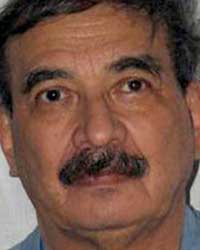
Robert Diaz
Serial killer Carl Eugene Watts
Serial killer · USA · 1974
Carl Eugene Watts (born November 7, 1953; died September 21, 2007), also known…
100 victims
Carl Eugene Watts
Serial killer · USA · 1974
Carl Eugene Watts (born November 7, 1953; died September 21, 2007), also known…
100 victims
 Rodney Alcala
Serial killer · USA · 1977
Rodney James Alcala (born August 23, 1943) was also known as Rodrigo Jacques Al…
100 victims
Rodney Alcala
Serial killer · USA · 1977
Rodney James Alcala (born August 23, 1943) was also known as Rodrigo Jacques Al…
100 victims
 Donald Leroy Evans
Serial killer · USA · 1975
Donald Leroy Evans (born July 5, 1957) was an American serial killer who murder…
60 victims
Donald Leroy Evans
Serial killer · USA · 1975
Donald Leroy Evans (born July 5, 1957) was an American serial killer who murder…
60 victims
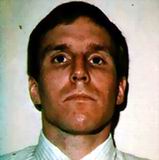 Michael Swango
Serial killer · USA · 1981
Michael Swango (Joseph Michael Swango) was a physician and American serial kill…
60 victims
Michael Swango
Serial killer · USA · 1981
Michael Swango (Joseph Michael Swango) was a physician and American serial kill…
60 victims
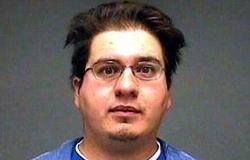 Efren Saldivar
Serial killer · USA · 1989
Efren Saldivar (born 30 September 1969) was an American serial killer who murde…
50 victims
Efren Saldivar
Serial killer · USA · 1989
Efren Saldivar (born 30 September 1969) was an American serial killer who murde…
50 victims
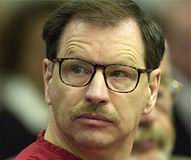 Gary Ridgway
Serial killer · USA · 1982
Gary Leon Ridgway Ridgway was born 18-February-1949 in Salt Lake City, UT. He w…
49 victims
Gary Ridgway
Serial killer · USA · 1982
Gary Leon Ridgway Ridgway was born 18-February-1949 in Salt Lake City, UT. He w…
49 victims
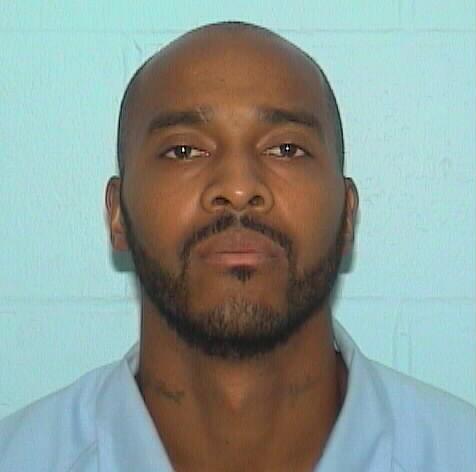 Anthony Townser
Murderer · USA · 1993
Anthony Townser Anthony Townser was sentenced to 75 years in prison in Illinois…
3 victims
Anthony Townser
Murderer · USA · 1993
Anthony Townser Anthony Townser was sentenced to 75 years in prison in Illinois…
3 victims
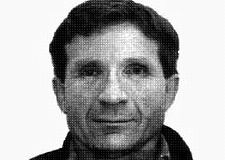 James Roszko
Murderer · Canada · 2005
James Roszko was a Canadian man operating a hydroponic marijuana grow-op in Roc…
4 victims
James Roszko
Murderer · Canada · 2005
James Roszko was a Canadian man operating a hydroponic marijuana grow-op in Roc…
4 victims
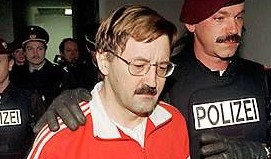 Franz Fuchs
Mass murderer · Austria · 1995
Franz Fuchs was an unemployed engineer and an Austrian terrorist known as the A…
4 victims
Franz Fuchs
Mass murderer · Austria · 1995
Franz Fuchs was an unemployed engineer and an Austrian terrorist known as the A…
4 victims
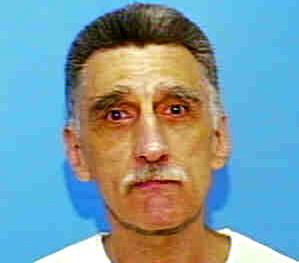 Robert Anthony Buell
Murderer · USA · 1982
Robert Anthony Buell was a former Akron city planner who lived in the nearby to…
1 victim
Robert Anthony Buell
Murderer · USA · 1982
Robert Anthony Buell was a former Akron city planner who lived in the nearby to…
1 victim
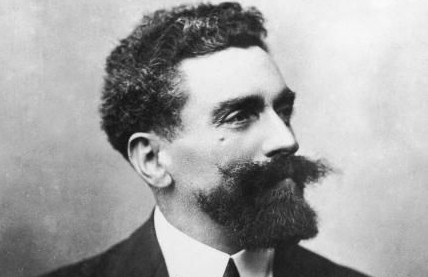 Jean-Pierre Vaquier
Murderer · United Kingdom · 1924
Jean-Pierre Vaquier was 45 years old when he was sentenced to death. Alfred Jon…
1 victim
Jean-Pierre Vaquier
Murderer · United Kingdom · 1924
Jean-Pierre Vaquier was 45 years old when he was sentenced to death. Alfred Jon…
1 victim
- Gender
- male
- Country
- USA
- Location
- Riverside County, California, USA
- Date of birth
- 1938
- Age at first offence
- 43
- Characteristics
- poisoner, nurse, history of mental illness
- Victim profile
- Men and women ranging in age from 52 to 89 (hospital patients )
- Method of murder
- Poisoning ( overdoses of the drug Lidocaine )
- Date(s) of murder
- March-April 1981
- Years active
- 1981
- Date of arrest
- November 24, 1981
- Status
-
Died in custody
Sentenced to death on April 11, 1984; died in prison on August 9, 2010
Case record: Robert Diaz
People involved
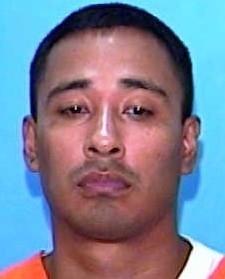
- Robert Rubane Diaz (also known as David Robert Diaz), American nurse; convicted of the murders of 12 hospital patients and sentenced to death.
- Robert Rubane Diaz was born in 1938. He was raised in the Midwest and was frequently ill during childhood.
- Lynn Race, critical-care nurse at the Perris hospital; testified Diaz had foreseen patients' sudden medical problems and had carried medical syringes and vials in his pockets, a violation of hospital procedure.
- John H. Barnard, judge; convicted Diaz and sentenced him to death.
- Patrick Magers, Deputy District Attorney; led the investigation leading up to the prosecution and prosecuted the case.
- Michael Lewis, public defender.
- John L. Lee, chief defense attorney.
- W. Christopher Long, toxicologist with the Nassau County Medical Examiner's office; authored an unpublished doctoral dissertation titled "Lidocaine Toxicity," based on measurements of lidocaine in brain tissue of more than 140 decedents.
- Mel Opotowsky, retired Press-Enterprise managing editor.
- Terry Thornton, California Department of Corrections and Rehabilitation spokeswoman.
- Leslie Lukash, respondent.
- Chief Judge Kaye (New York Court of Appeals), who authored the opinion in In the Matter of Robert Rubane Diaz, Appellant, v. Leslie Lukash, &C., Respondent.
Timeline
- March 1981 — Robert Rubane Diaz began work on the night shift in the intensive care unit (ICU) of a community hospital in California.
- March 30, 1981 — Eleven victims were killed at Community Hospital of the Valleys in Perris, California, between March 30 and April 22, 1981.
- April 22, 1981 — The period for the eleven deaths at Community Hospital of the Valleys in Perris, California ended.
- April 25, 1981 — A 79-year-old man died of a lidocaine overdose at San Gorgonio Pass Memorial Hospital in Banning.
- April 1981 — An anonymous call was placed to the San Bernadino County coroner claiming Diaz had possibly killed as many as 19 persons at a hospital in Perris, California.
- April 11, 1984 — Diaz was sentenced to die.
- March 29, 1984 — Judge found Diaz guilty of the killings at two Riverside County hospitals in 1981; verdict ended a five-month nonjury trial.
- March 1984 — Trial took place and Diaz was convicted.
- June 30, 1986 — The Supreme Court decided Press-Enterprise Co. v. Superior Court.
- 1993 — The New York Court of Appeals issued a decision in In the Matter of Robert Rubane Diaz, Appellant, v. Leslie Lukash, &C., Respondent.
- 1998 — A federal judge granted Diaz an evidentiary hearing.
- 2007 — Diaz remained on death row at San Quentin State Prison.
- August 9, 2010 — Diaz died in prison.
- August 11, 2010 — A Press-Enterprise article described Diaz's death.
Background
Robert Diaz had always proclaimed a desire to be a doctor; he settled for nursing. He insisted that his relatives call him “Dr. Diaz.” He believed he was an Egyptian mystic who had been a member of royalty in a former life.
The offence
Diaz was accused and convicted of murdering 12 hospital patients by administering massive doses of the heart drug lidocaine.
At Community Hospital of the Valleys in Perris, California, the case involved 11 patients. The victims were described as elderly, with ages 52 to 95 in the article about Diaz’s death, and the trial record included ages 52 to 89 in one compilation. The charges covered deaths at the Perris facility during March and April of 1981.
At San Gorgonio Pass Memorial Hospital in Banning, one patient died of a lidocaine overdose on April 25. The victim was described as a 79-year-old man.
Investigators determined that autopsies showed lidocaine concentrations in tissue and that seizures and cardiac and respiratory arrest were linked to the deaths. Prosecuting attorneys argued that Diaz, a male nurse working temporary night shifts at both hospitals, was the only link between the two facilities’ intensive care units at the time.
The Supreme Court opinion in Press-Enterprise Co. v. Superior Court described the complaint filed by the State of California as charging Diaz with 12 counts of murder and seeking the death penalty, alleging Diaz murdered 12 patients by administering massive doses of lidocaine.
Investigation
An anonymous call was placed in April of 1981 to the San Bernadino County coroner claiming Diaz had possibly killed as many as 19 persons at a hospital in Perris, California.
Investigators focused on Diaz as the nurse on duty when the deaths occurred, noting he repeatedly predicted the time that some patients would die, almost precisely, and was witnessed giving some of the same patients injections prior to their death.
Medical records of some intensive care patients were missing, and Diaz had access to these records.
Diaz also worked one night at San Gregorio Pass Hospital, where a patient had died that night under similar circumstances to the Perris Community Hospital victims.
Samples taken from exhumed bodies showed overdoses of lidocaine. Lidocaine was found in Diaz’s home along with syringes and quantities of morphine. Numerous pre-filled lidocaine syringes were found after his arrest.
The prosecution argued that lidocaine overdose levels were far above normal therapeutic ranges. The Supreme Court opinion noted that the complaint alleged Diaz murdered 12 patients by administering massive doses of lidocaine.
Arrest
Diaz was arrested in November 1981 after the investigation into the deaths of elderly patients at the Perris facility and the San Gorgonio Pass Memorial Hospital.
The New York Court of Appeals opinion described Diaz as being arrested and charged with killing a total of 12 patients by injecting them with massive doses of lidocaine.
Trial
Diaz requested a bench trial and waived his right to a jury trial.
Judge John H. Barnard conducted a bench trial and convicted Diaz of 12 counts of first-degree murder.
At trial, the prosecution relied on three types of evidence to conclude that the 12 patients died of massive overdoses: concentration of lidocaine in body tissue upon autopsy, evidence of seizures, and electrocardiograph (EKG) readings.
Diaz testified and denied wrongdoing. In a phone call interview, Patrick Magers recalled: “I cross-examined him for two days at trial and he denied any wrongdoing.” He further recalled Diaz’s testimony: “He testified he gave the proper medication to his patients and had no explanation of how or why they had massive doses of lidocaine injected into their systems.”
The New York Times reporting described the five-month nonjury trial and that Judge Barnard found special circumstances under a state multiple-murder rule.
Sentencing
On April 11, 1984, Diaz was sentenced to death.
The New York Times reported that the coronary care nurse, Robert Rubane Diaz, 46 years old, received the sentence from Judge John H. Barnard of Superior Court and that the sentence was to die in the gas chamber.
The case narrative described that the judge sentenced Diaz to die by either the gas chamber or lethal injection.
At sentencing, the defense failed to present a single character witness; his five children and his wife did not make an appeal.
The judge was not impressed by the defense’s brief plea for mercy that Diaz had saved the state a considerable amount of money.
Appeals
- California Supreme Court — Diaz’s conviction and sentence were upheld.
- 1993 (New York Court of Appeals) — In In the Matter of Robert Rubane Diaz, Appellant, v. Leslie Lukash, &C., Respondent, the court reversed dismissal of the petition and remitted for further proceedings. The opinion stated:
On this appeal, we must decide whether petitioner, an inmate on California's death row, has a "substantial interest" in certain records of the Nassau County Medical Examiner, so that he may inspect them. We conclude that the Appellate Division applied an erroneous legal standard and that in the circumstances presented, petitioner does have a substantial interest, as a matter of law, in at least some of the requested records. Accordingly, we reverse dismissal of the petition and remit for further proceedings.
- 1986 (United States Supreme Court) — In Press-Enterprise Co. v. Superior Court, the Court reversed the California Supreme Court. The decision stated:
We therefore conclude that the qualified First Amendment right of access to criminal proceedings applies to preliminary hearings as they are conducted in California. If the interest asserted is the right of the accused to a fair trial, the preliminary hearing shall be closed only if specific findings are made demonstrating that, first, there is a substantial probability that the defendant's right to a fair trial will be prejudiced by publicity that closure would prevent and, second, reasonable alternatives to closure cannot adequately protect the defendant's fair trial rights.
- Federal evidentiary hearing — A federal judge granted Diaz an evidentiary hearing in 1998.
- Diaz exhausted state appeals.
Outcome
Diaz was sentenced to death on April 11, 1984 and was on death row at San Quentin State Prison. The Press-Enterprise reporting of Diaz’s later death stated that he died of natural causes and had a lengthy illness.
Aftermath
On August 9, 2010, Diaz died in prison.
The Press-Enterprise article quoted Terry Thornton: “He died at a community hospital near the prison, California Department of Corrections and Rehabilitation spokeswoman Terry Thornton said. He had a lengthy illness. No other details were released.”
Information released in the reporting gave no survivors or other background about Diaz.
Other details
Names and personal history
- Diaz was also known as David Robert Diaz.
- He was one of 13 children and was raised in the Midwest.
- He joined the United States Marine Corps at age 18, after dropping out of school after completing 10 grades.
- He went AWOL for six weeks and was discharged due to inability to acclimate to military life.
- He was married in 1961 and divorced in 1972.
- At family gatherings, he insisted that the children introduce him as “Dr. Diaz.”
- He spent time staring at the family cat trying to control it with his mind.
Hospital death patterns and defense claims
- The investigation described an abnormally large number of deaths among the most elderly patients.
- The case narrative included that during the 12-day period Diaz was on duty, all the patients died.
- Diaz predicted trouble and foreseen seizures; in at least one case the predicted seizures occurred.
- A syringe filled with an especially high solution of lidocaine was found hidden in the Valleys hospital seven months after it closed.
- In Diaz’s home, at least two pre-filled syringes contained 20 percent solutions of lidocaine while marked as two percent, described as “10 times the concentration marked.”
- Diaz explained the presence of the items by stating they were mistakenly taken from the hospital when absent mindedly left in his shirt pocket.
- Investigators reported that the hospital’s care was lax, including employees being unable to read heart monitors and other basic equipment, doctors failing to respond to emergencies, and Code Blue alerts occurring nightly.
U.S. Supreme Court case narrative
In Press-Enterprise Co. v. Superior Court, the Supreme Court described:
- The State of California filed a complaint on December 23, 1981 charging Robert Diaz with 12 counts of murder and seeking the death penalty.
- The preliminary hearing commenced on July 6, 1982.
- Diaz moved to exclude the public from the preliminary hearing; the Magistrate granted the unopposed motion.
- The preliminary hearing continued for 41 days.
- Press-Enterprise requested release of the transcript, but the Magistrate refused and sealed the record.
- On January 21, 1983, the State moved in Superior Court to have the transcript released to the public; Diaz opposed the motion.
- The Supreme Court ruled the case was not moot and reversed the California Supreme Court.
The opinion included a Chief Justice Warren Burger 7-2 ruling and characterized it as “Press-Enterprise II.”
Supreme Court quotations and opinions
Chief Justice Warren Burger wrote the majority opinion in Press-Enterprise Co. v. Superior Court. In the judgment described by the article and the quoted material, the court held that:
The qualified First Amendment right of access attaches to preliminary hearings as conducted in California.
The dissenting opinion by Justice Stevens included statements including:
The constitutional question presented by this case is whether members of the public have a First Amendment right to insist upon access to the transcript of a preliminary hearing during the period before the public trial, even though the accused, the prosecutor, and the trial judge have all agreed to the sealing of the transcript in order to assure a fair trial.
Defense motion and trial structure
The narrative stated that Diaz entered a formal plea of innocent on all counts at the end of September 1982, and that his trial was scheduled to open in March 1983 but postponements delayed the event until Halloween. The record also stated that Diaz waived a jury trial and a judge convicted him on March 29, 1984.
Spotted an error, or have more information about this case?