Bobby James Moore
Murderer Ervil LeBaron
Murderer · USA · 1972
Ervil Morrell LeBaron (1925 to August 16, 1981) was the leader of a polygamous…
35 victims
Ervil LeBaron
Murderer · USA · 1972
Ervil Morrell LeBaron (1925 to August 16, 1981) was the leader of a polygamous…
35 victims
 Brian Kevin Rosenfeld
Murderer · USA · 1985
Brian Kevin Rosenfeld Brian Kevin Rosenfeld was sentenced to three concurrent l…
23 victims
Brian Kevin Rosenfeld
Murderer · USA · 1985
Brian Kevin Rosenfeld Brian Kevin Rosenfeld was sentenced to three concurrent l…
23 victims
 Marvin Gray
Murderer · USA · 1975
Marvin Gray was convicted killer who claimed responsibility for 23 slayings and…
23 victims
Marvin Gray
Murderer · USA · 1975
Marvin Gray was convicted killer who claimed responsibility for 23 slayings and…
23 victims
 Yahweh ben Yahweh
Murderer · USA · 1980
Yahweh ben Yahweh was born and legally named Hulon Mitchell Jr. (October 27, 19…
23 victims
Yahweh ben Yahweh
Murderer · USA · 1980
Yahweh ben Yahweh was born and legally named Hulon Mitchell Jr. (October 27, 19…
23 victims
 Andrea Volpe
Murderer · Italy · 2004
The Beasts of Satan were a suspected satanic cult in Italy. Members of this gro…
3 victims
Andrea Volpe
Murderer · Italy · 2004
The Beasts of Satan were a suspected satanic cult in Italy. Members of this gro…
3 victims
 Alphonso Cave
Murderer · USA · 1982
Alphonso Cave was convicted of first-degree murder, robbery with a firearm, and…
1 victim
Alphonso Cave
Murderer · USA · 1982
Alphonso Cave was convicted of first-degree murder, robbery with a firearm, and…
1 victim
 Patrick Lane Moody
Murderer · USA · 1994
Patrick Lane Moody was an inmate with an execution date set by the North Caroli…
1 victim
Patrick Lane Moody
Murderer · USA · 1994
Patrick Lane Moody was an inmate with an execution date set by the North Caroli…
1 victim
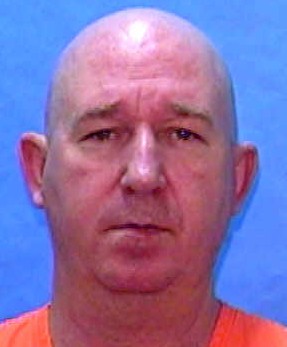 Faunce Pearce
Murderer · USA · 1999
Faunce Pearce was sentenced to death on February 14, 2002. He was indicted and…
1 victim
Faunce Pearce
Murderer · USA · 1999
Faunce Pearce was sentenced to death on February 14, 2002. He was indicted and…
1 victim
- Gender
- male
- Country
- USA
- Location
- Harris County, Texas, USA
- Date of birth
- October 29, 1959
- Age at first offence
- 21
- Characteristics
- armed robbery, murder for hire
- Victim profile
- Jim McCarble, 73 (grocery store owner)
- Method of murder
- Shooting
- Date(s) of murder
- April 25, 1980
- Years active
- 1980
- Date of arrest
- —
- Status
-
Capital sentence relief affirmed; district court’s grant of habeas corpus relief was affirmed as to punishment only, and the case was remanded with instructions to enter an order granting the writ of habeas corpus but conditioning issuance on a reasonable time for the state court of conviction to cure the constitutional error by vacating the death sentence and imposing a sentence of less than death or by conducting a new punishment hearing pursuant to Texas Code of Criminal Procedure article 44.29(c); conviction of capital murder for the death of Jim McCarble remained intact
Case information
Defendant: Bobby James Moore Victim: Jim McCarble
Status
The federal habeas corpus relief was limited to the punishment phase. The district court reversed the portion of the state trial court’s judgment imposing the death penalty and remanded for a new punishment hearing. The court of appeals affirmed the district court’s judgment as modified and remanded with instructions consistent with the authority of the state court to decide whether to conduct a new punishment hearing or impose a sentence less than death.
Timeline
- April 25, 1980 — Capital murder was committed during a bungled robbery of the Birdsall Super Market in Houston, Texas; McCarble was killed.
- December 1980 — Moore’s direct appeal commenced with motions filed in the Texas Court of Criminal Appeals.
- February 26, 1986 — Moore’s execution date was set.
- February 21, 1986 — Moore’s petition for writ of certiorari and his application for stay of execution were denied.
- February 24, 1986 — Moore filed an application for writ of habeas corpus and a motion for stay of execution in state court.
- February 25, 1986 — Moore filed a petition for habeas corpus relief and a motion for stay of execution in federal district court.
- 1987 — In June, the federal district court dismissed Moore’s first federal habeas petition without prejudice to refiling upon exhaustion.
- April 1992 — Moore filed his second application for state habeas relief.
- April 23, 1993 — The state habeas court held an evidentiary hearing on Moore’s ineffective assistance of counsel claims.
- October 4, 1993 — The Texas Court of Criminal Appeals affirmed the denial of state habeas relief.
- October 12, 1993 — Moore filed his second federal petition for federal habeas relief.
- October 21, 1993 — The district court denied Moore’s request for an evidentiary hearing.
- September 29, 1995 — The district court entered an order holding trial counsel’s performance was constitutionally deficient at both phases and prejudiced Moore at the punishment phase, reversing the death sentence only and remanding for a new punishment hearing.
- October 27, 1999 — The opinion of the United States Court of Appeals for the Fifth Circuit was issued.
- 1999 — The case was decided at the appellate level cited as 185 F.3d 244 (5th Cir. 1999).
Background
Moore’s case had been pending, in one court or another, for almost twenty years. An extensive review of the various proceedings, including the evidence adduced at Moore’s trial, was essential to understand the disposition.
The offence
Moore was convicted of capital murder for the death of Jim McCarble, committed in the course of a bungled robbery of the Birdsall Super Market in Houston, Texas on April 25, 1980.
On that day:
- Jim McCarble and his fellow employee Edna Scott worked in the courtesy booth at the front of the store.
- Arthur Moreno and Debra Salazar were checking groceries at nearby registers.
- Three men entered the store, later identified as Willie “Rick” Koonce, Everett Anthony Pradia, and petitioner Moore.
Robbery sequence inside the store
- Koonce entered the courtesy booth with a white cloth bank bag and ordered McCarble: "[f]ill it up, man. You being robbed."
- McCarble jumped to the left of Scott, allowing Scott to see a second man later identified as Moore outside the courtesy booth pointing a shotgun at her.
- The man holding the shotgun was wearing a wig and sunglasses, which together with the shotgun obscured part of his face.
- The shotgun itself was partially wrapped in two plastic bags.
- Neither Scott nor Moreno nor Salazar was able to positively identify Moore as the man holding the shotgun at either the pretrial line-up or at trial.
Identity evidence at trial
- Scott testified the man with the shotgun must have been significantly taller than herself because she could look directly into his eyes while standing on the floor of the elevated courtesy booth; at trial it was demonstrated Moore was approximately the same height, if not slightly shorter, than Scott.
- Salazar’s initial testimony stated she was certain Moore was the man pointing the shotgun into the courtesy booth, but she later qualified that she was not certain and could be mistaken.
- The store manager Leonard Goldfield testified he only saw two men he suspected of participating in the robbery and positively identified them as Koonce and Pradia.
Events during the shooting
- Scott shouted to the assistant manager that there was a robbery in progress and then dropped to the floor of the courtesy booth.
- Pradia, sensing the robbery was going wrong, fled the store.
- Moreno and Salazar testified they observed the man with the wig rise up on his toes and aim the shotgun down into the courtesy booth.
- Scott testified she heard the shotgun discharge and observed McCarble sustain a fatal wound to the head and fall to the floor beside her.
- Koonce and Moore fled the store.
Items dropped and post-robbery identification
- On the way to the car, Moore dropped one of the plastic bags covering the gun and the wig.
- Store customer Wulfrido Cazares observed the three robbers get into a red and white car and memorized the license plate number, with two alternative configurations for the numerical portion.
- When the numbers were later given to police, one of the numbers was registered to a red and white Mercury Cougar belonging to Koonce.
Investigation
After the robbery:
- The plastic bag and wig dropped by the shooter were recovered outside the store by police.
- Police also recovered a second plastic bag left at the front of the courtesy booth.
- The bag found in front of the courtesy booth contained a second wig.
- One of the bags contained a sales receipt issued to Betty Nolan; the receipt was traced and police interviewed Nolan.
Nolan’s statement and recovered evidence
Nolan told police:
- Moore sometimes lived at her house.
- Moore shared a room with her son Michael Pittman.
- Moore had been at Nolan’s house on the day of the offense.
Moore and his sister testified:
- Moore moved out of Nolan’s house several months before the offense because he had an argument with Pittman.
- Nolan changed the locks after the argument, so Moore could not have returned.
Police searched Nolan’s home and recovered:
- A shotgun between the mattress and box springs of Moore’s bed.
A ballistics expert testified:
- It was impossible to determine whether a particular shotgun was used in an offense by examining the projectiles from the shotgun.
- The expert was therefore unable to determine from the size 8 shot recovered from the floor of the courtesy booth and from McCarble’s head whether the shotgun recovered from Nolan’s house was the weapon used.
Other testimony established:
- Several witnesses testified the shotgun recovered from Nolan’s home was similar to or looked like the weapon aimed into the courtesy booth during the robbery.
- The ballistics expert testified one shell found with the shotgun contained size 8 shot.
- The expert testified that a single expended shell found with the shotgun had been fired from the shotgun recovered from Nolan’s house.
Fingerprint testing:
- Police were unable to find suitable fingerprints for comparison to Moore on either the shotgun or the plastic bags.
Moore’s testimony about the shotgun:
- Pittman owned the shotgun and it had been stolen from one of Pittman’s former employers.
- The state did not offer evidence relating to whether the gun was registered or whom it was registered to.
- Moore also testified that, according to Pradia, Pittman was the third man holding the shotgun during the robbery.
- Moore testified Pittman had four prior robbery convictions.
- Evidence established Pittman was incarcerated under a judgment of criminal conviction for burglary of a building.
Wig evidence:
- Police discovered Nolan had several wigs and wig stands.
- Photographs were made of six wig stands; four had wigs.
- Thus, two wigs (the number found at the crime scene) were missing.
- The two wigs secured at the crime scene were tested for hair samples.
- Some small pieces of hair were obtained but samples were too small for meaningful comparison to exemplar hairs from Moore’s head.
Arrest of Koonce and confessions:
- Police arrested Koonce based on the store customer’s description of the robbers’ car and license plate number.
- Koonce gave a confession implicating Pradia and Moore.
- Pradia’s billfold was found in Koonce’s car.
- When Pradia heard police were looking for him, he turned himself in.
- Pradia gave a confession implicating Moore in the robbery.
Arrest and interrogation
Based on information received from Koonce and Pradia and evidence from Nolan’s house, police obtained an arrest warrant for Moore.
Telephone call from Bobby White and Moore’s whereabouts
Police also received a telephone call from citizen Bobby White, an acquaintance of Moore’s father, Ernest “Junior” Moore:
- White told police that he accompanied Junior Moore and petitioner Bobby Moore to Moore’s grandmother’s house in Coushatta, Louisiana on the morning of Tuesday, April 29, 1980, four days after the robbery and around the time of Koonce’s and Pradia’s arrest.
- White told police Moore took luggage and he remained in Coushatta when Junior Moore and White returned to Houston on Wednesday, April 30, 1980.
- White said Moore remained in Coushatta when White and Junior Moore made a second trip to the grandmother’s house on May 1 and 2.
- White returned to Houston on Friday, May 2, 1980 and called Houston police indicating Bobby Moore was in Coushatta at his grandmother’s house.
- Houston police contacted Louisiana State Police, who arrested Moore at his grandmother’s house.
Transport and interrogation
On May 5, 1980, Houston Police Officers D. W. Autrey and Larry Ott traveled to Louisiana to bring Moore back to Houston.
Once returned:
- Moore was interrogated about his role in the crime.
- The Director claimed the interrogation resulted in Moore’s confession introduced at trial.
- Moore claimed he was beaten to induce cooperation and that he never signed a written statement.
Moore’s booking photo and line-up photo:
- Moore introduced a booking photo of himself taken three or four days after the interrogation showing swelling on the left side of his face and head.
- Photos taken of a pretrial line-up on May 7, 1980 did not show appreciable distortion in Moore’s features.
Trial
Counsel
Moore was defended by Alfred J. Bonner, retained and paid by Moore’s family, and C. C. Devine.
Admission of the confession
Early in trial, the state attempted to introduce Moore’s confession through Officer Ott. Moore’s counsel objected, and the jury was removed while the trial court considered admissibility.
Contents of the confession (inculpatory and exculpatory passages)
The confession recited that:
- Koonce, Pradia, and Moore were riding around in Koonce’s car looking for some place to rob.
- After casing the store, the three men decided Koonce would enter the courtesy booth, Pradia would remove money from the registers, and Moore was to guard the courtesy booth and front door with his shotgun.
- Moore wore a wig and covered the shotgun with two plastic shopping bags before entering.
- When Scott started shouting a robbery was in progress, Moore shouted to Koonce it was time to leave.
- As to the actual shooting, the confession stated:
The old man in the booth leaned over to open a drawer in the booth. I started trying to push him back with the barrel of the shotgun. I was leaning over the counter of the booth and I suddenly fell backwards and the butt of the gun hit my arm and the gun went off. I didn't learn until later that the man had been shot. I seen it on T.V. The man must have been standing back up as I fell backwards and the gun went off.
The confession also stated:
- After the robbery, the three men ran out of the store and drove to Betty Nolan’s house.
- Moore stayed at Nolan’s and Pradia and Koonce left.
The confession further stated:
I swear I was not trying to kill the old man and the whole thing was an accident.
Officer Ott stated on voir dire:
- Both inculpatory and exculpatory portions were verbatim recitals of Moore’s voluntary statements concerning his participation in the crime.
Moore’s testimony:
- On voir dire, Moore testified he refused to sign any written statement or confession.
- Moore testified officers struck him repeatedly on the left side of his face after his refusal.
- Moore conceded he eventually signed two pieces of blank white paper because officers told him he would be released if he did so.
- Moore testified he had not signed anything printed on blue paper and that the signature on the blue confession offered by the state was not his own.
- Moore’s counsel argued the confession was inadmissible because it was not signed by Moore and because it was involuntarily given.
The trial court denied the motion to suppress, and the confession was deemed admissible.
Redaction and “whited out” exculpatory portions
Before the jury was brought back in, the state informed the trial court it wished to exclude exculpatory portions tending to establish the shooting was an accident. Counsel stated they had not decided whether they would offer the remainder.
A ruling prohibited the state from referencing omitted portions until a decision could be made. The state agreed to cover exculpatory language when entering inculpatory portions, preserving the language for later defense use.
Moore’s counsel then changed course:
- Counsel stated they would not use the exculpatory portions.
- Counsel requested that those portions be completely “cut out” of the exhibit.
- As a result, the exculpatory passages were “whited out,” and the confession presented to the jury contained no mention of the actual shooting.
- The confession placed Moore at the crime scene holding a shotgun pointed in McCarble’s direction, followed by a conspicuous large blank space where exculpatory text was deleted, then described the three men fleeing the store.
Pradia’s testimony
The state also offered Pradia’s testimony pursuant to a plea bargain:
- Pradia testified that on the morning of April 25, 1980, the three men met at Betty Nolan’s house, then rode around in Koonce’s car deciding on a store to rob.
- Pradia testified he cased the store by going in to see who was working and whether a robbery was feasible.
- Employees testified Pradia was seen in the store earlier in the day, corroborating Pradia’s testimony.
- Pradia’s testimony was consistent with many details contained in the inculpatory portions of Moore’s confession submitted to the jury.
- Pradia told the jury Moore told him that Moore shot someone inside the store.
- Pradia testified he did not believe Moore until he saw news coverage about McCarble’s death.
Alibi defense and alleged perjury
Moore’s counsel pursued an alibi defense. In this habeas action, Moore claimed counsel knew his confession was true and that the shooting was unintentional.
Moore alleged counsel pressured Moore and his sisters Clara Jean Baker and Colleen McNiese to testify falsely that Moore was in Coushatta, Louisiana at his grandmother’s house on April 25, 1980.
Baker’s testimony:
- Baker initially testified she drove Moore to Coushatta, Louisiana on April 14, 1980 and picked him up the next Monday, April 21, 1980.
- Baker then changed her testimony: she drove Moore to Louisiana on April 21, 1980 and did not pick him up until Monday, April 28, 1980.
- Baker testified Moore went to Louisiana to care for his grandmother because his grandmother was ill.
- Baker testified she went to get him the next week because he was bored.
- Baker testified she was aware Moore returned to Louisiana the following morning, Tuesday, April 29, 1980, with his father Junior Moore and Bobby White.
Moore’s testimony in support of the alibi:
- Moore told the jury he was in Louisiana on the date of the alleged offense.
- On cross-examination, Moore testified he was certain he went to Louisiana on Monday, April 21, 1980, and stayed there only four or five days.
- Moore then said he returned with Baker on either April 26 or April 27 after being confronted with the possibility he could have been back on April 25.
- Moore repeated voir dire testimony regarding the circumstances of his arrest and interrogation and denied the written confession.
Defense witness for identification issue:
- Houston Police Officer J. H. Binford testified neither Edna Scott nor Debra Salazar nor Arthur Moreno was able to identify Moore as a participant in the robbery during a pretrial line-up.
Rebuttal: extraneous robberies and identification
On rebuttal, the state presented evidence of extraneous conduct involving similar robberies after Moore raised an alibi defense, citing that similar extraneous conduct may be admissible on identity once an alibi is raised.
The state’s evidence included:
- Cross-examination of Moore to catalogue prior convictions: three for burglary and one for aggravated robbery.
- Three witnesses to two separate robberies of small grocery stores in the Houston area on April 11 and April 18, 1980, the two Fridays preceding the April 25, 1980 Birdsall Super Market robbery.
- Store employees positively identified Moore as a perpetrator in both robberies:
- For the first robbery, an employee testified Moore and two other black men entered the store; Moore stood at the front of the courtesy booth holding a shotgun.
- For the second robbery, a store employee and store customer testified Moore and another black man entered; Moore held a shotgun during the robbery.
The state presented a Louisiana State Police Officer who knew Moore’s grandmother:
- The officer testified Moore’s grandmother was and had been in good health.
- The officer testified he had not seen Moore at the grandmother’s house or in the vicinity of Coushatta before the arrest date.
Closing arguments and jury questions
The state argued:
- Moore’s confession was voluntary.
- Moore’s confession was accurate as to those portions submitted.
Contrary to the pre-submission agreement, the state referred to obviously omitted portions in its closing argument and argued it edited the confession because it did not want to vouch for exculpatory language Moore included. The state argued Officer Ott would not have included exculpatory language in a fraudulently prepared confession.
The state did not clarify the excluded language supported an accidental shooting theory. Instead, defense counsel argued against any impression the shooting was accidental, emphasizing there had been no contention shooting was accidental.
Devine and Bonner made separate, in part contradictory arguments. Devine criticized the police and investigation consistent with Moore’s alibi defense. Bonner abandoned the alibi defense, saying it did not matter whether Moore’s sister testified truthfully or whether Moore’s grandmother was in fact in ill health. Bonner characterized alibi-related evidence as “rabbit trails” and focused on alleged forgery of Moore’s confession and whether other evidence placed Moore at the store on April 25, 1980.
The state’s rebuttal argument relied heavily on the failure of the alibi defense, emphasized defense counsel’s inability to agree, and made use of divergent positions in closing argument.
During deliberations, the jury sent a note requesting:
- "[b]oth confessions of the Defendant."
The state and defense counsel, by agreement, submitted only the redacted confession. Three hours later, the jury returned a verdict of guilty.
Sentencing
The punishment phase began immediately. Under Texas law, the jury had to answer two special issues affirmatively to impose death:
- Whether the conduct of the defendant that caused death was committed deliberately and with reasonable expectation death would result.
- Whether there was a probability the defendant would commit criminal acts of violence that would constitute a continuing threat to society.
The state began the punishment phase by tendering guilt phase evidence into the punishment phase record. It then offered Moore’s penitentiary package detailing his prior criminal record, and the jury was instructed that Moore had:
- three prior burglary convictions, and
- one prior aggravated robbery offense.
Defense counsel did not offer explanatory argument on the penitentiary package, despite:
- Moore being sentenced for each of the four offenses on the same day,
- Moore beginning to serve each sentence on the same day,
- Moore being released from serving the balance of four concurrently imposed sentences after only two years.
Counsel instead stipulated the documents in the penitentiary package were accurate.
Defense counsel offered no evidence on punishment. The evidentiary portion concluded less than ten minutes after it began.
Closing arguments included:
- Devine argued the shooting was accidental and unintentional, supporting that with argument about the nature and location of McCarble’s wound, the small amount of pressure required to discharge a firearm, and other circumstances.
- Devine argued Moore would not present a continuing threat of violence in the prison community, but did not focus on evidence that Moore was released early from his prior prison sentence.
- Bonner encouraged the jury not to make too much from disagreement between defense attorneys.
- Bonner suggested Devine argued accidental shooting only to ensure defense counsel were not lax, and then attempted to focus on the defensive theory that the state’s evidence failed to show Moore was at the scene of the crime.
- Neither Devine nor Bonner argued the alibi defense that had been prominent in the guilt phase.
The state highlighted defense counsel’s failure to try and explain away Moore’s prior offenses, failure to call character witnesses, and brevity of argument.
After deliberation, the jury returned affirmative answers to both special issues. One week later, Moore was sentenced to death.
At sentencing:
- Devine expressed a desire to withdraw from representation, and Devine died shortly thereafter.
- Bonner expressed a desire to continue representing Moore on appeal if the trial court would provide a record for that purpose.
Appeals
Direct appeal in Texas Court of Criminal Appeals
Moore’s case was automatically appealed to the Texas Court of Criminal Appeals.
In the two and one-half year period between December 1980 and June 1983, Bonner filed at least twelve motions seeking extensions of the filing deadline for Moore’s appellate brief or statement of facts. Bonner missed filing deadlines and did not request an extension until after notice that deadlines had passed.
Between January and April 1983, Moore sent letters and pro se motions complaining Bonner refused to communicate and requesting permission to file a pro se brief. The pro se motions were denied.
In May 1983, Bonner requested a final extension until July 15, 1983, but missed that deadline and did not file a brief until July 27, 1983, three years after the capital trial. The state filed a timely response brief in August 1983.
In October 1983, the Texas Court of Criminal Appeals ordered a hearing to determine whether Moore was making an informed decision to proceed pro se on appeal. In December 1983, a hearing was held to determine whether Bonner should continue as counsel. Moore rejected Bonner and requested another lawyer. Attorney John Ward was appointed.
Between January 1984 and September 1984, Ward filed four motions for additional extensions; the Texas Court of Criminal Appeals granted those motions. The final extension set the brief due on October 3, 1984. Ward missed that deadline. In December 1984, the Texas Court of Criminal Appeals issued a show-cause order instructing Ward to file by January 7, 1985 or show cause why he should not be held in contempt. Ward filed the brief by the January 7, 1985 deadline.
Ward’s brief argued, among other things, that trial counsel were ineffective for failing to investigate mitigating background evidence and failing to present available mitigating evidence at the punishment phase.
Moore also filed a pro se brief arguing, among other things, that trial counsel were ineffective for failing to call additional alibi witnesses including his grandmother and father.
In October 1985—more than five years after Moore’s capital trial—the Texas Court of Criminal Appeals affirmed the conviction and death sentence in Moore v. State, 700 S.W.2d 193 (Tex. Crim. App. 1985).
The Texas Court of Criminal Appeals stated:
- it purported to reach all arguments presented in the briefs, and
- the record on direct appeal is generally inadequately developed to reflect trial counsel’s failings,
- without precluding further beneficial development in later proceedings, and
- its rulings were limited to the record on appeal before it.
Execution date afterward:
- Moore’s execution date was set for February 26, 1986.
- Moore’s petition for certiorari and application for stay of execution were denied on February 21, 1986 in Moore v. Texas, 106 S. Ct. 1167 (1986).
Habeas corpus proceedings
State habeas
On February 24, 1986, Moore filed an application for writ of habeas corpus and a motion for stay of execution in state court, and the state trial court denied both without a hearing. The Texas Court of Criminal Appeals summarily affirmed without opinion.
Federal habeas (first petition)
On February 25, 1986, Moore filed a habeas petition and a motion for stay of execution in federal district court. The district court granted a stay. In June 1987, the district court dismissed the first federal habeas petition without prejudice to refiling upon exhaustion due to factual and legal theories not presented to state courts.
State habeas (second application) and evidentiary hearing
In April 1992, Moore filed his second application for state habeas relief alleging, among other claims, that trial counsel:
- suborned perjury in the presentation of Moore’s alibi defense,
- failed to conduct adequate pretrial investigation by interviewing Koonce and Pradia and state witnesses to extraneous conduct,
- excluded exculpatory evidence that the shooting was accidental based on erroneous belief the evidence was per se inconsistent with the alibi defense,
- unduly prejudiced Moore by eliciting damaging testimony on essential elements not introduced against Moore otherwise in cross-examination of Officer Autrey, and
- failed to investigate, develop, or present available mitigating evidence that would have swayed the jury’s decision on the special issues.
On April 23, 1993, the state habeas court held an evidentiary hearing. The court heard evidence from Bonner, Moore, Moore’s sisters Clara Jean Baker and Colleen McNiese, and other witnesses. It also heard testimony from an expert witness and Moore’s family members concerning Moore’s tortured family background and impaired mental functioning.
After the hearing, the state habeas court entered findings of fact and conclusions of law determining Moore did not receive ineffective assistance of counsel at his 1980 trial.
On October 4, 1993, the Texas Court of Criminal Appeals affirmed the denial of habeas corpus relief.
Federal habeas (second petition)
On October 12, 1993, Moore filed a second federal habeas petition raising the same claims.
On October 21, 1993, the district court denied the request for an evidentiary hearing, reserving the right to revisit if a hearing became necessary.
On September 29, 1995, the district court:
- held trial counsel’s performance was deficient at both the guilt and punishment phases, and
- held the deficient performance prejudiced Moore at the punishment phase,
- reversed the state court judgment as to punishment only (the death sentence),
- remanded to the state trial court for a new punishment hearing.
The Director appealed that decision.
Appeals in the Fifth Circuit (pre-AEDPA standards and Strickland analysis)
The court of appeals addressed the Sixth Amendment claim for effective assistance of counsel under Strickland v. Washington:
- deficiency required showing counsel’s performance was deficient so that counsel was not functioning as the Sixth Amendment “counsel,”
- prejudice required showing deficient performance prejudiced the defense and deprived Moore of a fair trial with a reliable result.
The court recounted that its earlier decision had applied newly enacted AEDPA provisions by concluding that deference standards were not properly followed, but that Supreme Court decision in Lindh v. Murphy required applying pre-AEDPA standards where the petition was pending when AEDPA became effective. It stated that the parties did not dispute that Moore’s ineffective assistance claims had received a full and fair adjudication on the merits in the April 1993 state evidentiary hearing.
Limited issue on appeal due to no cross-appeal
Because Moore had not cross-appealed, the court said it was limited to reviewing whether there was a reasonable probability that but for counsel’s deficient performance at either the guilt phase or punishment phase (or both), Moore would not have been sentenced to death.
A. Subornation of perjury and selection of alibi defense
Moore alleged trial counsel created a false alibi defense and suborned perjury by pressuring Moore and his sisters Clara Jean Baker and Colleen McNiese. Moore supported the state habeas claim with his testimony and that of his sisters, including that Bonner told them alibi was the only possible means to avoid the death penalty.
The state habeas court heard conflicting evidence from Bonner:
- it found Bonner’s testimony credible,
- it found that Bonner did not suborn perjury or attempt to suborn perjury from the sisters,
- it implicitly determined Bonner likewise did not suborn perjury from Moore.
The district court found deficient performance on the basis that counsel presented a perjured alibi defense, rejecting deference to the state habeas credibility determination. The appellate court rejected those reasons and declined to find deficient performance on that theory.
The appellate court held:
- Moore was presumed to be master of his own defense,
- Moore bore burden of proving the allegation that the alibi defense was unwillingly foisted,
- counsel would rarely be ineffective for failing to persuade an insistent defendant to abandon an unlikely defense,
- the alibi defense was not necessarily at odds with evidence known to counsel before the confession’s admissibility,
- the admission of Moore’s confession’s inconsistency with alibi was addressed by Moore’s trial testimony denying signing the confession and his testimony that he was elsewhere.
For those reasons, the appellate court declined to find deficient performance based on subornation or perjury in presenting the alibi.
B. Inadequate pretrial investigation
Moore argued counsel’s alibi defense pursuit was unreasonable because of inadequate pretrial investigation into controlling law and facts, including:
- support for the alibi being weak, and
- failure to investigate what extraneous conduct evidence the state could offer in rebuttal.
The appellate court held:
- counsel’s investigation into veracity of Moore’s alibi that he was in Louisiana when the offense occurred was sufficient; Bonner interviewed Moore and his family and traveled to Louisiana to interview Moore’s grandmother, and reviewed state files consistent with Moore’s physical evidence and witness testimony.
- counsel’s argument was unavailing that counsel should have uncovered evidence contradicting Moore’s chosen defense; Moore’s choice weakened his burden.
- the state rebuttal evidence of extraneous robberies was admissible only because Moore chose the alibi, and counsel was aware extraneous evidence might be introduced; the appellate court found the state habeas fact finding that Bonner was aware of applicable Texas law fairly supported by the record.
- however, counsel failed to contact or interview state witnesses to extraneous conduct. Bonner conceded the file included a list of witnesses, but he admitted he made no attempt to contact those witnesses or ascertain their testimony.
- the appellate court found the state habeas fact finding that Devine contacted those witnesses was not fairly supported by the record.
- counsel failed to include any consideration of the state’s extraneous conduct evidence when counseling Moore about the alibi defense, and the court found counsel’s failure to investigate and prepare for the state’s rebuttal evidence constituted deficient performance.
C. Exclusion of exculpatory language in Moore’s confession
Moore argued counsel were deficient in excising exculpatory language from the confession that supported accidental shooting. The appellate court reproduced the relevant exculpatory language:
The old man in the booth leaned over to open a drawer in the booth. I started trying to push him back with the barrel of the shotgun. I was leaning over the counter of the booth and I suddenly fell backwards and the butt of the gun hit my arm and the gun went off. I didn't learn until later that the man had been shot. I seen it on T.V. The man must have been standing back up as I fell backwards and the gun went off. * * * I swear I was not trying to kill the old man and the whole thing was an accident.
The appellate court found:
- the exculpatory language was relevant to intent and deliberateness special issues,
- once admissible, counsel had no justification and no potential benefit to excluding it, and counsel’s excision produced no conceivable benefit,
- Bonner testified he did not know why the exculpatory language was excluded, even who requested its exclusion, and testified “may have been” inconsistent statements were removed.
- the appellate court rejected the state habeas implicit fact finding that counsel’s decision to excise was a reasonable strategic decision.
- it rejected the legal conclusion that the decision was professionally reasonable.
The court concluded counsel’s decision to exclude that language was professionally unreasonable and constituted deficient performance.
D. Damaging cross-examination of Officer Autrey
Moore argued Devine elicited damaging evidence during cross-examination of arresting officer Autrey. The state called Autrey briefly on direct. Devine’s cross-examination exceeded the scope of direct and elicited or first mentioned major facts, including:
- size 8 shotgun pellets found on the floor of the courtesy booth,
- recovery of plastic bags including one containing a wig and one containing a receipt traced to Betty Nolan,
- hearsay testimony the bag containing Nolan’s receipt was dropped during the offense,
- hearsay testimony Moore came to Nolan’s house on April 25, 1980 and stayed that night,
- recovery of a shotgun from under Moore’s bed at Nolan’s house,
- hearsay about the shotgun’s shells including an expended shell and a shell containing size 8 shot, the same size shot used in the offense,
- hearsay testimony witnesses heard only one shot,
- hearsay testimony about a telephone call from citizen White that Moore was at his grandmother’s house in Louisiana and subsequent arrest there.
The appellate court found deficient performance and affirmed the district court’s holding, stating that counsel’s approach had no strategic purpose and set forth the state’s best case against Moore.
E. Failure to investigate, develop, or present mitigating evidence
Moore argued counsel failed to investigate, develop, and present mitigating evidence during the punishment phase, including:
- failure to investigate and present mitigating background evidence,
- failure to present previously redacted exculpatory evidence about accidental shooting,
- insufficient, internally inconsistent, and incompetent argument during punishment.
The appellate court described substantial evidence presented at the state habeas evidentiary hearing, including testimony about:
- physical and emotional deprivation and abuse in Moore’s childhood.
- Moore’s father Ernest Moore, Jr. as an abusive alcoholic frequently absent and rarely providing financial support, who beat children with hands and household effects; he targeted Moore more often because Moore tried to protect his mother in physical altercations.
- Moore’s mother forced to hold down two jobs, and Moore being forced out of the house at age fourteen after a particularly violent altercation.
- family members sometimes defied the father; Moore survived by sleeping on the street and stealing food.
- school records describing a morose and withdrawn child with severe developmental delays, with social promotions until dropping out shortly after being kicked out.
- evidence of impaired mental development and functioning and some evidence of organic brain damage from trauma.
The court also described expert testimony:
- Dr. Robert Borda, with Ph.D.s in psychology and physiology, reviewed Moore’s school records, psychological testing performed in school, and psychological testing conducted while Moore was incarcerated for this offense in 1989.
- Borda testified Moore’s intelligence was in the borderline retarded range; performance on other tests indicated his ability in an uncontrolled environment was lower than borderline IQ, likely within the retarded range.
- Borda testified psychological testing suggested severe trauma to head or brain would have impaired Moore’s ability beyond limitations reflected in intelligence testing alone.
- Borda estimated Moore’s mental age at time of offense as fourteen and biological age as nineteen.
Additional mitigating evidence included:
- evidence that the Texas Rehabilitation Commission conducted a psychological evaluation in 1979, with records destroyed in 1984 but available for counsel’s review at the time of Moore’s 1980 capital trial.
- Moore’s contention that prison record and early release could negate future dangerousness, including reference to Skipper v. South Carolina.
The appellate court further stated:
- the penitentiary package introduced by the state showed Moore arrested at age seventeen, convicted and sentenced to eight years, yet released after only two years.
- the state interpreted Moore’s record in closing argument as demonstrating a pattern requiring an affirmative finding on future dangerousness.
- Moore’s counsel did not respond with clarification that he was sentenced for each of four offenses on same day, began serving on same day, and was released early after only two years; counsel stipulated the documents were accurate.
- Bonner admitted he was aware of troubled childhood but did not investigate for mitigating evidence, believing mitigating evidence was per se inconsistent with an alibi defense, and described the case as “guilt/innocence” rather than “punishment.”
- Bonner inconsistently testified there was no reason not to offer previously redacted exculpatory confession portions once the jury rejected the alibi defense with the guilty verdict.
The appellate court affirmed the district court’s conclusion that counsel’s failure was not a reasonable strategic choice entitled to deference and held:
- counsel’s complete failure to investigate mitigating evidence and facts underlying the accidental shooting theory during the punishment phase was professionally unreasonable.
- counsel’s justification that mitigating evidence was per se inconsistent with an alibi defense was overbroad and insufficient.
Prejudice at the punishment phase
On prejudice, the appellate court held there was a reasonable probability counsel’s cumulative errors prejudiced the punishment phase outcome. It described prejudice as arising from:
- failure to prepare for rebuttal evidence about extraneous offenses that was admissible because Moore chose the alibi defense,
- excision and handling of exculpatory accidental-shooting language from the confession and counsel’s failure to object when the state argued that excluded portions supported voluntariness and that no contention shooting was accidental,
- counsel’s damaging cross-examination eliciting detailed state case evidence against Moore,
- failure to investigate and present mitigating evidence including failing to use the unredacted confession to support accidental shooting at punishment,
- failure to respond to misleading arguments based on the penitentiary package without clarifying the concurrency and early release.
The court concluded the cumulative errors rendered the punishment phase result unreliable and affirmed the grant of relief as to punishment only.
Remand authority
The appellate court agreed with the Director that the district court exceeded its authority by ordering a new punishment hearing itself. It held:
- a federal habeas court may grant a writ of habeas corpus but does not have power to order the state to conduct a new punishment hearing.
- the proper course was to remand with instructions to condition issuance of the writ on the state court’s reasonable but certain time to decide whether to hold a new punishment trial under TEX. CODE CRIM. PROC. art. 44.29(c) or to vacate the death sentence and impose a sentence less than death.
Other details
Parties and court
The case before the United States Court of Appeals for the Fifth Circuit was styled:
- Bobby James Moore, Petitioner-Appellee, v. Gary L. Johnson, Director, Texas Department of Criminal Justice, Institutional Division, Respondent-Appellant. Judges were:
- SMITH, EMILIO M. GARZA, and DeMOSS.
Jury special issues under Texas law
The two special issues were:
- deliberateness and reasonable expectation of death, and
- probability of future dangerousness constituting a continuing threat to society.
Confession processing details
Moore’s confession was edited at trial such that:
- exculpatory portions about accident were “whited out,” and
- the confession exhibit delivered to the jury contained no mention of the actual shooting, other than placing Moore at the scene holding a shotgun pointed in McCarble’s direction followed by conspicuous deletion space, then describing flight.
The jury asked for copies of “both confessions of the Defendant,” but only the redacted confession was submitted by agreement.
Medication or mental illness references
The appellate court referenced Moore’s impaired mental functioning and evidence of organic brain damage from trauma in discussing mitigating evidence presented in the state habeas proceedings.
Conflicts and arguments about AEDPA
The appellate court explained that:
- its earlier decision applied AEDPA newly enacted provisions and was later addressed in light of Lindh v. Murphy.
- it applied pre-AEDPA standards for the ineffective assistance review.
Notes about record and cross-appeal
The appellate court noted Moore had not cross-appealed and therefore limited its review accordingly. It also stated it did not decide certain evidentiary-hearing issues due to that limitation.
Spotted an error, or have more information about this case?