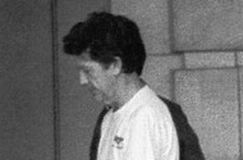
Walter Leroy Moody
Murderer Brian Kevin Rosenfeld
Murderer · USA · 1985
Brian Kevin Rosenfeld Brian Kevin Rosenfeld was sentenced to three concurrent l…
23 victims
Brian Kevin Rosenfeld
Murderer · USA · 1985
Brian Kevin Rosenfeld Brian Kevin Rosenfeld was sentenced to three concurrent l…
23 victims
 Yahweh ben Yahweh
Murderer · USA · 1980
Yahweh ben Yahweh was born and legally named Hulon Mitchell Jr. (October 27, 19…
23 victims
Yahweh ben Yahweh
Murderer · USA · 1980
Yahweh ben Yahweh was born and legally named Hulon Mitchell Jr. (October 27, 19…
23 victims
 Russell Ellwood
Murderer · USA · 1991
Russell Ellwood was a former taxi driver. Authorities suspected him of killing…
20 victims
Russell Ellwood
Murderer · USA · 1991
Russell Ellwood was a former taxi driver. Authorities suspected him of killing…
20 victims
 Robert Martines Perez
Murderer · USA · 1994
Name: Robert Martines Perez · Other name used in proceedings: Robert Martinez P…
15 victims
Robert Martines Perez
Murderer · USA · 1994
Name: Robert Martines Perez · Other name used in proceedings: Robert Martinez P…
15 victims
 Herman Drenth
Murderer · USA · 1931
Herman Drenth was also known by the aliases Harry F. Powers and Cornelius O. Pi…
5 victims
Herman Drenth
Murderer · USA · 1931
Herman Drenth was also known by the aliases Harry F. Powers and Cornelius O. Pi…
5 victims
 Christopher Scarver
Murderer · USA · 1990
Christopher Scarver (born July 6, 1969) was a convicted American murderer. Whil…
3 victims
Christopher Scarver
Murderer · USA · 1990
Christopher Scarver (born July 6, 1969) was a convicted American murderer. Whil…
3 victims
 Robert Wallace West
Murderer · USA · 1982
Robert Wallace West Jr. was convicted of capital murder in Texas and sentenced…
1 victim
Robert Wallace West
Murderer · USA · 1982
Robert Wallace West Jr. was convicted of capital murder in Texas and sentenced…
1 victim
 John Emil List
Mass murderer · USA · 1971
John Emil List was a devout member of the Lutheran church who taught Sunday sch…
5 victims
John Emil List
Mass murderer · USA · 1971
John Emil List was a devout member of the Lutheran church who taught Sunday sch…
5 victims
 Richard Biegenwald
Serial killer · USA · 1958
Richard Fran Biegenwald (August 24, 1940 – March 10, 2008) was an American seri…
6 victims
Richard Biegenwald
Serial killer · USA · 1958
Richard Fran Biegenwald (August 24, 1940 – March 10, 2008) was an American seri…
6 victims
 Elmer Brunner
Murderer · USA · 1957
Elmer David Brunner died on 3 April 1959. He was executed by electrocution on 3…
1 victim
Elmer Brunner
Murderer · USA · 1957
Elmer David Brunner died on 3 April 1959. He was executed by electrocution on 3…
1 victim
- Gender
- male
- Country
- USA
- Location
- Alabama/Georgia, USA
- Date of birth
- March 24, 1935
- Age at first offence
- 54
- Characteristics
- revenge
- Victim profile
- Robert Smith Vance, 58 ( Judge of the Court of Appeals for the Eleventh Circuit ) / Robert E. Robinson ( Georgia civil rights lawyer )
- Method of murder
- P ackages containing a nail bomb
- Date(s) of murder
- December 16/18, 1989
- Years active
- 1989
- Date of arrest
- J uly 11, 1990
- Status
-
Sentenced to death
Sentenced to death in Alabama in 1997
Case record: Walter Leroy Moody
Status
Walter Leroy Moody was sentenced to death in Alabama in 1997.
Background
Walter Leroy Moody, Jr. initiated a scheme in the mid-1980s to have his 1972 conviction overturned. He was also under investigation in early 1990 for a 1989 pipe bomb murders matter involving federal appellate judge Robert S. Vance and Savannah lawyer Robert Robinson.
Robert Smith Vance was a federal appellate judge in the United States who was killed instantly at his home on December 16, 1989 when he opened a package containing a nail bomb. Vance’s wife, Helen, was seriously injured in the blast.
Vance was born in Talladega County, Alabama. He obtained his undergraduate degree at the University of Alabama and earned law degrees from the University of Alabama School of Law and George Washington University Law School. After military service, Vance worked as a lawyer in private practice in Birmingham, Alabama from 1956 to 1977. He was also chairman of the Alabama Democratic Party from 1966 to 1977. In 1977, President Jimmy Carter nominated Vance to a federal judgeship on the United States Court of Appeals for the Fifth Circuit. In 1981, the Fifth Circuit territory was divided, and Vance was assigned to the United States Court of Appeals for the Eleventh Circuit, on which he served until his death.
Moody’s prior history included a conviction in 1972 of possessing a pipe bomb that had exploded in his house. He served three years in federal prison after that conviction. The case law referenced that Moody had previously been convicted in 1972 of possessing a bomb that had exploded in his house and that he served four years in federal prison.
Moody also attempted to conceal his connection to the bombings during his trial.
The offence
On December 16, 1989, federal appellate judge Robert Smith Vance was killed instantly at his home when he opened a package containing a nail bomb. Two days later, another mail bomb incident involved an Atlanta attorney. The record also described that two more bombs mysteriously appeared after that.
A third bomb was sent to the federal courthouse in Atlanta and was intercepted. A fourth bomb was recovered after being mailed to the Jacksonville office of the NAACP. ATF personnel defused one bomb and Florida police bomb experts defused the other.
Moody was charged with the murders of Judge Vance and of Savannah, Georgia civil rights attorney Robert E. Robinson, who was killed in a separate explosion. Moody was also charged with mailing bombs that were defused at the Eleventh Circuit’s headquarters and at the Jacksonville office of the NAACP.
A later portion of the record described that Moody’s motive became clear: a pattern of experimentation with bombs dating back to the early 1970s, including his conviction for possessing a bomb that had hurt his wife when it exploded. It further described that his conviction and failed appeals in that case led him to harbor resentment of the court system, and that his contact with Judge Vance in a 1980s case led to deeper resentment and a personal animus that led to revenge. The same portion described that the other bombs were meant to make authorities suspect racism as the motive.
Investigation
The Bureau and its partners began an extensive probe of the events, including purchases, contacts, and phone calls. The investigation gathered remnants of the bombs and packages for lab analysis, determined the path the packages had taken through the postal system, and assembled a long list of suspects.
An ATF expert was contacted by a colleague who had helped defuse one of the bombs. The expert thought the bomb resembled one he had seen 17 years before and remembered the name of the person who had built it: Walter Leroy Moody.
The record stated that court authorized surveillance of Moody at home and in jail. It also stated that this provided additional evidence, including that Moody talked to himself.
Arrest
Moody was later arrested in connection with the mail bomb murders and serial bombings.
Trial
Moody’s trial for murder and other crimes was presided over by U.S. District Judge Edward J. Devitt of the District of Minnesota. The record stated that an order had been entered directing the recusal of all the circuit and district judges within the Eleventh Circuit.
The record described that, after the trial, Moody was convicted on all counts and sentenced to multiple life terms.
A subsequent Alabama state-court proceeding resulted in Moody’s conviction of Judge Vance’s murder by an Alabama state-court jury, and he was sentenced to death in 1997. The record stated that he remained on death row at Holman Correctional Facility near Atmore, Alabama.
For a separate appellate matter, the record described a federal conviction and sentencing. Moody appealed the judgment of conviction and the sentence imposed on thirteen counts of obstruction of justice and related offenses.
Conviction and sentence in the obstruction-related case
The record stated that beginning in 1985 Moody initiated the plan to have his 1972 conviction vacated. It described that Moody bribed an acquaintance, Julie Linn-West, to say she had firsthand knowledge that someone else planted the bomb in Moody’s home in 1972. The record stated that this tangled web enveloped Linn-West’s mother, Susan Eckstrom, who later corroborated the fabricated story in court.
Moody filed a coram nobis petition in 1986 in the District Court for the Middle District of Georgia. The petition was denied in 1988, and the denial was affirmed in August 1989. In early 1990, Moody became aware that his connection to Linn-West and Eckstrom was being investigated and contacted Linn-West to ensure her and her mother’s cooperation. The record stated that a $400 payment to Linn-West, with a promise of more if she had to testify again, was followed by a threat to Linn-West that her mother’s life would be in danger if Eckstrom cooperated with authorities. It stated that Linn-West had already decided to cooperate with the government, and that video and audio tapes of many of Moody’s meetings and conversations with her were introduced at trial.
After a jury trial, Moody was convicted of all thirteen counts. He received a 120-month sentence under the Sentencing Guidelines and a consecutive five-year sentence on a single pre-guidelines count.
Appellate issues and rulings
Moody appealed the conviction and sentence.
The record described that, in February 1990, in the context of a civil proceeding initiated by members of the press to obtain access to a February 8 search warrant, all judges of the court entered an order recusing themselves “from participating in this case and in any other cases relating to the investigation of the murder of the Honorable Robert S. Vance in which Walter Leroy Moody is a party.” Judge W.D. Owens, Jr., of the Middle District of Georgia recused himself from hearing the instant case on October 4, 1990, and Chief Judge Tjoflat designated Judge Anthony A. Alaimo of the Southern District of Georgia on October 9, 1990. Moody argued that Chief Judge Tjoflat lacked authority to designate a judge in the instant case. The record described that the issue was whether the act of designating a trial judge was ministerial or substantive.
Moody also moved to recuse Judge Alaimo due to an appearance of bias arising from Moody’s alleged involvement in the Vance and Robinson murders. Judge Alaimo denied the motion on the ground that the purported basis for his bias was “simply too attenuated to raise even a reasonable appearance of impropriety.” The record stated that it found no abuse of discretion in that decision.
The appellate record stated that Moody raised two issues previously raised in his motion for a new trial: whether the court erred in failing to conduct a waiver hearing after Moody requested that a general insanity instruction not be given to the jury, and whether the court erred in denying the motion to suppress evidence discovered during searches of his home. It stated that the appellate court found no error and adopted the district court’s reasoning.
The record also described that Moody raised motions for acquittal on several counts at the close of the government’s case and at the close of all evidence, that the motions were denied, and that the appeal continued those issues.
Sentencing
In the obstruction-of-justice-related federal matter, Moody received a 120-month sentence under the Sentencing Guidelines and a consecutive five-year sentence on a single pre-guidelines count.
In the Alabama state-court proceeding for Judge Vance’s murder, Moody was sentenced to death in 1997.
The record additionally described that, in the federal murder-related convictions, Moody was sentenced to multiple life terms, and that an effort to conceal his connection to the bombings succeeded.
Appeals
In the federal appeal concerning obstruction and related offenses, the appellate record stated that Moody appealed the judgment of conviction and the sentence imposed on thirteen counts of obstruction of justice and related offenses, and that the appellate court affirmed.
Legal holdings included in the appeal record
The record stated that the appellate court held that 18 U.S.C. § 1503 was broad enough to cover witness tampering in the context of witness tampering acts intended to obstruct the due administration of justice, and that 18 U.S.C. § 1512 was not the exclusive vehicle for prosecution for witness tampering. It stated that it joined the majority of circuits in that view and expressly rejected the position taken by the Second Circuit.
The record also stated that count 2’s “pending judicial proceeding” element was satisfied because the obstruction consisted in the submission of the false affidavit to the court in the coram nobis case.
The record stated that the appellate court rejected Moody’s overbreadth and vagueness challenge to 18 U.S.C. § 201(c)(2) as applied in the bribe-related counts involving Linn-West and Eckstrom.
The record also addressed a sentencing guideline enhancement under U.S.S.G. § 2J1.2(b)(1). It described that the enhancement was based on Moody’s statement to Linn-West that he had connections to the Miami Mafia and that if the Mafia found out that Eckstrom had “said anything to anybody,” both he and Eckstrom would be murdered. The record stated that the district court concluded that these statements constituted threats to cause injury within the meaning of § 2J1.2(b)(1), even though they were not made directly to Eckstrom. It found no error in applying the specific offense characteristic.
Outcome
The appellate record stated that the court found no error and affirmed the judgment of conviction and sentence.
In Alabama, Moody was sentenced to death in 1997 and remained on death row at Holman Correctional Facility near Atmore, Alabama.
Aftermath
The record stated that the murders and serial bombings stunned the nation, and that the FBI and its partners treated protection of the nation’s judges as a responsibility they took very seriously.
Other details
Moody was also described as a mail bomber whose motive was characterized in the record as revenge. The record included a listing of “Motive: PC-extremist” and “MO: Racist mail bomber; killed a judge and an attorney,” and it also indicated “Bombs - Revenge.”
The appellate record included citations and procedural identifiers: 977 F.2d 1420, United States of America, Plaintiff-appellee, v. Walter Leroy Moody, Jr., Defendant-appellant, No. 91-8810, United States Court of Appeals, Eleventh Circuit; appeal from the United States District Court for the Middle District of Georgia. It also listed the panel as ERVIN (Chief Judge), HALL (Circuit Judge), and BUTZNER (Senior Circuit Judge), with the opinion authored by K. K. HALL, Circuit Judge.
The appellate record also stated that Moody moved to recuse Judge Alaimo because of the appearance of bias, and it stated the grounds for denial were “simply too attenuated to raise even a reasonable appearance of impropriety.”
The appellate record included that the trial court’s refusal to give an insanity instruction was relevant to Moody’s appeal and motion for a new trial.
The appellate record included that, in March or early February 1990, an order recusing judges was entered in the press access civil proceeding context and that the February 8 search warrant was involved in that civil proceeding.
A $400 payment to Linn-West with a promise of more if she had to testify again was followed by a threat regarding Linn-West’s mother’s life if Eckstrom cooperated with authorities. The record stated that video and audio tapes of many of Moody’s meetings and conversations with Linn-West were introduced at trial.
Timeline
- December 16, 1989 — Judge Robert Smith Vance was killed instantly when he opened a package containing a nail bomb at his home; Vance’s wife Helen was seriously injured in the blast.
- February 1990 — In the context of a civil proceeding initiated by members of the press to obtain access to the February 8 search warrant, all judges of the court entered an order recusing themselves “from participating in this case and in any other cases relating to the investigation of the murder of the Honorable Robert S. Vance in which Walter Leroy Moody is a party.”
- October 4, 1990 — Judge W.D. Owens, Jr. recused himself from hearing the instant case.
- October 9, 1990 — Chief Judge Tjoflat designated Judge Anthony A.
- June 28, 1991 — The jury found Moody guilty of more than 70 charges and sentenced him to life in prison.
- 1997 — Moody was sentenced to death in Alabama.

Spotted an error, or have more information about this case?