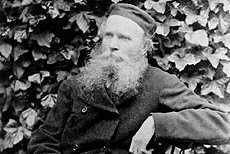
William Chester Minor
Homicide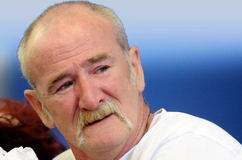 Mick Philpott
Homicide · United Kingdom · 2012
Michael “Mick” Philpott was an Englishman who had gained notoriety as a crimina…
6 victims
Mick Philpott
Homicide · United Kingdom · 2012
Michael “Mick” Philpott was an Englishman who had gained notoriety as a crimina…
6 victims
 Dyson Allen
Homicide · United Kingdom · 2012
Dyson Allen was convicted for starting a fire in a wardrobe in the children’s b…
4 victims
Dyson Allen
Homicide · United Kingdom · 2012
Dyson Allen was convicted for starting a fire in a wardrobe in the children’s b…
4 victims
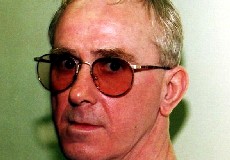 Robert Mone
Homicide · United Kingdom · 1967
Robert Francis Mone was born in 1948. He grew up with his parents and two siste…
4 victims
Robert Mone
Homicide · United Kingdom · 1967
Robert Francis Mone was born in 1948. He grew up with his parents and two siste…
4 victims
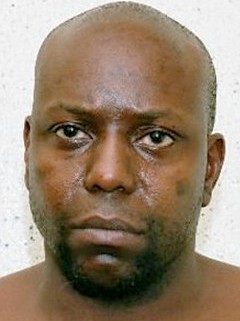 Peter Bryan
Homicide · United Kingdom · 1993
Peter Bryan was a schizophrenic cannibal who was sentenced to closed psychiatri…
3 victims
Peter Bryan
Homicide · United Kingdom · 1993
Peter Bryan was a schizophrenic cannibal who was sentenced to closed psychiatri…
3 victims
 Larry Joe Johnson
Murderer · USA · 1979
Larry Joe Johnson Larry Joe Johnson was executed by electrocution in Florida on…
1 victim
Larry Joe Johnson
Murderer · USA · 1979
Larry Joe Johnson Larry Joe Johnson was executed by electrocution in Florida on…
1 victim
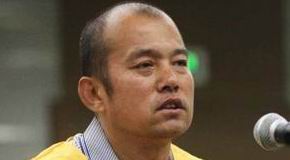 Wang Shujin
Serial killer · China · 1994
Wang Shujin was a death row prisoner who was convicted of raping and killing at…
4 victims
Wang Shujin
Serial killer · China · 1994
Wang Shujin was a death row prisoner who was convicted of raping and killing at…
4 victims
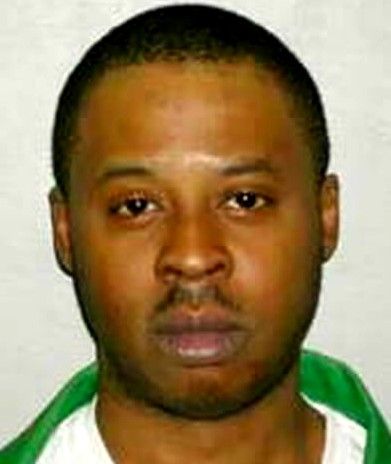 Joseph Gardner
Murderer · USA · 1992
Joseph Martin Luther Gardner was executed by lethal injection in South Carolina…
1 victim
Joseph Gardner
Murderer · USA · 1992
Joseph Martin Luther Gardner was executed by lethal injection in South Carolina…
1 victim
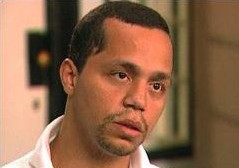 Matias Reyes
Homicide · USA · 1988
Matias Reyes was a juvenile at the time of the events described as part of a se…
2 victims
Matias Reyes
Homicide · USA · 1988
Matias Reyes was a juvenile at the time of the events described as part of a se…
2 victims
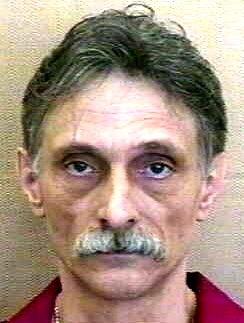 Kenneth Lee Boyd
Murderer · USA · 1988
Kenneth Lee Boyd was convicted of the murders of Thomas Dillard Curry and Julie…
2 victims
Kenneth Lee Boyd
Murderer · USA · 1988
Kenneth Lee Boyd was convicted of the murders of Thomas Dillard Curry and Julie…
2 victims
- Gender
- male
- Country
- United Kingdom
- Location
- London, England, United Kingdom
- Date of birth
- June 1834
- Age at first offence
- 38
- Characteristics
- history of mental illness, mentally ill, torture
- Victim profile
- George Merritt, 34
- Method of murder
- Shooting
- Date(s) of murder
- February 17, 1872
- Years active
- 1872
- Date of arrest
- Same day
- Status
-
Died in custody
Found not guilty on grounds of insanity on April 6, 1872; detained "until Her Majesty's Pleasure be known" as a "certified criminal lunatic"; died on March 16, 1920
Case record: William Chester Minor
Status and legal outcome
William Chester Minor was found not guilty on grounds of insanity on April 6, 1872. He was detained "until Her Majesty's Pleasure be known" as a "certified criminal lunatic" at the Asylum for the Criminally Insane in Broadmoor in the village of Crowthorne, Berkshire. He died on March 16, 1920.
Background
William Chester Minor, also known as W. C. Minors, was an American army surgeon and later contributed quotations to the Oxford English Dictionary. He was held in a lunatic asylum at the time of the shooting.
Minor was born on the island of Ceylon (now Sri Lanka) in June 1834. He was the son of Congregationalist Church missionaries from New England. He had numerous half-siblings, including Thomas T. Minor, mayor of Seattle, Washington in the late 1880s.
At 14, Minor was sent to the United States and finished his medical education in 1863 at Yale.
Military career and duties
Minor was accepted by the Union Army as a surgeon and served at the Battle of the Wilderness in May 1864. He was also given the task of punishing a Northern soldier by branding him on the face with a D for "deserter". The man was an Irish immigrant.
After the American Civil War, Minor saw duty in New York City and became drawn to prostitution. By 1867, his behavior had come bizarre and the Army transferred him to a remote post. By 1868, he showed growing signs of mental instability and was placed in St. Elizabeth's Hospital, the U.S. Government Hospital for the Insane.
Minor resigned his commission on the grounds of "incapacitated by causes arising in the line of duty" after 18 months, and he started to receive an Army pension. He was discharged from the hospital in 1871 and came to London as part of a vacation.
Move to England and disordered life
In 1871, Minor went to the UK and settled in the slum of Lambeth in London, where he took up a dissolute life. He was haunted by his paranoia and developed beliefs about the Irish that were linked to the earlier branding incident.
He carried a loaded gun for his own protection and took to carrying it after his paranoia returned.
The offence
On February 17, 1872, Minor fatally shot a man he believed had broken into his room. The man was George Merrett.
A narrative describes the shooting as occurring when George Merritt, a 34-year-old stoker at the Lion Brewery, was working an early shift starting at 2am. Minor fired four shots, two of which entered Merritt’s neck, while Merritt was walking down Belvedere Road and was on his way to work to support his family of six children, himself, and his pregnant wife, Eliza.
It was also stated that the shooting occurred after Minor returned home late at night and woke up believing someone was trying to get into his room; he chased after the intruder and shot at a man in the street.
Investigation, arrest, and detention
Minor was charged at Southwark Police-court in the afternoon after the shooting. Police-constable 236L gave evidence. The witness said:
"a little after two o'clock on Saturday morning he was on duty in Belvedere-road, when he heard a report of fire-arms. He proceeded in that direction and saw the prisoner coming on the opposite side of the road. He went over to him and asked him who it was that had fired. He said he had, and, asking him who he fired at, he said, "A man. I should not be such a coward as to shoot a woman." Witness seized him and took the revolver produced from his right hand; it was quite warm. He then took him to the station-house, and on the way met another constable, whom he directed to Tenison street, where he found the deceased lying near the wall of the Lion Brewery Stores, bleeding from wounds in the throat. Another constable came up, and they took the body to St. Thomas's Hospital, when he was found to be dead."
The inquest was held on Tuesday after the police court examination. The jury returned a verdict of Wilful Murder against the prisoner, and the coroner made out his warrant accordingly.
Sergeant Steggles, Acting-Inspector at Tower-street Police-station, recalled that after his examination on Saturday he went to Minor's lodgings and found two large portmanteaus containing:
- seven or eight American coins
- five bank notes of 20 livres each
- a box containing bulleted cartridges (Ely's make)
- five others were handed to him by Mrs. Fisher, who took them from a coat pocket in the room
- a United States surgeon's diploma, appointing him assistant-surgeon to the army, dated 1866
- a captain's commission, dated 1867
- a letter of introduction signed by J.W. Johnson addressed to Professor Rood, Sheffield Scientific School, Yale College, Newhaven, Connecticut
- several water-colours in various stages of completion
After Minor was removed from the dock, Mr. Nunn, the Vice-consul, returned into court and said he had had conversations with Minor, who had told him that:
"the gold watch and chain were heirlooms in his family, and wished them to be given up to him."
Mr Partridge desired the inspector to deliver them up to Mr. Nunn.
The landlady of the house in which he lodged gave evidence about his general conduct since he took the apartments on the Wednesday after Christmas. She said:
- he came home about one o'clock on Saturday morning and went to his room
- about a quarter to two he went out
- she had not heard him go out of a night before
- his room was generally unlocked except when he was at home
- she had never seen any weapon about the room
Ellen Henderson, living at 19, Tenison-street, testified about hearing shots and directing a constable. She said:
- about two o'clock on Saturday morning she heard four shots fired in rapid succession; one, two-one, two
- she saw a constable running down the street
- she directed him to the spot whence the sound of the shots came
Trial and findings
On April 6, 1872, Dr. William Chester Minor was judged not guilty on grounds of insanity and detained "until Her Majesty's Pleasure be known" as a "certified criminal lunatic" at the Asylum for the Criminally Insane in Broadmoor, Crowthorne, Berkshire.
Sentencing and detention conditions
After the verdict, Minor was incarcerated in the asylum at Broadmoor in the village of Crowthorne, Berkshire. Because he had his army pension and was not judged dangerous, he was given rather comfortable quarters and was able to buy and read books.
He was allocated two rooms in the "swells block" at Broadmoor. He was allowed books and painting materials.
Aftermath and later life
Minor was visited quite often by the widow of the man he had killed, Eliza Merritt. She provided him with further books.
Eliza Merritt gave evidence in court. Her testimony included details about her husband’s age, work, the size of her family, his schedule, and her circumstances. She said:
"I live at No.24, Cornwall-cottages, Cornwall-road. My husband had worked for thr Lion Brewery about eight years. He was 34 years of age. On Saturday morning a little before two o'clock he was roused up as usual to go to his work, and he immediately got up and dressed himself. He was in his usual health. He struck a light when he went out and said "good bye," as usual. For the last three weeks he had gone out at two in the morning. I heard nothing more of him until half-past seven, when I was told he was shot. Between two and three in the afternoon I went to see him at the hospital. I have seven children. The eldest is 18 and the youngest 12 months old, and I expect to be confined with another very shortly. My husband had 24s. a week. Our large family kept us very poor so I am now in deep distress."
During the inquest, it was stated that after hearing evidence substantially the same as that given before the police magistrate, with the addition of evidence by Mr. Williams, one of the hospital house surgeons, who said that either of the two wounds to the neck, produced by bullets, was sufficient to account for death.
Subscriptions were set on foot on behalf of the family of the murdered man. Rev. H.W. Bateman, vicar of St. John's, Waterloo-road, stated that general subscriptions would be received by him at 158, Stamford-street, or by the secretary to the Lion Brewery Company, Belvedere-road. Mr. Nunn made an appeal to Americans in London on behalf of the family. At the inquest, the 24s. allowed to the jury were at once handed over to the family.
Minor’s condition deteriorated, and in 1902 he cut off his own penis. His health failed and he was permitted to return to the United States and St. Elizabeths Hospital; he was subsequently diagnosed with schizophrenia.
He died in 1920 in New Haven, Connecticut. The narrative also states that he died of complications arising from pneumonia on the 26th March 1920 in an old peoples home in New Haven, Connecticut, and he was buried at Evergreen Cemetery New Haven.
Other details: Oxford English Dictionary contribution
Minor became a principal contributor of sixteenth and seventeenth century quotations to the first edition of the Oxford English Dictionary for over thirty years. He devoted most of the remainder of his life to that work. He became one of the most effective volunteers, reading through his personal library and compiling quotations that illustrated the way particular words were used.
It was stated that through correspondence with London booksellers, he heard of the call for volunteers from what was to become the Oxford English Dictionary. He began reading and collecting books after receiving an eight page flyer (a letter) inserted into new books appealing for new readers to find words and quotations for the dictionary. The flyer had been inserted by the OED editor, Dr. James Murray.
Minor turned one of his rooms into his library and signed his letters in a consistent way: "Dr W.C. Minor, Broadmoor, Crowthorne, Berkshire". The OED editor, Dr James Murray, learned Minor’s background history only after many years and visited him.
In 1910, following strong representations from Dr. Murray, the US Consulate and others, the then Home Secretary, Winston Churchill, signed the necessary papers to allow Minor to return to the mental hospital in the USA.
Named individuals and victims
George Merrett (also described as George Merritt) was the man Minor shot. He was a 34-year-old stoker at the Lion Brewery. He was declared dead on arrival at St Thomas' hospital after being shot in the neck.
Eliza Merritt was the wife of the deceased. She was pregnant at the time of the evidence described. She had seven children, with the eldest being 18 and the youngest 12 months old, and she expected to be confined with another very shortly.
Implied locations and times mentioned
The shooting occurred in Belvedere-road near Hungerford-bridge. Minor was described as residing at 41, Tenison-street, York-road, Lambeth, and he was arrested after a police encounter in Belvedere-road and then directed to Tenison street. The body was found near the wall of the Lion Brewery Stores. Medical treatment was at St. Thomas's Hospital. Court proceedings took place at Southwark Police-court. The inquest was held on Tuesday. The detention took place at Broadmoor in the village of Crowthorne, Berkshire, in the Asylum for the Criminally Insane. Later hospital care took place at St. Elizabeths Hospital. Minor died in New Haven, Connecticut.
Spotted an error, or have more information about this case?