
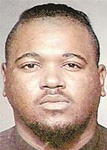
David Morris
Mass murderer Thomas Hamilton
Mass murderer · United Kingdom · 1996
Thomas Hamilton committed suicide by shooting himself on 13 March 1996. · 13 Ma…
17 victims
Thomas Hamilton
Mass murderer · United Kingdom · 1996
Thomas Hamilton committed suicide by shooting himself on 13 March 1996. · 13 Ma…
17 victims
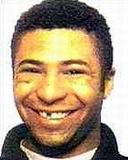 Richard Fielding
Mass murderer · United Kingdom · 1999
Richard Fielding Richard Fielding was detained indefinitely at Rampton Hospital…
7 victims
Richard Fielding
Mass murderer · United Kingdom · 1999
Richard Fielding Richard Fielding was detained indefinitely at Rampton Hospital…
7 victims
 Kenneth Regan
Mass murderer · United Kingdom · 2003
Kenneth Regan (born 1953) was a British murderer and drug dealer. He was found…
5 victims
Kenneth Regan
Mass murderer · United Kingdom · 2003
Kenneth Regan (born 1953) was a British murderer and drug dealer. He was found…
5 victims
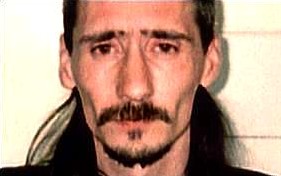 Lee Ford
Mass murderer · United Kingdom · 2000
Lee Ford · Lesley Ford (wife) · Michael Tranter (natural father of four childre…
5 victims
Lee Ford
Mass murderer · United Kingdom · 2000
Lee Ford · Lesley Ford (wife) · Michael Tranter (natural father of four childre…
5 victims
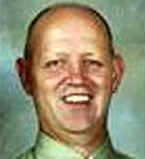 Robert Mochrie
Mass murderer · United Kingdom · 2000
Robert Mochrie unlawfully killed his family at their home in Barry, near Cardif…
5 victims
Robert Mochrie
Mass murderer · United Kingdom · 2000
Robert Mochrie unlawfully killed his family at their home in Barry, near Cardif…
5 victims
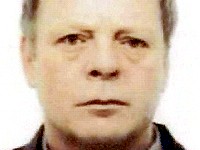 William Horncy
Mass murderer · United Kingdom · 2003
William Horncy (born 1954) was a British murderer. He was convicted of murderin…
5 victims
William Horncy
Mass murderer · United Kingdom · 2003
William Horncy (born 1954) was a British murderer. He was convicted of murderin…
5 victims
 Alexander Tchayka
Spree killer · Russia · 1994
Alexander Tchayka (born in 1974 in Sumy, USSR (now, Ukraine)) was a Russian ser…
4 victims
Alexander Tchayka
Spree killer · Russia · 1994
Alexander Tchayka (born in 1974 in Sumy, USSR (now, Ukraine)) was a Russian ser…
4 victims
 Jaime Elizalde
Murderer · USA · 1994
Name: Jaime Elizalde Also known as: Jaime Elizalde, Jr. Current status: Execute…
2 victims
Jaime Elizalde
Murderer · USA · 1994
Name: Jaime Elizalde Also known as: Jaime Elizalde, Jr. Current status: Execute…
2 victims
 David Junior Brown
Murderer · USA · 1980
David Junior Brown changed his name in prison after his conversion to Islam. Du…
2 victims
David Junior Brown
Murderer · USA · 1980
David Junior Brown changed his name in prison after his conversion to Islam. Du…
2 victims
 Paul Rowles
Murderer · USA · 1972
Paul Rowles died in prison on February 12, 2013. Paul Rowles was born in 1948.…
3 victims
Paul Rowles
Murderer · USA · 1972
Paul Rowles died in prison on February 12, 2013. Paul Rowles was born in 1948.…
3 victims
 Lester Kills On Top
Murderer · USA · 1987
Lester Kills On Top No A027079 was incarcerated at Montana State Prison in Deer…
1 victim
Lester Kills On Top
Murderer · USA · 1987
Lester Kills On Top No A027079 was incarcerated at Montana State Prison in Deer…
1 victim
 Pamela Lynn Perillo
Murderer · USA · 1980
Name: Pamela Lynn Perillo Sentenced to death on September 2, 1980; resentenced…
2 victims
Pamela Lynn Perillo
Murderer · USA · 1980
Name: Pamela Lynn Perillo Sentenced to death on September 2, 1980; resentenced…
2 victims
- Gender
- male
- Country
- United Kingdom
- Location
- Clydach, Swansea, Wales, United Kingdom
- Date of birth
- 1959
- Age at first offence
- 40
- Characteristics
- retaliation, domestic violence, convicted rapist, arson
- Victim profile
- Mandy Power, 34, her disabled 80-year-old mother and her daughters Katie, 10, and Emily, 8
- Method of murder
- Beating with an iron pole
- Date(s) of murder
- June 27, 1999
- Years active
- 1999
- Date of arrest
- March 2001
- Status
-
Acquitted / overturned
Sentenced to four life sentences; appeal allowed in 2005 resulting in a retrial; after retrial the whole-life term was quashed and a minimum period of 32 years was ordered before parole can be applied for; fresh bid to challenge convictions lost in 2007
Case record: David Morris
Background
David Morris, a former scrap metal dealer and builder’s labourer from Craig Cefn Parc in the Swansea Valley, was accused of murdering members of the same family at their home in nearby Clydach.
Alison Lewis, a former policewoman, had a lesbian affair with murdered mother-of-two Mandy Power. Alison Lewis tried to jump to her death from a window when she heard of the killing. She was eventually admitted to a local psychiatric unit and remained for some time. Within a year of the killings, she was arrested with her husband on suspicion of murder, and both were later released without charge.
Alison Lewis’s husband was police officer Steven Lewis. Prosecutor Patrick Harrington QC said Steven Lewis had been completely unaware that his wife was having a lesbian affair.
Another person mentioned in connection with the early arrests was Inspector Stuart Lewis, who was arrested with Alison Lewis and Stephen Lewis on suspicion of murder and later released without charge.
The offence
Mandy Power, her mother Doris Dawson, and Mandy Power’s daughters Katie and Emily were found dead in the Kelvin Road home in Clydach early on 27 June 1999. The victims were beaten to death with an iron pole and left in the house, which was set on fire.
The prosecution described the killings as a “massacre” in which the skulls of all four victims were crushed.
The jury heard that the killings began when Mandy Power rejected David Morris’s advances for sex after a casual relationship and a break-up of her marriage. The jury also heard that Mandy Power had begun a lesbian affair with a former policewoman and did not want to sleep with Morris again.
The jury heard that Morris “flew into a rage” and embarked on what was described as an “orgy of savagery.” Prosecutor Patrick Harrington QC said Mandy Power alone had been beaten 38 times with the murder weapon. The court heard that Doris Dawson was murdered as she lay in bed and that Morris then set her body alight. One of the children’s bodies lay on the landing and another was found in their bedroom, still in a cowering position.
Investigation
The evidence presented at Swansea Crown Court was described as the result of the biggest investigation ever undertaken by South Wales Police.
A gold neckchain was found at the murder scene in the house by forensic scientists. The jury heard that a blob of paint found on the chain exactly matched paint found on kitchen units at David Morris’s home.
Prosecutor Patrick Harrington QC told the jury that forensic scientists could not take DNA from the chain because it was caked in blood. He also told the jury that, when examined by the chain’s manufacturers, a blob of paint was found and it was indistinguishable from paint at David Morris’s house, which he described as a “crucially important discovery.”
The jury was shown pictures of the head injuries suffered by Mandy Power, her mother Doris Dawson, and two young children Katie and Emily.
Patrick Harrington QC told the jury:
“Believe me, these are horrific - you will never have seen anything like it in all of your lives”.
The judge said the jury would not be able to take the gold neckchain out and look at it because it was contaminated by human blood; the jury could look at the police replica and examine it in great detail.
The prosecution also told the jury that David Morris had lied and lied in the days and months following the killings about his movements on the night of the deaths and about the neckchain. The prosecution said these were carefully tailored lies and that Morris had refined and developed his account.
The court heard that David Morris said the chain was probably his four days before the start of the case.
Early in the investigation, David Morris had been ruled out as the killer because his partner had provided him with an alibi. The partner later admitted lying to the police about his whereabouts on the night of the murders.
South Wales Police were criticised for the time it took them to arrest Morris for the 1999 murder. A later report stated that it was not until March 2001 that South Wales Police confirmed that Morris had been arrested.
Three other people originally arrested over the murders were to sue the force for damages.
Arrest
David Morris was not arrested until nearly two years after the tragedy in June 1999, and South Wales Police later confirmed his arrest in March 2001.
Trial
Swansea Crown Court (first trial)
David Morris, aged 39 and later referred to as 40, was tried at Swansea Crown Court and denied four counts of murder.
The trial involved evidence described as coming from the biggest investigation ever undertaken by South Wales Police. The jury heard accounts of the victims’ injuries and the circumstances linking Morris to the killings, including the gold neckchain and paint matching between the chain and Morris’s home.
On the day news of the deaths was given to Alison Lewis, she was described as having deep shock and emotional trauma. The court heard that she held out her arms and tried to speak to Mandy Power as though she were there, and that friends recognised her shock. It was said that she hyperventilated and that medication was arranged. The court heard that Alison Lewis then wandered upstairs to her bedroom and was pulled back from the window.
The jury heard that the community response included “chaotic scenes in the street outside” and that news spread quickly through the close community. She was said to have gone to Kelvin Road and then returned to the home she shared with her police sergeant husband in Pontardawe.
In summarising the prosecution case, Prosecutor Patrick Harrington QC said:
“But Alison Lewis, during the day, was in a state of deep shock and deep emotional trauma.”
He further said:
“She continually tried to speak to Mandy Power, holding out her arms and speaking to her as though she were there. ”
and:
“Fortunately, some sensible and responsible friends were there and recognised that Alison Lewis was in deep shock.”
The court heard that both Alison Lewis and her husband, Steven Lewis, were shocked by the news in different ways and it had, in effect, ended their marriage.
The trial judge ruled that the jury could be told about David Morris’s almost two dozen previous convictions for robbery and violence.
The jury found David Morris guilty of the murders of four members of the same family.
Sentencing (first trial)
After the guilty verdicts, the trial led to sentencing at Swansea Crown Court.
Mr Justice Butterfield passed sentence and told Morris:
“These were horrific murders committed with great savagery in which you inflicted appalling injuries on innocent victims. You've shown not a trace of compassion or sympathy.”
David Morris was sentenced to four life sentences.
He showed no emotion as he was led away from the dock, and shouts of abuse could be heard from the public gallery.
Appeals
Appeal proceeding in 2005; conviction quashed on appeal
A judge ruled that an appeal on behalf of David Morris, who had been found guilty of murdering four members of the same family, should go ahead.
The appeal was heard by Court of Appeal judges sitting in Cardiff. An application for a 28-day adjournment made by Morris’s defence was rejected, and the hearing continued.
Michael Mansfield QC represented Morris and told the appeal judges that the defence had only just been given material which could have an important bearing on the appeal, and for that reason asked for an adjournment.
Michael Mansfield QC told the court that some evidence related to a key witness, police officer Stephen Lewis, whose wife had been having an lesbian affair with Mrs Power, and whether or not Mr Lewis knew about that relationship.
Michael Mansfield QC also told the court that there was a conflict of interest between Morris’s solicitor, David Hutchinson, who had represented Stephen Lewis in the past.
Lord Justice Pill rejected the application but indicated that the defence team would be given time to analyse new evidence.
The report stated that Morris was granted leave to challenge his convictions in October and appeared before judges in Cardiff. It also stated that in October, three judges at the Court of Appeal allowed him to appeal on two grounds, and that it would be argued that he did not receive a fair trial and that his convictions were unsafe.
The report stated that Morris’s original convictions from Swansea Crown Court in 2002 were quashed on appeal in 2005 and a second trial was ordered.
Court of Appeal in 2007; whole-life term quashed on retrial sentencing
A 2007 report stated that a former builder who murdered the family by bludgeoning them to death had lost a fresh bid to challenge his convictions, but had his “whole-life” sentence quashed by the Court of Appeal.
The report stated that David Morris, referred to as 44, had been convicted for the second time in August following a retrial at Newport Crown Court. It stated that after the retrial, Mr Justice McKinnon sentenced him to life for each of the four murders, telling Morris:
“life imprisonment should mean imprisonment for the rest of your life”.
It also stated that three judges at the Court of Appeal in London quashed the whole-life term and made an order that he should serve a minimum period of 32 years before he could apply for release on parole. The judges had earlier rejected an application by Morris for leave to appeal his convictions, ruling there was no “arguable” ground for a challenge.
The judges were said to be Sir Igor Judge, sitting with Mr Justice Elias and Mr Justice Griffith Williams.
Sir Igor Judge said Mr Justice McKinnon had concluded that the case was for what was described as a “whole-life sentence.” The report stated that Sir Igor Judge held that sentencing powers on a retrial were “constrained by statute” in that a penalty imposed following a retrial must not be harsher than that imposed after the first trial.
The report stated that at the conclusion of the first trial, Mr Justice Butterfield had recommended a minimum of 35 years. It also stated that Lord Woolf reviewed all the papers and concluded that the recommended period should be 32 years.
The report also stated that the application for leave to appeal convictions was rejected earlier, and that Morris lost the fresh bid to challenge convictions in 2007.
Outcome
David Morris was convicted of the four murders and sentenced to four life sentences.
On appeal in 2005, the convictions were quashed and a retrial was ordered.
After retrial and resentencing, a whole-life term was quashed and the Court of Appeal ordered a minimum period of 32 years before parole can be applied for.
Other details
When Morris was led away after sentencing, his friends shouted “the wrong one went in the van.”
Morris’s sister Deborah said:
“We are devastated by the verdict but we are unable to understand the evidence that was presented to the court. We are told by David's lawyers that there are good grounds for an appeal. We are confident that justice will prevail.”
After sentencing, Mrs Lewis said she was satisfied justice had been done but complained about her treatment. She told reporters:
“While standing trial for murder, the judicial system afforded David Morris the luxury of being innocent until proven guilty. Police sued “Throughout the trial my rights as an innocent person were neither given nor respected as David Morris's defence team did their utmost to make me look guilty by implication and insinuation,”
Mandy Power’s brother, Robert Dawson, spoke of the “sheer horror” his family had been through and said the guilty verdict would “never be enough” to relieve their pain and loss, although he was relieved the killer was behind bars.

Spotted an error, or have more information about this case?