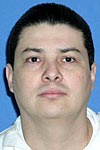
Jaime Elizalde
Murderer Brian Kevin Rosenfeld
Murderer · USA · 1985
Brian Kevin Rosenfeld Brian Kevin Rosenfeld was sentenced to three concurrent l…
23 victims
Brian Kevin Rosenfeld
Murderer · USA · 1985
Brian Kevin Rosenfeld Brian Kevin Rosenfeld was sentenced to three concurrent l…
23 victims
 Russell Ellwood
Murderer · USA · 1991
Russell Ellwood was a former taxi driver. Authorities suspected him of killing…
20 victims
Russell Ellwood
Murderer · USA · 1991
Russell Ellwood was a former taxi driver. Authorities suspected him of killing…
20 victims
 Robert Martines Perez
Murderer · USA · 1994
Name: Robert Martines Perez · Other name used in proceedings: Robert Martinez P…
15 victims
Robert Martines Perez
Murderer · USA · 1994
Name: Robert Martines Perez · Other name used in proceedings: Robert Martinez P…
15 victims
 Billy Frank Vickers
Murderer · USA · 1993
Billy Frank Vickers Vickers was executed by lethal injection in Texas on Januar…
14 victims
Billy Frank Vickers
Murderer · USA · 1993
Billy Frank Vickers Vickers was executed by lethal injection in Texas on Januar…
14 victims
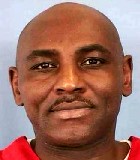 Ricky Chase
Murderer · USA · 1989
Ricky Chase was convicted in February 1990 of capital murder for the robbery an…
1 victim
Ricky Chase
Murderer · USA · 1989
Ricky Chase was convicted in February 1990 of capital murder for the robbery an…
1 victim
 Anthony Ayres
Murderer · United Kingdom · 1993
Anthony Ayres was a 49-year-old man when he was sentenced for the murder of Kel…
2 victims
Anthony Ayres
Murderer · United Kingdom · 1993
Anthony Ayres was a 49-year-old man when he was sentenced for the murder of Kel…
2 victims
 Tyrone Chalmers
Murderer · USA · 1994
Defendant: Tyrone Chalmers Case name: Tyrone Chalmers v. State of Tennessee Jur…
1 victim
Tyrone Chalmers
Murderer · USA · 1994
Defendant: Tyrone Chalmers Case name: Tyrone Chalmers v. State of Tennessee Jur…
1 victim
 Richard Zeitvogel
Murderer · USA · 1981
Richard Steven Zeitvogel was executed by lethal injection in Missouri on Decemb…
2 victims
Richard Zeitvogel
Murderer · USA · 1981
Richard Steven Zeitvogel was executed by lethal injection in Missouri on Decemb…
2 victims
 Wendi Andriano
Murderer · USA · 2000
Wendi Andriano was sentenced to death on December 22, 2004. Wendi Elizabeth Och…
1 victim
Wendi Andriano
Murderer · USA · 2000
Wendi Andriano was sentenced to death on December 22, 2004. Wendi Elizabeth Och…
1 victim
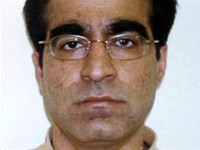 Zainulabedin Zaidi
Murderer · United Kingdom · 2000
Zainulabedin Zaidi murdered Shazia Zaidi and their children, Saba Zaidi and Zee…
3 victims
Zainulabedin Zaidi
Murderer · United Kingdom · 2000
Zainulabedin Zaidi murdered Shazia Zaidi and their children, Saba Zaidi and Zee…
3 victims
- Gender
- male
- Country
- USA
- Location
- Harris County, Texas, USA
- Date of birth
- December 12, 1971
- Age at first offence
- 23
- Characteristics
- —
- Victim profile
- Juan Saenz Guajardo, 29, and Marcos Sanchez Vasquez, 33
- Method of murder
- Shooting
- Date(s) of murder
- November 5, 1994
- Years active
- 1994
- Date of arrest
- Months after
- Status
-
Executed
Executed by lethal injection in Texas on January 31, 2006
Case information
Name: Jaime Elizalde Also known as: Jaime Elizalde, Jr. Current status: Executed by lethal injection in Texas on January 31, 2006
Timeline
- November 5, 1994 — Jaime Elizalde, Jr. walked out of a Houston bar with his father, Jaime Elizalde, Sr.; the senior Elizalde signaled through a widow for Juan Saenz Guajardo to come outside; Guajardo and Marcos Sanchez Vasquez approached the Elizaldes; Jaime Elizalde, Jr. pulled a gun and fatally shot Guajardo and Vasquez; a witness stated that Elizalde, Jr. fled the scene with a gun.
- November 5, 1994 — Juan Saenz Guajardo (29) and Marcos Sanchez Vasquez (33) were shot and killed outside the El Lugar bar/cantina in Houston.
- February 10, 1997 — Elizalde, Jr. was indicted for the capital murders of Juan Saenz Guajardo and Marcos Sanchez Vasquez.
- March 26, 1997 — Elizalde, Jr. was found guilty by a jury for the offense of capital murder.
- April 2, 1997 — Following a separate punishment hearing, Elizalde, Jr. was sentenced to death.
- June 9, 1999 — The Texas Court of Criminal Appeals affirmed Elizalde’s conviction and sentence on direct appeal.
- February 5, 1999 — Elizalde filed an application for writ of habeas corpus in the state trial court.
- April 11, 2001 — The Texas Court of Criminal Appeals denied Elizalde’s state application for writ of habeas corpus.
- February 25, 2002 — Elizalde filed a preliminary federal petition for writ of habeas corpus in a Houston U.S. district court.
- December 2, 2002 — Elizalde filed an amended petition for writ of habeas corpus with the federal district court.
- April 17, 2003 — The district court dismissed Elizalde’s federal habeas petition and denied him permission to appeal.
- September 10, 2003 — Elizalde requested permission to appeal from the 5th U.S. Circuit Court of Appeals.
- March 8, 2004 — The 5th Circuit Court of Appeals denied Certficate of Appeal (COA).
- June 3, 2004 — Elizalde petitioned the U.S. Supreme Court for a writ of certiorari.
- October 7, 2004 — Elizalde’s petition for writ of certiorari was denied by the Supreme Court.
- October 31, 2005 — A state district judge issued a delay so defense attorneys and prosecutors could question Elizalde in court about a second slaying.
- November 2, 2005 — Elizalde’s execution was scheduled but a delay was issued (as described in later reporting) to allow time for questioning about statements he had made admitting to another killing.
- January 13, 2006 — Reporting described that Elizalde was still maintaining innocence of the 1994 murders and discussed the planned videoconference before a Houston judge.
- January 19, 2006 — During a videoconference in a Harris County court, Elizalde refused to answer questions about a 1995 case and asserted his Fifth Amendment rights; the videoconference was closed to the media at attorneys’ request; Herrero was allowed to attend.
- January 30, 2006 — Attorneys asked that Elizalde’s execution be postponed so they could pursue claims of mental retardation.
- January 31, 2006 — The U.S. Supreme Court turned down late appeals; Elizalde was executed by lethal injection; at 6:17 p.m. CST he was pronounced dead.
The offence
Jaime Elizalde, Jr. was convicted of the capital murders of Juan Saenz Guajardo and Marcos Sanchez Vasquez. Both victims were shot and killed outside a Houston bar/cantina on November 5, 1994.
After Jaime Elizalde, Jr. and his father, Jaime Elizalde, Sr., walked out of a Houston bar on Nov. 5, 1994, the senior Elizalde signaled through a widow of the establishment for Juan Guajardo to come outside. Guajardo and another man, Marcos Vasquez, walked out of the lounge and approached the Elizaldes. A bar manager also went outside and saw Elizalde, Jr. pull a gun and fatally shoot Guajardo and Vasquez. A witness stated that he saw Elizalde, Jr. flee the scene with a gun.
Jurors at trial were told of Elizalde’s leadership in the Mexican Mafia, a prison gang. Jurors also heard evidence of his involvement in assaults while in prison, including the stabbing of another inmate.
Investigation
A witness testified that he saw Elizalde flee with a gun after the shootings.
At trial, bar manager Juan Millan testified that while standing outside his establishment he saw Elizalde, accompanied by his father Jaime Elizalde, Sr., shoot Guajado and then a fleeing Vasquez. Robert Garcia testified that from the bar he saw Guajado as he was shot, and that although he did not see the killer shoot Guajado, when he exited the bar he saw Elizalde flee with a gun.
Several days after the shooting, Millan gave a statement to police saying that he was playing pool inside the bar with Fidel Razo at the time of the shooting and did not go outside until after he heard the gunshots. At trial, Razo testified that he was playing pool with Millan when the shots were fired. Millan disavowed the statement and testified that he was not initially truthful with police because “he did not want to have any problems.” He also admitted that the police pressured him, including threatening jail time, after he gave his initial statement.
Arrest
At the time of his arrest, Elizalde, 34, was on parole after serving almost four years of a 10-year term for cocaine possession and auto theft. Reporting described that the conviction was picked up at age 17.
Trial
Conviction
On March 26, 1997, Elizalde was found guilty by a jury for the offense of capital murder.
Punishment
On April 2, 1997, following a separate punishment hearing, Elizalde was sentenced to death.
The jury determined that he posed a risk of future danger.
A separate description stated that after convicting Elizalde for capital murder, in less than 1 hour the jury decided that Elizalde, Jr. would be a threat to society and sent him to death row for the slayings of Juan Saenz Guajardo and Marcos Sanchez Vasquez.
Witness testimony and contradictions
Bar manager Juan Millan initially gave a police statement saying he was playing pool inside the bar during the shooting and did not go outside until after hearing gunshots; at trial he testified to seeing Elizalde shoot Guajado. Millan testified that he did not want any problems. Razo testified that he was playing pool when the shots were fired.
Statements attributed to Elizalde
Elizalde protested his innocence throughout his trial and in interviews since being condemned.
He did not testify at his capital murder trial.
In interviews, he said:
- “I don't know what happened,” and “I had nothing to do with that. That was none of my business.”
- “Everything was just hearsay and circumstantial,” and “Fear has never been something that's gripped me. Death comes to all of us.”
He also made statements about having been stabbed and needing his head sewn up, saying:
- “I've been in front of a gun where I've had the hammer come down and it didn't go off. I've been stabbed. I've been in so many fights. I've had to have my head sewn up. You have to adapt. So I can't really say I'm scared of dying.”
Prior criminal history introduced at punishment
During the punishment phase, the State introduced evidence of Elizalde’s criminal and school records showing juvenile offenses, including felony auto theft. The State also offered prison-guard testimony about Elizalde’s involvement in several prison assaults, including an incident in which Elizalde stabbed another inmate with a shank.
Sentencing
Elizalde received a death sentence following a punishment hearing on April 2, 1997.
A separate report described that at sentencing the jury was given choices of a life sentence or the death penalty, and did not receive an instruction about parole after 40 years.
Appeals
- March 8, 2004 — The 5th U.S. Circuit Court of Appeals denied Certficate of Appeal (COA), described in the case Elizalde v. Dretke, 362 F.3d 323 (5th Cir. 2004).
- October 7, 2004 — The U.S. Supreme Court denied Elizalde’s petition for writ of certiorari.
Fifth Circuit COA decision (Elizalde v. Dretke, 362 F.3d 323)
Elizalde sought a COA to appeal the denial of his habeas petition, including claims that: he was actually innocent; the State withheld exculpatory evidence; he was denied effective assistance of counsel at trial and during direct appeal; and a claim that the state trial court violated the Constitution by refusing to instruct the jury that if sentenced to life in prison Elizalde would be eligible for parole in forty years.
The Fifth Circuit denied the COA, stating the request was denied because the Constitution does not require the requested jury instruction and because procedurally barred claims were not shown to meet the COA standard described in its discussion.
Summary of issues in the Fifth Circuit decision
The court addressed Elizalde’s arguments about procedural bar and cause and prejudice related to ineffective assistance of state habeas counsel. The court also addressed the requested jury instruction about parole eligibility in 40 years if sentenced to life imprisonment, concluding that the trial court was not constitutionally required to provide that instruction.
Outcome
Elizalde was executed in Texas by lethal injection on January 31, 2006.
He was executed after the U.S. Supreme Court turned down late appeals filed in hopes of halting the punishment.
He was pronounced dead at 6:17 p.m. CST, about eight minutes after he began praying as the drugs took effect.
Aftermath
Final statement and last remarks
In a brief final statement, Elizalde thanked friends for their support and urged fellow death row inmates to:
- “keep the faith and stay strong and put your faith in the Lord.”
He said:
- “Many times in life we take the wrong road and there are consequences for everything,”
- “Mistakes are made but with God all things are possible, so put your faith and trust in him.”
- “We talk about a reprieve or stay from the Supreme Court, but the real Supreme Court you must face up there and not down here,”
- “Keep your heads up and stay strong. I love you all. That is it. Stay strong. Thank you.”
He also told inmates:
- “The guys back there waiting, keep the faith and stay strong and put your faith in the Lord,”
- Mistakes are made, but with God all things are possible. So put your faith and trust in him,”
- I love you all. That is it. Stay strong. Thank you.”
Final meal request
For his final meal, Elizalde requested:
- fried chicken, onion rings, French fries, two bowls of peach cobbler, two milk shakes and two glasses of orange juice.
Other details
Prior arrest and prison involvement described in reporting
At the time of his arrest, Elizalde was on parole after serving almost four years of a 10-year term for cocaine possession and auto theft. Reporting also described that he was a leader of the Mexican Mafia while incarcerated and that he had stabbed someone in prison and assaulted guards.
Father’s case
Elizalde’s father, Jaime Elizalde, Sr., was arrested in the case and jailed for some two years before being released. Prosecutors said the father signaled his son by pointing out the victim while heading outside; both Elizalde and his father denied any such signal. It was also reported that all charges against Elizalde’s father were eventually dropped.
Separate 1995 murder confession and related proceedings
Elizalde confessed to shooting/killing Albert Guajardo (also referenced in different places as “Guajardo” without a first name) in a different case. Reporting described that the confession was supported by a sworn statement or affidavit signed later, and that Elizalde claimed Albert Guajardo was responsible for the murders for which Elizalde was on death row.
The 1995 murder was described as involving: strangling with a nylon rope, hitting on the head several times with a blackjack, and slit of the throat with a hunting knife; and Guajardo’s body being found wrapped in a carpet in northeast Harris County. Hermilio Herrero, Jr. was convicted of that murder and was serving a life sentence.
A state district judge issued delays so defense attorneys and prosecutors could question Elizalde in court about this second slaying; Elizalde appeared before a Houston judge via videoconference from death row on January 19, 2006 and refused to answer questions, asserting his Fifth Amendment rights.
In late reporting, Elizalde’s attorney in the murder for which he was on death row was described as Philip Wischkaemper, and it was stated he sent a letter to the governor and the Texas Board of Pardons and Parole asking them to reactivate a previously filed clemency petition. The clemency plea focused on an innocence claim and included evidence of mental retardation.
Mental retardation claims and related litigation
Elizalde’s mental retardation claim was described as based on an IQ test administered in 1990; he scored 60. Reporting stated the Supreme Court exempted mentally retarded inmates from execution in 2002. The Harris County District Attorney’s Office argued the mental retardation claim was without merit, describing reliance on a higher score on a later IQ test and lack of diagnosis, consideration, or treatment.
The Texas Court of Criminal Appeals denied the mental retardation claim on January 30, 2006 reporting, and lawyers pursued the claim in federal court.
A separate report described that a federal district court denied a separate appeal challenging lethal injection as unconstitutional. Another report stated that a previous clemency petition was reactivated and was before the governor and the Texas Board of Pardons and Parole.
Organization petitions and statements (verbatim quotes)
A quoted statement attributed to Assistant District Attorney Jack Roady was:
- “We are still conducting our investigation,”
and also:
- “We are still conducting our investigation,” and “Our office wants to question him in open court” (as part of the quoted reporting).
In reporting about the U.S. Supreme Court ruling and state attorneys’ arguments, state attorneys said the mental retardation claim was meritless and “nothing more than a calculated attempt to postpone his execution,” and said the injection complaint was frivolous and should have been raised years ago.
Spotted an error, or have more information about this case?