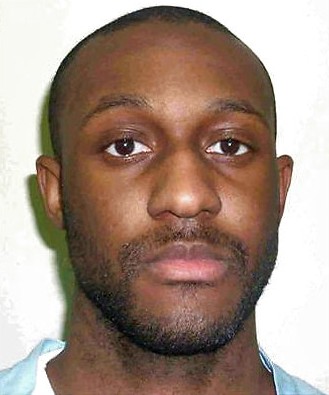
Kent Jermaine Jackson
Murderer Russell Ellwood
Murderer · USA · 1991
Russell Ellwood was a former taxi driver. Authorities suspected him of killing…
20 victims
Russell Ellwood
Murderer · USA · 1991
Russell Ellwood was a former taxi driver. Authorities suspected him of killing…
20 victims
 Robert Martines Perez
Murderer · USA · 1994
Name: Robert Martines Perez · Other name used in proceedings: Robert Martinez P…
15 victims
Robert Martines Perez
Murderer · USA · 1994
Name: Robert Martines Perez · Other name used in proceedings: Robert Martinez P…
15 victims
 Billy Frank Vickers
Murderer · USA · 1993
Billy Frank Vickers Vickers was executed by lethal injection in Texas on Januar…
14 victims
Billy Frank Vickers
Murderer · USA · 1993
Billy Frank Vickers Vickers was executed by lethal injection in Texas on Januar…
14 victims
 Peter Hogg
Homicide · United Kingdom · 1976
Peter Hogg was an airline pilot for Air Europe. Margaret Hogg worked as an airl…
1 victim
Peter Hogg
Homicide · United Kingdom · 1976
Peter Hogg was an airline pilot for Air Europe. Margaret Hogg worked as an airl…
1 victim
 Antoine François Desrues
Murderer · France · 1777
Antoine François Desrues (1744–1777) was a French poisoner. Desrues was born at…
2 victims
Antoine François Desrues
Murderer · France · 1777
Antoine François Desrues (1744–1777) was a French poisoner. Desrues was born at…
2 victims
 Michael Lee Perry
Homicide · USA · 1990
Michael Lee Perry · June 13-14, 1990 — Michael L. Perry and Jacinto (Jason) Ric…
3 victims
Michael Lee Perry
Homicide · USA · 1990
Michael Lee Perry · June 13-14, 1990 — Michael L. Perry and Jacinto (Jason) Ric…
3 victims
 Frank R. Davis
Murderer · USA · 1983
Frank R. Davis was convicted in connection with the assault and killings of mul…
2 victims
Frank R. Davis
Murderer · USA · 1983
Frank R. Davis was convicted in connection with the assault and killings of mul…
2 victims
 Darnell Williams
Murderer · USA · 1986
Darnell Williams received a death sentence on March 23, 1987. On July 2, 2004,…
2 victims
Darnell Williams
Murderer · USA · 1986
Darnell Williams received a death sentence on March 23, 1987. On July 2, 2004,…
2 victims
- Gender
- male
- Country
- USA
- Location
- Newport News, Virginia, USA
- Date of birth
- September 18, 1981
- Age at first offence
- 19
- Characteristics
- rape, robbery
- Victim profile
- Beulah Mae Kaiser (female, 79)
- Method of murder
- Stabbing with knife
- Date(s) of murder
- April 18, 2000
- Years active
- 2000
- Date of arrest
- August 28, 2001
- Status
-
Executed
Executed by lethal injection in Virginia on July 10, 2008
Case record: Kent Jermaine Jackson
Background
Kent Jermaine Jackson was a male Black defendant. He was a Newport News inmate with Inmate Number 318275 in the Virginia Department of Corrections.
Kent Jermaine Jackson was sentenced to death.
The victim was Beulah Mae Kaiser, 79 years old, of Newport News.
Kaiser lived in her apartment across the hall from Jackson and from Jackson’s roommate Joseph M. Dorsett.
Jackson entered the case on Jan. 14, 2002.
The offence
On April 18, 2000, the body of Beulah Mae Kaiser, 79 years of age, was found in her apartment.
According to the medical examiner, Mrs. Kaiser died from a combination of:
- a stab wound to her jugular vein
- a fractured skull
- asphyxia caused by blockage of her airway by her tongue
Any one of these injuries could have been fatal.
In addition to these injuries, Mrs. Kaiser suffered two black eyes, a broken nose, and multiple abrasions, lacerations, and bruises.
She had five stab wounds to her head and neck, including the wound to her jugular vein.
The medical examiner also testified that Mrs. Kaiser had been anally sodomized with her walking cane, and that the cane then had been driven into her mouth with such violence that it knocked out most of her teeth, tore her tongue and forced it into her airway, fractured her jaw, and penetrated the left side of her face.
When Mrs. Kaiser's body was found, her apartment was in disarray. Personal items were strewn throughout the apartment, blood spatters were on the surfaces of the apartment, and the contents of Mrs. Kaiser's purse had been dumped on the floor.
The police were unable to find a weapon or any fingerprints of value.
Kaiser's murder went unsolved for over 16 months.
Jackson and Joseph M. Dorsett were charged about a year later.
Jackson admitted to being a party to Kaiser’s murder. During trial, Jackson asked that his admission of guilt be quashed. Jackson claimed that his confession had not been freely given because “it was not the product of his free and unconstrained will.”
Though he admitted stabbing Kaiser with a knife, Jackson denied using the cane.
Kaiser was sexually assaulted.
During sentencing-stage and appellate discussions, Jackson’s counsel argued that evidence showed that Dorsett was to blame for Kaiser's death, and that Dorsett used the cane.
Investigation
DNA testing of saliva on a cigarette butt found at the crime scene led police to an individual named Gary Gaskins.
Gaskins in turn led police to Jackson and Joseph M. Dorsett, who had been roommates at an apartment across the hall from Kaiser.
A Washington Post account stated that DNA from a cigarette butt left in Kaiser's apartment led investigators to Jackson and Joseph Marquis Dorsett, who lived together in an apartment across the hall from Kaiser.
The crime went unsolved for more than a year before DNA from saliva on a cigarette butt left in Kaiser's apartment implicated an individual named Cary Gaskins.
An interview with Gaskins led the police to Joseph M. Dorsett and Jackson, who had been roommates in an apartment across the hall from Mrs. Kaiser's apartment at the time of her death.
During investigation following an interview with Dorsett, Newport News police arrested Dorsett, charging him with Mrs. Kaiser's murder, and obtained a warrant for Jackson's arrest.
During forensic testing, DNA of a sock at the crime scene linked six of eight loci to Jackson.
However, criminal DNA testing usually examines 13-16 loci.
Arrest
Jackson was arrested on Aug. 28, 2001 for killing Beulah Mae Kaiser, 79, of Newport News more than a year earlier.
Police arrested Jackson at a girlfriend's home in King George County around 4:00 a.m. on August 29, 2001.
During an interview with Newport News police detectives at the King George County jail that afternoon, Jackson confessed to the murder of Mrs. Kaiser.
Trial
Indictment
On January 14, 2002, Jackson was indicted by a Newport News grand jury for the capital murder of Beulah Mae Kaiser in the commission of a robbery or attempted robbery, robbery, felony stabbing, statutory burglary, and object sexual penetration, in violation of Code §§ 18.2-31, 18.2-58, 18.2-53, 18.2-90, and 18.2-67.2, respectively.
Jury trial and verdict
Following a six-day trial, a jury convicted Jackson of all charges except object sexual penetration.
The jury found the aggravating factor of vileness and fixed a sentence of death for the capital murder conviction.
The jury fixed sentences totaling life imprisonment plus 25 years and a $100,000 fine for the remaining convictions.
Jackson was convicted of capital murder for the slaying of Kaiser.
Dorsett was also found guilty of murder and sentenced to 135 years.
Confession and Miranda
Detective Larry P. Rilee testified that Jackson had been informed of his Miranda rights and chose to verbally waive his rights.
The trial court allowed the self-incriminating confession into the trial record.
At the suppression hearing, Detective Larry P. Rilee testified that he informed Jackson of his Miranda rights when he began questioning Jackson at the King George County Jail around 2:50 p.m. on August 29 and that Jackson orally waived those rights at that time.
The transcript of the taped portion of the interrogation recited: “We've advised you of your Miranda Rights, you understood those is that correct?” Jackson responded: “That's correct.”
Jackson asserted that because Detective Rilee did not use a written waiver of rights form and did not repeat the elements of the Miranda warning during the taped portion of the interrogation, the record was insufficient to show that Jackson intelligently and knowingly waived his Miranda rights.
The trial court found that Jackson was informed of his Miranda rights and that he knowingly and intelligently waived those rights.
Jackson argued that his confession was not voluntary because it was not the product of his free and unconstrained will.
Jackson alleged he was tired, hungry, kept in a “freezing” cell, and had an IQ-related concern based on expert testimony from Dr. Stephen C. Ganderson.
Jackson further alleged he was told that if he made a statement he could call his mother, and that he stated that the promise was the reason he gave the statement confessing to the murder.
The trial court determined that these matters did not establish that Jackson suffered from an impaired ability to understand what he was doing or saying, or that his ability to decide whether to give a statement of his own free will was overcome.
Additional trial matters
One defense lawyer asked permission from the court to withdraw due to “irreconcilable differences” with Jackson, and the court consented—a possible violation of petitioner’s constitutional right of counsel.
Jackson charged that the trial court erred in not striking Sandra Peiffer from the jury panel for cause; the trial court refused to strike Peiffer for cause.
During voir dire, Peiffer volunteered that she had read newspaper accounts about the case and remembered that the person charged with the crime had made some comments to the newspaper earlier.
Peiffer did not remember the name of the person. Peiffer stated she had not formed an opinion on the defendant's guilt and repeated that she would decide the case based on the evidence produced at trial.
Jackson challenged a Batson issue. The Commonwealth offered race-neutral explanations for exercising peremptory strikes against five African-Americans:
- The Commonwealth struck Charles Blanco because he was previously represented by one of the defense attorneys and would be more likely to believe that attorney, and because he was concerned about the impact of the trial on his responsibility to take care of his children who had special needs.
- Amy Leggett was struck because she answered that she did not believe in the death penalty and even though she said she could apply it, “she would have a very, very hard time in applying the laws and evidence.”
- Vento Carter changed his position throughout his voir dire regarding the standard of proof and the necessity of the defendant testifying. The Commonwealth stated it had no “faith” in Carter's final answers.
- The Commonwealth struck Geraldine Thomas because she stated that she would have to have “no doubt” as to the guilt of the defendant before imposing the death penalty regardless of what the court said.
- Christopher Sledge testified he would hold the Commonwealth to a higher standard even though he supposed he could follow the court's instructions, and he “didn't like” the death penalty.
Jackson also complained that the trial court improperly allowed the Commonwealth to cross-examine his court-appointed DNA expert, Shawn Weiss, regarding Weiss’s refusal to meet with the Commonwealth’s DNA expert.
Jackson argued that the trial court incorrectly barred Jackson from asking his expert witness, Dr. Steven C. Ganderson, “a hypothetical question about false confessions.”
The trial court permitted Dr. Ganderson to testify generally regarding circumstances that could lead to false confessions but forbade Dr. Ganderson from testifying about the truth or falsity of Jackson's statement.
Jackson challenged the court’s refusal to limit the presentation of crime scene and autopsy photographs.
Jackson argued that “numerous horrific photographs of the decendant” inflamed the jury and improperly influenced its sentencing decision.
Jackson asserted that the trial court erred in “preventing Jackson from presenting certain so-called ‘negative’ evidence of good character,” referring specifically to testimony of two individuals called as character witnesses.
The trial court sustained objections where Jackson did not establish foundation for the reputation knowledge required.
Jackson asserted that the trial court erred in denying his motion to strike the Commonwealth's evidence.
Sentencing
Jackson was sentenced to death for capital murder.
In the sentencing proceeding, the jury found the aggravating factor of vileness and fixed a sentence of death for the capital murder conviction.
Jackson also received life imprisonment plus 25 years and a $100,000 fine for remaining convictions.
Virginia’s Supreme Court review upheld the death sentence.
Appeals
Virginia Supreme Court
On Oct. 31, 2003, the Virginia Supreme Court upheld Jackson’s death sentence.
The Supreme Court’s holdings included:
- evidence was insufficient that defendant's confession was involuntary.
- defendant was not entitled to poll jury as to which statutory element(s) established vileness.
- commonwealth gave sufficient race-neutral justifications for exercising all of its five peremptory challenges against African-Americans.
- trial court acted within its discretion in allowing commonwealth to cross-examine defendant's DNA expert regarding his refusal to meet with commonwealth's DNA expert.
- trial court properly barred defendant from asking his expert witness a line of questions regarding veracity of defendant's confession based on transference theory.
- lack of forensic evidence connecting defendant to crime scene, other that DNA testing results which involved only eight loci, six of which were matched by defendant's DNA, did not support conclusion that evidence was insufficient to prove defendant's guilt.
- death sentence was neither excessive nor disproportionate to penalty imposed in similar cases.
The Supreme Court affirmed.
Justice Elizabeth B. Lacy authored the opinion and it concluded for the above reasons the conviction for capital murder and imposition of the death penalty were affirmed and the non-capital convictions were affirmed.
The appellate reasoning discussed that the jury found vileness beyond the minimum necessary to accomplish the act of murder, involving torture, depravity of mind or aggravated battery.
U.S. Supreme Court / federal habeas
Jackson filed two appeals with the U.S. Supreme Court trying to block the execution.
Minutes after Kaine declined to intervene, the Supreme Court issued a statement that Jackson’s petitions for a stay had been denied.
Jackson’s execution proceeded after the 4th U.S. Circuit Court of Appeals rejected a petition seeking to halt the execution.
The U.S. Supreme Court and Gov. Timothy M. Kaine declined to intervene.
A U.S. Supreme Court certiorari petition had previously been denied, with reference to Jackson v. Virginia, 543 U.S. 842, 125 S.Ct. 281, 160 L.Ed.2d 68 (2004).
Jackson also filed a petition for writ of habeas corpus in federal court under 28 U.S.C.A. § 2254.
The district court denied the petition and the appellate court affirmed, holding the state court determination rejecting an ineffective assistance of counsel claim did not represent an unreasonable application of Supreme Court precedent.
The federal habeas appeal focused on the Commonwealth's closing argument at sentencing and whether trial counsel was ineffective for failing to object to victim-to-defendant comparison at sentencing.
Clemency
A clemency petition was sent to Gov. Timothy M. Kaine arguing that Dorsett was to blame for Kaiser's death, and therefore Jackson should not have been sentenced to death.
The clemency petition also argued it was unfair that Jackson received a death sentence and Dorsett did not.
Kaine rejected the petition.
Kaine stated: “Having carefully reviewed the petition for clemency and judicial opinions regarding this case, I find no compelling reason to set aside the sentence that was recommended by the jury and then imposed and affirmed by the courts,” and “Accordingly, I decline to intervene.”
Quotations (verbatim)
Jackson’s last words were: "You all can't kill me. I'm the king. Remember me like you remember Jesus. I'll be back."
Detective Larry P. Rilee provided testimony about Miranda waiver, including the taped exchange: “We've advised you of your Miranda Rights, you understood those is that correct?” and Jackson responded: “That's correct.”
Jackson claimed: “it was not the product of his free and unconstrained will.”
Gov. Timothy M. Kaine’s reported statement also included: “Tonight, Kent Jermaine Jackson was executed by the Commonwealth of Virginia for the 2000 murder of 79-year-old Beulah Mae Kaiser in Newport News. Ms. Kaiser was a beloved member of her community and a dedicated volunteer at the Peninsula Rescue Mission, a local homeless shelter. She was a good and caring woman who was brutally and senselessly murdered during the commission of a robbery. The death penalty is the only appropriate punishment for this horrific crime. “The jury verdict of guilt and sentence of death in this case have been fully and exhaustively reviewed and repeatedly upheld by the trial court, U.S. District Court, U.S. Court of Appeals, Virginia Supreme Court, U.S. Supreme Court and, this evening, Governor Kaine declined to intervene. Justice has now been served. Our thoughts and prayers remain with Ms. Kaiser’s friends and family.””
Attorney Andrew A. Protogyrou stated: “You have two defendants, one less culpable than the other, and [Jackson] is getting death, and the other one got a term of years,” and “That's the arbitrariness of the death penalty.”
The Commonwealth closing argument at sentencing included: “Ladies and gentlemen, because the Commonwealth has proved the aggravating factors does not mean that you're required to find that death is the appropriate punishment. You may impose the death penalty. You may. What you have to do is weigh the evidence to include the evidence in mitigation. You've taken an oath to take that into consideration as well. Weigh the evidence to include the defendant's evidence in mitigation against the defendant's conduct in committing the crime; the helplessness of the victim and the effects that Kent Jackson's crime has had on Beulah Mae Kaiser's family, friends and this community. That is what the Commonwealth is asking you to do. The defendant's conduct we've already talked about; clearly horrible, inhuman. Is there any question this was a defenseless woman? From what you have heard about her, she had arthritis, she got around on a walker, she probably would have given Mark Dorsett and Kent Jackson anything they wanted. There was no need for this. None. It didn't have to happen. What's the evidence in mitigation against this? You've heard from his family. Kent Jackson came from a very good family. There's no doubt about that. The people that took that stand told the truth about what they know about this person, and when they looked at the Kaiser family and said they were remorseful for what he did and that they truly felt pain for this family, they meant it. I know that every single one of you felt that. They meant it from the bottom of their hearts, and the Kaiser family felt it, too. What did you see from him? He strolled to this witness stand with his hands in his pockets. Said Mark Dorsett may have had an influence on Kent Jackson's life, but when he picked up that sharp instrument, he made the decision to thrust it into Beulah Kaiser's throat. Mark Dorsett didn't make it for him. As she laid there and he was kicking her on the ground, he made that decision. Mark Dorsett will be held answerable another day. Today is Kent Jackson's day to be answerable for what he chose to do and what he did to this woman. Look at the effects that this crime has had on Beulah Mae Kaiser's family, friends and on this community. As I listened to this testimony today, I couldn't help but realize that what we're talking about here are two lives that were completely opposite. You had Beulah Mae Kaiser who literally during her life lost everything material, just about everything you can lose, and who only sought to give. She lost what she had and she wanted to give more. Then you have Kent Jackson who was given everything and only sought to take more. This family has lost an incredible person. I've only gotten to know Beulah Kaiser through talking to family and friends, but from what you have heard about her, it's not only clear that this family lost her, we lost her. People like her don't come along every day. She was a gift to the community, and when Kent Jackson went in there that day and took rings and coins and worthless trinkets, he took something far more valuable, something that can never be replaced. Weigh the life he had against what he has taken, and when you do you will know that the appropriate punishment for capital murder is death. (J.A. at 1014-1016.)”
Outcome
Kent Jermaine Jackson was executed by lethal injection in Virginia on July 10, 2008.
He was pronounced dead at 9:18 p.m.
Jackson’s execution occurred at Greensville Correctional Center in Jarratt.
The execution happened after the U.S. Court of Appeals for the 4th Circuit rejected Jackson’s Wednesday-night petition seeking to halt the execution, and after the U.S. Supreme Court and Virginia Gov. Timothy M. Kaine declined to intervene.
I'm the king. I'll be back."
Lindsay Poteat stated: “She would have given these guys anything they asked for had they asked for it, and she didn't have much,”
Aftermath
Larry Traylor, spokesman for the Virginia Department of Corrections, stated Jackson spent part of his last day visiting with immediate family members.
Jackson was scheduled to meet with his spiritual adviser and lawyers.
Jackson requested a final meal but did not want its contents made public.
Jackson was the 101st inmate executed in Virginia since the U.S. Supreme Court reinstated capital punishment in 1976.
He was scheduled to be executed July 10, 2008.
Christopher Scott Emmett was scheduled to be executed July 24 for a 2001 capital murder in Danville.

Spotted an error, or have more information about this case?