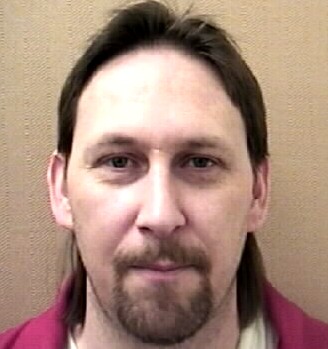
Carl Moseley
Murderer Brian Kevin Rosenfeld
Murderer · USA · 1985
Brian Kevin Rosenfeld Brian Kevin Rosenfeld was sentenced to three concurrent l…
23 victims
Brian Kevin Rosenfeld
Murderer · USA · 1985
Brian Kevin Rosenfeld Brian Kevin Rosenfeld was sentenced to three concurrent l…
23 victims
 Russell Ellwood
Murderer · USA · 1991
Russell Ellwood was a former taxi driver. Authorities suspected him of killing…
20 victims
Russell Ellwood
Murderer · USA · 1991
Russell Ellwood was a former taxi driver. Authorities suspected him of killing…
20 victims
 Robert Martines Perez
Murderer · USA · 1994
Name: Robert Martines Perez · Other name used in proceedings: Robert Martinez P…
15 victims
Robert Martines Perez
Murderer · USA · 1994
Name: Robert Martines Perez · Other name used in proceedings: Robert Martinez P…
15 victims
 Billy Frank Vickers
Murderer · USA · 1993
Billy Frank Vickers Vickers was executed by lethal injection in Texas on Januar…
14 victims
Billy Frank Vickers
Murderer · USA · 1993
Billy Frank Vickers Vickers was executed by lethal injection in Texas on Januar…
14 victims
 Gwynne Evans
Murderer · United Kingdom · 1964
Gwynne Evans was convicted for the capital murder of John Alan West, committed…
1 victim
Gwynne Evans
Murderer · United Kingdom · 1964
Gwynne Evans was convicted for the capital murder of John Alan West, committed…
1 victim
 Seburt Nelson Connor
Murderer · USA · 1992
Seburt Nelson Connor was charged and tried in the Eleventh Judicial Circuit, Da…
2 victims
Seburt Nelson Connor
Murderer · USA · 1992
Seburt Nelson Connor was charged and tried in the Eleventh Judicial Circuit, Da…
2 victims
 William Dillard Powell
Murderer · USA · 1991
William Dillard Powell (also known as William Dillard “Bugsy” Powell) was execu…
1 victim
William Dillard Powell
Murderer · USA · 1991
William Dillard Powell (also known as William Dillard “Bugsy” Powell) was execu…
1 victim
 James Harrison
Murderer · USA · 1989
James P. Harrison was sentenced to death on December 14, 1991. On January 17, 1…
3 victims
James Harrison
Murderer · USA · 1989
James P. Harrison was sentenced to death on December 14, 1991. On January 17, 1…
3 victims
 Gary Lawrence McKinley
Murderer · New Zealand · 1986
Gary Lawrence McKinley was sentenced to life imprisonment in June 1987 after th…
1 victim
Gary Lawrence McKinley
Murderer · New Zealand · 1986
Gary Lawrence McKinley was sentenced to life imprisonment in June 1987 after th…
1 victim
 David Hebbert Hard
Homicide · USA · 1984
Dorothy Biggs was a resident of the tiny Lincoln County community of Eddyville.…
1 victim
David Hebbert Hard
Homicide · USA · 1984
Dorothy Biggs was a resident of the tiny Lincoln County community of Eddyville.…
1 victim
- Gender
- male
- Country
- USA
- Location
- North Carolina, USA
- Date of birth
- October 22, 1965
- Age at first offence
- 26
- Characteristics
- rape
- Victim profile
- Dorothy Louise Woods Johnson, 35 / Deborah Jane Henley, 38
- Method of murder
- Strangulation
- Date(s) of murder
- April 12/July 25, 1991
- Years active
- 1991
- Date of arrest
- —
- Status
-
Sentenced to death
Sentenced to death on February 9, 1993
Case record: Carl Moseley
Background
Carl Moseley was tried for first-degree murder. The State’s evidence included two separate killings involving the same defendant, and it included testimony and evidence from each case.
The offence
Murder of Deborah Henley
The State’s evidence showed that Moseley met Deborah Henley at the SRO dance club in Winston-Salem on the evening of 25 July 1991. After the club closed, Moseley offered Ms. Henley a ride to her home. There was testimony that Moseley and Ms. Henley left the club together at approximately 1:30 a.m. and that Moseley was next seen at approximately 2:45 a.m. Ms. Henley’s nude body was later found partially concealed in a field approximately five miles from the SRO club. The wounds on Ms. Henley’s body revealed that she had been savagely beaten, stabbed, sexually assaulted with a blunt instrument, and manually strangled.
Murder of Dorothy Louise Woods Johnson
The State’s evidence showed that Dorothy Louise Woods Johnson went to the SRO, a country-western dance club in Winston-Salem, on the evening of 12 April 1991. Ms. Johnson lived with her parents, and when she did not return home, her parents called the Sheriff’s Department and reported her missing. Moseley was also at the SRO on 12 April 1991, and he and Ms. Johnson had talked and danced together during the evening. Ms. Johnson was last seen alive at the SRO Club. Her naked body was found the next day, 13 April 1991, lying beside a secluded cul-de-sac in a new development known as Friendship Forest, in a rural area of Stokes County. She had been savagely beaten with a blunt force object, cut with a sharp object, sexually assaulted with a blunt instrument, raped, and manually and ligaturally strangled.
Investigation
In Moseley’s trial involving Ms. Johnson, evidence included DNA testing and testimony about similarities between the injuries sustained by Ms. Johnson and Ms. Henley. Dr. Pat Lantz performed an autopsy on Ms. Johnson in the case at bar and supervised the autopsy of Deborah Henley in a homicide investigation in Forsyth County. During the Forsyth County trial, Dr. Lantz testified that there were similarities in the deaths of Ms. Johnson and Ms. Henley due to the nature and location of the injuries, and he used slides comparing the wounds. He also testified that some of the wounds inflicted on the bodies of both victims were torture wounds.
Special Agent Budzynski performed DNA analysis using blood samples taken from Ms. Johnson, Moseley, and two other individuals, Danny Cannady and William Mabe. Budzynski testified that DNA analysis excluded Mr. Cannady and Mr. Mabe as the source of the semen found in Ms. Johnson’s vagina.
Trial
Venue motion and pretrial matters
Moseley argued that the trial court erroneously denied his motion for a change of venue, contending he could not receive a fair trial in Stokes County due to extensive media coverage. He supported his pretrial motion and supplemental motion with affidavits from two local television stations detailing broadcasts in the four months prior to trial covering either the case or Moseley’s conviction of first-degree murder that occurred in neighboring Forsyth County. He also introduced copies of numerous newspaper articles from the Winston-Salem Journal and other area papers dealing with this case and his earlier conviction in Forsyth County. He argued that facts from the Forsyth County case likely would be introduced under North Carolina Evidence Rule 404(b), and that the extensive media coverage of the earlier Forsyth County trial made a fair trial impossible in Stokes County.
The State presented testimony from Mike Bennett, the Stokes County Sheriff Mike Joyce, the Stokes County Clerk of Superior Court Wic Southern, and Stokes County Sheriff Deputy James Joyce, each giving their opinion that Moseley could receive a fair and impartial trial in Stokes County. The trial court denied Moseley’s pretrial motion.
During jury selection, the trial court permitted individual voir dire on the media exposure issue. The trial court made findings of fact that the seated jurors and alternate jurors were not subject to bias or pretrial publicity, except that a single juror was excused for pretrial publicity, and that the remaining jurors expressed clear certainty that they could strike pretrial publicity from consideration and base their verdict solely on evidence and law presented at trial.
On appeal, the court held that the trial court did not err in denying the change of venue motion. The affidavits indicated only that one television station covered developments in Moseley’s Forsyth County trial approximately fifty times and the other station covered developments eleven times, and the affidavits did not suggest the televised coverage was inflammatory. The court also noted that factual news accounts regarding commission of a crime and pretrial proceedings do not, by themselves, warrant a change of venue.
Motion for funds to employ a pathologist
Moseley argued the trial court erred in denying his motion for funds to employ a pathologist to assist in his defense. He noted Dr. Pat Lantz performed the autopsy on the body of Ms. Johnson in the case at bar and supervised the autopsy of Deborah Henley in the Forsyth County homicide investigation. Dr. Lantz’s Forsyth County testimony included similarities between the deaths of the two victims and slides comparing the wounds, and he testified that some wounds were torture wounds. Moseley argued that these similarities were critical to admission of Ms. Henley’s murder evidence under Rule 404(b) in his trial for Ms. Johnson’s murder, and that a pathologist was needed to review the autopsies and the slides to determine whether the wounds were similar, assess whether the wounds were torture wounds, and analyze time of death.
The trial court summarily denied the motion, and on appeal the higher court held there was no error in denying the motion. It found Moseley did not demonstrate a sufficient showing of particularized need to warrant expert assistance and held that the assistance sought would have been of little, if any, value, with time of death not treated as a material issue.
Voir dire limitations
Moseley asserted error in the trial court’s limitation of questions during voir dire. He argued the court unconstitutionally limited his inquiries about juror exposure to pretrial publicity and the content of information heard, preventing development of a basis for challenges for cause and inhibiting intelligent exercise of peremptory challenges. He also argued the trial court actions violated statutory rights under N.C.G.S. § 15A-1214.
The court held there was no error. It explained that Morgan v. Illinois entitled a defendant to inquire into jurors who would always impose death following conviction, and it concluded Morgan did not create a constitutional right to ask voir dire questions about specifics of juror exposure to pretrial publicity and content. It further found the trial court did not abuse its discretion in curtailing Moseley’s voir dire inquiries. It addressed the voir dire of specific prospective jurors including Holder (Robin), Montgomery, Willard, Inman, Boles, Barlow, Martin, and Thomas.
The court also addressed challenges for cause. It found Moseley failed to preserve any claim that jurors should have been excused for views impairing their ability to follow instructions and the law, and in any event concluded the challenge for cause as to juror Slate was properly denied.
Guilt-innocence phase closing arguments
Moseley contended the trial court committed prejudicial error by refusing to intervene ex mero motu during prosecutors’ closing arguments at the guilt-innocence phase and to preclude misstatements of applicable law. He argued prosecutors impermissibly defined “reasonable doubt” and “the presumption of innocence” in a way that undermined his constitutional guarantees and that prosecutors repeatedly referred to State evidence as uncontradicted and to the defense’s failure to present witnesses. He conceded he did not object to the “reasonable doubt” and “presumption of innocence” arguments, and he objected once to the “uncontradicted” argument.
The court held there was no reversible error and found the prosecutors’ arguments were not so grossly improper as to require intervention ex mero motu.
Admission of witness Carter testimony
Moseley argued the trial court erred in allowing Chuck Carter to testify that Carter contacted law enforcement after seeing on television that Moseley had been charged with the murder of Deborah Henley in Forsyth County. Chuck Carter testified he saw Moseley and Ms. Johnson dancing together at the SRO around midnight on the night Ms. Johnson disappeared (12 April 1991) and that he called law enforcement officers to report seeing Ms. Johnson with Moseley. The challenged testimony included the following exchanges:
Q Tell us why and when this was that you called. A When - - [DEFENDANT]: Objection. THE COURT: Objection overruled. Q You may answer. A When I seen the second murder - - [DEFENDANT]: Objection. THE COURT: Objection overruled. Q You may answer. A When I seen the second murder that had, someone had - - I had kept up with someone had left the SRO. And showed they had charged the defendant, and showed his picture on television. I recognized him and realized he was the one that was with Ms. Johnson, and proceeded to call Crime Stoppers. Q Do you know what time length had passed between the time of 12th of April and when you saw him on T.V.? [DEFENDANT]: Objection. THE COURT: Objection overruled. A Roughly three months.
The court held this testimony was properly admitted as relevant and not unfairly prejudicial, concluding it explained why Carter did not contact police until three months after the murder.
Excluded testimony about an unnamed black-haired man
Moseley argued the trial court erred in refusing to admit testimony that Ms. Johnson was assaulted by someone other than Moseley on the night she was murdered. During cross-examination of Mark Lamb, defense counsel attempted to elicit testimony that a black-haired man approached Ms. Johnson at the SRO, pushed her, and told her, “You better stop or I'm going to get you.” The prosecutor objected, and the trial judge sustained the objection after a hearing. In an offer of proof, Lamb testified that Ms. Johnson indicated the black-haired man was the boyfriend of her cousin, that the man thought Ms. Johnson was trying to break up his relationship with her cousin, and that Ms. Johnson was frightened. The appellate court held the excluded testimony amounted to speculation and did not point directly to another perpetrator, and also concluded it was not inconsistent with Moseley’s guilt.
DNA evidence and “innocence of others”
Moseley argued the trial court erred in allowing Special Agent Budzynski to testify that DNA testing excluded two individuals as donors of semen found in Ms. Johnson’s body. The court held there was no error, distinguishing State v. England and concluding the DNA evidence linked Moseley to the semen found in Ms. Johnson.
Motion to dismiss and first-degree rape
At the close of the State’s evidence, Moseley moved to dismiss all charges. He presented no evidence and renewed the motion to dismiss at the close of all the evidence; the trial court denied both motions. Moseley argued the trial court erred in failing to dismiss first-degree rape because there was insufficient evidence that vaginal intercourse took place by force and against the will of the victim.
The appellate court held the evidence was sufficient to support the inference of force and against the will. It stated that fear, fright, or duress may take the place of actual physical force and concluded Ms. Johnson’s severe beating and testimony that she was alive during the beating supported an inference that she was forced and intimidated into intercourse against her will.
Jury instruction on flight
Moseley argued error in the trial court’s jury instruction on flight. The court instructed:
In this case, ladies and gentlemen, the state contends that the defendant fled. Evidence of flight may be considered by you together with all other facts and circumstances in this case in determining whether to combine circumstances to an admission or show a consciousness of guilt. However, proof of this circumstance is not sufficient in itself to establish the defendant's guilt. And further, this circumstance has no bearing on the question of whether the defendant acted with premeditation and deliberation. It must not be considered by you as evidence of premeditation or deliberation.
The appellate court held there was sufficient evidence to support instruction on flight.
Admission of Ms. Henley murder evidence under Rule 404(b)
Moseley argued the trial court erred in admitting evidence of Deborah Henley’s murder because the evidence failed Rule 403 balancing. The court held it was properly admitted under Rule 404(b) to show identity, plan, and a common modus operandi. It noted that both victims were last seen alive at the SRO club, that both bodies had similar wounds, that both died from strangulation, and that both had a foreign object forced into their genitalia. It also discussed that the naked bodies were found in a rural area and that the “signature” present in both murders included overkill. It concluded the probative value was not substantially outweighed by unfair prejudice and noted the trial court repeatedly gave limiting instructions.
Photographs and slides
Moseley argued constitutional error from redundant use of photographs and slides during guilt-innocence and sentencing, and improper use during closing arguments. The court held photographs could be introduced even if gory so long as they illustrated testimony and were not aimed solely at arousing the passions of the jury, and it found no abuse of discretion.
It addressed specifics of admitted exhibits: three photographs of Dorothy Johnson (one in life and two in death), five photographs of Deborah Henley (one in life and four in death), nine autopsy slides of Ms. Johnson, and two simultaneously shown carousels of comparative slides with twenty each of Ms. Johnson and Ms. Henley used during Dr. Lantz’s testimony to illustrate similarity of wounds.
It also addressed a claim that a slide of Ms. Henley’s genitalia was introduced to inflame the jury. The court held the slide was exhibited beside a slide of Ms. Johnson’s genital region to demonstrate similarities and rejected the argument.
Admission of prior acts: Melissa Dawson
The court addressed evidence admitted under Rule 404(b) involving Moseley’s ex-wife, Melissa Dawson. Dawson testified that during their marriage, Moseley anally assaulted her with his penis and by inserting foreign objects into her rectum. The sexual conduct began in late 1989 and ended in October 1990. The trial court admitted the testimony to demonstrate a plan, scheme, or design to anally assault Ms. Johnson.
The appellate court held the evidence was probative of Moseley’s state of mind and plan at the time of Ms. Johnson’s assault and murder. It also held the testimony was sufficiently similar to be admissible and not overly prejudicial due to temporal proximity.
Admission of Denise Fletcher incident for motive
The court addressed evidence of Moseley’s assault and sexual assault of Denise Fletcher in June 1989 to show motive. Fletcher testified that she met Moseley, agreed to go riding with him, and that after kissing and resisting his advances, Moseley brandished a gun, ordered her to undress and perform fellatio, and during a struggle the gun fired injuring her finger. Fletcher testified he ordered her to wrap her finger in her underwear and get dressed, told her he knew she would report the attack and that he would be in trouble, and then took her home.
The trial judge made findings of fact that Moseley’s statement to Fletcher was substantial evidence from which a jury could infer Moseley was particularly aware that any victim might report him, and that such concerns provided motive for killing Ms. Johnson. The appellate court held there was no error.
Dr. Gregory Davis testimony about torture and overkill
Moseley argued that Dr. Gregory Davis, the pathologist who performed the autopsy on Deborah Henley, improperly testified that Henley’s wounds were torture wounds and that the number of wounds was characteristic of overkill. The appellate court held there was no error, relying on State v. Jennings. It found Dr. Davis did not testify that Henley was tortured by Moseley, but instead gave medical opinions consistent with torture and overkill, and it found the testimony properly fell within permissible expert medical conclusions rather than legal conclusions.
Jury verdicts
The jury found Moseley guilty of first-degree murder, first-degree sexual assault, and first-degree rape. After a capital sentencing proceeding, the jury recommended that Moseley receive the death penalty for the murder conviction.
Sentencing
Sentences imposed
Judge McHugh sentenced Moseley to death on the murder conviction. The court also imposed consecutive terms of life imprisonment for convictions for first-degree sexual assault and first-degree rape.
Prosecutors’ sentencing-phase closing arguments
Moseley argued the trial court erred in not intervening during prosecutors’ closing arguments during the sentencing phase. The court addressed multiple contentions, including alleged improper remarks about mitigating circumstances, arguments about victims and community sentiment, and other statements.
The appellate court held that certain prosecutorial remarks did not require intervention ex mero motu, and it overruled the assignments of error it addressed.
Allocution
Moseley argued he was not afforded the opportunity to speak to the sentencing jury after the court granted his motion for allocution. The court held Moseley did not have a constitutional, statutory, or common law right to make unsworn statements of fact to the jury at the conclusion of a capital sentencing proceeding and that, in any event, Moseley failed to remind the trial court of his wish to allocute at the appropriate stage.
Statutory aggravating circumstances
The jury found as separate statutory aggravating circumstances that:
- Moseley had been previously convicted of the felony of assault with a deadly weapon inflicting serious injury being a felony involving the use or threat of violence to the person.
- Moseley had been previously convicted of the felony of attempted second degree sexual offense being a felony involving the use or threat of violence to the person.
- The murder was committed while Moseley was engaged in the commission of a first degree sexual offense.
- The murder was committed while Moseley was engaged in the commission of a first degree rape.
- The murder was especially heinous, atrocious, or cruel.
- The murder for which Moseley stood convicted was part of a course of conduct in which he engaged in the commission of other crimes of violence against another person or persons.
The appellate court rejected arguments that some of the aggravating circumstances were redundant, concluding the evidence underlying each was distinct, and it also addressed the submission of aggravating circumstances tied to sexual offense and rape.
Limiting instructions on aggravating circumstances
Moseley argued the trial court erred in failing to give limiting instructions that the same evidence could not be used to find more than one aggravating circumstance. The appellate court agreed the trial court should have instructed the jury that it could not use the same evidence to find more than one circumstance, but it concluded that plain error relief was not warranted because sufficient independent evidence supported each aggravating circumstance.
Parole eligibility evidence
Moseley argued the trial court erred in denying his request to argue parole eligibility and to present evidence of the same to the jury. The appellate court rejected this argument, citing a policy prohibiting information concerning parole in capital cases.
Appeals
This matter reached the Supreme Court of North Carolina as an appeal as of right pursuant to N.C.G.S. § 7A-27(a). The Supreme Court held there was no error in either the guilt-innocence phase or the capital sentencing proceeding.
Outcome
The Supreme Court of North Carolina concluded that Moseley received a fair trial and a fair sentencing proceeding free of prejudicial error before an impartial judge and jury, that the conviction and aggravating circumstances were supported by the evidence, that the sentence of death was not imposed under the influence of passion, prejudice, or any other arbitrary factor, and that the sentence was not disproportionate.
The Supreme Court held: NO ERROR.
Other details
Identity and evidentiary links
The appellate opinion described evidence tying Moseley to the murder of Ms. Johnson, including that blood was detected on Moseley’s clothing, DNA analysis linking Moseley to semen found inside Ms. Johnson’s vagina, and testimony from the DNA expert that the chance of finding someone else unrelated to Moseley having a similar DNA profile in the white population was approximately one in 274 million for North Carolina. It also described uncontradicted evidence that he and both victims were last seen at the SRO Club and that both women were of small stature and suffered from speech impediments.
Victim names and body findings
Dorothy Louise Woods Johnson was last seen alive at the SRO Club and was found dead the next day, 13 April 1991, near a secluded cul-de-sac in the Friendship Forest development in rural Stokes County. Deborah Henley met Moseley at the SRO dance club on the evening of 25 July 1991 and was later found partially concealed in a field approximately five miles from the SRO club.
Photographs admitted
The opinion specifically listed photographs and slides admitted during the guilt-innocence phase and sentencing phase, including comparative carousels of slides used during Dr. Lantz’s testimony.
Spotted an error, or have more information about this case?