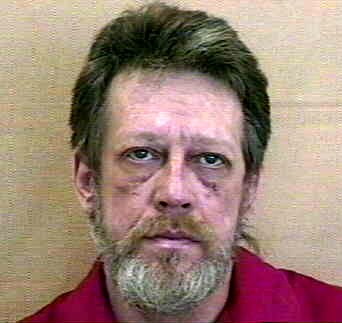
William Dillard Powell
Murderer Brian Kevin Rosenfeld
Murderer · USA · 1985
Brian Kevin Rosenfeld Brian Kevin Rosenfeld was sentenced to three concurrent l…
23 victims
Brian Kevin Rosenfeld
Murderer · USA · 1985
Brian Kevin Rosenfeld Brian Kevin Rosenfeld was sentenced to three concurrent l…
23 victims
 Russell Ellwood
Murderer · USA · 1991
Russell Ellwood was a former taxi driver. Authorities suspected him of killing…
20 victims
Russell Ellwood
Murderer · USA · 1991
Russell Ellwood was a former taxi driver. Authorities suspected him of killing…
20 victims
 Robert Martines Perez
Murderer · USA · 1994
Name: Robert Martines Perez · Other name used in proceedings: Robert Martinez P…
15 victims
Robert Martines Perez
Murderer · USA · 1994
Name: Robert Martines Perez · Other name used in proceedings: Robert Martinez P…
15 victims
 Billy Frank Vickers
Murderer · USA · 1993
Billy Frank Vickers Vickers was executed by lethal injection in Texas on Januar…
14 victims
Billy Frank Vickers
Murderer · USA · 1993
Billy Frank Vickers Vickers was executed by lethal injection in Texas on Januar…
14 victims
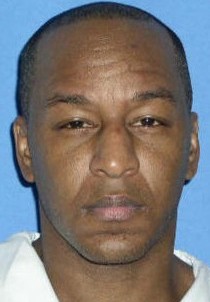 Kenneth Wayne Morris
Murderer · USA · 1991
Kenneth Wayne Morris was convicted of capital murder in connection with the mur…
1 victim
Kenneth Wayne Morris
Murderer · USA · 1991
Kenneth Wayne Morris was convicted of capital murder in connection with the mur…
1 victim
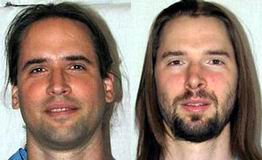 Helzer brothers
Spree killers · USA · 2000
Helzer brothers were sentenced to death in California for the killings of five…
5 victims
Helzer brothers
Spree killers · USA · 2000
Helzer brothers were sentenced to death in California for the killings of five…
5 victims
 Johan Kotze
Murderer · South Africa · 2012
Johan Kotze was sentenced to life in prison on July 16, 2013. · Johan Kotze — c…
1 victim
Johan Kotze
Murderer · South Africa · 2012
Johan Kotze was sentenced to life in prison on July 16, 2013. · Johan Kotze — c…
1 victim
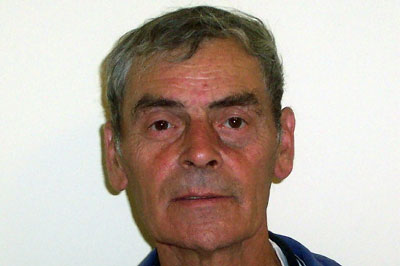 Peter Tobin
Serial killer · United Kingdom · 1991
Peter Britton Tobin (born 27 August 1946) was a convicted Scottish serial kille…
3 victims
Peter Tobin
Serial killer · United Kingdom · 1991
Peter Britton Tobin (born 27 August 1946) was a convicted Scottish serial kille…
3 victims
 Timothy Cockrell
Murderer · 1992
Timothy Cockrell was convicted of the murder of Sandra Deptawa and sentenced to…
1 victim
Timothy Cockrell
Murderer · 1992
Timothy Cockrell was convicted of the murder of Sandra Deptawa and sentenced to…
1 victim
 Misty Stoddard
Murderer · USA · 2012
Misty Stoddard was a 37-year-old resident of Sarasota County. She was the stepm…
1 victim
Misty Stoddard
Murderer · USA · 2012
Misty Stoddard was a 37-year-old resident of Sarasota County. She was the stepm…
1 victim
- Gender
- male
- Country
- USA
- Location
- Cleveland County, North Carolina, USA
- Date of birth
- September 25, 1946
- Age at first offence
- 45
- Characteristics
- robbery, drugs
- Victim profile
- Mary Gladden, 54 (convenience store clerk)
- Method of murder
- Beating with a tire iron
- Date(s) of murder
- October 31, 1991
- Years active
- 1991
- Date of arrest
- November 16, 1991
- Status
-
Executed
Executed by lethal injection in North Carolina on March 11, 2005
Case identification
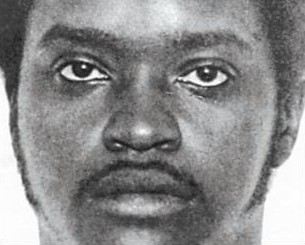
William Dillard Powell (also known as William Dillard “Bugsy” Powell) was executed by lethal injection in North Carolina on March 11, 2005.
Timeline
- October 27, 1991 — Mark Stewart, an employee of The Pantry, saw a tire tool behind the counter to the side of the cash register; the tool had lain there for approximately one year.
- October 31, 1991 — Mary Gladden was killed while working at The Pantry in Shelby.
- October 31, 1991 (about 3:15 a.m. to 3:30 a.m.) — Scott Truelove bought $5 worth of gasoline at The Pantry.
- October 31, 1991 (about 3:29 a.m.) — The cash register tape reflected a gasoline sale of $5.
- October 31, 1991 (about 3:35 a.m.) — The cash register tape reflected a no-sale.
- October 31, 1991 (about 4:15 a.m.) — Clarissa Epps stopped at The Pantry to buy gasoline and then found Mary lying in blood behind the counter.
- October 31, 1991 (4:26 a.m.) — Officer Mark Lee arrived at The Pantry in response to a radio dispatch.
- November 1, 1991 — Mark Stewart noticed the tire tool was missing when he worked.
- November 3, 1991 — Commander Dale Ledbetter prepared a photographic line-up; Truelove did not make an identification.
- November 16, 1991 — Scott Truelove identified Powell as the man from a photographic lineup.
- November 16, 1991 (about 4:00 p.m.) — Powell arrived at the police station and began being questioned by Commander Ledbetter and Lieutenant Cherka.
- April 29, 1993 — William Dillard Powell was sentenced to death in Cleveland County Superior Court.
- April 22, 1997 — Powell filed a motion for appropriate relief (MAR).
- March 7, 2005 (10:00 a.m.) — A media tour was scheduled for Monday, March 7 at 10:00 a.m. at Central Prison.
- March 9, 2005 — Governor Michael F. Easley denied clemency.
- March 10, 2004 — Governor Michael Easley denied clemency.
- March 10, 2004 — U.S. Supreme Court denied application for stay of execution and petition for writ of certiorari.
- March 9, 2004 — Powell’s petition for writ of certiorari and petition for writ of habeas corpus, along with the application for stay of execution, were denied by the Supreme Court of North Carolina.
- March 9, 2004 — Witnesses were named for Powell’s execution.
- January 10, 2005 — U.S. Supreme Court denied Powell’s petition for a writ of certiorari.
- January 24, 2005 — Correction Secretary Theodis Beck set March 11, 2005 as the execution date.
- February, March and April 2000 — Discovery hearings were conducted.
- June 2000 — An evidentiary hearing was conducted.
- June 27, 2001 — Both the MAR and amended MAR were denied.
- July 1, 1999 — The state court vacated the October 1998 order of dismissal and found Powell was entitled to an evidentiary hearing.
- October 15, 1998 — A motion was granted dismissing the MAR, and Powell moved to vacate that dismissal.
- October 1999 — The State Supreme Court denied the State’s petition for a writ of certiorari.
- December 19, 2002 — The State Supreme Court denied Powell’s petition for a writ of certiorari.
- March 11, 2005 (2:00 a.m.) — Execution was scheduled for 2:00 a.m. at Central Prison in Raleigh.
- March 11, 2005 (2:09 a.m.) — Powell was pronounced dead.
- March 11, 2005 (2:09 a.m.) — Correction system spokeswoman Pam Walker said Powell had declined to make a final statement.
- March 11, 2005 — Powell was executed at Central Prison in Raleigh, North Carolina.
- March 11, 2005 (5:30 p.m.) — Powell’s last meal was taken at 5:30 p.m. Thursday night.
- 1991 (Halloween) — The attempted robbery and subsequent killing occurred on Halloween in 1991.
- 1993 — Powell was convicted of first-degree murder under the felony murder rule and sentenced to death.
- 1995 — North Carolina Supreme Court affirmed Powell’s conviction and sentence of death.
The offence
William Dillard Powell attempted to rob a convenience store in Shelby unarmed in 1991. Mary Gladden, age 54, was a clerk at The Pantry in Shelby, North Carolina. She tried to impede the robbery and was beaten to death.
The events at The Pantry included:
- Clarissa Epps stopped at The Pantry at approximately 4:15 a.m., called out after waiting in vain for a clerk, and then saw Mary lying in blood behind the counter.
- Officer Mark Lee arrived at The Pantry at 4:26 a.m., ensured that all customers had left the store, and found Mary behind the counter lying on her back in a pool of blood with her head toward the cash register and her hands at her sides.
- Officer Mark Lee noticed injuries to Mary’s left eye and ear as well as other injuries to her head, and saw a one-dollar bill on the floor near Mary’s left foot and another on the counter.
- Dr. Stephen Tracey performed an autopsy and testified that Mary had numerous lacerations on her head, her skull was fractured in several places, her nose was broken, and her left eye had been displaced by a fracture to the bone behind it. Tracey testified that Mary’s brain had hemorrhaged, was bruised and lacerated in several places, and contained skull fragments. Tracey determined that blunt trauma to the head caused Mary’s death and that she died from the trauma before she lost a fatal amount of blood.
- Tracey concluded that human hands had not inflicted the wounds and surmised that the perpetrator used “a lug-nut wrench, a tire wrench, or possibly a pipe.”
Evidence about a weapon included testimony that a tire tool had been behind the counter and was missing after the murder:
- Mark Stewart testified that on October 27 he saw a tire tool behind the counter to the side of the cash register; it had lain there for approximately one year, was curved on one end with a round hole for a lug nut, and was split on the other end for hubcap removal.
- Stewart testified he noticed the tool was missing when he worked on November 1.
Investigation and identification
Powell was identified as the man in The Pantry from a photographic lineup:
- On November 3, 1991, Commander Dale Ledbetter prepared a photographic line-up that did not include Powell; Truelove did not make an identification.
- On November 16, 1991, Truelove identified Powell from a lineup containing thirty-two photographs.
A cash register tape and missing money were presented:
- Thomas Tucker testified he arrived sometime after 6:00 a.m. on October 31 and examined the cash register tape. The tape showed a gasoline sale of $5 at 3:29 a.m. and a no-sale at 3:35 a.m. Tucker testified that according to the tape, no transaction occurred between the $5 purchase and the no-sale.
- Tucker testified he opened the register at 6:22 a.m. at the direction of Captain Ledbetter to determine whether any money had been taken during the homicide, and he concluded approximately $48 was missing.
Arrest and police questioning
On November 16, 1991, Lieutenant Mark Cherka and Officer David Lail drove to Anthony’s Trailer Park to find Powell and bring him to the police station for questioning. Powell came out of a trailer, allowed Cherka to take four photographs of him, and agreed to accompany the officers to the police station as a possible suspect in the murder. The officers told him he did not have to leave because he was not under arrest at that time. They arrived at the police station at approximately 4:00 p.m., where Cherka began questioning Powell.
Powell refused to allow Cherka to tape record the interview, so Cherka made notes of what transpired after the interview ended.
Powell gave statements about events around the time of the killing and his drug and alcohol use:
- Powell stated that he had gone to sleep at around 4:00 a.m. on October 31 after drinking with Don Weathers and Powell’s girlfriend, Lori Yelton.
- Powell stated later that Yelton and Powell took Weathers to the hospital because he had cut himself during the previous night.
Powell’s interaction with Miranda rights and statements included:
- Ledbetter told Powell about Truelove’s identification and asked if Powell wanted an attorney. Powell stated that he had not killed anyone and did not want an attorney.
- Ledbetter advised Powell of Miranda rights and Powell signed a waiver.
- Ledbetter then asked, “Why did you kill her?”
- Powell answered, “[S]he slapped me and I went off on her.”
- Powell asked to speak to Ledbetter alone; Cherka left the room.
- Powell stated that she had slapped him, he had panicked, he had not intended to harm her, and he merely wanted the money from the cash register.
- Powell indicated he wanted to speak to Ledbetter off the record and asked Ledbetter to tear up the Miranda waiver form, which Ledbetter ripped into four pieces.
- At about 6:00 p.m., Powell asked for a lawyer, and one was contacted.
- Powell was arrested and taken into custody after he conferred with his lawyer.
Powell later testified about the waiver and drug effect:
- Powell testified he did not read the Miranda waiver form but signed it because he felt “agreeable” from cocaine he had ingested.
- On cross-examination, Powell admitted he had given Miranda warnings during his tenure in law enforcement and recited the warnings on the witness stand.
- Powell admitted he had not mentioned in his pretrial affidavit that Ledbetter proposed that they talk off the record.
Witness evidence and related testimony
Scott Truelove
Truelove testified he bought $5 worth of gasoline between 3:15 a.m. and 3:30 a.m. and stood near a rough-looking man with unkempt, shoulder-length hair, facial hair, and a tattoo on his left forearm. He later read about the murder and gave a description to Captain Ledbetter. On November 16, 1991, Truelove identified Powell as the man by picking him out of a photographic lineup.
Truelove’s statements about certainty included:
- Truelove said, “I’m 100% sure that's the man that was in The Pantry that night that I purchased gas.”
- Truelove stated that some individuals in the lineup had similarities to the person he saw in the store.
Truelove and witnesses also discussed a different person referred to as Rambo:
- Johnny Smith testified he spoke to Truelove about the murder and that Truelove said he had seen a man with red hair in The Pantry on the day of the murder.
- Truelove testified he knew Rambo and that the lineup from which he identified Powell contained a photograph of Rambo.
- Truelove never picked Rambo as the person he saw at The Pantry on October 31.
- Truelove testified he remembered having a conversation with Smith about becoming an uncle, and not about the murder.
Don Weathers and Lori Yelton
Don Weathers testified he, Powell, and Powell’s girlfriend, Lori Yelton, had been drinking “quite a bit” at Weathers’ apartment on the evening before the victim was murdered. Weathers testified he was cut with a knife so badly he required stitches.
Lori Yelton’s testimony included:
- Yelton began living with Powell in April 1991.
- Yelton used a gram of cocaine each day during the time she lived with Powell.
- Neither Yelton nor Powell worked during that time.
- Powell’s only source of income was disability income received on behalf of his son.
- That income stopped in August 1991 when the child began living with his mother.
- In September and October 1991, the electricity in Powell’s apartment was disconnected due to nonpayment, and Yelton and Powell often stayed at Weathers’ apartment.
- During that time period, Yelton and Powell used cocaine together every day.
- On the evening of October 30, 1991, they used cocaine all day until about 9:00 or 10:00 p.m. when their supply was exhausted.
Paul Barnard, called “Rambo,” and related statements
Billy Joe Sparks testified that sometime after the Gladden murder he had a conversation with Paul Barnard, who called himself Rambo. Sparks testified that during the conversation Rambo sniffed glue and both men drank beer, and that Rambo told Sparks he had killed a woman at a supermarket by beating her to death. Sparks testified Rambo died before Powell’s trial and Sparks did not tell police about Rambo’s statement until after Rambo’s death.
Officer James Glover testified on rebuttal:
- Glover testified Rambo claimed to be a Vietnam veteran and to have a black belt in karate, and neither claim was true.
- Glover testified that before his death Rambo had telephoned Glover and told him he had lied to Sparks about committing the murder.
- Glover testified Rambo told Sparks he had killed a woman only to maintain his street image.
Trial
Powell was convicted by a Cleveland County jury of first-degree murder under the felony murder rule. The underlying felony was robbery with a dangerous weapon.
At sentencing:
- The sentencing jury found one aggravating circumstance: that the murder was committed for pecuniary gain.
- The jury found no mitigating circumstances.
- The jury unanimously recommended that Powell be sentenced to death.
- The trial court sentenced Powell accordingly.
Sentencing and post-sentencing proceedings
- July 28, 1995 — The North Carolina Supreme Court affirmed Powell’s conviction and sentence of death.
- After affirmance, Powell pursued a petition for a writ of certiorari to the United States Supreme Court.
- The United States Supreme Court denied Powell’s petition for a writ of certiorari on January 10, 2005 (as reflected in the execution chronologies).
- Powell’s petition for certiorari and a petition for a writ of habeas corpus, along with an application for stay of execution, were denied by the Supreme Court of North Carolina on March 9, 2004.
- March 10, 2004 — Governor Michael Easley denied clemency, and the U.S.
Appeals
Direct appeal
In State v. Powell, 459 S.E.2d 219 (N.C. 1995), the North Carolina Supreme Court affirmed the first-degree murder conviction and death sentence and concluded that the death sentence was not disproportionate.
Federal habeas corpus
In Powell v. Lee, 282 F.Supp.2d 355 (4th Cir. 2003), the federal habeas petition was denied.
The habeas court’s rulings included:
- Counsel did not render deficient performance during the capital murder sentencing hearing.
- Powell was not entitled to a peremptory instruction on certain mitigating factors, so counsel was not deficient in failing to request instruction.
- The death sentence based on aggravating factor that the murder was committed for pecuniary gain did not violate the Eighth Amendment.
- The state’s pretrial disclosures satisfied Brady rights.
- Any error in admitting statements allegedly made “off the record” was harmless beyond reasonable doubt.
- The petition was denied.
Clemency and execution preparations
- The execution was scheduled for 2:00 a.m. at Central Prison in Raleigh. The media tour was scheduled for Monday, March 7 at 10:00 a.m., and was described as the only opportunity to photograph the execution chamber and deathwatch area before the execution.
- Easley denied clemency, concluding: “Having carefully reviewed the clemency petition, I conclude that there are no compelling reasons to invalidate the sentence recommended by the jury and affirmed by the courts,” Easley said.
Execution
On March 11, 2005, Powell was executed by lethal injection at Central Prison in Raleigh, North Carolina.
Powell declined to make a final statement. Witness accounts included that Powell told his sister through the double-paned glass that he loved her shortly before execution began, and then counted down from 99 before lethal injection proceeded.
Powell’s last meal was described as:
- A medium, thin-crust pizza with pepperoni, mushrooms and Canadian bacon
- A hamburger with mustard, chili and onions
- A 20-ounce Pepsi
Powell was pronounced dead at 2:09 a.m.
Other details
Personal details
- William Dillard Powell’s date of birth was September 25, 1946.
- At the time of the capital crime, Powell was 45 years old.
- At sentencing on April 29, 1993, he received the death sentence.
- Powell was a white male.
- Powell was honorably discharged from the Army and served as a volunteer with the rescue squad of the Shelby Fire Department, as described in the clemency and execution-related narratives.
- Powell’s lawyers described him as a caregiver to his autistic son.
Psychological and neurological testimony
Dr. Terrence Onischenko, an expert in psychology and neuropsychology, testified and performed comprehensive testing of Powell on 22 November 1992. The results showed impaired memory, problem-solving skills, and motor functions; he scored in the average range on other tests. Onischenko also testified Powell had an increased chance of developing Alzheimer’s disease and other organic diseases. Testimony indicated Powell’s abuse of cocaine and alcohol probably caused brain dysfunctions.
Character evidence described in sentencing
Powell’s evidence showed he was raised in a loving family, worked as a jailer and with the fire department, and was well-liked and not violent. Two jailers at the Cleveland County jail testified Powell adjusted well to life as an inmate and had caused no problems.
Last meal timing and meal description
Powell’s last meal was described as being taken at 5:30 p.m. Thursday night, consisting of a medium, thin-crust pizza with pepperoni, mushrooms and Canadian bacon, a hamburger with mustard, chili and onions, and a 20-ounce Pepsi.

Spotted an error, or have more information about this case?