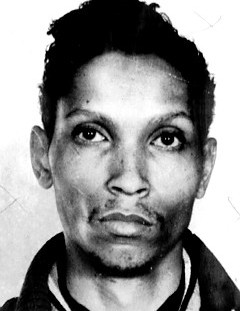
Winston Moseley
Murderer Ervil LeBaron
Murderer · USA · 1972
Ervil Morrell LeBaron (1925 to August 16, 1981) was the leader of a polygamous…
35 victims
Ervil LeBaron
Murderer · USA · 1972
Ervil Morrell LeBaron (1925 to August 16, 1981) was the leader of a polygamous…
35 victims
 Charles Manson
Murderer · USA · 1969
Charles Milles Manson (born November 12, 1934) was an American criminal and mus…
9 victims
Charles Manson
Murderer · USA · 1969
Charles Milles Manson (born November 12, 1934) was an American criminal and mus…
9 victims
 Dennis Duane Webb
Murderer · USA · 1973
Defendant: Dennis Duane Webb · Victims: John Rainwater and Lori Rainwater · Cou…
7 victims
Dennis Duane Webb
Murderer · USA · 1973
Defendant: Dennis Duane Webb · Victims: John Rainwater and Lori Rainwater · Cou…
7 victims
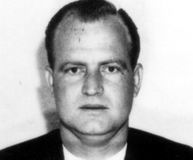 Gary Gene Tison
Murderer · USA · 1967
Gary Gene Tison was serving life sentences at the Arizona state prison. He had…
7 victims
Gary Gene Tison
Murderer · USA · 1967
Gary Gene Tison was serving life sentences at the Arizona state prison. He had…
7 victims
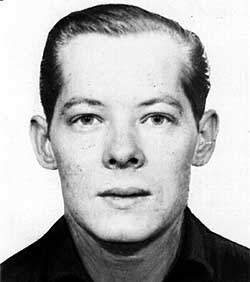 Richard Lee Tingle
Murderer · USA · 1968
Richard Lee Tingle was born out of wedlock in December 1940. He was raised by a…
6 victims
Richard Lee Tingle
Murderer · USA · 1968
Richard Lee Tingle was born out of wedlock in December 1940. He was raised by a…
6 victims
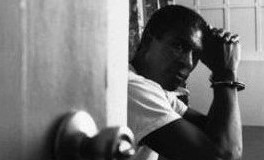 Edward Dean Kennedy
Murderer · USA · 1978
Edward D. Kennedy was listed as Edward Dean Kennedy (also styled as Edward D. K…
3 victims
Edward Dean Kennedy
Murderer · USA · 1978
Edward D. Kennedy was listed as Edward Dean Kennedy (also styled as Edward D. K…
3 victims
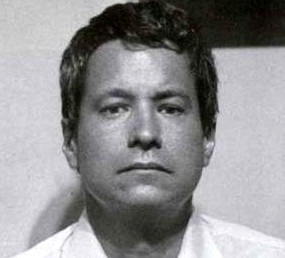 Robert Joseph Zani
Serial killer · USA · 1967
Robert Joseph Zani Current characteristics listed included: Parricide - Robberi…
6 victims
Robert Joseph Zani
Serial killer · USA · 1967
Robert Joseph Zani Current characteristics listed included: Parricide - Robberi…
6 victims
 Melinda Loveless
Homicide · USA · 1992
Defendant: Melinda Loveless Victim: Shanda Renee Sharer Shanda Renee Sharer was…
1 victim
Melinda Loveless
Homicide · USA · 1992
Defendant: Melinda Loveless Victim: Shanda Renee Sharer Shanda Renee Sharer was…
1 victim
 Freddie Lee Webb
Murderer · USA · 1985
Freddie Lee Webb was executed by lethal injection in Texas on March 31, 1994. W…
1 victim
Freddie Lee Webb
Murderer · USA · 1985
Freddie Lee Webb was executed by lethal injection in Texas on March 31, 1994. W…
1 victim
 Gerald Tigner
Murderer · USA · 1992
Gerald Wayne Tigner was convicted of the capital murders of Michael Watkins and…
3 victims
Gerald Tigner
Murderer · USA · 1992
Gerald Wayne Tigner was convicted of the capital murders of Michael Watkins and…
3 victims
 Adele Craven
Murderer · USA · 2000
Adele Craven married Stephen Craven, an airline pilot, in 1989 after meeting wh…
1 victim
Adele Craven
Murderer · USA · 2000
Adele Craven married Stephen Craven, an airline pilot, in 1989 after meeting wh…
1 victim
- Gender
- male
- Country
- USA
- Location
- Queens, New York, USA
- Date of birth
- March 2, 1935
- Age at first offence
- 28
- Characteristics
- rape
- Victim profile
- Barbara Kralik, 15 / Annie May Johnson, 24 / Catherine "Kitty" Genovese, 28
- Method of murder
- St abbing with knife / Shooting
- Date(s) of murder
- 1963 - 1964
- Years active
- 1963–1964
- Date of arrest
- April 1, 1964
- Status
-
Sentenced to death
Sentenced to death on June 15, 1964; reduced to an indeterminate sentence/lifetime imprisonment on June 1, 1967
Overview
Winston Moseley was convicted in the murder of Catherine “Kitty” Genovese and was sentenced to death. The sentence was later reduced to an indeterminate sentence/lifetime imprisonment.
People involved
- Catherine “Kitty” Genovese — victim; bar manager; stabbed to death in Queens, New York, on March 13, 1964
- Barbara Kralik — victim; 15 years old; stabbed in her home on July 20, 1963
- Ann Johnson — victim; 24 years old; shot and then burned to death on February 29; the events were described as occurring two weeks before the Genovese attack made headlines in New York
- Winston Moseley — perpetrator; 29-year-old business machine operator at the time of the Genovese case confession; married with two children; owned a home at 133-19 Sutter Avenue, South Ozone Park, Queens
- Alvin L. Mitchell — suspect in the Kralik slaying; 10-year-old; was charged and later went to trial later in the month
- Joseph Fink — witness; was aware she was stabbed in the first attack
- Karl Ross — witness; called the police after the second attack
- Frederick M. Lussen — Assistant Chief Inspector in charge of the borough’s detectives
- Martin Gansberg — reported the events in a New York Times article
- A. M. Rosenthal — metropolitan editor at the New York Times in 1964 who edited the article
- Sandra Zahler — later victim mentioned in aftermath context (beaten to death early Christmas morning in 1974)
Timeline
- July 20, 1963 — Barbara Kralik, 15, was stabbed in her home
- February 29, 1964 — Ann Johnson was shot and then burned to death
- March 13, 1964 — Catherine “Kitty” Genovese was stabbed to death near her Queens apartment building
- April 2 — Winston Moseley confessed to the murders of Catherine Genovese and two other female victims in Queens
- June 11, 1964 — Winston Moseley was convicted of first-degree murder in the Genovese case
- June 15, 1964 — announcement of his death sentence
- June 23, 1964 — Winston Moseley repeated his confessions from the witness stand during Alvin Mitchell’s trial; jurors were unable to reach a verdict
- June 1, 1967 — the death sentence was reduced to an indeterminate sentence/lifetime imprisonment
- March 11, 2008 — parole was denied for a thirteenth time
- March 13, 2008 — Winston Moseley returned for another parole hearing, and it was denied
- 2010 — he would be eligible to go up for parole again
- 1984 — the reporter John Melia aired doubts about whether details were exaggerated
- 1995 — Joe Sexton alluded to doubts in a Times article
The offence
Catherine “Kitty” Genovese (Queens)
Catherine “Kitty” Genovese was returning home from her job as manager of a bar in Hollis. She parked her red Fiat in a lot adjacent to the Kew Gardens Long Island Railroad Station, facing Mowbray Place. She started to walk to the entrance of her apartment at 82-70 Austin Street in a Tudor building with stores on the first floor and apartments on the second; the entrance to the apartment was in the rear of the building because the front was rented to retail stores.
Genovese noticed a man at the far end of the lot near a seven-story apartment house at 82-40 Austin Street. She halted, then headed up Austin Street toward Lefferts Boulevard, where there was a call box to the 102nd Police Precinct in nearby Richmond Hill. She got as far as a street light in front of a bookstore before the man grabbed her.
She screamed: “Oh, my God, he stabbed me! Please help me! Please help me!” A man called down from one of the upper windows: “Let that girl alone!” The assailant looked up at him, shrugged, and walked down Austin Street toward a white sedan.
Genovese struggled to her feet. The killer returned and stabbed her again. She shrieked: “I’m dying!” Windows were opened and lights went on in many apartments. The assailant got into his car and drove away. Genovese staggered to her feet as a city bus passed. The assailant returned.
Genovese had crawled to the back of the building at 82-70 Austin Street. The killer tried the first door and she was not there. At the second door, 82-62 Austin Street, he saw her slumped on the floor at the foot of the stairs. He stabbed her a third time—fatally.
It was 3:50 by the time police received their first call, from a neighbor of Genovese. Police and first responders arrived within two minutes. The only persons on the street were described as a 70-year-old woman and another woman. A neighbor who called after deliberation said he had phoned a friend in Nassau County for advice and then crossed the roof to the elderly woman’s apartment to get her to make the call. He told police: “I didn’t want to get involved.”
The sequence of attacks was described as taking place over about a 35-minute period, with police stating the assailant had three chances to kill her during that time and had returned twice to complete the job.
Later context also described additional attack details, including attempts to rape her in a foyer and further stabbing, with the attacks spanning approximately half an hour.
Barbara Kralik (Kralik slaying)
Barbara Kralik was stabbed in her home on July 20, 1963.
During the Kralik case, the police were holding Alvin L. Mitchell, who was said to have confessed to that slaying. Prosecutors refused to cancel Mitchell’s trial on the basis of Moseley’s confession. The account said Mitchell did not remember stabbing Kralik, but he thought he might have punched her several times.
Ann Johnson (Johnson slaying)
Ann Johnson was shot and then burned to death on February 29. The event was described as occurring two weeks before the Genovese attack made headlines in New York.
Investigation
The murder was widely discussed, including reactions of witnesses who watched and did not call the police. In the neighborhood, people expressed sentiments about not wanting to be involved.
Assistant Chief Inspector Frederick M. Lussen, in charge of the borough’s detectives and described as a veteran of 25 years of homicide investigations, said:
“As we have reconstructed the crime,”
“the assailant had three chances to kill this woman during a 35-minute period. He returned twice to complete the job. If we had been called when he first attacked, the woman might not be dead now.”
Police stressed how simple it would have been to contact them. One detective said: “A phone call would have done it.” Police may have been reached by dialing “0” for operator or “SPring 7-3100.”
Arrest
Six days later, police arrested Winston Moseley and charged him with homicide.
Confessions and psychiatric observation
When questioned by police, Moseley also said he had slain Ann Johnson on February 29 and Barbara Kralik last July. Following his committal to Kings County Hospital for psychiatric observation, a defense attorney announced plans to plead his client “guilty by reason of insanity,” but the prosecution faced problems with its case.
Moseley’s confessions were repeated at his witness-stand testimony, including during Alvin Mitchell’s trial.
Trial
Genovese case
Moseley was convicted of first-degree murder in the Genovese case on June 11, 1964. Four days later, announcement of his death sentence was greeted by applause from courtroom spectators.
Mitchell trial (Kralik case)
Alvin Mitchell went to trial later that month. Moseley repeated his confessions from the witness stand on June 23, and jurors were unable to reach a verdict in the case.
Sentencing
Winston Moseley was sentenced to death. The sentence was reduced to an indeterminate sentence/lifetime imprisonment on June 1, 1967.
The New York Court of Appeals found that Moseley should have been able to argue that he was “medically insane” at the sentencing hearing when the trial court found that he had been legally sane.
Appeals
The material described that the death sentence reduction followed findings by the New York Court of Appeals.
Outcome
Moseley’s death sentence was reduced to an indeterminate sentence/lifetime imprisonment on June 1, 1967.
Aftermath
Moseley had parole denials, including denial of parole a thirteenth time on March 11, 2008. He returned for another parole hearing on March 13, 2008, and it was denied. He would be eligible to go up for parole again in 2010.
The material stated that Moseley remained in prison after being denied parole a thirteenth time on March 11, 2008, and that the previous week he had turned 72 years old.
Genovese’s brother, Vincent Genovese, was described as being unaware of the March 13 hearing until contacted by Daily News reporters. He reportedly never “recovered from the horror” of his sister’s murder. He said: “This brings back what happened to her”, and “the whole family remembers”.
The article context also mentioned Sandra Zahler, described as being beaten to death early Christmas morning in 1974 in an apartment of the building which overlooked the site of the Genovese attack, with neighbors said to have heard screams and “fierce struggles” but did nothing.
Other details
Additional criminal history and prison incidents (as described)
The material described that Moseley participated in the later Attica Prison riots.
It also described that in 1968, during a trip to a Buffalo, New York hospital for surgery, Moseley overpowered a guard and beat him up to the point that his eyes were bloody. He then took a bat and swung it at the closest person to him and took five hostages, raping one of them before he was recaptured after a two-day manhunt.
Public reaction and commentary (quoted items preserved)
Neighbors voiced the sentiment that became a grim refrain: “I didn’t want to get involved.”
A neighbor later described a thought process about calling the police, saying:
- “We thought it was a lovers’ quarrel.”
- “Frankly, we were afraid.”
- “I didn’t want my husband to get involved.”
- “I don’t know.”
- “I was tired.” “I went back to bed.”
A witness account included:
- “Let that girl alone!”
A man called after deliberation told police: “I didn’t want to get involved.”
A remark attributed to A. M. Rosenthal included:
“In a story that gets a lot of attention, there’s always somebody who’s saying, ‘Well, that’s not really what it’s supposed to be,’” and: “There may have been 38, there may have been 39, but the whole picture, as I saw it, was very affecting.”
A parole-related defense included:
“For a victim outside, it’s a one-time or one-hour or one-minute affair, but for the person who’s caught, it’s forever.”
Popular culture references (as described)
The material stated:
- In 1975, ABC broadcast the TV movie Death Scream based on the Kitty Genovese case.
- In the 1986–1987 graphic novel Watchmen, Kitty Genovese was portrayed as having ordered a dress with black and white shifting, symmetrical shapes, leading to a mask and vigilante actions by Walter Kovacs.
- In Dean R. Koontz’s 1987 book Twilight Eyes, the Kitty Genovese murder was referenced as being the work of Goblins.
- In the opening of the film The Boondock Saints, the case was used in a sermon, including the quote: “And I am reminded on this Holy Day of the sad story of Kitty Genovese. As you all may remember, A long time ago, almost 30 years ago, this poor soul cried out for help, time and time a gain, but no person answered her calls. Though many saw, no one so much as called the police. They all just watched as Kitty was being stabbed to death in broad daylight. They watched as her assailant walked away. Now we must all fear evil men. But there is another kind of evil which we must fear most, and that is the indifference of good men.”
- The murder was referenced with irony in a Phil Ochs song about apathy, “Outside of a Small Circle of Friends”.
- Kitty Genovese’s story was cited in the Latter-day Saint book The Miracle of Forgiveness as an example of committing a sin by failing to do something right, rather than actively doing something wrong.
- The case was referenced in the Latter-day Saint book The Miracle of Forgiveness and in Hortense Calisher’s short story “The Scream on Fifty-seventh Street.”
- The 1996 episode of Law & Order entitled “Remand” was based on the case.
- In the Spike Lee movie Summer of Sam, the main characters briefly mentioned the Kitty Genovese murder after talking about the S.O.S. murders.
- In Case Studies (BBC radio series), psychologist Claudia Hammond re-investigated the case with regard to studies into the bystander effect, in an episode broadcast 7 May, 2008.
- In the Nip/Tuck Season 2 episode 7 titled “Naomi Gaines,” a fake appointment was made under the name Kitty Genovese referencing the fact she was a victim.
- Dorothy Uhnak’s 1985 novel Victims was based on the Genovese murder.
- The November 1965 episode of Perry Mason, entitled “The Case of the Silent Six,” started with an assault ignored by six neighbors.
Spotted an error, or have more information about this case?