
David Mulcahy
Serial killer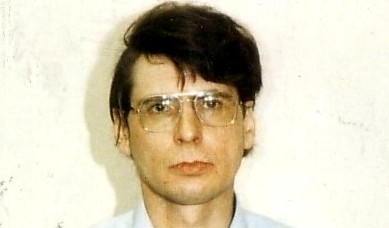 Dennis Nilsen
Serial killer · United Kingdom · 1978
Dennis Andrew Nilsen was born on November 23, 1945. He lived in London. He was…
16 victims
Dennis Nilsen
Serial killer · United Kingdom · 1978
Dennis Andrew Nilsen was born on November 23, 1945. He lived in London. He was…
16 victims
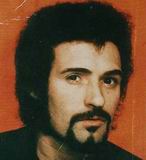 Peter Sutcliffe
Serial killer · United Kingdom · 1975
Peter William Sutcliffe (born 2 June 1946) was an English serial killer dubbed…
13 victims
Peter Sutcliffe
Serial killer · United Kingdom · 1975
Peter William Sutcliffe (born 2 June 1946) was an English serial killer dubbed…
13 victims
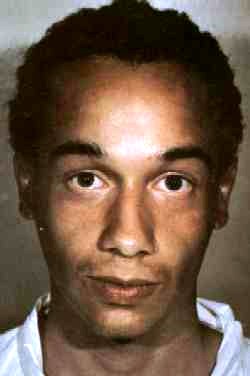 Kenneth Erskine
Serial killer · United Kingdom · 1987
Kenneth Erskine (born 1962) was an English serial killer known as the “Stockwel…
7 victims
Kenneth Erskine
Serial killer · United Kingdom · 1987
Kenneth Erskine (born 1962) was an English serial killer known as the “Stockwel…
7 victims
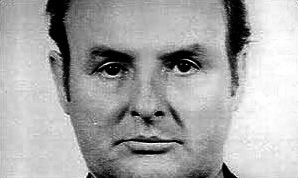 Archibald Hall
Serial killer · United Kingdom · 1977
Archibald Hall was born as Archibald Thompson Hall in Glasgow on 17 June 1924.…
5 victims
Archibald Hall
Serial killer · United Kingdom · 1977
Archibald Hall was born as Archibald Thompson Hall in Glasgow on 17 June 1924.…
5 victims
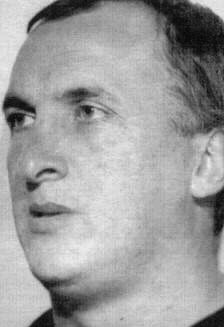 Colin Ireland
Serial killer · United Kingdom · 1993
Name: Colin Ireland · Also known as / tabloid name: London's "Gay Slayer" · Cri…
5 victims
Colin Ireland
Serial killer · United Kingdom · 1993
Name: Colin Ireland · Also known as / tabloid name: London's "Gay Slayer" · Cri…
5 victims
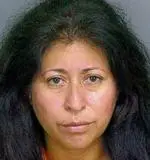 Carmen Montelongo
Murderer · USA · 2011
Carmen Montelongo was a Riverside woman who was convicted of first-degree murde…
1 victim
Carmen Montelongo
Murderer · USA · 2011
Carmen Montelongo was a Riverside woman who was convicted of first-degree murde…
1 victim
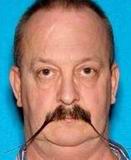 William Clyde Gibson
Serial killer · USA · 2002
October 26, 2013 — A jury in New Albany found William Clyde Gibson guilty of th…
3 victims
William Clyde Gibson
Serial killer · USA · 2002
October 26, 2013 — A jury in New Albany found William Clyde Gibson guilty of th…
3 victims
 James Otto Earhart
Murderer · USA · 1987
James Otto Earhart · May 4, 1987 — Earhart visited the Kirtland home in respons…
1 victim
James Otto Earhart
Murderer · USA · 1987
James Otto Earhart · May 4, 1987 — Earhart visited the Kirtland home in respons…
1 victim
 Theodore Rodgers
Murderer · USA · 2001
Theodore Rodgers was sentenced to death on June 16, 2004 for the murder of his…
1 victim
Theodore Rodgers
Murderer · USA · 2001
Theodore Rodgers was sentenced to death on June 16, 2004 for the murder of his…
1 victim
- Gender
- male
- Country
- United Kingdom
- Location
- North London, England, United Kingdom
- Date of birth
- 1959
- Age at first offence
- 26
- Characteristics
- serial rapist, rape, domestic violence, drugs
- Victim profile
- Alison Day, 19 / Maartje Tamboezer, 15 / Anne Lock, 29
- Method of murder
- Strangulation
- Date(s) of murder
- 1985 - 1986
- Years active
- 1985–1986
- Date of arrest
- February 3, 1999
- Status
-
Life imprisonment
Sentenced to three life sentences, with a 30-year recommendation, on February 1, 2001
Case record: David Mulcahy
David Mulcahy (born 1959) was a British serial rapist and convicted murderer who attacked numerous women at railway stations in south England through the 1980s. He was described as one of the “Railway Rapists” and “Railway Killers.” John Duffy and David Mulcahy were known as the Railway Rapists and the Railway Killers; the press also coined the attacker names “Railway Rapist” and later “Railway Killer.”
Mulcahy was identified as Duffy’s accomplice, and police treated the two men’s crimes as linked.
Timeline
- February 1, 2001 — Mulcahy was sentenced to three life sentences, with a 30-year recommendation.
- February 3, 1999 — Mulcahy was arrested.
- 1998 — Duffy broke his silence and implicated Mulcahy; police made use of DNA testing and re-examined evidence.
- February 1988 — Duffy went on trial and was convicted of two murders and four rapes.
- July 1985 — Duffy and Mulcahy were first interrogated by police regarding a series of rapes in north London.
- 29 December 1985 — Alison Day, 19, was dragged off a train at Hackney Wick station, repeatedly raped, and strangled with a piece of string.
- 17 April 1986 — Maartje Tamboezer, 15, was raped in West Horsley; her body was set on fire.
- 18 May 1986 — Anne Lock, 29, was abducted and murdered as she dismounted a train in Brookmans Park, Hertfordshire.
- 8 August 1996 — A different rapist, Ted Biggs, attacked on near Hampstead Heath, prompting operational links through investigators’ methods.
- May 1986 — LWT employee Anne Lock, 29, was killed by Mulcahy after being ambushed getting off a train at Brookmans Park, Hertfordshire.
- 18 May 1985 — Local TV presenter Anne Locke, 29, was abducted and murdered as she dismounted a train in Brookmans Park, Hertfordshire.
- 1985 — Three rapes took place on the same night in Hendon.
- April 1986 — Maartje Tamboezer’s body was found near a station at Horsley, Surrey.
- July 1984 — The pair raped two girls on Hampstead Heath.
- December 1985 — Alison Day was raped and strangled at Hackney Wick station, east London.
- September 1998 — Ted Biggs struck again in Hampstead.
- 1997 — Duffy implicated Mulcahy.
- 2000 — Duffy appeared at the Old Bailey as a witness against Mulcahy for 14 days.
- February 2001 — Mulcahy’s sentencing remarks were made at the end of the trial.
Background
John Duffy and David Mulcahy attacked numerous women at railway stations in the south of England during the 1980s. Police set up an urgent workshop called Operation Hart to try to find the perpetrators.
Police initially suspected Duffy, who was a martial arts instructor and was on the sex offenders register following conviction for the rape of his wife. Rope found in Duffy’s parents’ house linked him to the second murder victim. Mulcahy was also questioned due to his close friendship with Duffy, but victims were still traumatised and unable to pick him out of an identity parade. Mulcahy was released for lack of evidence.
After the death of Alison Day, the moniker for the perpetrator changed in the press, from “Railway Rapist” to “Railway Killer,” reinforced by subsequent rape and murder, including the rape and strangling of Maartje Tamboezer and later offences involving Anne Lock.
Police brought in Dr. David Canter, a psychologist from the University of Surrey, to help their inquiries. Canter examined details of each crime and built up a profile of the attacker’s personality, habits and traits. Another rape took place as a 14-year-old girl was raped in a park, and Canter continued his investigative approach. This led him to set up Investigative Psychology.
Duffy and Mulcahy had been friends since their school days in Haverstock, North London, and were described as inseparable.
The offence
Murder and rape events involving the identified victims
Alison Day, 19, was dragged off a train at Hackney Wick station by Duffy and Mulcahy on 29 December 1985. She was repeatedly raped and was then strangled with a piece of string. She tried to escape and fell or was pushed by Mulcahy into a feeder canal, where Duffy claimed he pulled her out. Mulcahy raped her again, tore off a piece of her blouse to throttle her, and then the narrative described her being hurled back into the water with her sheepskin coat weighed down with stones. She was found 17 days later, bound and gagged with her hands tied behind her back.
Maartje Tamboezer, 15, was raped on 17 April 1986 in West Horsley. She was attacked after being knocked off her bicycle with a length of fishing line stretched across the path. She was marched across fields between Effingham and East Horsley in Surrey and was raped. Duffy stated that Mulcahy struck her, that a rock or stone was used, and that Mulcahy ripped off Maartje’s belt and looped it around her throat, twisting it until she was dead. Her body was then set on fire, with burning tissues stuffed into her vagina in an account attributed to Duffy. Police also described that Maartje’s body was set on fire.
Anne Lock, 29, was abducted and murdered after she dismounted a train in Brookmans Park, Hertfordshire. The narrative described the attack as occurring on 18 May 1986 when she was ambushed getting off a train at Brookmans Park railway station. Duffy stated that he raped Anne and Mulcahy threw him a bunch of keys and he went to collect the car. Anne’s decomposed body was later found in undergrowth about a mile from her home. She was suffocated with her own sock. The account also described her as newly wed and as an LWT employee, and stated that her suntan from a dream honeymoon remained described at the time of reporting.
Other described offences and suspects’ later involvement
Mulcahy’s sentencing and trial context described that he was implicated as the chief perpetrator who moved from sexual stimulation to murder. Police suspected the pair of further offences.
Duffy was described as being convicted of additional rapes and as later confessing to other rapes, burglaries with intent to rape, and further offences, though Mulcahy’s liability was treated separately for his own trial.
Police later re-investigated other murders, including the 1980 murder of 19-year-old Jenny Ronaldson, which was described as being sexually assaulted, strangled, and thrown in the Thames. Detectives planned to examine a national file of over 180 unsolved murders of women to search for links to Duffy and Mulcahy.
Investigation
Police suspected Duffy early and ran Operation Hart. A psychologist, Dr. David Canter, provided offender profiling based on the details of each crime, building a profile of the attacker’s personality, habits and traits.
Mulcahy had been questioned earlier and released for lack of evidence, before DNA testing became available.
In 1998, investigators described a breakthrough arising from Detective Constable Caroline Murphy’s discovery while checking whether Duffy was still in jail. Duffy was said to have mentioned the involvement of a second man, David Mulcahy, while being interviewed by psychologist Jenny Cutler. DC Murphy consulted forensic experts to consider whether modern science could establish Mulcahy’s culpability.
Police re-examined surviving exhibits and applied DNA techniques not available in the 1980s. Police stated that samples taken from the clothes of one of the au-pairs Mulcahy raped on Hampstead Heath showed only a one in a billion chance he was not the attacker.
Police also described a further evidential issue: a piece of tape used to bind the woman attacked on Highgate Hill West had not been tested for fingerprints before it was stored in a British transport police store room at Euston station. Four experts confirmed that the fingerprint on the tape belonged to David Mulcahy.
Police conducted surveillance: Mulcahy was put under round-the-clock surveillance for two months, involving 400 officers monitoring him. Investigators reviewed the risk he posed to the public, particularly women. Hundreds of witnesses from the original inquiry were re-interviewed, and new witnesses were identified. Duffy was re-interviewed in jail, and police said handling him was complicated because he was a life-sentenced sex killer now giving evidence as a prosecution witness.
Arrest and charging
Mulcahy was initially released because police could not prove his involvement. He was later arrested on February 3, 1999, after Duffy implicated him.
In 2000, Duffy appeared at the Old Bailey as a witness against Mulcahy and gave detailed evidence over 14 days.
Trial
Proceedings and verdict
Mulcahy was convicted after a trial lasting more than five months. The jury deliberated for five days to find Mulcahy guilty, and another account described that the jury deliberated for 19 hours and 42 minutes over four days.
In the account describing the Recorder of London Judge Michael Hyam’s remarks, the jury verdict described that Mulcahy was found guilty of rape and murder offences including three murders and seven rapes. Another account stated that he was found guilty of three murders and seven rapes and handed three life sentences, with a 30-year recommendation.
Duffy’s earlier trial context was also provided: Duffy had been convicted of two murders and four rapes in February 1988, and was acquitted of raping and killing Anne Locke.
Duffy later testified at Mulcahy’s trial. He described their “hunts” and said:
“We would have balaclavas and knives.
We used to call it hunting. We did it as a bit of a joke. A bit of a game.”
In the narrative, Mulcahy challenged Duffy from the dock claiming innocence.
A police officer described as Detective Superintendent Andy Murphy said Mulcahy’s jailing would ensure Mulcahy could not terrorise the streets of London again, stating:
“Today's verdict will ensure David Mulcahy will never be able to terrorise the streets of London again,”
“Our thoughts are with the victims of these crimes and those who have had the courage to give evidence in this trial.”
The BBC News account stated that the Old Bailey jury of six men and six women took five days to find Mulcahy guilty, and stated that Detective Superintendent Andy Murphy of Hertfordshire police described Mulcahy’s crimes as “one of the most horrific series of rapes and murders the UK had ever seen.”
Evidence and described patterns
Police and court proceedings described that Duffy and Mulcahy stalked women at suburban railway stations. It was described that in July 1984 they raped two girls on Hampstead Heath. The narrative included accounts of the pair using balaclavas, knives, and tape to gag and blindfold victims, and it described a pattern of rape attacks beginning with an initial rape victim in October 1982 and including multiple later attacks.
The trial materials included a description that Duffy had named Mulcahy as his partner in 15 attacks.
Sentencing
Mulcahy was sentenced to three life sentences on February 1, 2001, with a 30-year recommendation.
One account also described additional sentences: he was given 24-year jail terms for rape offences, and life sentences for three murders, and it also stated that he received 18 years each for five counts of conspiracy to rape, to run concurrently.
Judge Michael Hyam’s characterisation of Mulcahy at sentencing included the statement that Mulcahy had “sunk to the depths of depravity” in committing the three murders.
A later account described a courtroom remark at the end of Mulcahy’s trial:
“These were acts of desolating wickedness in which you descended to the depths of depravity in carrying the them out.”
Appeals
No appeal outcome was included in the provided text.
Outcome
Mulcahy was found guilty and sentenced to three life sentences.
The provided text also stated that neither man was expected to ever be released from prison alive.
Aftermath
The provided text included references to ongoing police investigation and publicity:
- Police planned to re-investigate the 1980 murder of 19-year-old Jenny Ronaldson and to examine a national file of over 180 unsolved murders of women for possible links to Duffy and Mulcahy.
- In 2001, a television movie titled “Witness of Truth: The Railway Murders” was released, starring Huw Higginson and Nicholas Marchie as Duffy and Mulcahy, respectively.
- A later prison incident was described: Mulcahy was said to have needed stitches after being bludgeoned in jail with a tin of carrots, allegedly attacked by Dean Winfield, who was serving eight years for robbery. It stated that the shower area was cordoned off and police scene-of-crime officers were called, and it included a quoted prison source describing that there had been jokes about Mulcahy’s injury and that Winfield had planned the attack.
Other details
Duffy’s confession and accomplice implication timeline
The narrative described that Duffy chose to reveal no more until 1997, when he implicated Mulcahy. The text also described that Duffy revealed Mulcahy as his accomplice to a forensic psychologist after Duffy’s conviction, and described that Duffy’s accounts were treated as accurate and reliable during re-interviews.
Identity and personal details stated in the text
Mulcahy was described in multiple accounts as a builder from Chalk Farm, north London, and as a married father-of-four who continued to live a normal life with his wife and children in north London for 18 years.
Mulcahy was described as 41 in connection with the trial proceedings. Another account described that he was 50 at the time of the prison injury incident. The text described him as having been inseparable with Duffy since their school days at Haverstock Hill secondary school in North London.
Injury-related quoted material
The prison source quoted in the later incident was:
“There have been plenty of jokes flying around that Mulcahy's crack on the head is a 24-carat injury. Winfield had clearly planned the attack and thought a can of carrots in a sock would be a suitable weapon. "He managed to get Mulcahy in the showers but he only got a few blows in before the alarm was raised. "Death by carrots wouldn't have been the most glamorous way to go, but it's nothing less than he deserves.”
“Lucky hunch” and evidential quotes
DC Caroline Murphy’s “chance comment” was described as prompting forensic review, and a quote attributed to her stated:
“It was just a hunch,” she said.
A quote attributed to DC Murphy described her reaction to a DNA call:
“It was the best phone call of my life. "They could hear me shouting down the corridor.”
A quote attributed to Detective Superintendent Andy Murphy described the charging dilemma:
“While it may have been possible to sustain a charge of rape, there would have been no opportunity to gather evidence to charge him with the full list of offences for which he was believed responsible, including murder.”

Spotted an error, or have more information about this case?