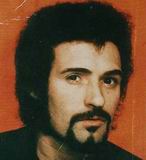
Peter Sutcliffe
Serial killer Bruce Lee
Serial killer · United Kingdom · 1973
Bruce Lee was born Peter George Dinsdale in 1960. He later changed his name to…
26 victims
Bruce Lee
Serial killer · United Kingdom · 1973
Bruce Lee was born Peter George Dinsdale in 1960. He later changed his name to…
26 victims
 Dennis Nilsen
Serial killer · United Kingdom · 1978
Dennis Andrew Nilsen was born on November 23, 1945. He lived in London. He was…
16 victims
Dennis Nilsen
Serial killer · United Kingdom · 1978
Dennis Andrew Nilsen was born on November 23, 1945. He lived in London. He was…
16 victims
 Dr. Harold Shipman
Serial killer · United Kingdom · 1974
Harold Fredrick Shipman was an English doctor who was convicted as a serial kil…
15 victims
Dr. Harold Shipman
Serial killer · United Kingdom · 1974
Harold Fredrick Shipman was an English doctor who was convicted as a serial kil…
15 victims
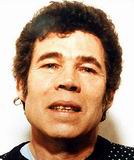 Frederick West
Serial killer · United Kingdom · 1967
Frederick West (29 September 1941 – 1 January 1995) was an English serial kille…
13 victims
Frederick West
Serial killer · United Kingdom · 1967
Frederick West (29 September 1941 – 1 January 1995) was an English serial kille…
13 victims
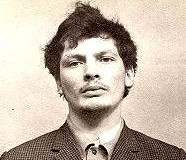 Patrick David Mackay
Serial killer · United Kingdom · 1973
Patrick David Mackay was born on September 25, 1952, in England. He was the son…
11 victims
Patrick David Mackay
Serial killer · United Kingdom · 1973
Patrick David Mackay was born on September 25, 1952, in England. He was the son…
11 victims
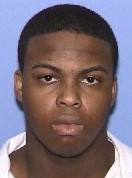 Damon Matthews
Murderer · USA · 2003
Damon Matthews (TDCJ Number 999476) was convicted of capital murder in Harris C…
1 victim
Damon Matthews
Murderer · USA · 2003
Damon Matthews (TDCJ Number 999476) was convicted of capital murder in Harris C…
1 victim
 Kevin Dean Young
Murderer · USA · 1988
Kevin Dean Young was sentenced to death twice for the robbery and shooting deat…
1 victim
Kevin Dean Young
Murderer · USA · 1988
Kevin Dean Young was sentenced to death twice for the robbery and shooting deat…
1 victim
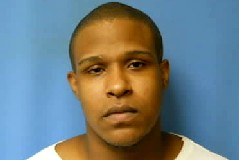 Terry Pitchford
Murderer · USA · 2004
Terry Pitchford v. State of Mississippi (No. 2006-DP-00441-SCT) · Terry Pitchfo…
1 victim
Terry Pitchford
Murderer · USA · 2004
Terry Pitchford v. State of Mississippi (No. 2006-DP-00441-SCT) · Terry Pitchfo…
1 victim
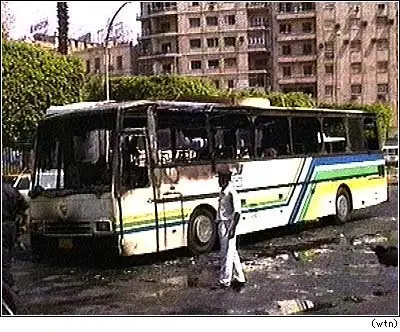 Saber & Mahmoud Abu el-Ulla
Mass murderers · Egypt · 1993
This case concerns Saber Abu el-Ulla and his brother, Mahmoud Abu el-Ulla, who…
13 victims
Saber & Mahmoud Abu el-Ulla
Mass murderers · Egypt · 1993
This case concerns Saber Abu el-Ulla and his brother, Mahmoud Abu el-Ulla, who…
13 victims
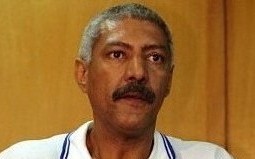 Edson Isidoro Guimaraes
Serial killer · Brazil · 1999
Edson Isidoro Guimarães was a Brazilian nursing assistant and nurse’s aide at S…
131 victims
Edson Isidoro Guimaraes
Serial killer · Brazil · 1999
Edson Isidoro Guimarães was a Brazilian nursing assistant and nurse’s aide at S…
131 victims
- Gender
- male
- Country
- United Kingdom
- Location
- West Yorkshire, England, United Kingdom
- Date of birth
- J une 2, 1946
- Age at first offence
- 29
- Characteristics
- serial rapist, rape, mentally ill, history of mental illness, angel of death
- Victim profile
- Wilma McCann, 28 / Emily Jackson, 42 / Irene Richardson, 28 / Patricia Atkinson, 32 / Jayne MacDonald, 16 / Jean Jordan, 20 / Yvonne Pearson, 21 / Helen Rytka, 18 / Vera Millward, 40 / Josephine Whitaker, 19 / Barbara Leach, 20 / Marguerite Walls, 47 / Jacqueline Hill, 20
- Method of murder
- Hitting with a hammer / St abbing with knife
- Date(s) of murder
- 1975 - 1980
- Years active
- 1975–1980
- Date of arrest
- January 2, 1981
- Status
-
Released
Sentenced to 20 sentences of life imprisonment on May 22, 1981; a High Court ruling rejected an appeal in 2010, confirming that he would serve a whole life tariff and would never be released from imprisonment
Background
Peter William Sutcliffe (born 2 June 1946) was an English serial killer dubbed "The Yorkshire Ripper". After his conviction, Sutcliffe began using his mother's maiden name and became known as Peter William Coonan. He was currently serving 20 sentences of life imprisonment in Broadmoor Hospital.
Sutcliffe was born in Bingley to a working-class Catholic family in West Riding of Yorkshire. He was the son of John Sutcliffe (11 December 1922 - June 2004) and Kathleen Frances Sutcliffe (née Coonan, 22 January 1919 - 1978).
Sutcliffe was described as a loner at school. He left at the age of 15 and took a series of menial jobs, including two stints as a gravedigger during the 1960s. Between November 1971 and April 1973, Sutcliffe worked at the factory of Baird Television Ltd, on the packaging line. He left when he was asked to go on the road as a salesman. After leaving Baird, he worked nightshifts at the Britannia Works of Anderton International from April 1973. In February 1975 he took redundancy, used the pay-off to gain an HGV licence on 4 June 1975, and began working as a driver for a tyre firm on 29 September of that year. On 5 March 1976 he was dismissed for the theft of used tyres. He was unemployed until October 1976, when he found another job as an HGV driver for T & WH Clark (Holdings Ltd.) on the Canal Road Industrial Estate in Bradford.
Other details
Sutcliffe frequently used prostitutes as a young man. It was speculated that a bad experience with one—believed to involve being conned out of money—helped fuel his violent hatred of women.
Sutcliffe first met Sonia Szurma (who had Czech and Ukrainian parentage) on 14 February 1967. They married on 10 August 1974. Sonia suffered several miscarriages over the following few years, and the couple were subsequently informed that she would not be able to have children. Shortly after this, she resumed a teacher training course. When she completed the course in 1977 and began teaching, the couple used her salary to buy their first house in Heaton, Bradford. They moved on 26 September 1977, and they were still living there at the time of Sutcliffe’s arrest.
The offence
Sutcliffe was convicted of murdering 13 women and attacking seven others.
He was convicted for murdering the following 13 victims:
- 30 October 1975 — Wilma McCann, 28
- 20 January 1976 — Emily Jackson, 42
- 5 February 1977 — Irene Richardson, 28
- 23 April 1977 — Patricia Atkinson, 32
- 26 June 1977 — Jayne MacDonald, 16
- 1 October 1977 — Jean Jordan, 20
- 21 January 1978 — Yvonne Pearson, 21
- 31 January 1978 — Helen Rytka, 18
- 16 May 1978 — Vera Millward, 40
- 4 April 1979 — Josephine Whitaker, 19
- 2 September 1979 — Barbara Leach, 20
- 20 August 1980 — Marguerite Walls, 47
- 17 November 1980 — Jacqueline Hill, 20
Sutcliffe was also involved in other assaults and attacks that were not among the 13 murder convictions mentioned, including assaults in Keighley, Halifax, Silsden, Roundhay Park, Bradford, and Huddersfield.
Sutcliffe claimed God had told him to murder the women, and he pleaded guilty to seven counts of attempted murder.
Timeline
- 10 August 1974 — Sonia Szurma and Sutcliffe married
- 14 February 1967 — Sutcliffe first met Sonia Szurma
- 4 June 1975 — Sutcliffe gained an HGV licence
- 29 September 1975 — Sutcliffe began working as a driver for a tyre firm
- 5 March 1976 — Sutcliffe was dismissed for the theft of used tyres
- October 1976 — Sutcliffe found another job as an HGV driver for T & WH Clark (Holdings Ltd.)
- 22 May 1981 — Sutcliffe began his sentence at HMP Parkhurst
- 4 January 1981 — Sutcliffe declared he was the Ripper
- 5 January 1981 — Sutcliffe was charged at Dewsbury
- 5 May 1981 — Trial commenced at the Old Bailey
- 22 May 1981 — Sutcliffe was sentenced to life imprisonment
- 10 January 1983 — James Costello assaulted Sutcliffe at Parkhurst Prison by plunging a broken coffee jar twice into the left side of Sutcliffe’s face
- 1982 — Sonia obtained a separation from Sutcliffe
- March 1984 — Sutcliffe was sent to Broadmoor Hospital under section 47 of the Mental Health Act 1983
- April 1994 — Sonia obtained a divorce from Sutcliffe
- 23 February 1996 — Sutcliffe was attacked in his private room in the Henley Ward of Broadmoor Hospital by Paul Wilson
- 10 March 1997 — Sutcliffe was attacked by fellow inmate Ian Kay with a pen, after which Sutcliffe lost vision in his left eye and his right eye was severely damaged
- 17 January 2005 — Sutcliffe was allowed to visit Grange over Sands where ashes had been scattered
- 22 December 2007 — Sutcliffe was attacked again by Patrick Sureda with a metal cutlery knife
- 17 February 2009 — It was reported that Sutcliffe was "fit to leave Broadmoor"
- 23 March 2010 — Jack Straw was questioned by Julie Kirkbride in the House of Commons regarding Sutcliffe’s release
- 16 July 2010 — High Court application for a minimum term to be set was heard
- 4 August 2010 — A spokeswoman for the Judicial Communications Office confirmed that Coonan had initiated his appeal against the latest decision
- 30 November 2010 — Hearing for the appeal against the High Court ruling began at the Court of Appeal
- 14 January 2011 — The Court of Appeal rejected the appeal
- 9 March 2011 — The Court of Appeal rejected Sutcliffe's application for leave to appeal to the Supreme Court
Investigation, arrest, and confession
On 2 January 1981, Sutcliffe was stopped by the police with 24-year-old prostitute Olivia Reivers in the driveway of Light Trades House, Melbourne Avenue, Broomhill, Sheffield, in South Yorkshire. A police check revealed the car was fitted with false number plates. Sutcliffe was arrested for this offence and transferred to Dewsbury Police Station, West Yorkshire.
At Dewsbury, Sutcliffe was questioned in relation to the Yorkshire Ripper case because he matched many of the physical characteristics known. The next day, police returned to the scene of the arrest and discovered a knife, hammer, and rope that Sutcliffe had discarded after he briefly slipped away from the police while telling them he was "bursting for a pee". Sutcliffe had hidden a second knife in the toilet cistern at the police station when he was permitted to use the toilet.
The police obtained a search warrant for Sutcliffe's home at 6 Garden Lane in the Heaton district of Bradford and brought his wife in for questioning.
During questioning, Sutcliffe was stripped of his clothing at the police station and was wearing a V-neck sweater under his trousers with sleeves pulled over his legs, exposing his genital area. The front of the elbows were padded to protect his knees.
After two days of intensive questioning, on the afternoon of 4 January 1981, Sutcliffe suddenly declared he was the Ripper. Over the next day, Sutcliffe described his many attacks. Weeks later he claimed God had told him to murder the women.
Sutcliffe was charged at Dewsbury on 5 January 1981.
After his trial, Sutcliffe admitted two further attacks to detectives. It was decided at the time that prosecution for these offences was "not in the public interest". West Yorkshire Police made it clear that the female victims wished to remain anonymous.
Trial
At his trial, Sutcliffe pleaded not guilty to 13 counts of murder, but guilty to manslaughter on the grounds of diminished responsibility. His diminished responsibility defence was based on a claim that he was the tool of God's will. He claimed that he had heard voices while working as a gravedigger, which ordered him to kill prostitutes. He claimed that the voices originated from a headstone of a deceased Polish man, Bronisław Zapolski, and that the voices were that of God. He also pleaded guilty to seven counts of attempted murder.
Four psychiatrists diagnosed Sutcliffe with paranoid schizophrenia. However, the trial judge, Mr Justice Boreham, demanded an unusually detailed explanation of the prosecution reasoning. After representation by the Attorney-General Sir Michael Havers, a 90-minute lunch break, and a further 40 minutes of legal discussion, he rejected the diminished responsibility plea and the expert testimonies of the four psychiatrists, insisting that the case should be dealt with by a jury.
The trial proper was set to commence on 5 May 1981. The trial lasted two weeks. Despite the efforts of his counsel James Chadwin QC, Sutcliffe was found guilty of murder on all counts and sentenced to life imprisonment.
The trial judge said that Sutcliffe was beyond redemption and that he hoped that he would never leave prison. He recommended a minimum term of 30 years to be served before parole is considered, meaning Sutcliffe would be unlikely to be freed until at least 2011 at the age of 65.
This recommendation was later extended to a full life term.
Sentencing
Sutcliffe was sentenced to life imprisonment and received a minimum term recommendation of 30 years before parole could be considered.
On 16 July 2010, Sutcliffe’s sentence was extended to a full life term, meaning he would not be released from imprisonment barring any judicial developments to the contrary. Sutcliffe was therefore confirmed to serve a whole life tariff and would never be released from imprisonment.
Sutcliffe was also described as being sentenced to 20 sentences of life imprisonment on May 22, 1981.
Appeals
An application by Sutcliffe for a minimum term to be set was heard by the High Court of Justice on 16 July 2010.
The High Court decided that Peter Sutcliffe would never be released from prison. Mr Justice Mitting stated:
"This was a campaign of murder which terrorised the population of a large part of Yorkshire for several years. The only explanation for it, on the jury's verdict, was anger, hatred and obsession. Apart from a terrorist outrage, it is difficult to conceive of circumstances in which one man could account for so many victims."
Various psychological reports describing the mental state of Sutcliffe and the severity of his crimes were taken into consideration. Barring any judicial decisions to the contrary, Sutcliffe would spend the rest of his life in Broadmoor Hospital.
On 4 August 2010, a spokeswoman for the Judicial Communications Office confirmed that Coonan had initiated his appeal against the latest decision.
The hearing for his appeal against this ruling began on 30 November 2010 at the Court of Appeal and was rejected on 14 January 2011. On 9 March 2011, the Court of Appeal rejected Sutcliffe's application for leave to appeal to the Supreme Court.
In the House of Commons on 23 March 2010, Julie Kirkbride questioned Jack Straw about reassurance for one of her constituents, a victim of Sutcliffe, that he would remain in prison. Straw responded that while the matter of Sutcliffe’s release was a parole board matter, "that all the evidence that I have seen on this case, and it's a great deal, suggests to me that there are no circumstances in which this man will be released."
Prison and Broadmoor Hospital
After his conviction, Sutcliffe decided to go by the name Peter Coonan, his late mother’s maiden name. He began his sentence at HMP Parkhurst on 22 May 1981.
Despite being found sane at his trial, he was soon diagnosed as suffering from schizophrenia. Attempts to send him to a secure psychiatric unit were initially blocked.
During his time at Parkhurst Prison, he was seriously assaulted for the first time. The attack was carried out by James Costello, a 35-year-old career criminal from Glasgow with several convictions for violence. On 10 January 1983, Costello followed Sutcliffe into the recess of F2 at the hospital wing at Parkhurst Prison and plunged a broken coffee jar twice into the left side of Sutcliffe’s face, creating four separate wounds requiring a total of 30 stitches.
In March 1984, Sutcliffe was finally sent to Broadmoor Hospital under section 47 of the Mental Health Act 1983.
Sonia obtained a separation from Sutcliffe in 1982 and a divorce in April 1994.
On 23 February 1996, Sutcliffe was attacked in his private room in the Henley Ward of Broadmoor Hospital. Paul Wilson, a convicted robber, asked to borrow a videotape before attempting to strangle Sutcliffe with the cable from a pair of stereo headphones. Kenneth Erskine, known as the "Stockwell Strangler", and Jamie Devitt intervened upon hearing Sutcliffe's screams.
After an attack by fellow inmate Ian Kay on 10 March 1997 with a pen, Sutcliffe lost vision in his left eye and his right eye was severely damaged. Kay admitted he had tried to kill Sutcliffe and was ordered to be detained in a secure mental hospital without time limit.
In 2003, reports surfaced that Sutcliffe had developed diabetes.
Sutcliffe’s father died in 2004 and was cremated. On 17 January 2005, Sutcliffe was allowed to visit Grange over Sands where the ashes had been scattered. The decision to allow the temporary release was initiated by David Blunkett and later ratified by Charles Clarke when he took over the role of Home Secretary. Sutcliffe was accompanied by four members of the hospital staff.
On 22 December 2007, Sutcliffe was attacked again. Fellow inmate Patrick Sureda lunged at him with a metal cutlery knife. Sutcliffe flung himself backwards and the blade missed his right eye, instead stabbing him in the cheek.
On 17 February 2009, it was reported that Sutcliffe was "fit to leave Broadmoor." If the Ministry of Justice agreed with the doctors’ verdict, he would be sent to a medium-secure unit where he could be allowed out on short release for rehabilitation.
Outcome
Sutcliffe remained incarcerated. The High Court decision in 2010 confirmed that he would serve a whole life tariff and would never be released from imprisonment.
Spotted an error, or have more information about this case?