Daniel Munro
Murderer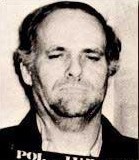 Ervil LeBaron
Murderer · USA · 1972
Ervil Morrell LeBaron (1925 to August 16, 1981) was the leader of a polygamous…
35 victims
Ervil LeBaron
Murderer · USA · 1972
Ervil Morrell LeBaron (1925 to August 16, 1981) was the leader of a polygamous…
35 victims
 Brian Kevin Rosenfeld
Murderer · USA · 1985
Brian Kevin Rosenfeld Brian Kevin Rosenfeld was sentenced to three concurrent l…
23 victims
Brian Kevin Rosenfeld
Murderer · USA · 1985
Brian Kevin Rosenfeld Brian Kevin Rosenfeld was sentenced to three concurrent l…
23 victims
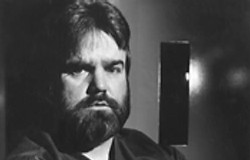 Marvin Gray
Murderer · USA · 1975
Marvin Gray was convicted killer who claimed responsibility for 23 slayings and…
23 victims
Marvin Gray
Murderer · USA · 1975
Marvin Gray was convicted killer who claimed responsibility for 23 slayings and…
23 victims
 Yahweh ben Yahweh
Murderer · USA · 1980
Yahweh ben Yahweh was born and legally named Hulon Mitchell Jr. (October 27, 19…
23 victims
Yahweh ben Yahweh
Murderer · USA · 1980
Yahweh ben Yahweh was born and legally named Hulon Mitchell Jr. (October 27, 19…
23 victims
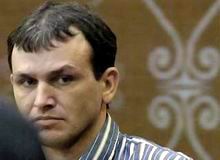 Brian Rooney
Murderer · USA · 2006
Brian Rooney (born June 27, 1970) was a former construction worker. He was conv…
1 victim
Brian Rooney
Murderer · USA · 2006
Brian Rooney (born June 27, 1970) was a former construction worker. He was conv…
1 victim
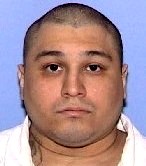 Alexander Rey Martinez
Murderer · USA · 2001
Alexander Rey Martinez was convicted in the trial court, Harris County, Susan B…
1 victim
Alexander Rey Martinez
Murderer · USA · 2001
Alexander Rey Martinez was convicted in the trial court, Harris County, Susan B…
1 victim
 David Rocheville
Murderer · USA · 1991
David Rocheville (1967 or 1968 – December 3, 1999) was executed by lethal injec…
2 victims
David Rocheville
Murderer · USA · 1991
David Rocheville (1967 or 1968 – December 3, 1999) was executed by lethal injec…
2 victims
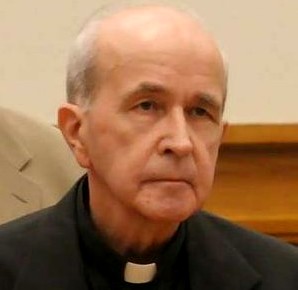 Rev. Gerald Robinson
Murderer · USA · 1980
Rev. Gerald Robinson (born April 14, 1938) was an American murderer and a Roman…
1 victim
Rev. Gerald Robinson
Murderer · USA · 1980
Rev. Gerald Robinson (born April 14, 1938) was an American murderer and a Roman…
1 victim
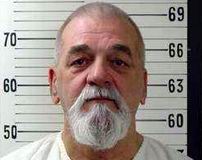 Leonard J. Young
Murderer · USA · 1999
Leonard J. Young met a woman during the 1990 Christmas holidays. The two became…
2 victims
Leonard J. Young
Murderer · USA · 1999
Leonard J. Young met a woman during the 1990 Christmas holidays. The two became…
2 victims
- Gender
- male
- Country
- USA
- Location
- Des Moines, Polk County, Iowa, USA
- Date of birth
- ???
- Characteristics
- robbery
- Victim profile
- Gerald Hoffman Jr., 15, his brother, Geoffrey, 14, and Jeffrey Beavers, 14 / William Baldwin, 30
- Method of murder
- Shooting
- Date(s) of murder
- February 19, 1978
- Years active
- 1978
- Date of arrest
- April 28, 1978
- Status
-
Life imprisonment
Sentenced to three terms of life imprisonment in 1979
Case record: Daniel Munro
Background
Daniel Russell Munro was a suspect in the deaths of four Des Moines residents on the morning of February 19, 1978.
On that day, the bodies of three teenage boys were found lying on the floor of a downtown business establishment that was in the process of being remodeled. The body of William Baldwin, a clerk at an adult bookstore about a block away, was found on the floor of his place of employment. All four were killed by gunshot wounds to the head. Money was missing from the cash register at the bookstore.
Munro was an escapee from the Alabama prison system. He was arrested in Little Rock, Arkansas, on April 28, 1978, pursuant to a warrant issued in the State of Alabama for unlawful flight to avoid confinement for a previous conviction. After interrogation in Arkansas by agents of both the Iowa and federal criminal investigation bureaus, Munro was transported to Iowa and formally charged with the February 19 homicides.
The offence
Four people were killed by gunshot wounds to the head:
- Three teenage boys found on the floor of a downtown business establishment being remodeled: Gerald Hoffman Jr., 15; his brother, Geoffrey, 14; and Jeffrey Beavers, 14.
- William Baldwin, 30, found on the floor of an adult bookstore about a block away, where he worked.
Investigation
The investigation focused on Munro. When the homicide investigation began to focus on him, Des Moines police obtained a medical file on him from the Alabama Board of Corrections. The file contained reports of psychological evaluations while Munro was incarcerated in Alabama for a prior offense.
Des Moines police also contacted an Alabama psychiatrist, Dr. Brown, who examined Munro on a previous occasion, and Barry Hess, an Alabama attorney who defended Munro in a previous criminal prosecution. No waivers of doctor-patient or attorney-client privileges were obtained.
Among the items of information derived from these sources were:
- Munro was of above average intelligence (I.Q. of 130).
- He was a “loner.”
- He had a close relationship with his mother.
- He had an alcohol problem.
- He had attempted suicide on at least one occasion.
- He had been diagnosed as paranoid schizophrenic.
Des Moines police relayed this information to a Des Moines psychiatrist, Dr. Taylor, for the purpose of developing a “psychological profile” of Munro. Dr. Taylor suggested interrogation techniques believed to be most effective in dealing with a person with Munro’s psychological makeup. The recommendations included:
- Treating Munro with respect.
- Addressing him as “Mr. Munro.”
- Avoiding too close contact with him.
- Breaking eye contact.
Dr. Taylor also suggested that only one officer interrogate Munro at any given time because someone with Munro’s psychological profile would probably refuse to talk if more than one investigator tried to question him.
Arrest
Daniel Russell Munro was arrested in Little Rock, Arkansas, on April 28, 1978, at approximately 12:00 P.M. by two FBI agents, Danny Sisco and Dale Kent. The arrest occurred at a Salvation Army transient lodge. Munro was transported to the Little Rock FBI office.
The Alabama warrant charged Munro with unlawful flight to avoid confinement for a previous conviction.
Trial
Pretrial motions
Prior to trial, Munro filed a motion to suppress evidence obtained as a result of an April 28 search of his living quarters in Little Rock and any statements made by him to BCI and FBI agents while he was in their custody.
The district court overruled the motion, finding:
- Munro consented to the search of his premises.
- Munro “knowingly, voluntarily and intelligently waived his constitutional rights as to any conversation between himself and the law enforcement officers.”
A change of venue to Linn County occurred.
Trial dates and verdicts
Trial commenced on January 8, 1979.
At the close of the State’s evidence, the trial court sustained Munro’s motion for directed verdict as to the count based on Baldwin’s death, meaning the Baldwin death count did not proceed.
On January 19, 1979, the jury found Munro guilty of the remaining three counts of first-degree murder.
Munro filed a motion for new trial, which was denied.
Sentencing
The trial court sentenced Munro to three terms of life imprisonment and appointed appellate counsel.
Sentencing
Munro received three terms of life imprisonment.
Appeals
Munro appealed to the Supreme Court of Iowa.
Munro based his appeal on three asserted errors by the trial court:
- The court’s finding that Munro consented to the April 28 search of his living quarters.
- The court’s holding that Munro knowingly, voluntarily, and intelligently waived his rights to remain silent and to the presence of counsel.
- The admission of evidence regarding alleged shoeprints found at the scene of the boys’ bodies.
I. Search of Munro’s living quarters
Munro argued that the April 28 search of his Little Rock apartment was illegal and that all fruits of the search should have been suppressed.
The State relied on Munro’s oral and written consent.
The Supreme Court of Iowa discussed the standard for proving consent to an otherwise illegal search, referencing State v. Freese, 166 N.W.2d 785 (Iowa 1969), and adopting a preponderance of the evidence rule based on State v. Folkens, 281 N.W.2d 1 (Iowa 1979).
At the pretrial suppression hearing:
- Sisco testified that he told Munro “he didn't have to let us search his room if he didn't want to,” and that Munro responded, “I don't care. I don't have anything to hide.”
- Munro’s counsel asked about consent documentation:
- Q. Did you ask him to sign anything in regard to searching his room?
- A. Yes.
- Q. All right. Do you have a copy of that with you at this time?
- A. The form that we entitle The Consent to Search Form, and it is just an authorization.
- Q. Do you now whether or not this was signed by Mr. Munro prior to the time that his room or the area where he was living at the Salvation Army was searched?
- A. Yes, it was.
- Kent performed the search.
- Kent testified at the pretrial suppression hearing that he did not personally obtain consent from Munro.
During trial, Kent’s testimony addressed the execution of the consent form:
- Q. Once he was transported back there what was done at that time?
- A. He provided a form consent to search his room and gave to. Agent Sisco, who gave to me, and I went down to search his room at the Salvation Army.
- Q. So he did sign a consent form on that?
- A. Yes, sir, he did.
The Supreme Court of Iowa held that the uncontradicted testimony, together with Munro’s signed consent form, established that Munro voluntarily consented to the April 28 search, and it found no inconsistency between Kent’s suppression hearing statement and Kent’s trial testimony.
The Supreme Court of Iowa held that the district court did not err in rejecting Munro’s challenge of the April 28 search.
II. Interrogation of Munro
Munro argued that evidence was inadmissible because the State employed “psychological coercion” that caused any statements to be not made knowingly, voluntarily, or intelligently.
The State responded that Munro received Miranda warnings prior to each interrogation session and waived his rights to remain silent and to counsel.
Legal framework discussed by the court
The Supreme Court of Iowa stated that the test for admissibility of confessions or inculpatory statements is voluntariness, citing Culombe v. Connecticut.
The court described the “totality of the circumstances” test, including assessment of:
- Characteristics of the accused.
- Details of the interrogation process.
- Psychological impact and legal significance of the defendant’s reactions.
- Whether the defendant’s choice to confess was “essentially free and unconstrained with his will not overborne and his capacity for self-determination not critically impaired,” citing State v. Cullison.
Interrogation timeline and details
The court described these facts:
April 28, 1978 interview in Pulaski County Jail:
- It occurred on the same day Munro was arrested in Arkansas.
- Only Wood and Munro were present; other officers listened through an intercom.
- Munro was informed of his rights and signed a waiver form.
- Wood testified he followed Dr. Taylor’s advice and asked Munro about his mother.
- Munro made no incriminating statements and generally denied involvement in the Des Moines homicides.
April 29, 1978 interview:
- Wood again informed Munro of his rights and Munro signed a waiver form.
- Shortly after the session began, Munro indicated “he probably should talk to an attorney.”
- One officer listening through the intercom testified that Munro “said that he didn't want to talk anymore with anyone and requested an attorney.”
- The interview ended at that time, but no steps were taken to procure counsel.
- Munro was apparently not represented by counsel throughout the interrogation procedures at issue.
May 3, 1978 morning—Sisco procedure for photographs and fingerprints:
- FBI Agent Sisco ordered to go to the Pulaski County Jail to obtain photographs and fingerprints for FBI files.
- During this procedure, Munro was not given the Miranda warnings.
Sisco’s testimony included:
- I told him — I said Dan, if you want to talk about this. I said, if you didn't do it tell me where the gun is and the gun will show that you didn't do it. And I left him my name, address and telephone number and left.
Sisco also testified that Munro later called Sisco’s office and left a message that he would like to see Sisco again.
Sisco testified that when Sisco returned to the jail:
- Q. [Munro] himself initiated this conversation, did he not?
- A. Yes.
- Q. At that time did you advise him of any Miranda warnings?
- A. I did.
- Q. And was there a written consent form?
- A. There was.
- Q. Was it executed by the defendant?
- A. It was.
- Q. At that time do you know whether or not the defendant had an attorney?
- A. No, I do not. He did not request an attorney, no.
- Q. What did he tell you?
- A. He told me where the gun was located.
The record stated that, in return for telling Sisco the location of the gun, Munro obtained a promise that the FBI would do the original examination of the gun. The gun was found as Munro indicated at a pawnshop in Springfield, Illinois, and was introduced in evidence at trial. The metal inside the barrel had been scratched and cut away.
At the close of the May 3 interview, Sisco told Munro:
- “if he felt like writing me a letter or calling me or anything feel free to do so.”
In a letter dated May 11, 1978, Munro asked Sisco:
- “let me know where I stand with the authorities from Iowa.”
By then Munro had been transferred to Kilby State Prison in Montgomery, Alabama.
- June 5, 1978—interview at Kilby Prison:
- Sisco went to Kilby Prison at the request of the United States District Attorney in Des Moines to ask Munro additional questions about the gun, which was by then in the hands of Des Moines police.
- Munro was given the Miranda warnings and signed a waiver form.
- The interview lasted approximately two hours.
Sisco testified regarding the conversation:
- Q. Okay. What was the gist of the conversation?
- A. We talked primarily about the gun and about what he had [295 NW2d Page 442] done while he was in Des Moines with the gun and everything that happened. Well, basically he had told me what he had done on Sunday, February the 19th.
- Q. And at all times he was proclaiming his innocence?
- A. Yes. Matter of fact, he told me — I told him that the gun had not checked out to my knowledge at the time, and he said that is good. I hoped it hadn't.
Sisco also testified:
- Q. And you terminated that conversation fairly abruptly. Why did you do that?
- A. Fairly abruptly?
- Q. I get it from the motion produced.
- A. I think we had a conversation about an hour and a half.
- Q. And then you said you would see him the next day?
- A. I asked him if I could come back to see him. He said he wouldn't do you any good, but, yes, you can come back.
- June 6, 1978—second-day interview:
- Sisco returned at approximately 9:00 A.M.
- Munro was given Miranda warnings and signed a waiver form.
- Sisco characterized the previous day as “just basically general conversation,” and he testified he asked Munro why he didn’t want to talk about the murders in Des Moines.
Sisco’s questions and Munro’s responses included:
- Q. What did he respond to that?
- A. He said if I confess to it then I don't have a chance for an appeal and I would just rather go to trial and take my chances on appeal. He also told me that you have got to look at my side of it. I just don't believe it would benefit me to talk about it now.
- Q. What was his appearance like when he told you this?
- A. Well, at that point basically like his appearance is here. He apparently showed no emotion.
- Q. Was that also true when you discussed this part about talking about the crime?
- A. At one point during our conversation I related just a hypothetical situation to him regarding the crime and I observed what appeared to be eyes watering and his right arm trembled.
Sisco also testified he asked where bullets were and Munro declined:
- Q. Did you ask him about any of those items of evidence [that Des Moines police were still searching for]?
- A. I asked him where the bullets were that he purchased or had an individual purchase for him in Des Moines, Iowa, and he told me that he thought the Iowa authorities had enough evidence on him as it was and he didn't want to tell me where they were.
The court noted that the record contained reference to another interrogation on July 6 and 7 while Munro was transported from Alabama to Des Moines for trial, but no trial testimony had been introduced about it. The court stated it did not consider those circumstances a relevant factor for voluntariness of statements introduced at trial.
Supreme Court’s voluntariness findings
The Supreme Court of Iowa agreed with the trial court that the State showed by a preponderance of the evidence that Munro’s statements were voluntarily made.
It relied on factors including:
- Munro was informed of rights and signed waiver forms at each session.
- Munro had above average intelligence and prior experience with criminal law.
- No physical mistreatment or prolonged interrogation periods appeared.
- No deceit or improper promise appeared.
- Munro requested a May 3 meeting at which he divulged the location of the gun.
- Munro consented at the end of the June 5 interview to Sisco’s return the next day.
- Munro negotiated an agreement to have his gun tested first by the FBI, supporting a conclusion that his will was not overborne.
The court also rejected Munro’s contention that the use of the psychological profile overbore his will, reasoning that:
- Much of the information could be found in Alabama prison records that attributed superior intelligence and schizophrenia with alcoholism.
- The examinations were for ascertaining mental condition rather than for treatment, so the information was not privileged.
- Iowa Code section 622.10 applied only to testimonial use of privileged information, and it did not bar the manner in which information was used here.
Finally, the court addressed Munro’s claim that police should have provided counsel when he requested an attorney.
The court referenced language from State v. Moon and clarified that the invocation of counsel did not render later statements inadmissible in all circumstances. It described that later admissions could be introduced if interrogation ceased at the time of the request and if the State showed a knowing and intelligent waiver.
The court held that interrogation ceased when Munro requested counsel at the April 29 meeting. It further held that Munro was not questioned again until the morning of May 3, when Sisco provided contact information so Munro could decide whether to disclose the gun location. The court noted Sisco’s pretrial suppression hearing testimony that he could not recall anyone telling him that Munro had requested an attorney at that point.
The Supreme Court of Iowa held that Munro knowingly and intelligently waived his right to remain silent and to counsel at the time he made his statements.
III. Footprint evidence
Munro’s final contention was that the trial court erred in admitting evidence of an alleged footprint shown in photographs.
The State argued Munro “opened the door” through cross-examination of Officer John Kilgore.
The Supreme Court focused on the “opened the door” issue.
When Kilgore was first called, he testified about recovery of bullets from doctors performing autopsies and from the scene. No reference was made to footprints found at the scene or shown in photographs at that time.
On cross-examination, defense counsel obtained testimony that no photographs were taken for footprint impressions and that Kilgore did not observe impressions that could be characterized as a wheelbarrow or footprint in a photo taken of the scene. The cross-examination included:
- Q. Officer Kilgore, you were at what is now called the Coney Island or the crime scene on February 19, 1978, were you not?
- A. Yes, sir.
- Q. And you were there to take certain photographs?
- Objection was overruled.
- Q. You took certain photographs, did you not?
- A. Yes, sir.
- Q. … did you go back to the scene at a second time?
- A. I left the scene and did return, yes.
- Q. And for what purpose?
- A. I returned to photograph and recover an additional bullet that had been found.
- Q. … Can you locate … where the spent … bullet … can you point that out …
- A. The approximate location, yes, sir.
- Q. … Where is it located next to?
- A. It is located next to and to the west of an item called Bar No. 1 in the crime scene sketch. . . .
- Q. … there were various footprint impressions or impressions that left certain track marks, isn't that correct?
- A. That is correct.
- Q. Were there any photographs in this area where the bullet was discovered?
- Were there any photographs that you took specifically to look at for footprint impressions or some sort of track impressions?
- A. No.
- Q. Did you ever examine for the specific purposes to determine whether or not there was a foot impression …
- A. No, sir.
- Q. … anything like that?
- A. No, sir.
Later, Kilgore was recalled and allowed over objection to testify:
- Munro’s shoes had a crosshatch pattern on their soles.
- The photographs of the floor at the scene also showed a crosshatch pattern.
- The portion of the crime scene photograph containing the pattern was circled and shown to the jury.
The Supreme Court held that the trial court did not abuse its discretion in admitting Kilgore’s testimony regarding the nature of the alleged footprint at the scene and the pattern on Munro’s shoes. It reasoned that cross-examination created an inference about footprint evidence, and Kilgore’s later testimony rebutted that inference.
The Supreme Court stated that the prosecutor had not first injected the comparisons into the record and referenced earlier introduction of Munro’s shoes into evidence for a purpose unrelated to footprint comparison at the time.
The Supreme Court rejected Munro’s contention that admissibility had already been determined by a prior trial ruling on footprint evidence.
It held Munro’s assignments of error were not meritorious.
Outcome
The Supreme Court of Iowa affirmed the judgment.
Other details
- The case was styled: STATE OF IOWA, APPELLEE, V. DANIEL RUSSELL MUNRO, APPELLANT.
- It involved an appeal from POLK DISTRICT COURT, RAY E. FENTON, J.
- The opinion was delivered by Uhlenhopp, Justice.
- Consideration included Reynoldson, C.J., and LeGRAND, Uhlenhopp, Allbee, and McGIVERIN, JJ.
- The case arose from deaths on February 19, 1978.
- The jury verdict occurred on January 19, 1979.
- The Baldwin death count resulted in a directed verdict for Munro at the close of the State’s evidence.
- The Supreme Court described issues involving suppression of evidence and exclusion of evidence, including:
- refusal to suppress evidence and statements,
- waiver of rights,
- admissibility of footprint evidence.
Spotted an error, or have more information about this case?