
David Rocheville
Murderer Brian Kevin Rosenfeld
Murderer · USA · 1985
Brian Kevin Rosenfeld Brian Kevin Rosenfeld was sentenced to three concurrent l…
23 victims
Brian Kevin Rosenfeld
Murderer · USA · 1985
Brian Kevin Rosenfeld Brian Kevin Rosenfeld was sentenced to three concurrent l…
23 victims
 Russell Ellwood
Murderer · USA · 1991
Russell Ellwood was a former taxi driver. Authorities suspected him of killing…
20 victims
Russell Ellwood
Murderer · USA · 1991
Russell Ellwood was a former taxi driver. Authorities suspected him of killing…
20 victims
 Robert Martines Perez
Murderer · USA · 1994
Name: Robert Martines Perez · Other name used in proceedings: Robert Martinez P…
15 victims
Robert Martines Perez
Murderer · USA · 1994
Name: Robert Martines Perez · Other name used in proceedings: Robert Martinez P…
15 victims
 Billy Frank Vickers
Murderer · USA · 1993
Billy Frank Vickers Vickers was executed by lethal injection in Texas on Januar…
14 victims
Billy Frank Vickers
Murderer · USA · 1993
Billy Frank Vickers Vickers was executed by lethal injection in Texas on Januar…
14 victims
 Robert William Clayton
Murderer · USA · 1985
Robert William Clayton was a Tulsa death row inmate. He had an IQ of 68 and pre…
1 victim
Robert William Clayton
Murderer · USA · 1985
Robert William Clayton was a Tulsa death row inmate. He had an IQ of 68 and pre…
1 victim
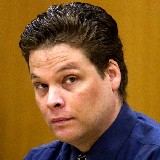 Bryan Hower
Murderer · USA · 2010
Bryan Hower was charged in the death of his wife, Bonnie Hower. Bryan Hower’s d…
1 victim
Bryan Hower
Murderer · USA · 2010
Bryan Hower was charged in the death of his wife, Bonnie Hower. Bryan Hower’s d…
1 victim
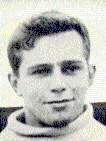 Miles Giffard
Murderer · United Kingdom · 1952
Miles William Giffard (1927 - 24 February 1953) twice played cricket for the Co…
2 victims
Miles Giffard
Murderer · United Kingdom · 1952
Miles William Giffard (1927 - 24 February 1953) twice played cricket for the Co…
2 victims
 Larme Price
Serial killer · USA · 2003
Larme Price, 30, was accused of carrying out four unprovoked killings of shopke…
4 victims
Larme Price
Serial killer · USA · 2003
Larme Price, 30, was accused of carrying out four unprovoked killings of shopke…
4 victims
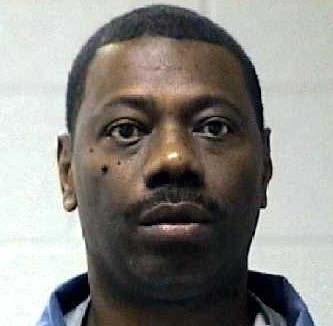 Timothy Carl Dawson
Murderer · USA · 1998
Timothy Carl Dawson was sentenced to life imprisonment without parole on Novemb…
4 victims
Timothy Carl Dawson
Murderer · USA · 1998
Timothy Carl Dawson was sentenced to life imprisonment without parole on Novemb…
4 victims
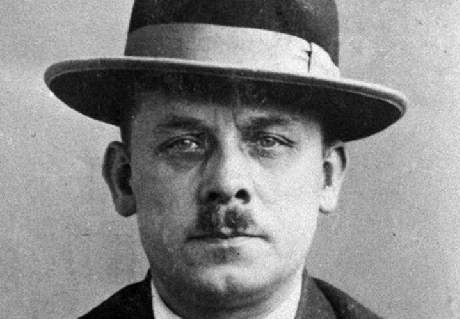 Friedrich Haarmann
Serial killer · Germany · 1918
Friedrich "Fritz" Haarmann (October 25, 1879 – April 15, 1925) was a serial kil…
27 victims
Friedrich Haarmann
Serial killer · Germany · 1918
Friedrich "Fritz" Haarmann (October 25, 1879 – April 15, 1925) was a serial kil…
27 victims
- Gender
- male
- Country
- USA
- Location
- Spartanburg County, South Carolina, USA
- Date of birth
- 1968
- Age at first offence
- 23
- Characteristics
- robbery
- Victim profile
- Alexander George Hopps, 19, and James Todd Greene, 24
- Method of murder
- Shooting
- Date(s) of murder
- January 7, 1991
- Years active
- 1991
- Date of arrest
- Next day
- Status
-
Executed
Executed by lethal injection in South Carolina on December 3, 1999
Case record
Other details
David Rocheville (1967 or 1968 – December 3, 1999) was executed by lethal injection in South Carolina on December 3, 1999. He was indicted on two counts of murder, one count of kidnapping, and one count of armed robbery, and he received life imprisonment and death sentences as described in the appellate opinion.
Rocheville filed a petition for habeas corpus relief in the United States Court of Appeals for the Fourth Circuit, styled as David Rocheville, petitioner-appellant, v. Michael Moore, Commissioner, South Carolina Department of Corrections; Charles Condon, Attorney General, State of South Carolina, respondents-appellees.
The Fourth Circuit appeal was argued January 25, 1999 and was dismissed by an unpublished per curiam opinion dated March 16, 1999. The court denied Rocheville’s request for a certificate of appealability and dismissed his appeal.
Rocheville had been convicted in South Carolina of murdering Alex Hopps and James Todd Green and received sentences of life imprisonment and death respectively.
Timeline
- January 7, 1991 — The victims were the only two employees on duty at the Westgate Mall Cinemas in Spartanburg, South Carolina; Hopps was working as an usher and Green was expected to deposit the evening’s receipts.
- About the same time as the movie theater events — Before the cashier left the theater at approximately 10:40 p.m., the cashier observed Rocheville in the lobby.
- Shortly after the events — Hopps’ body was located behind the theater near the rear door.
- The following morning — Rocheville was arrested and began to supply information to the police concerning the crimes.
- March 16, 1999 — The Fourth Circuit dismissed the appeal by unpublished per curiam opinion.
- December 3, 1999 — Rocheville was executed by lethal injection in South Carolina.
Background
Late on the evening of January 7, 1991, the victims were the only two employees on duty at the Westgate Mall Cinemas in Spartanburg, South Carolina. Green, a 22-year-old assistant manager, had the combination to the safe and was expected to deposit the evening’s receipts into a local bank after the theater closed. Hopps, a 19-year-old college student who was working as an usher, was to follow Green as a security precaution.
Several movies were still playing, and the box office and concession stand closed by 10:30 p.m.
Rocheville was a former assistant manager at the theater. The office was a shambles and approximately $3,000 was missing from the theater safe after the killings.
Rocheville knew both of his victims, having been a former manager of another theater in the chain that owned the Westgate Mall Cinemas.
The offence
Rocheville’s killing involved armed robbery and kidnapping during which Hopps and Green were murdered.
Hopps was shot in his left temple with a medium-to-large caliber firearm. Green had been shot in the back of the head.
After the robbery, Rocheville led police to Green’s body, which had not previously been located, in a ditch several miles from the theater.
A jury convicted Rocheville of armed robbery, kidnapping, and the murders of Hopps and Green. Having concluded that Rocheville murdered Green during an armed robbery and a kidnapping, the jury recommended a sentence of death for Green’s murder. Rocheville was sentenced to life imprisonment for Hopps’ murder.
Investigation
Before trial, witnesses observed Rocheville’s interest in Green’s vehicle. An off-duty employee of the theater and his girlfriend were sitting in the parking lot of the theater and watched as Rocheville exited a van and looked inside Green’s vehicle. Rocheville returned to the van, and after speaking with someone and returning briefly to Green’s automobile, left with an unidentified driver.
The following morning, Rocheville was arrested and began to supply information to the police concerning the crimes. He provided a series of changing accounts of his actions and those of his accomplice, Richard Longworth. Initially, Rocheville claimed that Longworth had murdered both Hopps and Green and was responsible for robbing the theater. Eventually, however, Rocheville admitted to having murdered Green. In addition, Rocheville led police to Green’s body, which had not previously been located, in a ditch several miles from the theater.
The appellate opinion also stated that Rocheville admitted that he killed Greene, while also claiming he was coerced into it and that he was afraid that Longworth would kill him.
Arrest
Rocheville was arrested the following morning after the killings.
Trial
The jury recommended a sentence of death for Green’s murder after concluding that Rocheville murdered Green during an armed robbery and a kidnapping.
Rocheville was sentenced to life imprisonment for Hopps’ murder, and he received the death penalty for Green’s murder.
Rocheville exhausted his appeals in October.
Appeals
United States Court of Appeals for the Fourth Circuit
Rocheville filed this petition for habeas corpus relief from his South Carolina convictions for murdering Alex Hopps and James Todd Green and his resulting sentences of life imprisonment and death respectively.
The district court denied the petition. The Fourth Circuit concluded that Rocheville had not made a substantial showing of the denial of a constitutional right. The court denied his request for a certificate of appealability and dismissed the appeal.
The appeal addressed multiple issues raised under 28 U.S.C.A. § 2254:
Change of venue and jurisdiction concerns
- Rocheville moved for a change of venue before Judge Luke Brown, who had been appointed by the South Carolina Supreme Court to preside over all aspects of Rocheville’s trial.
- When the motion was made and argued, Judge Brown was holding court in Aiken, South Carolina. Judge Brown acknowledged that the proceedings were not taking place in Spartanburg, where the murders occurred, and asked if Rocheville had any objection; counsel for Rocheville stated there was no objection.
- Judge Brown took the matter under advisement and several days later he entered an order denying the motion for a change of venue while sitting in Spartanburg.
- Rocheville argued that Judge Brown lacked jurisdiction, that the remainder of the trial was tainted by the ruling, and that he was deprived of due process. Rocheville also claimed that his trial counsel was ineffective for attempting to waive any objection to the motion being heard in Aiken.
- The Fourth Circuit stated those arguments were first raised in the § 2254 proceedings in filings before the court and thus were not properly before the court, citing Spencer v. Murray, and further stated they were procedurally defaulted because the state PCR court expressly ruled they had not been raised timely.
- The court also stated that it had no authority to review the state PCR court’s alternative determination of state law that Judge Brown possessed jurisdiction to hear the venue motion.
Indigent counsel and statutory right
- South Carolina law required that when the court determined a person was unable financially to retain adequate legal counsel in a murder case where the death penalty was sought, it shall appoint two attorneys to defend such person.
- Rocheville asserted the state trial court found him indigent but never appointed counsel for him or made him aware he was entitled to have attorneys appointed, and that he was represented by one retained attorney whom his parents hired.
- Rocheville claimed he was denied due process because the state court failed to obtain his waiver of the statutory right to appointed counsel, and claimed his trial counsel was ineffective for failing to secure appointed counsel.
- The Fourth Circuit stated that the state PCR court ruled that the statute did not require appointment when a defendant already had retained counsel, and that the decision was one of state law.
- The court concluded that Rocheville’s claims lacked merit because under state law Rocheville was not entitled to appointed counsel and his retained attorney was not ineffective for failing to secure appointed counsel.
Final personal argument to the jury in the guilt phase
- South Carolina law provided for a defendant and counsel to make the last argument, and it had been construed to require that a capital defendant be provided with the opportunity to make a final, personal argument to the jury at the close of the guilt and sentencing phases.
- Rocheville maintained that his attorney was constitutionally ineffective for failing to advise him of his right to make the final argument in the guilt phase and that the trial court deprived him of due process by failing to ensure he waived this right.
- The Fourth Circuit described the PCR court’s finding that counsel had informed Rocheville of his right to make the final argument at the close of the guilt phase of the trial.
- The Fourth Circuit concluded Rocheville failed to rebut the presumption of correctness by clear and convincing evidence and that the claim lacked merit.
Pretrial publicity and jury bias
- Rocheville argued counsel was ineffective in handling matters relating to possible jury bias from pretrial publicity. He argued counsel was ineffective for failing to adequately voir dire the jury and for failing to hire an expert in mass communication.
- The Fourth Circuit applied Strickland v. Washington standards and described a PCR court ruling that counsel’s attempts to have the venue changed were competent, that trial counsel filed appropriate pretrial motions, that counsel submitted numerous newspaper articles and video newscasts, and that counsel conducted adequate voir dire over four days with extensive individual questioning.
- The Fourth Circuit noted the defense utilized only seven of its ten peremptory strikes and stated the PCR court concluded Rocheville had failed to establish prejudice.
- The Fourth Circuit concluded Rocheville failed to demonstrate the PCR court rulings were unreasonable.
Police detective testimony about invocation of right to counsel
- During the guilt phase, a police detective testified about statements Rocheville gave about his involvement in the murders. Under questioning by the prosecutor about Rocheville’s confession, the detective stated that after Rocheville confessed to having murdered Green, he immediately asked to speak to a public defender.
- Rocheville alleged counsel was ineffective for failing to object to this testimony as an improper and prejudicial comment on his invocation of the right to counsel.
- The Fourth Circuit stated the PCR court held counsel was not ineffective and that brief references did not undermine confidence in the outcome.
- The court concluded the mention of Rocheville’s invocation of his right to counsel did not amount to a constitutional violation because mere mention is not unconstitutional, and it concluded the PCR court’s decision was not unreasonable.
Prosecutor’s closing argument and failure to testify
- Rocheville contended that portions of the prosecutor’s closing argument constituted an improper comment on his failure to testify.
- Rocheville also argued counsel was ineffective for failing to pursue the issue on direct appeal.
- The Fourth Circuit stated these arguments were procedurally defaulted because Rocheville did not raise the claim directly attacking the prosecutor’s closing argument on direct appeal and did not raise any issue related to the prosecutor’s closing argument until after the state PCR court denied his petition.
- The Fourth Circuit stated the PCR court expressly ruled the issue was defaulted and that Rocheville could not establish cause and prejudice or a miscarriage of Justice to excuse the procedural default.
Failure to retain experts
- Rocheville argued counsel was ineffective for failing to retain experts to assist in his defense.
- Rocheville argued the prosecution theory was that the murders were committed in an “execution style,” and he asserted there was little or no blood found on his clothing if the murders had been committed as the prosecution argued; he argued counsel should have retained a blood-splatter expert.
- Rocheville also argued counsel should have retained an atomic absorption expert to explain to the jury that too much time had passed between the time of the murders and the time swabs of Rocheville’s hands were taken for tests designed to show whether Rocheville had fired a weapon to be reliable.
- He also argued that a crime reconstruction expert would have been helpful.
- The Fourth Circuit described counsel’s testimony at the PCR hearing that Rocheville had confessed his guilt to law enforcement officers and had admitted his guilt to counsel, and that counsel’s strategy was to admit to the shooting to avoid angering the jury by contesting guilt and focus on mitigating evidence in sentencing.
- The Fourth Circuit stated the PCR court denied relief and concluded counsel’s strategy was sound and did not amount to unprofessional conduct.
The Fourth Circuit ultimately denied Rocheville a certificate of appealability and dismissed the appeal.
Outcome
Rocheville was executed by lethal injection in South Carolina on December 3, 1999.
Rocheville made no final statement and laid still with his eyes closed. After being pronounced dead at 6:18 p.m., he showed no emotion and made no sounds. Mary Green and Alex Hopps Sr. shared a brief hug after the execution.
Aftermath
Rocheville’s execution was described as taking place after he exhausted his appeals in October.
The appellate narrative also described that Rocheville’s accomplice Richard Longworth was executed more than 5 years later, on April 15, 2005. Longworth had been sentenced to death as well, and Rocheville’s execution was stated to proceed if the governor did not grant clemency.
On the day of the execution, multiple individuals were described as present outside Broad Correctional Facility to protest the execution, and Rocheville’s execution was described as being witnessed by Spartanburg County Sheriff Bill Coffey and 7th Circuit Solicitor Holman Gossett, along with the victims’ surviving relatives Mary Ann Green, Todd Green’s mother, and Alec Hopps Sr. and Caroline E. Hopps.
Rocheville’s admissions included that he killed Green and claimed he was coerced into the killings by Richard Longworth and was afraid Longworth would kill him. Rocheville stated: "Basically, my crime was I was no hero that night," Rocheville said. Rocheville also stated: "I was a coward." In another quoted statement near the time of execution, Rocheville said:
"I'm sorry for the pain they're going through," "If this happening Friday will somehow give them closure, then the pain that my family is going through might not be in vain."
Alex Hopps Sr. was quoted as saying:
"I just feel better," and as saying: "I think he's a complete liar," and: "He showed no remorse. He's never shown remorse," and: "What happened tonight is a consequence of what happened 9 years ago. He committed the ultimate crime and he paid the ultimate price," Alex Hopps Sr., who witnessed the execution, said.
Rocheville’s execution date was described as being December 3, 1999.
Rocheville’s family and friends described him as having no criminal record before the killings and as having been a model prisoner since. They described him as an avid reader and writer who served as a role model to younger prisoners.
Green’s mother, Mary Ann Green, was quoted as saying:
"I'm happy for the simple reason that it's coming to the end for one of them," "I just don't have any mercy for them."
Protest and closure-related quotes were also included from others, including Todd Nelmes and Larry Prince of Boiling Springs, who were quoted about hoping the execution would bring closure.
People named in the case
- David Rocheville — defendant; convicted; executed.
- Richard Longworth — accomplice; convicted; sentenced to death; executed on April 15, 2005 (as stated in the narrative).
- James Todd Green — victim; assistant manager of a movie theater; 22-year-old assistant manager in the appellate opinion; shot in the back of the head; found in a ditch several miles from the theater; safe combination holder.
- Alexander George Hopps — victim; 19-year-old college student; working as an usher; shot in his left temple; killed outside or near the theater rear door per narrative.
- Michael Moore — Commissioner, South Carolina Department of Corrections (respondent in the Fourth Circuit habeas action).
- Charles Condon — Attorney General, State of South Carolina (respondent in the Fourth Circuit habeas action).
- Charles E. Simons, Jr. — Senior District Judge.
- Luke Brown — Judge appointed by the South Carolina Supreme Court to preside over all aspects of Rocheville’s trial.
- John Barkley — Corrections Department spokesman who was described as reporting a time of death.
- Faye Weldon — paralegal for Rocheville’s appeals lawyer.
- Nina Brook — spokeswoman.
- Jim Hodges — governor referenced in connection with Rocheville’s clemency appeal.
- Bill Coffey — Spartanburg County Sheriff referenced as a witness to the execution.
- Holman Gossett — 7th Circuit Solicitor referenced as a witness to the execution.
- Mary Green / Mary Ann Green — parent of a victim (and quoted).
- Alex Hopps Sr. — father of Alex Hopps (quoted).
- Caroline E. Hopps — Alex Hopps’ sister (named as a witness).
- Larry Prince — Todd Green’s best friend (quoted).
- Todd Nelmes — projectionist at Westgate Mall Cinemas (quoted).
- Alexander Hopps Jr. — referenced in one narrative sentence as the theater employee murdered on Jan. 7, 1991.

Spotted an error, or have more information about this case?