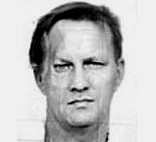
Earl Carl Heiselbetz
Murderer Brian Kevin Rosenfeld
Murderer · USA · 1985
Brian Kevin Rosenfeld Brian Kevin Rosenfeld was sentenced to three concurrent l…
23 victims
Brian Kevin Rosenfeld
Murderer · USA · 1985
Brian Kevin Rosenfeld Brian Kevin Rosenfeld was sentenced to three concurrent l…
23 victims
 Russell Ellwood
Murderer · USA · 1991
Russell Ellwood was a former taxi driver. Authorities suspected him of killing…
20 victims
Russell Ellwood
Murderer · USA · 1991
Russell Ellwood was a former taxi driver. Authorities suspected him of killing…
20 victims
 Robert Martines Perez
Murderer · USA · 1994
Name: Robert Martines Perez · Other name used in proceedings: Robert Martinez P…
15 victims
Robert Martines Perez
Murderer · USA · 1994
Name: Robert Martines Perez · Other name used in proceedings: Robert Martinez P…
15 victims
 Billy Frank Vickers
Murderer · USA · 1993
Billy Frank Vickers Vickers was executed by lethal injection in Texas on Januar…
14 victims
Billy Frank Vickers
Murderer · USA · 1993
Billy Frank Vickers Vickers was executed by lethal injection in Texas on Januar…
14 victims
 Donnie Andrews
Murderer · USA · 1986
Larry Donnell Andrews (April 29, 1954 – December 13, 2012) was an American crim…
2 victims
Donnie Andrews
Murderer · USA · 1986
Larry Donnell Andrews (April 29, 1954 – December 13, 2012) was an American crim…
2 victims
 Alex Wiens
Murderer · Germany · 2009
Alex Wiens (also known as Alexander Weins) was tried in Dresden, Germany, for t…
1 victim
Alex Wiens
Murderer · Germany · 2009
Alex Wiens (also known as Alexander Weins) was tried in Dresden, Germany, for t…
1 victim
 Elias Abuelazam
Serial killer · USA · 2009
Elias Abuelazam (born August 28, 1976) was an Israeli convicted murderer and su…
5 victims
Elias Abuelazam
Serial killer · USA · 2009
Elias Abuelazam (born August 28, 1976) was an Israeli convicted murderer and su…
5 victims
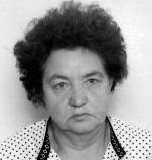 Maria Velten
Serial killer · Germany · 1963
Maria Velten was described as a classic “black widow” who killed her loved ones…
5 victims
Maria Velten
Serial killer · Germany · 1963
Maria Velten was described as a classic “black widow” who killed her loved ones…
5 victims
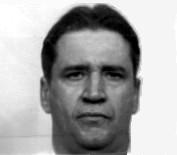 Daniel Joe Hittle
Mass murderer · USA · 1973
Daniel Joe Hittle was executed by lethal injection in Texas on December 6, 2000…
7 victims
Daniel Joe Hittle
Mass murderer · USA · 1973
Daniel Joe Hittle was executed by lethal injection in Texas on December 6, 2000…
7 victims
 Tristan Van der Vlis
Mass murderer · Netherlands · 2011
9 April 2011 — Tristan van der Vlis entered the Ridderhof mall in Alphen aan de…
6 victims
Tristan Van der Vlis
Mass murderer · Netherlands · 2011
9 April 2011 — Tristan van der Vlis entered the Ridderhof mall in Alphen aan de…
6 victims
- Gender
- male
- Country
- USA
- Location
- Sabine County, Texas, USA
- Date of birth
- April 1, 1951
- Age at first offence
- 40
- Characteristics
- neighborhood disputes
- Victim profile
- Rena Rogers, 27, and her 2 year old daughter Jacy
- Method of murder
- Strangulation
- Date(s) of murder
- May 30, 1991
- Years active
- 1991
- Date of arrest
- June 27, 1991
- Status
-
Executed
Executed by lethal injection in Texas on January 12, 2000
Case details
Name: Earl Carl Heiselbetz Execution offender identifier: #999014 Age at execution: 48 Trial plea: not guilty Capital offense: two murders
Timeline
- May 24, 1991 — Heiselbetz was suspected of shooting one of the Rogers dogs.
- May 30, 1991 — Rena Rogers and her 2 year old daughter Jacy were killed; Heiselbetz confessed he killed the victims at around 11 a.m.
- June 27, 1991 — Skeletal remains of an adult female and a child were found in and around a barn in nearby Tyler County; the remains were identified as those of Rena and Jacy Rogers.
- July 16, 1991 — Heiselbetz was charged by an indictment filed in the District Court of Sabine County, Texas, with the capital offense of two murders.
- November 18, 1991 — The jury found Heiselbetz guilty of capital murder.
- November 20, 1991 — Following a separate punishment hearing, the jury answered affirmatively the two special issues; the trial court sentenced Heiselbetz to death.
- June 28, 1995 — The Texas Court of Criminal Appeals affirmed Heiselbetz’s conviction and sentence.
- January 21, 1998 — The Court of Criminal Appeals denied a state habeas corpus application.
- February 5, 1998 — Heiselbetz filed a federal petition for writ of habeas corpus in the United States District Court for the Eastern District of Texas, Lufkin Division.
- October 20, 1998 — The district court denied relief and denied permission to appeal.
- July 26, 1999 — The United States Court of Appeals for the Fifth Circuit denied permission to appeal.
- January 12, 2000 — Heiselbetz was executed by lethal injection in Texas.
Background
Earl Carl Heiselbetz was the closest neighbor of the Rogers family, living about two tenths of a mile away near Pineland, Texas. Before the Rogers moved into their home, Heiselbetz broke into the locked house and stated that he could get into the house whenever he wanted.
Rena Rogers and her 2 year old daughter Jacy Rogers lived in a secluded home near Pineland, Texas. The home was secluded and not visible from the road. In one account, the victims were described as standing under five feet tall; Rena weighed no more than 90 pounds. Heiselbetz was described as 6'2" and over 250 pounds.
In a final moments account, Heiselbetz looked at his mother and father through a window as they watched during the execution.
The offence
On Thursday, May 30, 1991, Rena Rogers and her 2 year old daughter Jacy were killed. Heiselbetz confessed that he killed the victims at around 11 a.m. on Thursday, May 30, 1991.
Heiselbetz confessed to putting the two bodies into Rena’s car and driving them some miles away to a barn in nearby Tyler County, where the bodies were found about a month later. He also confessed that when he returned from hiding the bodies in the barn, he parked Rena’s car back at her house, then went into the Rogers’ home and took a package of frozen hamburger meat and canned tomato sauce, which he took home.
When asked how he had killed the victims, Heiselbetz answered that he did not know. He said he had blacked out and remembered marks on the victims’ necks. The interviewer asked if he had strangled the victims, and Heiselbetz answered that he did not think so.
The State’s theory of the offence said that Heiselbetz knew how to enter the Rogers’ home and actually entered it on the morning of Tuesday, May 28, 1991, to make “900” sweepstakes calls from their telephone, that he had been attacked by the watchdogs and killed the animals, and that on the morning of Thursday, May 30, 1991, he re-entered the Rogers’ home, believed Rena had gone for the day, made “900” telephone calls, was surprised by Rena returning from the grocery store, strangled Rena, strangled her two year old daughter Jacy in their home, then loaded the bodies into Rena’s car and transported them to the barn.
A court-appointed psychiatrist testified that nothing in his examination explained or excused Heiselbetz’s actions. The psychiatrist also testified that head injuries sustained by Heiselbetz in a traffic accident in 1975 could not have caused the amnesia which Heiselbetz claimed in his confession. A forensic anthropologist testified that strangulation was a possible cause of death of Rena Rogers. The skeletal remains of Rena evidenced “pink tooth,” a condition that appears in the teeth of those who have died of asphyxiation. “Pink tooth” did not occur in infants, and the incomplete skeletal remains of the infant Jacy evidenced no trauma which could suggest a cause of death.
The evidence also included testimony that holes in the blue jeans worn by Heiselbetz the day of the murders had no evidence that the holes were caused by bullets. A physician testified that an injury on Heiselbetz’s leg did not look like a gunshot wound, was not characteristic of a recent wound, and appeared to have been a year or two old.
Investigation
Heiselbetz was questioned by the Sabine County Sheriff on the day Rena and Jacy disappeared and responded in a questionable manner about his whereabouts, which made him a potential suspect. He was questioned again on the day the remains were discovered.
At the second interview, Heiselbetz voluntarily confessed to the murders in the presence of his wife at a relative’s home. He later signed a written confession stating that he killed the victims at around 11:00 a.m. on Thursday, May 30, 1991.
A few days after his confession, Heiselbetz guided police investigators on the route he had taken after killing Rena and Jacy and showed them where he had thrown Rena’s purse in a pond. The purse contained Rena’s identification and was recovered from the pond. It appeared that an attempt had been made to burn the purse and the items in it.
The Rogers’ telephone records showed that on May 28, 1991, at 10:01 and at 10:02 a.m., calls were made from the Rogers’ home to the Multiquest Sweepstakes at a “900” telephone number. The Rogers were not home at the times the calls were made, and no one had permission to be in their home.
Evidence was introduced that Heiselbetz liked to participate in sweepstakes contests and that he had informed his wife of his interest in participating in the “dial 900” telephone sweepstakes, but his wife had discouraged him because of the cost.
Arrest
Heiselbetz was not described as being arrested in the supplied material. He was questioned by the Sabine County Sheriff, and he became a potential suspect due to his questionable responses, followed by another interview on the day the remains were discovered.
Trial
Heiselbetz was tried before a jury upon a plea of not guilty.
On November 18, 1991, the jury found him guilty of capital murder. On November 20, 1991, following a separate punishment hearing, the jury answered affirmatively the two special issues submitted to it, and the trial court accordingly sentenced Heiselbetz to death.
In one account, Heiselbetz was convicted of capital murder under section 19.03(a)(6)(A), Tex. Penal Code, for a double murder committed on May 30, 1991, and the jury’s affirmative findings to two special issues resulted in a sentence of death under Article 37.071(e).
Heiselbetz raised thirty-three points of error on direct appeal.
Sentencing
The trial court sentenced Heiselbetz to death after the jury answered affirmatively the two special issues on November 20, 1991.
Appeals
Because he was sentenced to death, appeal to the Texas Court of Criminal Appeals was automatic.
The Court of Criminal Appeals affirmed Heiselbetz’s conviction and sentence on June 28, 1995.
Heiselbetz did not file a petition for certiorari review in the United States Supreme Court.
Heiselbetz filed an application for state habeas corpus relief in the convicting court on April 24, 1997. The Court of Criminal Appeals denied the application on January 21, 1998. He did not seek certiorari review to the Supreme Court.
He then filed a federal petition for writ of habeas corpus in the United States District Court for the Eastern District of Texas, Lufkin Division, on February 5, 1998. The district court denied relief on October 20, 1998, and also denied permission to appeal. The United States Court of Appeals for the Fifth Circuit denied permission to appeal on July 26, 1999.
Heiselbetz filed a petition for writ of certiorari to the United States Supreme Court, described as pending before the Court at the time the narrative was written. He also filed a subsequent state habeas application and two motions for stay of execution with the state courts, described as pending before the respective courts.
Outcome
Heiselbetz was executed by lethal injection in Texas on January 12, 2000.
Last statement: “Love y'all, see you on the other side.”
In an additional execution narrative, he was pronounced dead at 6:19 p.m., eight minutes after the flow of lethal drugs began. He coughed twice and gasped three times before falling into unconsciousness.
Other details
Victims and missing property
Rena Rogers and her 2 year old daughter Jacy Rogers were kidnapped from their home in Pineland, Texas and driven to Tyler County on May 30, 1991. Their remains were found June 27, 1991.
Rena’s car keys, purse, and a jar of coins were discovered missing from the Rogers’ home, but there was no sign of foul play at the home. Rena’s car was parked in her driveway.
Heiselbetz stole a change jar containing about $8 and a handgun and Rena’s purse. The purse and the jar were later found in a pond near the home.
Dog shooting and sweepstakes calls
On Friday, May 24, 1991, the Rogers family left their home to spend the long Memorial Day weekend out of town, leaving two watchdogs outside to guard their home. On Tuesday morning, May 28, 1991, the Rogers returned home. Bob Rogers arrived at work sometime between 10:30 and 11:00 a.m. and discovered that the two dogs were missing when he returned home that evening.
On June 2, 1991, the carcass of one missing dog was discovered near the Rogers’ and Heiselbetz’s houses, and the dog had been shot.
On May 28, Heiselbetz told his wife, Becky, that he had been bitten that morning by a dog. When she saw him later, he had a bite on his finger and scratches on his arms and he was upset. Evidence introduced at trial indicated his interest in “dial 900” telephone sweepstakes and that his wife had discouraged him because of the cost.
A neighbor saw Rena and Jacy at the grocery store at about 9:30 a.m. Rena had planned to meet her sister-in-law, Natalie Whitton, at 11:30 a.m. to travel together to Nacogdoches, and Rena planned to take Jacy. Natalie Whitton had confirmed plans over the telephone that morning, but Rena failed to show up.
Prior violence and family relationships (punishment-phase witnesses)
At the punishment phase of trial, various witnesses testified to Heiselbetz’s violent nature.
A 72 year old woman testified that about two years prior to trial Heiselbetz became violently angry when she fired him for doing a poor job on her roof. She testified that he chased her with a hammer, threatening to kill her.
Heiselbetz’s ex-wife testified that he physically abused their two children, including striking them on the head. She testified that the children needed professional psychiatric help and that Heiselbetz no longer had parental rights over the children.
She also testified that after their separation, Heiselbetz broke into her house and raped her.
Heiselbetz’s former sister-in-law testified that she once saw Heiselbetz beat his two children with the buckle end of a leather belt.
Drugs or alcohol
There was no evidence of drug or alcohol use connected with the instant offense.
Interview statements
In one interview narrative, Charles Mitchell, the Sabine County district attorney who prosecuted Heiselbetz, said: “He was kind of a loner-type of person who had gotten into making sweepstakes (toll) calls. He went over to (Ms. Rogers') house to make 1-900 calls for some kind of sweepstakes,” and: “We theorize maybe he was caught there in the house after they got home from the grocery store, they got into an altercation and he killed the woman and killed her child.”
In another account, Heiselbetz said: “I'm not worried about myself,” adding that he needed to “just get my heart right with God.”

Spotted an error, or have more information about this case?