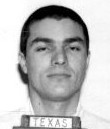
Victor Saldano
Murderer Brian Kevin Rosenfeld
Murderer · USA · 1985
Brian Kevin Rosenfeld Brian Kevin Rosenfeld was sentenced to three concurrent l…
23 victims
Brian Kevin Rosenfeld
Murderer · USA · 1985
Brian Kevin Rosenfeld Brian Kevin Rosenfeld was sentenced to three concurrent l…
23 victims
 Russell Ellwood
Murderer · USA · 1991
Russell Ellwood was a former taxi driver. Authorities suspected him of killing…
20 victims
Russell Ellwood
Murderer · USA · 1991
Russell Ellwood was a former taxi driver. Authorities suspected him of killing…
20 victims
 Robert Martines Perez
Murderer · USA · 1994
Name: Robert Martines Perez · Other name used in proceedings: Robert Martinez P…
15 victims
Robert Martines Perez
Murderer · USA · 1994
Name: Robert Martines Perez · Other name used in proceedings: Robert Martinez P…
15 victims
 Billy Frank Vickers
Murderer · USA · 1993
Billy Frank Vickers Vickers was executed by lethal injection in Texas on Januar…
14 victims
Billy Frank Vickers
Murderer · USA · 1993
Billy Frank Vickers Vickers was executed by lethal injection in Texas on Januar…
14 victims
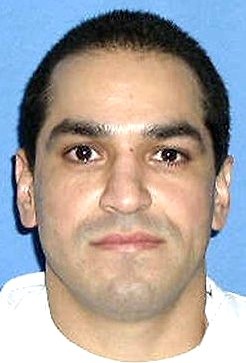 Lionell Gonzales Rodriguez
Murderer · USA · 1990
Lionell Gonzalez Rodriguez was executed by lethal injection on June 20, 2007 in…
1 victim
Lionell Gonzales Rodriguez
Murderer · USA · 1990
Lionell Gonzalez Rodriguez was executed by lethal injection on June 20, 2007 in…
1 victim
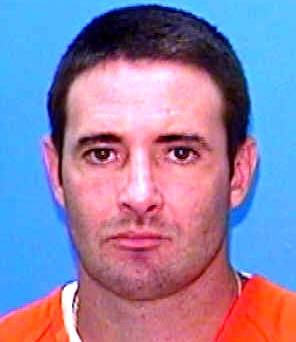 John Troy
Murderer · USA · 2001
Name: John Troy · Date of birth (DOB): 12/05/69 · Twelfth Judicial Circuit: Sar…
1 victim
John Troy
Murderer · USA · 2001
Name: John Troy · Date of birth (DOB): 12/05/69 · Twelfth Judicial Circuit: Sar…
1 victim
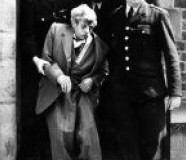 Tom Lionel Burns
Homicide · 1958
Tom Lionel Burns was a retired driver and played the piano. He was 71 years old…
2 victims
Tom Lionel Burns
Homicide · 1958
Tom Lionel Burns was a retired driver and played the piano. He was 71 years old…
2 victims
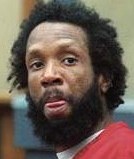 Daryl Mack
Murderer · USA · 1988
Daryl Linnie Mack was executed in Nevada on April 26, 2006 for the rape and mur…
2 victims
Daryl Mack
Murderer · USA · 1988
Daryl Linnie Mack was executed in Nevada on April 26, 2006 for the rape and mur…
2 victims
- Gender
- male
- Country
- USA
- Location
- Collin County, Texas, USA
- Date of birth
- October 22, 1972
- Age at first offence
- 23
- Characteristics
- kidnapping, armed robbery
- Victim profile
- Paul Ray King
- Method of murder
- Shooting
- Date(s) of murder
- November 25, 1995
- Years active
- 1995
- Date of arrest
- —
- Status
-
Sentenced to death
Sentenced to death on September 12, 1996; federal habeas corpus proceedings overturned the death sentence based on a procedurally defaulted claim of prosecutorial misconduct at appellant's 1996 trial; in 2004, appellant was again sentenced to death at another punishment hearing in state court; on direct appeal, the judgment was affirmed (delivered June 6, 2007)
Parties
- Victor Saldano, appellant.
Background
- In 1996, Victor Saldano was convicted of capital murder and sentenced to death.
- The conviction was upheld, but the death sentence was overturned in federal habeas corpus proceedings based on a procedurally defaulted claim of prosecutorial misconduct at Victor Saldano's 1996 trial.
- Since his 1996 trial, Victor Saldano resided on death row.
- Victor Saldano committed numerous acts of misconduct on death row that resulted in him being placed in the most restrictive and isolated level of death row.
The offence
- The record reflected that Victor Saldano and an accomplice (Chavez) forced the victim into the victim's car in the parking lot of a grocery store.
- Victor Saldano and Chavez took the victim in the victim's own car to a remote location and parked.
- Victor Saldano led the victim into some woods while Chavez waited at the car.
- Victor Saldano shot the victim five times, with the last shot to the head at close range, to make sure the victim was dead.
- Victor Saldano was confrontational when the police arrested him about an hour later.
- That evening, several police officers observed that Victor Saldano was unremorseful and that his situation seemed like "a joke to him."
- One officer told Victor Saldano several times that he should take his situation seriously and stop laughing.
- Victor Saldano was involved in an attempted armed robbery about five days before the victim's murder.
Investigation
- The record included observations by police officers on Victor Saldano's demeanor at the time of his arrest.
Arrest
- The police arrested Victor Saldano about an hour after he was confronted.
Trial
1996 conviction and sentence
2004 punishment hearing and direct appeal
- In 2004, Victor Saldano was again sentenced to death at another punishment hearing in state court.
- Victor Saldano raised 66 points of error on direct appeal.
- The court found none of these points to present reversible error and affirmed.
Sentencing
Death sentence and future-dangerousness special issue
- The future-dangerousness special issue required the jury to determine "whether there is a probability that the defendant would commit criminal acts of violence that would constitute a continuing threat to society."
- The court noted prior holdings that this special issue was not unconstitutionally vague.
Mitigation testimony and the Lagrone issue
- The defense intended to explain Victor Saldano's death-row misconduct with testimony from a psychiatrist (Peccora).
- Peccora treated Victor Saldano on death row "on well over 100 occasions" from "late 1997 or early 1998" until "early 2001."
- The defense intended Peccora's testimony to support the claim that the conditions on death row caused Victor Saldano to suffer psychological deterioration and to misbehave.
- The State claimed, and the trial court agreed, that the defense could not present Peccora's testimony without first having Victor Saldano examined by a state psychiatric expert pursuant to Lagrone v. State.
- Victor Saldano would not submit to a Lagrone examination, and Peccora's testimony was not presented.
Claims raised on appeal regarding Lagrone
- Victor Saldano raised three basic, separate complaints on appeal regarding Lagrone:
- Victor Saldano should not have been required to submit to a Lagrone examination.
- If required, the examination should have been limited to rebuttal of Peccora's testimony on Victor Saldano's mental decline.
- If required, the State should have been precluded from using any evidence derived from the examination on the future-dangerousness special issue.
Timing of trial-court requests and rulings
- The Lagrone issue first arose during a November 5, 2004 hearing on a written motion filed October 21, 2004, during individual voir dire.
- Appellant's motion on November 5, 2004 included:
- A request that the State could not seek another death sentence and therefore Victor Saldano be sentenced to life imprisonment.
- An alternative request for an in limine ruling to exclude all evidence of Victor Saldano's death-row misconduct subsequent to the first trial in July 1996.
- Victor Saldano argued that the State should not be permitted to seek another death sentence or, alternatively, not permitted to use any evidence of Victor Saldano's death-row misconduct after the 1996 trial because of the procedurally defaulted claim of prosecutorial misconduct at the 1996 trial.
- Victor Saldano stated he intended to introduce Peccora's testimony at the hearing to show Victor Saldano's mental decline on death row since his 1996 trial.
Verbatim statements from the November 5, 2004 hearing
Defense counsel stated:
Sure. And the first part of the motion won't be the focus today. We're looking just, really, at the second part and the third part. And regarding those parts, there are just two factual issues that we need to put evidence on. The first factual issue is whether [appellant] has suffered a decline in his cognitive abilities and emotional stability as a result of his isolation on death row; and the second issue is whether [appellant] would have committed aggressive acts while incarcerated were it not for the isolation on death row.
[THE COURT]: Gotcha.
[THE DEFENSE]: Now, in legal terms, the way this fits in is, the State should not be able to enjoy the fruits of [the procedurally defaulted claim of prosecutorial misconduct at appellant's 1996 trial] that it committed eight and one-half years ago. And if the Court finds that [appellant] has suffered a decline in his cognitive abilities and emotional stability-and, your Honor, it doesn't require a finding on our part that he is psychotic, we're not arguing he's not competent to stand trial; we're only arguing a significant decline in cognitive ability and emotional stability. If that's the case, our argument is he may no longer be tried. The State committed [the procedurally defaulted claim of prosecutorial misconduct at appellant's 1996 trial] by putting him on death row, they caused him to be diminished as a result of many years in isolation there, and they can't enjoy the fruits of that at the new sentencing proceeding today. And, in fact, he can't even be evaluated fairly as a future danger because he's not just the same person today, and the statute requires an evaluation of future dangerousness as of the time of trial. Second, on the issue of whether [appellant] would have committed aggressive acts while incarcerated if not for the isolation that he was subjected to, the question is whether the State can present evidence of his misconduct on death row on the issue of future dangerousness. And our position is that the State committed the primary illegality here [with the procedurally defaulted claim of prosecutorial misconduct at appellant's 1996 trial]. If the State can show by a preponderance of the evidence that the defendant's misconduct on death row would have occurred anyway, then we have nothing to complain about. If you think of this in terms of an illegal search and seizure, and the fruits of an illegal search and seizure, clearly the illegality occurred. That means that the State can certainly try to overcome that illegality; show that, for instance, the evidence would have been obtained anyway; but they have the burden of showing that this misconduct would have occurred in any case. We maintain that it's very clear from the testimony we'll present that the misconduct occurred precisely because of the isolation on death row that the State illegally placed him in.- Defense counsel stated:
- And further counsel stated:
Well, let me-let me make this even more clear. The reason that we're putting that into evidence at this point is, we are not going to allow [appellant] to be looked at by a psychiatrist.
He'll invoke his Fifth Amendment right.
- Defense counsel stated:
Your Honor, may I add? I'd like to point out that we're being placed in a situation risking that [appellant's] testimony-[appellant's] examination to a psychiatrist of the State could actually be used against him at trial. Faced with that possibility, we can't have the-our client examined for the purposes of this pretrial motion. It's just a risk that we can't run.
- Defense counsel stated:
The trial court stated:
Let me get something up front here. I have had a chance to read, during some of that testimony, that Lagrone case, and I believe the State has a right to have [appellant] examined if the State's-if the defense is going to offer the evidence along the lines set out in [Peccora's] affidavit, which I've now reread.
The trial court stated:
I gotcha.
State resting and later motion on November 15, 2004
- On Friday, November 12, 2004, the State rested its punishment hearing case-in-chief.
- On Monday morning, November 15, 2004, Victor Saldano filed another written motion requesting reconsideration of the earlier ruling on the Lagrone issue.
- In the November 15, 2004 motion, Victor Saldano for the first time offered to submit to a Lagrone examination.
- In that motion, Victor Saldano for the first time alerted the trial court to the claim that the Lagrone examination should be limited to rebutting any testimony by Peccora on Victor Saldano's mental decline.
- That motion requested a hearing scheduled five days later on November 20, 2004, because that was "the only possible date for [Peccora's] voluntary attendance."
- The motion encouraged the jury to begin deliberations prior to any hearing, with the jury refraining from pronouncing its verdict before the hearing.
- The motion asserted that Victor Saldano was willing to wait and have a hearing held after the verdict, in the context of a motion for a new trial, described as a motion for reconsideration of the sentence.
Verbatim statements from the November 15, 2004 written motion
- The motion stated:
Defendant continues to insist that the Court ruled incorrectly in barring [Peccora] from testifying at the hearing of November 5, 2004 without a prior examination of [appellant] by the State's expert, but more seriously, as the Court recognized at the hearing, its decision created a risk for the Defendant-that the State would use its own examination of the Defendant not only on the pre-trial motion of Defendant's impairment, but to prove future dangerousness before the jury. The Defendant returns to the Court in this motion to request that the Court develop some device to permit it to overcome its dilemma.
- Defendant has two proposals for the Court to overcome the problem it faces in needing to consent to an examination of [appellant] prior to any testimony by [Peccora]. First, Defendant asks the Court to order that the prosecution be permitted to examine [appellant], but on condition that the examination not be used for any purpose other than the question of his decline in cognitive ability and emotional stability on Death Row. Because [Peccora] will need to travel to McKinney from Houston, and because [Peccora's] mother is receiving chemotherapy this week and his patient schedule is therefore especially tight, the Defendant also requests that the hearing be scheduled for Saturday, November 20, since that is the only possible date for [Peccora's] voluntary attendance. The Defendant appreciates the difficulties that this causes the Court, but is unable to demand more of [Peccora] at a very trying time for him. Defendant would encourage the Court to have the jury begin deliberations prior to any hearing, with the jury simply refraining from pronouncing its verdict before the hearing. Second, the Defendant is willing to wait and have a hearing held after the verdict, in the context of a motion for a new trial, which in the present case might better be described as a motion for reconsideration of the sentence. . . . Defendant would have preferred to have any competency-type issue resolved pre-trial, but in the context of the difficulty that [Peccora] will have attending a hearing, it is willing to accept this alternative, of the Court ruling against the Defendant for the purpose of the trial, but reconsidering the issue with an evidentiary hearing post-trial.
- The defense agreed at a hearing held on the morning that it was filed that it was requesting reconsideration of the earlier ruling.
Verbatim statements from the November 15, 2004 hearing
- The trial court stated:
This is-it's titled basically the same way. They-the defense wants me to reverse my ruling barring [Peccora] from testifying about [appellant's] deterioration, is the best word I can recall-call it, because of his confinement death row for the last several years. I had earlier ruled that I would not let-the issue arose that, if the I had allowed [Peccora] to testify, that the State was going to insist on having [appellant] examined by their expert, which I tended to agree they could do because of the case law as I read it. At that point, as I recall, the defense decided that it would not-they did not want to insist on [Peccora] testifying; but, instead, offered his affidavit which he had attached to the original motion instead, which I, of course, considered, and did consider.
- The trial court stated:
At that point that pretty much any of the-now, the State has filed a controverting affidavit; I believe I saw that one day last week. And that was by [Price]? Is that your doctor?
[STATE]: Yes, your Honor. - The trial court stated:
Which I also-but I had earlier, before I'd actually seen [Price's] affidavit, I had denied the defense motion, and let it go at that. I have not done more on it. And then Price's motion was filed, and now the defense has filed a motion-I think it's asking to reconsider, [defense lawyers]? Is that a fair statement?
- The State stated:
Your Honor, I believe that [appellant] was only stalling and asking for a delay in tactics.
- The trial court stated:
A Lagrone examination would probably open everything up" about "anything relevant to [appellant's] mental state, including future dangerousness, which is the defense concern."
- The trial court stated:
I did not have a chance to fully brief the-how far, if I could-if I could even restrict your expert if he didn't-assuming [Peccora] was allowed to testify, and then, consistent with my earlier ruling, then he would be entitled-the State would be entitled then to have their expert examine [appellant], and what that would open up. And my belief is that it would probably open everything up. And if your witness testifies and-examines [appellant] and testified to whatever it is in response to Mr.-[Peccora's] testimony going to be, which, generally, is going to be that [appellant] deteriorated, degradated-degraded, I should say-on death row, I would suspect your witness would be entitled to testify about anything relevant to his mental state, including future dangerousness, which is the defense concern. So I don't know how I can-Mr. Franklin, I don't know how I can limit, under the case law, their expert. I mean, I guess I could order it, but I'm not going to disregard the law. So I don't know-I don't have-and the other option he suggests is to wait and have a hearing after the verdict.
- The trial court denied appellant's request to limit a Lagrone examination to rebutting Peccora's testimony on Victor Saldano's mental decline.
- Victor Saldano again would not submit to a Lagrone examination.
- Victor Saldano did not offer Peccora's testimony at the punishment hearing or any other hearing.
Jury
Challenges for cause and peremptory strikes
In points of error six through sixteen, Victor Saldano challenged the trial court's denial of his challenges for cause to eleven veniremembers:
- Vanlokeren (point six)
- Janszen (point seven)
- Gilbert (point eight)
- Wilson (point nine)
- Kunesh (point ten)
- Powers (point eleven)
- Kleber (point twelve)
- Gaus (point thirteen)
- Farris (point fourteen)
- Baird (point fifteen)
- Garfield (point sixteen)
The trial court's denial of challenges for cause was reviewed under a standard requiring a clear abuse of discretion for reversal.
Verbatim statements about Garfield
- The defense stated:
Your Honor, based on the Court's decision to deny the challenge [to Garfield], we would request additional preparatory [sic] strikes at this time. Would, for the record, point out that, in addition to this juror that we would not want on the panel, the challenges for cause that also having been made and used on the other jurors-specifically Juror Number 189, Kleber-the challenges for cause that were denied by the Court, 189, Dennis Kleber; 175, Joyce Powers; 127, Marie Kunesh; 101, Don Wilson; 28, Patti Gilbert-especially Patti Gilbert-Juror-I'm sorry; Juror 6, Bruce Van Lokeren. For those reasons, we request an additional peremptory at this time.
- The trial court stated:
Mr. Harrison I'm going to decline to do that. I'm conscious of your position. I feel like the Court's been very careful in considering your challenges, and somebody else may think otherwise; but I'll decline to give you additional challenges at this time. So what says you all about the Juror Garfield?
- The defense stated:
Well, based on the decision, we are forced to accept.
- Victor Saldano challenged Garfield on the basis that Garfield would require the defense to have the burden to show mitigating circumstances.
- The record included voir dire questioning and responses from Garfield:
Garfield voir dire excerpts (verbatim)
- Garfield stated:
Um, I understand the law. I understand the Constitution. But I have to say, in my own mind, a complete lack of defense-okay; in other words, rebuttal to any of the claim-would psychologically be a factor for me.
- Garfield stated:
I can promise you that.
- Garfield stated:
I can.
- Garfield stated:
A. I can promise you that.
- Garfield stated:
On this record, Garfield also stated that he could "keep an open mind and consider everything for mitigation on the [mitigation special issue]."
Veniremember voir dire and trial-court rulings summarized in the decision
- The decision addressed each contested veniremember's responses and whether the trial court abused its discretion in denying the challenges for cause, ultimately concluding no clear abuse of discretion was evident for the listed veniremembers:
- Vanlokeren
- Janszen
- Gilbert
- Wilson
- Kunesh
- Powers
- Kleber
- Gaus
- The decision concluded it was unnecessary to decide whether the trial court erred as to Farris and Baird because harm required denial of at least three challenges for cause among points six through fifteen.
Evidence and evidentiary rulings
Autopsy photographs
- Victor Saldano claimed on appeal that the trial court erred in admitting autopsy photographs in violation of Tex. R. Evid. 403.
- The trial court overruled the objection, finding:
that the probative value of the particular exhibits outweighs the prejudicial value, given the nature of this case and the evidence.
- The medical examiner used the autopsy photographs to explain testimony about the victim's five gunshot wounds.
Medical examiner verbatim exchanges (excerpts)
- The medical examiner stated:
Well, this is the entry site behind [the victim's] left ear. Now, this is a photograph that is dirty, or not cleaned up. I haven't shaved away the hair so you can better see the entry, and haven't cleaned up any blood. This is as it is uncleaned.
- The medical examiner stated:
Well, this is a cleaned-up photograph of the entry site behind the left ear. Here I have the hair shaved away, and I've cleaned away a lot of the blood, and you can easily see the entry wound. One of the things I'd like to point out is that there's characteristics of a contact wound here, and that there's splitting of the wound here, a long laceration; and if you look a little harder, the edges are serrated, or jagged, right up in here, which is-it's not a smooth round defect like you'd expect in a distant shot. Only a contact wound against a flat bone would create this sort of a situation.
Oral statements and remorse testimony by officers
- The decision addressed oral statements made by Victor Saldano while in custody, including testimony that Victor Saldano did not express remorse.
- Officer Giddings testified about observations during booking.
Giddings verbatim exchanges
Giddings stated:
Nice. He was not unhappy. He seemed to be nonchalant about the whole thing. At times he would laugh; and during-during the book-in process, he-he would laugh and cut up and just seemed like everything was fine.
Giddings stated:
None whatsoever.
The decision also addressed officer Pero's testimony regarding demeanor and a hand gesture.
- Pero testified Victor Saldano was amused with the situation and chuckled or laughed.
- Pero testified:
On one of the times where I opened the door to the interview room to check on [appellant], he flipped me off and chuckled as I exited.
- Pero stated:
Simply that; simply me opening the door to check on him, as I did periodically. There was no words spoken, just the gesture and the chuckle.
- Pero stated:
No.
Admission of confession to prior murders (prior bad act)
- During transportation back to the courthouse from jail after a lunch break, Victor Saldano spontaneously told a county detention officer (Poindexter) that he had "killed three people in Oak Cliff."
- Victor Saldano objected on hearsay grounds.
- The State responded that it was a party opponent admission and not hearsay.
- The trial court overruled the objection.
Poindexter testimony verbatim exchange
- Poindexter testified:
He stated kind of in a-we were talking about Argentina, and then there was a pause, and out of nowhere he just kind of turned and looked at me and said, You know I killed three people in Oak Cliff.
Jury charge
Victor Saldano raised multiple challenges to the jury charge in points of error twenty-five through forty-nine, including claims about:
- the rational process for life or death determinations
- instructions balancing individualized sentencing and deterrence
- alleged legal insufficiency of the punishment charge as a whole
- alleged failures to allow mercy or mitigate evidence in prescribed ways
- instructions on presumptions, meanings of terms, and how mitigation and future-dangerousness special issues should be answered
- alleged limitations on victim impact evidence
- instructions related to extraneous offenses and proof requirements
The court stated that it believed it sufficient to dispose of these points by recognizing that the trial court submitted a charge consistent with applicable state statutes, which had withstood numerous constitutional challenges.
The court stated that these state statutory provisions narrowed death eligibility and provided a jury a vehicle to "fully" consider mitigating evidence "in every conceivable manner in which the evidence might be relevant."
Points of error twenty-five through forty-nine were overruled.
Appeals
Direct appeal
- Victor Saldano's direct appeal in this case included 66 points of error.
- The court overruled points of error one through three and five regarding Lagrone and the limitations sought.
- Point of error four regarding vagueness of the future-dangerousness special issue was overruled.
- Points of error six through fifteen regarding challenges for cause to veniremembers were overruled.
- Point of error sixteen regarding the denial of the challenge for cause to Garfield was overruled.
- Points of error seventeen through nineteen were overruled.
- Points of error twenty through twenty-four were overruled.
- Points of error fifty through sixty-six raising constitutional challenges to Texas death penalty statutes were overruled.
- The judgment of the trial court was affirmed.
Prior federal habeas and reversal of death sentence (described in the decision)
- The court described that the death sentence was overturned in federal habeas corpus proceedings based on a procedurally defaulted claim of prosecutorial misconduct at the 1996 trial.
Outcome
- The court affirmed the judgment of the trial court.
- The opinion was delivered June 6, 2007.
Aftermath
- The decision concluded that none of the points raised presented reversible error.
Spotted an error, or have more information about this case?