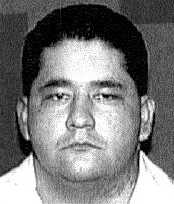
Michael Dean Gonzales
Murderer Brian Kevin Rosenfeld
Murderer · USA · 1985
Brian Kevin Rosenfeld Brian Kevin Rosenfeld was sentenced to three concurrent l…
23 victims
Brian Kevin Rosenfeld
Murderer · USA · 1985
Brian Kevin Rosenfeld Brian Kevin Rosenfeld was sentenced to three concurrent l…
23 victims
 Russell Ellwood
Murderer · USA · 1991
Russell Ellwood was a former taxi driver. Authorities suspected him of killing…
20 victims
Russell Ellwood
Murderer · USA · 1991
Russell Ellwood was a former taxi driver. Authorities suspected him of killing…
20 victims
 Robert Martines Perez
Murderer · USA · 1994
Name: Robert Martines Perez · Other name used in proceedings: Robert Martinez P…
15 victims
Robert Martines Perez
Murderer · USA · 1994
Name: Robert Martines Perez · Other name used in proceedings: Robert Martinez P…
15 victims
 Billy Frank Vickers
Murderer · USA · 1993
Billy Frank Vickers Vickers was executed by lethal injection in Texas on Januar…
14 victims
Billy Frank Vickers
Murderer · USA · 1993
Billy Frank Vickers Vickers was executed by lethal injection in Texas on Januar…
14 victims
 John Richard Baltazar
Murderer · USA · 1997
John Richard Baltazar was executed in Texas. · September 27, 1997 — John Baltaz…
1 victim
John Richard Baltazar
Murderer · USA · 1997
John Richard Baltazar was executed in Texas. · September 27, 1997 — John Baltaz…
1 victim
 Vincent Tabak
Murderer · United Kingdom · 2010
Vincent Tabak was a Dutch engineer who lived and worked in the United Kingdom s…
1 victim
Vincent Tabak
Murderer · United Kingdom · 2010
Vincent Tabak was a Dutch engineer who lived and worked in the United Kingdom s…
1 victim
 Jeong Nan-Kyu
Serial killer · South Korea · 2004
January 2004 — Jeong Nam-gyu began a period of killings and assaults that would…
13 victims
Jeong Nan-Kyu
Serial killer · South Korea · 2004
January 2004 — Jeong Nam-gyu began a period of killings and assaults that would…
13 victims
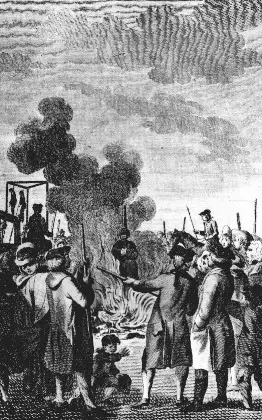 Ann Beddingfield
Murderer · United Kingdom · 1762
Ann Beddingfield was convicted of petty treason for the murder of her husband,…
1 victim
Ann Beddingfield
Murderer · United Kingdom · 1762
Ann Beddingfield was convicted of petty treason for the murder of her husband,…
1 victim
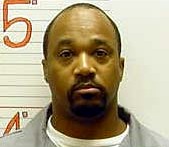 Andre Cole
Murderer · USA · 1998
Andre Cole and his wife, Terri Cole (Terri), divorced in 1995 after eleven year…
1 victim
Andre Cole
Murderer · USA · 1998
Andre Cole and his wife, Terri Cole (Terri), divorced in 1995 after eleven year…
1 victim
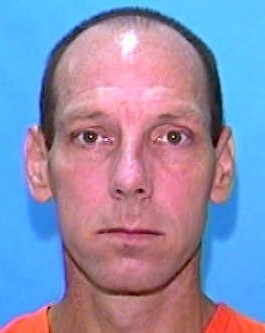 William Happ
Murderer · USA · 1986
Name: William Happ · Prisoner number / identifier: DC# 117027 · Date of birth:…
1 victim
William Happ
Murderer · USA · 1986
Name: William Happ · Prisoner number / identifier: DC# 117027 · Date of birth:…
1 victim
- Gender
- male
- Country
- USA
- Location
- Odessa, Texas, USA
- Date of birth
- September 1, 1973
- Age at first offence
- 22
- Characteristics
- robbery
- Victim profile
- Manuel Aguirre, 73, and Merced Aguirre, 65 (his neighbors)
- Method of murder
- St abbing with knife
- Date(s) of murder
- May 7, 1995
- Years active
- 1995
- Date of arrest
- Same day
- Status
-
Sentenced to death
Sentenced to death on December 12, 1995; conviction and death sentence were affirmed on federal appeal in 2006 by the United States Court of Appeals for the Fifth Circuit
Case record: Michael Dean Gonzales
Background
Michael Dean Gonzales was convicted of capital murder and sentenced to death.
A Texas jury convicted Gonzales of killing Manuel and Merced Aguirre. The killings occurred in Odessa, Texas in the home of the Aguirres on the night of April 21, 1994. Gonzales stabbed Manuel and Merced Aguirre to death.
Mr. Aguirre was stabbed eleven times. Mrs. Aguirre had stab wounds too numerous to count, including many defensive wounds. A blood spatter expert testified that Mr. Aguirre was overcome quickly, but Mrs. Aguirre fought even after falling to the floor in the attack. The medical examiner testified that she had been “basically butchered.”
The police investigation focused quickly on Gonzales. Gonzales, along with his mother, wife, and child, lived in the house next door to the Aguirres. Prior to the night of the murders, the Aguirres complained to police about being disturbed by Gonzales’s late night activities. The Aguirres’ son testified that their fear of Gonzales was one of the reasons they put bars on their windows.
No one else was charged in the murders.
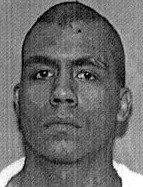
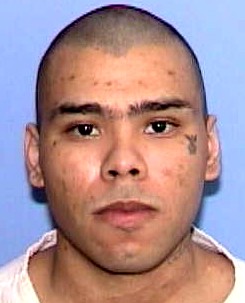
Gonzales was in a gang called “Homies Don’t Play.” At trial, an officer testified that Gonzales had two teardrop tattoos on his face when he was arrested, and that the tattoos were a gang symbol signifying the number of people a person has killed.
Detective Robertson suspected that two other gang members, Daniel Lugo and Jesse Perkins, were involved in the murders. Julian Olivarez believed that both of them probably had something to do with the murders. Lugo had told a friend that there were dead bodies in the Aguirres’ house at least an hour before the crime was reported by the Aguirres’ son.
The offence
Gonzales stabbed Manuel Aguirre and Merced Aguirre to death in their home in Odessa, Texas.
Mr. Mrs. Aguirre sustained stab wounds too numerous to count, including many defensive wounds. Aguirre was overcome quickly. The medical examiner testified that Mrs. Aguirre had been “basically butchered.”
Investigation
After the murders, Gonzales was taken into custody for questioning approximately sixteen hours after the murders. Gonzales consented to a luminol test of his arms, hands, and shoes.
Except for the site on Gonzales’s arm where the police had drawn blood that day, the luminol test did not indicate the presence of blood on the portions of Gonzales’s body that were tested. When Gonzales was taken into custody, police officers Lambert and Thomas conducted the luminol test on Gonzales’s hands, arms, and shoes. Luminol becomes fluorescent when it comes into contact with any traces of blood. The only area that appeared fluorescent was at the crook of Gonzales’s arm, where blood had been drawn shortly before the test. Lambert’s report characterized the test result as “inconclusive.”
Gonzales was released from custody after being questioned.
Police found a “blood transfer” stain on a camper parked in the alley between the Aguirre and Gonzales houses. Police also noticed that the alley had recently been swept clean. An anonymous Crime Stoppers informant reported that Gonzales had swept the dirt in that alley the morning after the murders.
Police found a red pepper on the floor underneath Mrs. Aguirre’s body. The same type of pepper was found on Gonzales’s back doorstep, and a bowl of the same peppers was found in his refrigerator. Detective Snow Robertson testified at trial that he attempted, unsuccessfully, to locate such peppers in local stores. There was evidence that these peppers were not native to Texas and were unique to a certain area of Mexico.
The medical examiner testified at trial that the type of knife found in Gonzales’s home could have caused both of the victims’ wounds. On cross examination, the medical examiner stated that he could not rule out the possibility that Mrs. Aguirre was stabbed with more than one knife.
Police also found a white Dexter & Russell kitchen knife in Gonzales’s home.
The police investigation included searching for stolen items. On the day after the murders, a neighbor found property belonging to the victims in front of the dumpster located on the route from Gonzales’s house to Linda Olivarez’s home. Police later found more of the Aguirres’ property in or around the dumpster. Although there was no sign of forced entry, the Aguirres’ son identified a microwave, a VCR, a camera, a stereo, and a .22 pistol as missing from their house.
Less than a week after the murders, Gonzales asked Olivarez and her husband, Julian, if they wanted to buy a microwave oven. Julian told Gonzales he would have to see it first. Julian, Linda, and Gonzales went to Gonzales’s house, where Gonzales showed them a VCR, a camera, and a stereo for sale. The Olivarezes purchased the microwave, VCR, and stereo. Gonzales showed Julian a .22 caliber pistol but told him it was not for sale. Gonzales said, “They are on to me.” When Julian asked what he meant, Gonzales replied, “No, I can't tell you.” After the Olivarezes took the items to their home, Gonzales retrieved the stereo because they had not paid for it yet and he had already sold it to someone else.
During interrogation, Daniel Lugo, a member of Gonzales’s gang, told the police that he had the Aguirres’ stolen stereo, which he had gotten from Gonzales. Gonzales’s fingerprint was found on the back of the stereo. The pistol was eventually recovered from Delia Sanchez, who testified that she purchased it from Gonzales. These items were later identified as those stolen from the Aguirres’ home.
Some empty shell casings found in a box at Gonzales’s house were determined to have been fired from the Aguirres’ gun. Ballistics testing indicated that some empty shell casings found in a box at his home had been fired from the victims’ .22 caliber gun that also was stolen from their home on the night of the murders.
Arrest and custody
Gonzales was arrested fifteen days after the murders and charged with capital murder for the murder of more than one person during the same criminal transaction.
On the day Gonzales was arrested, Charles Kenimer, a guard at the local jail and Gonzales’s relative, saw Gonzales leave a police station interrogation room with Detective Robertson and a Texas Ranger. Kenimer testified that Gonzales seemed upset and that he tried to calm Gonzales by stating, “Boy, you really got these officers upset. I don't know what you said.” Kenimer testified that Gonzales responded, in Spanish, “They're trying to pin this rap on me, this murder rap on me. They can't do it. They don't have any evidence. Although I did it, you know, but they don't have anything to go on.”
In part of Gonzales’s habeas petition for which the court did not grant a certificate of appealability, Gonzales argued that his counsel was ineffective for failing to impeach Kenimer with the somewhat different statement Kenimer made soon after this confession. Kenimer reported: “I was escorting [Gonzales] back to his cell, in D Block. He then blurted out ‘They can't pin nothing on me’. I told him I don't know, I'm not familiar with what your case is. Michael Gonzales is my third cousin, on my mother's side, and he knows I'm his cousin. Michael then said ‘I did it, but they can't pin nothing on me.’ I then told him I don't know what you're talking about. He replied was (sic) ‘On the murder of the old man and the old lady.’”
Trial
Guilt-innocence phase
During the guilt-innocence phase, the defense strategy was to highlight evidence of other parties’ involvement in the offence and to emphasize the State’s burden of proof. The prosecution did not request a jury instruction on the law of parties. The jury therefore had to find that Gonzales intentionally caused the death of both victims by stabbing them.
During closing argument, defense counsel argued that the evidence strongly suggested other suspects were involved and that there was no direct evidence that Gonzales murdered both victims. Defense counsel repeatedly reminded the jury that Gonzales could not be held responsible for an accomplice’s criminal conduct.
During his final closing argument, the prosecutor argued, without objection, that Gonzales was guilty of capital murder even if he killed only one of the victims and aided and abetted someone else in the killing of the other victim.
During deliberations, the jury asked: “we need clarification on capital murder versus murder verdict. If Mr. Gonzales murdered one individual only, then does his association make him guilty of both.”
The trial judge responded by referring the jury to the charge.
The jury found Gonzales guilty of capital murder.
Evidence relating to tattoos
When Gonzales was arrested, he had two teardrop tattoos on his face. Detective Robertson testified at trial that teardrops tattooed on a gang member’s face represent the number of people that the individual has killed.
Defense counsel objected on the ground that Robertson was unqualified to give an expert opinion on the subject. After Robertson described his gang-related training, the trial court overruled the objection and admitted the testimony. Defense counsel did not cross-examine Robertson about the tattoos and did not present expert testimony about the possible meaning of the tattoos at the guilt phase of trial.
During closing argument, the prosecutor characterized the tattoos as an admission of the murders of two people: “Some of the days that you were here, you saw me wearing a Shriner pin. I am a Shriner. I am proud of that, and I wear that symbol proudly. Well, gangsters in their own way have their symbols and they wear them proudly. Two teardrops. What does that mean? That means he has killed two people. And the symbol is there for those of his kind to see and appreciate. He doesn't try to hide it. It is as much as leaping out and saying to you, ‘I did it, but they will never prove it.’”
In part, Gonzales argued on direct appeal that Robertson’s testimony was offered to prove that he had committed two extraneous murders, and that his counsel rendered ineffective assistance by failing to object to the testimony on that ground.
The Texas Court of Criminal Appeals disagreed on the direct appeal argument about ineffective assistance, concluding that from the context of the testimony, Robertson appeared to be presenting evidence that Gonzales committed the murders of Mr. and Mrs. Aguirre and that because the testimony was not extraneous offence evidence, trial counsel did not render ineffective assistance by failing to object to it as such.
Evidence regarding knives hidden by Gonzales’s mother
Detective Robertson testified on direct examination that after Gonzales’s arrest, police found knives hidden under a couch cushion in the house where Gonzales lived with his mother, wife, and child. When asked who led police to those knives, Robertson responded, “The criminalistics team found them. Michael Gonzales' mother told me about them.” When asked why they were in there, Robertson responded: “Because she was afraid that he was going to kill her and his family.”
Defense counsel objected: “Excuse me, your Honor, I was a little slow in getting on my feet on that one. It's obviously hearsay and it is a rather extremely wild accusation that this lady harbored this fear from her son. I object to that answer. I object to the conclusion that this witness has drawn. There is no predicate for it. There is nothing involved in this case that would cause an investigation to be made of such an allegation and I think that this statement was made simply for the purposes of showmanship in front of the jury.”
Defense counsel asked the trial court to strike “the last remark” and instruct the jury to disregard it. The trial court struck the last remark and instructed the jury not to consider it for any purpose.
The Texas Court of Criminal Appeals characterized the testimony as “improper” but concluded Gonzales had not demonstrated prejudice under Strickland because Gonzales had “set[ ] forth no argument as to why the instruction to disregard did not cure the error.”
Questioning witnesses and timing evidence
Linda Olivarez testified that on the night of the murders, Gonzales and his wife and child came to her home around 10:15 p.m. Gonzales brought a plastic bag that he left outside by Olivarez’s front gate. Gonzales left with a man in a truck and returned shortly thereafter. Gonzales asked his wife to pick up the plastic bag when they left.
A neighbour found property belonging to the victims in front of the dumpster on the route from Gonzales’s house to the Olivarez home.
Julian Olivarez identified missing items and purchased certain of those items from Gonzales shortly after the murders, including the microwave, VCR, and stereo, and Julian testified that Gonzales showed him a .22 caliber pistol but said it was not for sale.
Sentencing
Following the punishment phase, the jury answered the special issue on future dangerousness affirmatively and answered the special issue on mitigation negatively. Gonzales was sentenced to death.
The Texas Court of Criminal Appeals affirmed the conviction on direct appeal in June 1998.
Gonzales v. State, No. 72,317 (unpublished).
Appeals
State appeal and state habeas
Gonzales’s state habeas application was denied by the trial court and by the Texas Court of Criminal Appeals. Ex Parte Michael Dean Gonzales, No. 72,317, Writ No. D-23,370.
Federal habeas proceedings and certificate of appealability
Gonzales filed his federal habeas petition in January 2000, raising six claims for relief:
- the prosecutor denied due process by concealing the exculpatory negative result of a luminol test for blood;
- he was denied effective assistance of counsel on direct appeal because his attorney did not appeal the denial of his motion for new trial;
- he was denied effective assistance of counsel at the guilt and punishment phases of his trial (nine sub-claims);
- his unwarned confession to Kenimer violated his Fifth Amendment right against self-incrimination;
- he was denied due process because the prosecutor knowingly failed to correct Kenimer’s false testimony that he spontaneously confessed to him; and
- the prosecutor denied due process by knowingly allowing a police officer to give the jury the false impression that his teardrop tattoos meant that he had killed two people.
Gonzales filed a supplemental petition in August 2000 asserting that the State’s psychological expert witness testified unconstitutionally that race is an indicator of future dangerousness. The State conceded that the claim was valid and entitled Gonzales to a new sentencing hearing. The district court so ordered, and neither party appealed the ruling.
In March 2001, the district court held a two-day evidentiary hearing on the Brady and ineffective assistance claims. The district court denied relief and denied Gonzales’s request for a certificate of appealability (“COA”).
The United States Court of Appeals for the Fifth Circuit granted a COA for Gonzales’s claims:
- the prosecutor withheld exculpatory evidence in violation of the Due Process Clause by concealing the negative result of a luminol test;
- trial counsel rendered ineffective assistance by failing to refute Detective Robertson’s testimony about the two teardrop tattoos; and
- trial counsel rendered ineffective assistance by failing timely to object to Detective Robertson’s testimony that Gonzales’s mother hid knives from Gonzales because she feared that he was going to kill her and his family.
The Fifth Circuit denied a COA for Gonzales’s procedurally barred claims and his cumulative ineffective assistance of counsel claim. See Gonzales v. Dretke, No. 03-50021 (5th Cir. Feb.7, 2005).
The Fifth Circuit ultimately affirmed the denial of federal habeas relief: III. CONCLUSION “The state courts did not unreasonably apply Strickland and Brady. The judgment of the district court denying Gonzales's petition for federal habeas relief on these conviction-related issues is, therefore, AFFIRMED.”
The court issued the per curiam decision with the panel consisting of JONES, Chief Judge, and JOLLY and GARZA, Circuit Judges. The United States Court of Appeals for the Fifth Circuit issued the decision on July 31, 2006, and the case citation included “458 F.3d 384.”
Outcome
Gonzales was found guilty of capital murder and sentenced to death on December 12, 1995.
During federal habeas proceedings related to sentencing, the State conceded that Gonzales was entitled to a new sentencing hearing. The district court ordered that new sentencing hearing.
For the conviction-related issues addressed on appeal, the Fifth Circuit affirmed the district court’s denial of federal habeas relief in 2006.
Other details
The trial court denied Gonzales’s motion for a new trial after the luminol test issue.
Lambert and Thomas agreed that “negative” would have been more accurate than “inconclusive” to describe the luminol test result. Detective Robertson believed, in contrast, that Gonzales could have washed all of the blood from his skin between the murders and the luminol test. Wilson Young testified that Gonzales could have successfully removed all invisible traces of blood from his skin during the time between the murders and the luminol test, while admitting he had no training or experience using luminol on skin and did not know whether it was more difficult on human skin than other surfaces.
At the federal evidentiary hearing on the teardrop tattoo ineffective assistance issue, Robertson testified that before trial he did not talk to Gonzales’s counsel about the teardrop tattoos. Robertson testified that if counsel had asked him about the tattoos, he would have researched the topic more thoroughly and would have discovered that the tattoos had alternative, innocent meanings.
Officer McCann, Odessa police department gang expert, testified he would have told counsel that teardrop tattoos have many meanings including mourning for a dead or imprisoned gang member and prior incarceration.
A gang expert testified that teardrop tattoos relating to killings committed by the wearer usually have a different appearance and location than the ones on Gonzales’s face, opining that Gonzales’s tattoos were the “mourning” type and that Robertson’s trial testimony was misleading.
Gonzales asserted on federal appeal that the district court may have confused the facts with another case because the murder weapon was a knife, no fingerprint evidence was recovered from the scene, and there had never been any fingerprint or ballistic evidence implicating him in both murders. The argument was rejected in the discussion noting that a fingerprint was found on the back of the stereo stolen from the victims’ home and that ballistics testing indicated empty shell casings found in a box at Gonzales’s home had been fired from the victims’ .22 caliber gun that was stolen on the night of the murders.
In a motion for rehearing, Gonzales reiterated that Robertson’s testimony about the teardrop tattoos related to an extraneous offence and concluded that a review of Robertson’s testimony showed the evidence of tattoos did not relate to the instant offence. The Court of Criminal Appeals denied rehearing.
Spotted an error, or have more information about this case?