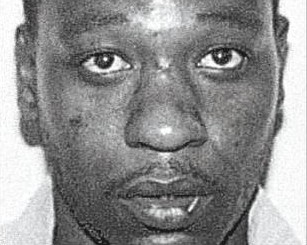
Tony Albert Mackall
Murderer Brian Kevin Rosenfeld
Murderer · USA · 1985
Brian Kevin Rosenfeld Brian Kevin Rosenfeld was sentenced to three concurrent l…
23 victims
Brian Kevin Rosenfeld
Murderer · USA · 1985
Brian Kevin Rosenfeld Brian Kevin Rosenfeld was sentenced to three concurrent l…
23 victims
 Yahweh ben Yahweh
Murderer · USA · 1980
Yahweh ben Yahweh was born and legally named Hulon Mitchell Jr. (October 27, 19…
23 victims
Yahweh ben Yahweh
Murderer · USA · 1980
Yahweh ben Yahweh was born and legally named Hulon Mitchell Jr. (October 27, 19…
23 victims
 Russell Ellwood
Murderer · USA · 1991
Russell Ellwood was a former taxi driver. Authorities suspected him of killing…
20 victims
Russell Ellwood
Murderer · USA · 1991
Russell Ellwood was a former taxi driver. Authorities suspected him of killing…
20 victims
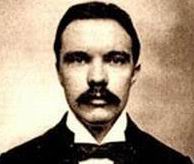 Theodore Durrant
Murderer · USA · 1895
Theodore Henry Durrant was born 1871 in Toronto, Canada. He was the son of Will…
2 victims
Theodore Durrant
Murderer · USA · 1895
Theodore Henry Durrant was born 1871 in Toronto, Canada. He was the son of Will…
2 victims
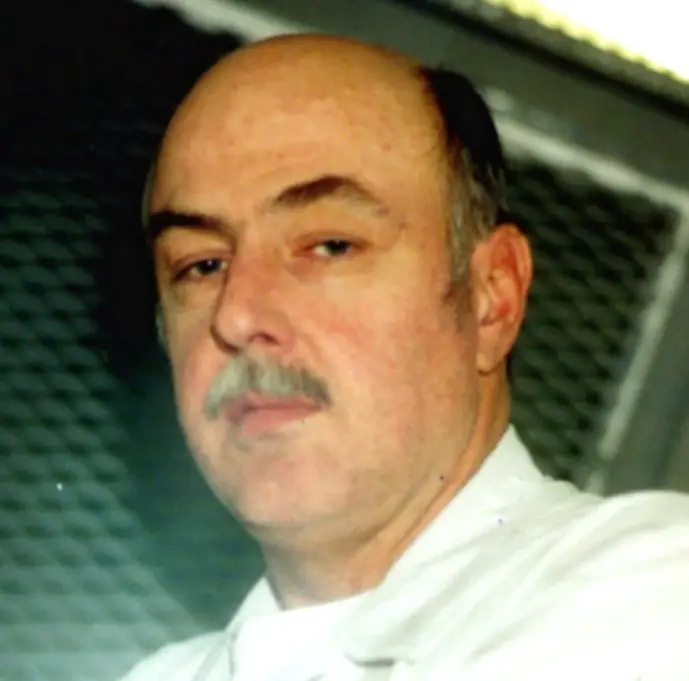 Roy Michael Roberts
Murderer · USA · 1983
Roy Michael Roberts was convicted and sentenced to death for alleged participat…
1 victim
Roy Michael Roberts
Murderer · USA · 1983
Roy Michael Roberts was convicted and sentenced to death for alleged participat…
1 victim
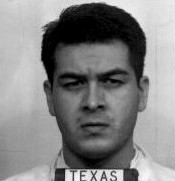 Johnny Joe Martinez
Murderer · USA · 1993
Johnny Joe Martinez was convicted of capital murder for the robbery and murder…
1 victim
Johnny Joe Martinez
Murderer · USA · 1993
Johnny Joe Martinez was convicted of capital murder for the robbery and murder…
1 victim
 Dale Shackelford
Murderer · USA · 1999
Dale Carter Shackelford was convicted for the 1999 slayings of Donna Fontaine a…
2 victims
Dale Shackelford
Murderer · USA · 1999
Dale Carter Shackelford was convicted for the 1999 slayings of Donna Fontaine a…
2 victims
- Gender
- male
- Country
- USA
- Location
- Prince William County, Virginia, USA
- Date of birth
- 1964
- Age at first offence
- 22
- Characteristics
- robbery
- Victim profile
- Mary Elizabeth Dahn, 31 ( gas station cashier )
- Method of murder
- Shooting
- Date(s) of murder
- December 9, 1986
- Years active
- 1986
- Date of arrest
- 3 days after
- Status
-
Executed
Executed by lethal injection in February 10, 1998
Case information
Tony Albert Mackall was convicted of robbery, displaying a firearm in a threatening manner, and capital murder in the Circuit Court of Prince William County, Virginia. He received a sentence of two years imprisonment for the firearm count, life for the robbery, and death for the capital murder.
Timeline
- December 9, 1986 — Tony Albert Mackall robbed a service station in Prince William County, Virginia and murdered the cashier on duty, Mary E. Dahn, by shooting her in the head.
- December 18, 1987 — Mackall was convicted in the Circuit Court of Prince William County, Virginia of robbery, displaying a firearm in a threatening manner, and capital murder, and was sentenced to two years imprisonment for the firearm count, life for the robbery, and death for the murder.
- December 1987 — Mackall was sentenced to death.
- March 13, 1989 — Mackall filed in the Circuit Court a petition for a writ of habeas corpus.
- October 18, 1989 — The Circuit Court dismissed Mackall’s habeas corpus petition.
- October 10, 1991 — Mackall filed the federal petition.
- May 18, 1992 — In a supplement to the federal petition, Mackall raised for the first time several claims of ineffective assistance of counsel.
- August 18, 1993 — Mackall filed a second state habeas petition.
- September 23, 1993 — The Circuit Court of Prince William County dismissed the second state petition.
- November 17, 1994 — The federal district court lifted its stay.
- April 24, 1996 — The Antiterrorism and Effective Death Penalty Act of 1996 was enacted.
- July 16, 1996 — Mackall’s case was argued in the United States Court of Appeals, Fourth Circuit (No. 95-4018).
- March 25, 1997 — The United States Court of Appeals, Fourth Circuit decided Mackall’s appeal (No. 95-4018), affirming in part and reversing and remanding in part.
- May 21, 1997 — The opinion was vacated.
- September 30, 1997 — Mackall’s case was argued in the United States Court of Appeals, Fourth Circuit (No. 95-4018).
- December 18, 1997 — The United States Court of Appeals, Fourth Circuit decided the appeal (No. 95-4018).
- Feb. 6, 1998 — Certiorari was denied by the United States Supreme Court.
- February 10, 1998 — Mackall was executed by lethal injection.
The offence
On the night of December 9, 1986, Tony Albert Mackall robbed a service station in Prince William County, Virginia and murdered the cashier on duty, Mary E. After the killing, Mackall robbed the station of $515.
Mackall drove to a nearby town house development and shot a man twice in the head while trying to steal his car. The man, Michael Keating, survived and testified against Mackall. Mackall took Michael Keating’s car keys and wallet at gun point.
Mary E. Dahn was 31. Her husband, Stephen Dahn, was the station manager, and their two young daughters, April and Julie, were decorating the station for the holidays when Mackall entered the store, demanded money, and shot Mary E. Dahn in the head. April was 5 years old when her mother was shot and later testified for the prosecution at Mackall’s trial. Julie and April were referenced as two daughters; April later said she planned to witness the execution. April testified for the prosecution at Mackall’s trial.
Investigation and arrest
After his arrest, Mackall admitted to a fellow inmate that he committed the shootings.
Mackall had been released from prison 2 months earlier and was AWOL from a prison halfway house run by the Washington metropolitan government.
Trial
On December 18, 1987, Mackall was convicted in the Circuit Court of Prince William County, Virginia, of robbery, displaying a firearm in a threatening manner, and capital murder.
Mackall was sentenced to two years imprisonment for the firearm count, life for the robbery, and death for the murder.
During voir dire, the judge did not permit the defense counsel to question prospective jurors about whether any of their family members were cashiers. The Appellate Court conceded that that question was relevant, however denied Mackall’s appeal on that issue because other questions had alluded to that fact.
Also during voir dire, any potential juror who expressed an opposition to the death penalty was dismissed automatically. Temple Barron, a prospective juror who gave “an affirmative answer to a confusing question as to the appropriateness of the death penalty” was permitted to remain on the jury.
Another questionable juror, Sally Seesc, was permitted to serve despite the rape of her mother only nine months earlier.
Mackall appealed on the basis that the testimony of Mary E. Dahn’s six-year-old daughter, April, a key witness for the prosecution, was planted. Mackall argued:
- “that six-year-old April's testimony was a recollection not of the events surrounding her mother's murder but rather of a recent conversation she had with the Commonwealth's Attorney, Mackall maintain[ed] that the Commonwealth failed to establish her ability to remember the events in question.”
- “that April gave no 'clear indication that she understood the difference between telling the truth and telling a lie.'” Despite his objections, both the trial court and the appellate court permitted the testimony to stand.
During the sentencing portion of the trial, the psychologist was not permitted to describe the hallucinations that Mackall had before she interviewed him. Mackall’s appeal asserted that this limitation could have had a mitigating effect on the sentence; the trial court did not allow it. The Appellate Court affirmed the sentence.
Mackall maintained that, for the first few months after his arrest, he had no memory of the day the murder took place. The state-appointed doctor examined him; due to his memory loss, the doctor could only fill out a partial report. In October 1987, Mackall regained his memory, and the doctor examined him again. The doctor did not find any grounds for a defense of insanity. Despite Mackall’s request to be examined by another psychiatrist, the court ordered the trial to begin.
Mackall’s arguments also included that his trial counsel was ineffective. His ineffective assistance contentions included:
- failure to challenge a witness’s identification of Mackall,
- failure to cross-examine the identifying witness,
- failure to point out that another witness had stated that the perpetrator wore a mask,
- failure to object to allegedly irrelevant testimony,
- failure to cross-examine a jailhouse informant,
- failure to object to the prosecutor’s summation,
- failure to object to testimony beyond the scope of an expert witness’s expertise.
Mackall’s appeal also contested voir dire and mitigating evidence rulings in the sentencing phase.
Sentencing
The trial court sentenced Mackall to:
- two years imprisonment for the firearm count,
- life for the robbery,
- death for the capital murder.
Appeals
United States Court of Appeals, Fourth Circuit (No. 95-4018)
In Mackall v. Murray (109 F.3d 957), Mackall petitioned for a writ of habeas corpus, claiming among other things that his trial counsel had been ineffective. The district court held that Mackall had defaulted the issue by failing to raise it in his first state habeas petition. On appeal, Mackall argued that his representation in the first state habeas proceeding was also ineffective.
The Fourth Circuit held that because state habeas corpus offered the first forum in which Mackall could challenge the effectiveness of his trial counsel, he was entitled to effective assistance of counsel in the first state habeas proceeding. The court stated that, if the district court found on remand that Mackall’s first state habeas counsel was ineffective, that finding would excuse his default. The Fourth Circuit remanded for further proceedings, including an evidentiary hearing on the effectiveness of Mackall’s original state habeas counsel and more thorough development of the mitigative evidence question.
The Fourth Circuit disposition stated:
- “AFFIRMED IN PART AND REVERSED AND REMANDED IN PART.”
Subsequently, a Fourth Circuit decision in the same case (131 F.3d 442) affirmed the district court’s denial of the habeas corpus petition. In that later decision, the Fourth Circuit concluded that Mackall did not have cause to excuse procedural default of claims that he received ineffective assistance of trial and appellate counsel, and that claims relating to sentencing-phase mitigation were procedurally defaulted.
The Fourth Circuit also concluded that the state trial court did not violate the Sixth or Fourteenth Amendments by refusing to inquire into prospective jurors’ views on the death penalty.
In that later decision, the Fourth Circuit stated:
- “Accordingly, we affirm.”
United States Supreme Court
The United States Supreme Court denied certiorari on Feb. 6, 1998.
Outcome
Tony Albert Mackall was executed by lethal injection in February 10, 1998. He was pronounced dead at 9:10 p.m. eastern time.
In his final statement, Mackall said:
“I know it is a hard thing to grow up without a mother, and I ask you to forgive me,”
and also said: “I know it is a hard thing to do, but I can only ask.”
The statement was directed at the two daughters of the victim, who were believed to be attending the execution. Department of Corrections officials would not confirm that.
Gov. Jim Gilmore denied clemency about 3 hours before the death sentence was carried out, and the U.S. Supreme Court denied a request to delay the execution. Gilmore stated in a written statement:
“Upon a thorough review of Mr. Mackall's petition for clemency, the numerous court decisions regarding this matter, and the circumstances of this case, I decline to intervene,”
Aftermath and related remarks
Mackall’s execution took place with members of Mary Elizabeth Dahn’s family watching from a room separate from the booth where press and official witnesses sat.
Mackall’s lawyers had appealed since 1988, arguing that he suffered severe head trauma during a troubled childhood, had a low I.Q., and received poor legal help.
A clemency petition written by Mackall’s lawyer, Joseph N. Bowman, of Alexandria, asserted that Mackall’s IQ had been rated at 64 and 71 and that he had suffered head injuries as a child, had poor impulse control, and suffered from a learning disability. Bowman wrote:
“It seems that he has been institutionalized and neglected throughout his life,”
and also wrote: “Tony was a problem child from a very early age. His 1st encounter with official authority was at about age 8, and intermittently thereafter until the murder for which he has been sentenced to die,”
and: “at the sentencing phase of Tony Mackall's trial, the jury never heard any statement or evidence regarding Tony's remarkably low level of intelligence, his hallucinations and delusions, or his numerous documented cases of head trauma.”
Bowman urged Gilmore: “He is exactly the sort of person that should receive some mercy from our society. He should be given at least one break,”
In a recent interview with the Potomac News, April said she wanted to watch the execution because:
“I was there when my Mom died, so, I don't know, I just want to be there. What he did was just not human."
The record also described Mackall’s mental condition contentions: a psychiatrist stating an IQ of 64 and labeling him mentally retarded, and another placing him in the “dull-normal range.” It stated that an IQ of 69 or below is considered to be retarded. It also referenced that 11 of the 38 states that have capital punishment have barred the execution of retarded killers, according to the Death Penalty Information Center in Washington, which opposed capital punishment.
It referenced other executed men with retarded IQ ranges: Morris Odell Mason (IQ tested in the 62 to 66 range) executed June 25, 1985, and Walter Milton Correll (IQ 68) executed Aug. 30, 1989.
A Death Penalty Awareness Day was scheduled for Tuesday with an 11:30 a.m. rally in front of the General Assembly Building in Richmond, sponsored by Virginians for Alternatives to the death penalty; Henry Heller, director of the organization, said the date was in part set to draw attention to Mackall’s execution.

Spotted an error, or have more information about this case?