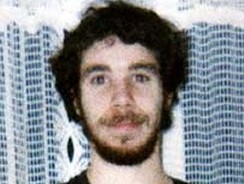
Marc Lepine
Mass murderer Roger Warren
Mass murderer · Canada · 1992
Roger Warren was convicted of 9 counts of second-degree murder in connection to…
9 victims
Roger Warren
Mass murderer · Canada · 1992
Roger Warren was convicted of 9 counts of second-degree murder in connection to…
9 victims
 David Shearing
Mass murderer · Canada · 1982
David Shearing was arrested after police received a caller tip about him in a c…
6 victims
David Shearing
Mass murderer · Canada · 1982
David Shearing was arrested after police received a caller tip about him in a c…
6 victims
 Pierre Lebrun
Mass murderer · Canada · 1999
Pierre Lebrun committed suicide by shooting himself on April 6 1999, after carr…
4 victims
Pierre Lebrun
Mass murderer · Canada · 1999
Pierre Lebrun committed suicide by shooting himself on April 6 1999, after carr…
4 victims
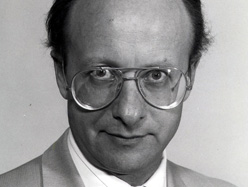 Valery Fabrikant
Mass murderer · Canada · 1992
Valery Fabrikant was a former associate professor of mechanical engineering at…
4 victims
Valery Fabrikant
Mass murderer · Canada · 1992
Valery Fabrikant was a former associate professor of mechanical engineering at…
4 victims
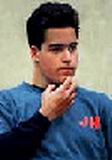 Joshua Jenkins
Homicide · USA · 1996
Joshua Jenkins was a 15-year-old American killer who killed five members of his…
5 victims
Joshua Jenkins
Homicide · USA · 1996
Joshua Jenkins was a 15-year-old American killer who killed five members of his…
5 victims
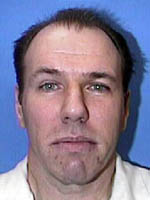 Craig Neil Ogan
Murderer · USA · 1989
Craig Neil Ogan worked as a confidential informant for the Drug Enforcement Adm…
1 victim
Craig Neil Ogan
Murderer · USA · 1989
Craig Neil Ogan worked as a confidential informant for the Drug Enforcement Adm…
1 victim
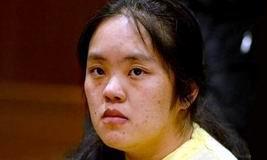 Ka Yang
Murderer · USA · 2011
Ka Yang was a mother of four, including her late daughter, Mirabelle Thao-Lo, a…
1 victim
Ka Yang
Murderer · USA · 2011
Ka Yang was a mother of four, including her late daughter, Mirabelle Thao-Lo, a…
1 victim
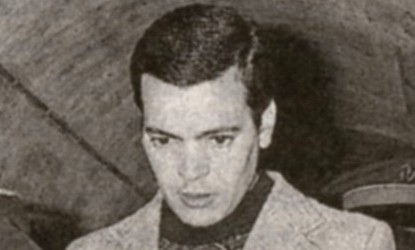 Hamida Djandoubi
Murderer · France · 1974
1968 — Hamida Djandoubi started living and working in Marseille, France, as a p…
1 victim
Hamida Djandoubi
Murderer · France · 1974
1968 — Hamida Djandoubi started living and working in Marseille, France, as a p…
1 victim
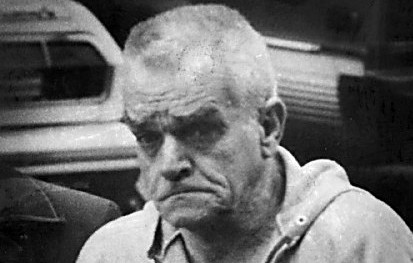 Charles Pierce
Child killer · USA · 1969
Charles E. Pierce was convicted of second-degree murder in the 1969 killing of…
3 victims
Charles Pierce
Child killer · USA · 1969
Charles E. Pierce was convicted of second-degree murder in the 1969 killing of…
3 victims
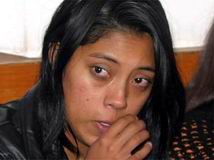 Romina Tejerina
Murderer · Argentina · 2003
Romina Tejerina was born in 1985 in San Pedro, Jujuy Province. She was sentence…
1 victim
Romina Tejerina
Murderer · Argentina · 2003
Romina Tejerina was born in 1985 in San Pedro, Jujuy Province. She was sentence…
1 victim
- Gender
- male
- Country
- Canada
- Location
- Montreal, Quebec, Canada
- Date of birth
- October 26, 1964
- Age at first offence
- 25
- Characteristics
- school shooting, shooting spree
- Victim profile
- Geneviève Bergeron, 21 / Hélène Colgan, 23 / Nathalie Croteau, 23 / Barbara Daigneault, 22 / Anne-Marie Edward, 21 / Maud Haviernick, 29 / Maryse Laganière, 25 / Maryse Leclair, 23 / Anne-Marie Lemay, 22 / Sonia Pelletier, 28 / Michèle Richard, 21 / Annie St-Arneault, 23 / Annie Turcotte, 20 / Barbara Klucznik-Widajewicz, 31 (students)
- Method of murder
- Shooting
- Date(s) of murder
- December 6, 1989
- Years active
- 1989
- Date of arrest
- —
- Status
-
Died in custody
Committed suicide by shooting himself the same day
Overview
Marc Lépine committed a shooting at the École Polytechnique engineering school affiliated with the Université de Montréal, killing fourteen women and wounding four men and ten women. He then turned the gun on himself. He committed suicide by shooting himself the same day.
Background
Marc Lépine was also known as Gamil Gharbi. He was born October 26, 1964, and his birth name was Gamil Rodrigue Gharbi. He was the son of Algerian immigrant Rachid Liass Gharbi and Canadian Monique Lépine. He was baptized a Catholic as an infant.
He spent much of his early childhood in Costa Rica and Puerto Rico while his father was working as a successful mutual fund salesman. The family moved back to Montreal permanently in 1968, shortly before a stock market crash led to the loss of much of the family's assets.
Rachid Gharbi had contempt for women and believed they were only intended to serve men. He was verbally and physically abusive to his wife and children, once beating his son so hard on the face that marks were visible a week later. He discouraged tenderness between mother and child because he considered it spoiling. When Marc Lépine was seven, his parents separated and were divorced in 1976. Marc lived with his mother and younger sister Nadia and saw little of their father, whom they feared. Rachid Gharbi ceased contact with the children and moved abroad.
In 1973, Monique Lépine returned to work as a nurse and began courses to advance her career. During that time the children lived with family and friends and saw their mother on weekends. The family spent a year in family psychotherapy in 1975 because of difficulties expressing and receiving love and affection.
In 1976, Monique Lépine became director of nursing at a Montreal hospital, and the family moved to a house in Pierrefonds. Marc attended junior high and high school where he was described as a quiet student who obtained middle to above average marks. He developed a close friendship with another boy but did not mix much with other students. He spent some summers as a youth learning to hunt with his uncles and enjoyed designing and building electronic gadgets. He took responsibility at home, including doing cleaning and repairs while his mother worked.
During that period he began to insist on being called Marc Lépine, giving his hatred of his father as the reason for wishing to take his mother's name.
He applied to join the Canadian Forces in 1981 at the age of 17 but was rejected during the interview process. He reported in his suicide letter that it was because he was “anti-social”. An official statement from the military after the massacre stated that he had been “interviewed, assessed and determined to be unsuitable”.
Marc legally changed his name to Marc Lépine in 1982 at the age of 18, and the family moved to Saint-Laurent, closer to his mother's work and his new CEGEP. He quickly lost touch with his school friend after the move.
He began a two-year pre-university course in pure sciences at CEGEP Saint-Laurent, failing some courses in the first semester but improving his grades in the second. After a year he switched into electronics technology, a three-year technical program geared more towards immediate employment. His teachers remembered him as a model student, quiet, hardworking and generally doing well in his classes, particularly those related to electrotechnology.
In February 1986, during the last term of the program, he stopped attending his classes without explanation, resulting in failing to complete his CEGEP diploma.
He took a job in the kitchens at the hospital where his mother was director of nursing. Colleagues saw him as nervous and hyperactive. He moved out into his own apartment and in the fall of 1986 applied to study engineering at the École Polytechnique at the Université de Montréal. He was admitted on the condition that he complete two compulsory courses, including one in solution chemistry.
In the fall of 1987 he left his hospital job and took three courses at CEGEP, obtaining good marks. In March 1988 he began a course in computer programming at a private college in downtown Montreal, funded by government student loans. Two months later he moved downtown to an apartment near his place of study and his mother's new condominium. In winter 1989 he took a CEGEP night-course in solution chemistry, a prerequisite for the École Polytechnique.
In March 1989 he abandoned the course in computer programming, but did well in the CEGEP course, obtaining 100% in his final exam.
The offence
Firearms and approach
In August 1989, Marc Lépine picked up an application for a firearms-acquisition certificate and received his permit in mid-October.
On November 21, 1989, he purchased a Ruger Mini-14 semi-automatic rifle at a local sporting goods store. During the period October to December 1989, he was seen at least seven times at the École Polytechnique.
He brought his mother a present four days before the shooting, though it was several weeks before her birthday. He had always been punctual paying his rent, but did not do so in December 1989.
Massacre at École Polytechnique
On December 6, 1989, Marc Lépine walked into the École Polytechnique de Montréal. He entered a second-floor classroom and separated the men and women, ordering approximately fifty men to leave. He claimed he was fighting feminism and shot the nine women who remained, killing six and injuring the rest.
After this, he moved to other areas of the building, including the cafeteria, corridors, and another classroom. A total of fourteen women (twelve engineering students, one nursing student, and one university employee) were killed, and four men and ten women were injured before Marc Lépine turned the gun on himself.
A three-page letter was found in the pocket of his jacket. The letter was never officially made public, but was leaked in November 1990 to Francine Pelletier and published in the newspaper La Presse.
Suicide
Marc Lépine turned the gun on himself, committing suicide by shooting himself the same day. The event included the use of a rifle and he later died by gunshot to his head.
Investigation
Police received information that his suicide letter claimed political motives and blamed feminists for ruining his life. The letter contained a list of nineteen Quebec women he apparently wished to kill because of their feminism.
People affected
Victims killed (fourteen women)
- Geneviève Bergeron (b. 1968), civil engineering student.
- Hélène Colgan (b. 1966), mechanical engineering student.
- Nathalie Croteau (b.
- Barbara Daigneault (b. 1967), mechanical engineering student.
- Anne-Marie Edward (b. 1968), chemical engineering student.
- Maud Haviernick (b. 1960), materials engineering student.
- Maryse Laganière (b. 1964), budget clerk in the École Polytechnique's finance department.
- Maryse Leclair (b. 1966), materials engineering student.
- Anne-Marie Lemay (b.
- Sonia Pelletier (b. 1961), mechanical engineering student.
- Michèle Richard (b. 1968), materials engineering student.
- Annie St-Arneault (b.
- Annie Turcotte (b. 1969), materials engineering student.
- Barbara Klucznik-Widajewicz (b. 1958), nursing student.
Injured (men and women)
Four men and ten women were injured.
Suicide note (verbatim excerpts)
The suicide note included the following verbatim text:
“Forgive the mistakes, I had 15 minutes to write this. Would you note that if I commit suicide today 89-12-06 it is not for economic reasons (for I have waited until I exhausted all my financial means, even refusing jobs) but for political reasons. Because I have decided to send the feminists, who have always ruined my life, to their Maker. For seven years life has brought me no joy and being totally blase, I have decided to put an end to those viragos. I tried in my youth to enter the Forces as a student-officer, which would have allowed me possibly to get into the arsenal and precede Lortie in a raid. They refused me because antisocial [sic]. I therefore had to wait until this day to execute my plans. In between, I continued my studies in a haphazard way for they never really interested me, knowing in advance my fate. Which did not prevent me from obtaining very good marks despite my theory of not handing in work and the lack of studying before exams. Even if the Mad Killer epithet will be attributed to me by the media, I consider myself a rational erudite that only the arrival of the Grim Reaper has forced to take extreme acts. For why persevere to exist if it is only to please the government. Being rather backward-looking by nature (except for science), the feminists have always enraged me. They want to keep the advantages of women (e.g. cheaper insurance, extended maternity leave preceded by a preventative leave, etc.) while seizing for themselves those of men. Thus it is an obvious truth that if the Olympic Games removed the Men-Women distinction, there would be Women only in the graceful events. So the feminists are not fighting to remove that barrier. They are so opportunistic they neglect to profit from the knowledge accumulated by men through the ages. They always try to misrepresent them every time they can. Thus, the other day, I heard they were honoring the Canadian men and women who fought at the frontline during the world wars. How can you explain then that women were not authorized to go to the frontline??? Will we hear of Caesar's female legions and female galley slaves who of course took up 50 per cent of the ranks of history, though they never existed. A real Casus Belli. Sorry for this too brief letter. Marc Lepine (the letter is followed by the 19 name list, with a note at the bottom) "Nearly died today. The lack of time (because I started too late) has allowed these radical feminists to survive. Alea Jacta Est."”
The note also included:
“Nearly died today. The lack of time (because I started too late) has allowed these radical feminists to survive. Alea Jacta Est.”
And it also included:
“Alea Jacta Est (The Die Is Cast).”
Other details
Burial
Marc Lépine was buried in the Cimetière Notre-Dame-des-Neiges in Montreal, a few blocks from where he committed the massacre.
Descriptions and theories about Marc Lépine
Marc Lépine was described as shy and uncommunicative, showing little emotion. He was described as very organized and precise and having problems accepting authority that caused difficulties at school and work. The record stated that he did not drink or take drugs. It also said he was ill at ease around women and had no known girlfriends, and he tended to boss women around and show off his knowledge in front of them.
A police psychiatrist who interviewed Marc Lépine's family and entourage and had access to his letters suggested that he may have had a serious personality disorder and cited the multiple homicide/suicide strategy as a characteristic of this disorder. Other psychiatrists suggested that Marc Lépine was psychotic, having lost touch with reality while trying to erase memories of a brutal and absent father, while unconsciously identifying with a violent manhood that dominates women.
Other theories stated that his experiences of abuse as a child had caused brain damage or led him to feel victimized as he faced losses and rejections in later life. Some wondered if his actions were the result of societal changes leading to increased poverty, powerlessness, individual isolation, or increased violence in the media and society.
Military and school assessments
Timeline
- 1962 — Monique Lépine met Algerian-born businessman Liesse Gharbi in 1962.
- 1963 — Marc Lépine’s parents married in 1963.
- 26 October 1964 — Marc Lépine was born.
- 1966 — Hélène Colgan was born.
- 1968 — Geneviève Bergeron was born; Anne-Marie Edward was born; Michèle Richard was born.
- 1969 — Annie Turcotte was born.
- 1973 — Monique Lépine returned to work as a nurse.
- 1975 — The family spent a year in family psychotherapy.
- 1976 — Marc Lépine’s parents separated and his mother became director of nursing at a Montreal hospital.
- 1976 — Marc Lépine’s parents were subsequently divorced in 1976.
- 1981 — Marc Lépine applied to join the Canadian Forces and was rejected during the interview process.
- 1982 — Marc Lépine legally changed his name to Marc Lépine and the family moved to Saint-Laurent.
- February 1986 — Marc Lépine stopped attending classes at CEGEP Saint-Laurent.
- Fall 1986 — Marc Lépine applied to study engineering at the École Polytechnique at the Université de Montréal.
- Fall 1987 — Marc Lépine took three courses at CEGEP obtaining good marks.
- March 1988 — Marc Lépine began a course in computer programming at a private college in downtown Montreal.
- Winter 1989 — Marc Lépine took a CEGEP night-course in solution chemistry.
- August 1989 — Marc Lépine picked up an application for a firearms-acquisition certificate.
- Mid-October 1989 — Marc Lépine received his firearms-acquisition permit.
- 21 November 1989 — Marc Lépine purchased a Ruger Mini-14 semi-automatic rifle.
- 6 December 1989 — Marc Lépine entered the École Polytechnique, carried out the shooting, and committed suicide by shooting himself the same day.
Spotted an error, or have more information about this case?