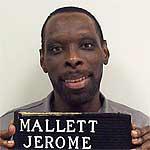
Jerome Mallett
Murderer Brian Kevin Rosenfeld
Murderer · USA · 1985
Brian Kevin Rosenfeld Brian Kevin Rosenfeld was sentenced to three concurrent l…
23 victims
Brian Kevin Rosenfeld
Murderer · USA · 1985
Brian Kevin Rosenfeld Brian Kevin Rosenfeld was sentenced to three concurrent l…
23 victims
 Marvin Gray
Murderer · USA · 1975
Marvin Gray was convicted killer who claimed responsibility for 23 slayings and…
23 victims
Marvin Gray
Murderer · USA · 1975
Marvin Gray was convicted killer who claimed responsibility for 23 slayings and…
23 victims
 Yahweh ben Yahweh
Murderer · USA · 1980
Yahweh ben Yahweh was born and legally named Hulon Mitchell Jr. (October 27, 19…
23 victims
Yahweh ben Yahweh
Murderer · USA · 1980
Yahweh ben Yahweh was born and legally named Hulon Mitchell Jr. (October 27, 19…
23 victims
 Russell Ellwood
Murderer · USA · 1991
Russell Ellwood was a former taxi driver. Authorities suspected him of killing…
20 victims
Russell Ellwood
Murderer · USA · 1991
Russell Ellwood was a former taxi driver. Authorities suspected him of killing…
20 victims
 D. H. Fleenor
Murderer · USA · 1982
D. H. Fleenor D. H. Fleenor was executed by lethal injection in Indiana on Dece…
2 victims
D. H. Fleenor
Murderer · USA · 1982
D. H. Fleenor D. H. Fleenor was executed by lethal injection in Indiana on Dece…
2 victims
 David Scott Franks
Murderer · USA · 1994
Name: David Scott Franks · August 5, 1994 — David Scott Franks stabbed to death…
3 victims
David Scott Franks
Murderer · USA · 1994
Name: David Scott Franks · August 5, 1994 — David Scott Franks stabbed to death…
3 victims
 James Cooke
Murderer · USA · 2005
James Cooke (James E. Cooke, Jr.; James Edward Cooke) James E. Cooke, Jr. was b…
1 victim
James Cooke
Murderer · USA · 2005
James Cooke (James E. Cooke, Jr.; James Edward Cooke) James E. Cooke, Jr. was b…
1 victim
 Anxiang Du
Mass murderer · United Kingdom · 2011
Anxiang Du was sentenced to life imprisonment with a minimum term of 40 years o…
4 victims
Anxiang Du
Mass murderer · United Kingdom · 2011
Anxiang Du was sentenced to life imprisonment with a minimum term of 40 years o…
4 victims
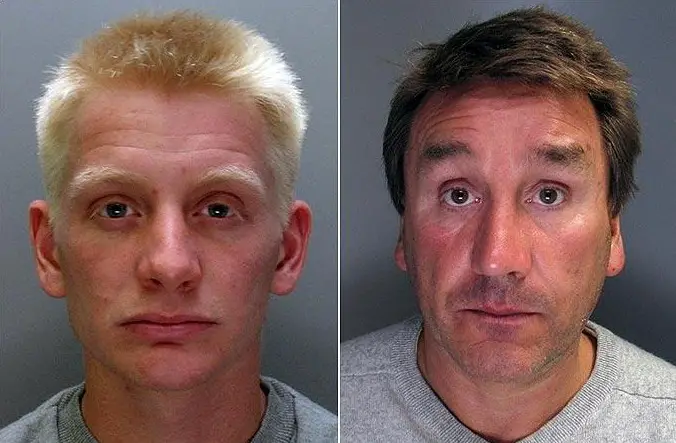 Norman & Joseph Jones
Murderers · United Kingdom · 2008
Norman Jones and Joseph Jones were convicted and jailed for life for the abduct…
1 victim
Norman & Joseph Jones
Murderers · United Kingdom · 2008
Norman Jones and Joseph Jones were convicted and jailed for life for the abduct…
1 victim
 Michele Profeta
Murderer · Italy · 2001
Michele Profeta was described as a serial killer of Padua. He was said to have…
2 victims
Michele Profeta
Murderer · Italy · 2001
Michele Profeta was described as a serial killer of Padua. He was said to have…
2 victims
- Gender
- male
- Country
- USA
- Location
- Perry County, Missouri, USA
- Date of birth
- January 1, 1959
- Age at first offence
- 26
- Characteristics
- to avoid arrest, escape
- Victim profile
- James Froemsdorf, 35 (Missouri State Trooper)
- Method of murder
- Shooting (.357-Magnum revolver)
- Date(s) of murder
- March 2, 1985
- Years active
- 1985
- Date of arrest
- 3 days after
- Status
-
Executed
Executed by lethal injection in Missouri on May 23, 2001
Case record: Jerome Mallett
Status and outcome
Jerome Mallett was executed by lethal injection in Missouri on May 23, 2001.
Timeline
- March 2, 1985 — Jerome Mallett shot and killed Missouri State Highway Patrol officer James M. Froemsdorf on Interstate 55 in Perry County, Missouri.
- May 13, 1985 — Mallett was charged by information with Murder First Degree.
- January 13, 1986 — Mallett’s trial began on a change of venue from Perry County to Schuyler County.
- January 22, 1986 — Mallett was found guilty of Murder First Degree.
- January 23, 1986 — The jury recommended the death sentence for Mallett.
- March 7, 1986 — Mallett was sentenced to death by the court.
- March 17, 1986 — Mallett filed a motion for appeal.
- June 16, 1987 — The Missouri Supreme Court affirmed the conviction and sentence.
- November 25, 1987 — Mallett filed a motion for post-conviction relief in the Schulyer County Circuit Court.
- June 6, 1988 — The Circuit Court granted in part and denied in part the motion for post-conviction relief.
- April 18, 1989 — The Missouri Supreme Court affirmed in part and reversed in part the post-conviction judgment; the conviction and sentence were upheld.
- February 26, 1990 — The United States Supreme Court denied certiorari review.
- March 9, 1990 — Mallett filed a petition for writ of habeas corpus in the U.S. District Court for the Eastern District of Missouri.
- July 29, 1996 — The District Court denied the petition for writ of habeas corpus in an unpublished order.
- November 16, 1998 — The U.S. Eighth Circuit Court of Appeals affirmed the denial of relief.
- October 4, 1999 — The U.S. Supreme Court declined discretionary review.
- October 4, 1999 — The State requested the Missouri Supreme Court to set an execution date.
- June 5, 2001 — The Missouri Supreme Court set July 11, 2001 as Jerome Mallett’s execution date.
- July 11, 2001 — Mallett’s execution occurred (execution date and time given as 7/11/01, 1:01am EST in the materials).
- May 23, 2001 — Mallett’s execution is also given as occurring on this date in the status field.
Background
Jerome Mallett lived in Dallas and was a felon wanted on warrants for probation violation and aggravated robbery. He had a deformed right wrist attributed to a childhood injury that allowed him to compress his hand so that it could slip out of handcuffs.
The offence
On March 2, 1985, Trooper James Froemsdorf pulled over a rust-colored 1973 Ford LTD driven by Jerome Mallett for speeding on northbound Interstate 55 in Perry County, Missouri. Mallett hid his wallet and identification under the front seat before the trooper approached. When Trooper Froemsdorf asked for the driver’s license, Mallett replied that he did not have it with him and falsely claimed to be Anthony Mallett. Trooper Froemsdorf handcuffed Mallett and searched the vehicle, finding several items bearing the name “Jerome Mallett,” including a Texas driver’s license.
After contacting the highway patrol radio dispatcher, Trooper Froemsdorf was informed that Mallett had four outstanding warrants for probation violations and one outstanding warrant for aggravated robbery. At 5:40 p.m., Trooper Froemsdorf told the dispatcher that Mallett was in custody and that he needed no assistance.
At approximately 6:00 p.m., a passing motorist noticed Trooper Froemsdorf’s apparently abandoned patrol car with red lights flashing and discovered Trooper Froemsdorf’s body. The interior was described as a shambles consistent with a struggle. Trooper Froemsdorf’s .357 magnum service revolver was missing from the patrol car. Investigators found Mallett’s hand print on the hood of the car, and Mallett’s driver’s license and other items taken from Mallett’s car were found in the patrol car. The ticket book containing the partially written ticket was found on the front passenger seat of the patrol car.
The subsequent events were deduced largely from Trooper Froemsdorf’s injuries and forensic analysis. After Trooper Froemsdorf placed Mallett in the front passenger seat and began writing a speeding ticket, Mallett worked his right hand out of the handcuffs and attacked Trooper Froemsdorf with the back of his still-manacled left hand. Mallett repeatedly struck Trooper Froemsdorf on the left side of his face, causing large bruises, numerous abrasions, and a serrated cut under his left eye. Trooper Froemsdorf was temporarily unable to see due to the severity of the cut. Mallett drew Trooper Froemsdorf’s .357 magnum service revolver from the holster on Trooper Froemsdorf’s right hip.
The first shot grazed Trooper Froemsdorf’s right epaulet and shattered the driver’s side window of the patrol car. A second shot was intended for Trooper Froemsdorf’s lower left chest; a slug from the second shot was found imbedded in the bulletproof vest, and the impact would have slammed Trooper Froemsdorf against the driver’s side door and rendered him helpless for a short period. At point-blank range, Mallett fired two more shots into the right side of Trooper Froemsdorf’s neck, killing him.
Investigation and manhunt
A massive manhunt involved several law enforcement agencies, and hundreds of officers came into the community for the funeral and helped conduct a house-to-house search. Mallett was hiding in a vacant house.
When Mallett was captured in Desloge (capture described as three days after the murder in the materials), the handcuffs still dangled from his left hand (and elsewhere described as being secured to his right wrist). The materials also describe Mallett fleeing on foot after a pursuit that ended with him missing a turn, running up an embankment, crashing through a fence into a field, and then fleeing on foot. During the chase, Trooper Froemsdorf’s service revolver was found on the floorboard of Mallett’s car. Mallett also swam across a river and spent the first night in a car in a nearby garage.
Arrest and custody
Mallett was apprehended after a brief pursuit after he went to a fast food restaurant. He was transported to a highway patrol station, waved Miranda rights, and gave a videotaped confession. Mallett admitted to shooting Trooper Froemsdorf but claimed it was an accident. An autopsy was performed, and it disputed Mallett’s claim of an accidental shooting.
Trial
Mallett was charged in Perry County with first-degree murder of Trooper Froemsdorf. Because of extensive pretrial publicity, defense counsel moved for a change of venue from Perry County to another county with a substantial number of black residents so that a jury including black persons would be more likely. After defense counsel and the State were unable to reach agreement on venue, each party submitted a list of preferred counties.
At the conclusion of argument on Mallett’s motion, the Perry County court entered an order transferring venue to Schuyler County, which contained no black residents. Neither party had included Schuyler County in its list of preferred counties. A Schuyler County jury convicted Mallett of first degree murder of Trooper Froemsdorf.
The jury’s verdict form reflected three aggravating circumstances in assessing Mallett’s sentence:
- The murder involved depravity of mind and as a result it was outrageously or wantonly vile, horrible, or inhuman.
- The murder was committed against a peace officer while engaged in the performance of his official duty.
- At the time of the murder Mallett had escaped from the lawful custody of a police officer.
Based on these aggravating circumstances, the jury imposed the death sentence. On March 7, 1986, Mallett was sentenced to death by the court.
Sentencing
The trial court imposed the death sentence following the jury’s recommendation, based on the three aggravating circumstances found by the jury.
Appeals and post-conviction proceedings
Direct appeal and post-conviction
On direct appeal, the Missouri Supreme Court affirmed Mallett’s conviction and death sentence. See State v. Mallett, 732 S.W.2d 527 (Mo.), cert. denied, 484 U.S. 933 (1987).
Pursuant to Missouri Supreme Court Rule 27.26, Mallett moved for post-conviction relief. Following an evidentiary hearing, the post-conviction court vacated Mallett’s conviction and death sentence. On appeal, the Missouri Supreme Court reversed the post-conviction court’s order and reinstated the conviction and death sentence. See Mallett v. State, 769 S.W.2d 77 (Mo. 1989), cert. denied, 494 U.S. 1009 (1990). Mallett then filed a petition for a writ of habeas corpus in the U.S. District Court for the Eastern District of Missouri; the District Court denied habeas relief, and Mallett appealed.
Federal habeas corpus appeal (Eighth Circuit)
In the U.S. Court of Appeals for the Eighth Circuit case captioned Jerome Mallett, Appellant v. Michael Bowersox, Superintendent of the Potosi Correctional Center, Appellee, the court affirmed the District Court’s denial of a writ of habeas corpus under 28 U.S.C. § 2254.
Mallett argued that:
- His equal protection, due process, and Sixth Amendment rights were not violated when the state trial court transferred his case to a county in which no blacks resided.
- His constitutional rights were not violated when the jury considered “depravity of mind” as an aggravating circumstance in imposing the death penalty.
- He was not deprived of his constitutional right to an impartial and disinterested trial judge.
- His constitutional right to effective assistance of counsel was not violated either at trial or on direct appeal.
- He was not denied a fundamentally fair trial by the prosecutor’s allegedly improper closing argument.
- The evidence tending to establish the existence of deliberation for first degree murder was sufficient for a reasonable jury to convict.
The Eighth Circuit addressed the change of venue issue in relation to equal protection and due process, rejected arguments related to Batson v. Kentucky, and concluded the venue transfer did not deprive Mallett of a fundamentally fair trial. The Eighth Circuit also rejected Mallett’s arguments that the depravity-of-mind instruction was unconstitutionally vague and concluded that the remaining aggravating circumstances would be sufficient to sustain the death sentence even if any instruction defect existed. The court also addressed Mallett’s judge bias claim, finding it procedurally defaulted under Missouri law and procedurally barred from federal habeas review due to lack of showing of cause and prejudice. The Eighth Circuit concluded that none of Mallett’s remaining claims had merit and affirmed the District Court’s judgment.
Supreme Court review
The United States Supreme Court denied certiorari review in 1990, and later declined discretionary review as of October 4, 1999.
Outcome
Mallett was convicted of murder first degree and sentenced to death. His conviction and death sentence were affirmed through the Missouri Supreme Court and through federal habeas review proceedings described as ending with the Eighth Circuit affirming the denial of habeas relief.
Aftermath
Mallett was incarcerated at the Potosi Correctional Center, with Michael Bowersox named as Superintendent during the federal appeal after replacing Paul Delo as superintendent during the habeas proceedings.
Mallett was executed by lethal injection in Missouri (execution also described as occurring on July 11, 2001, with execution time described in the materials).
Mallett made a final statement that included the following quotation:
"My heart and best wishes to the Froemsdorf family. I hope everybody can just move on now and this can be a learning experience for everybody. I love my family and friends.''
Other details
- The victim was Trooper James M. Froemsdorf. His badge number was given as 261.
- Trooper Froemsdorf was 35 at the time of his death.
- Trooper Froemsdorf was described as a father and a father of three young daughters. The materials also describe him as having a wife and three daughters.
- Trooper Froemsdorf was described as having been a nine-year veteran of the Missouri State Highway Patrol.
- Trooper Froemsdorf was described as the 12th member of the Patrol to lose his life in the line of duty.
- The materials note Mallett claimed he shot Trooper Froemsdorf in self-defense after wrestling away the lawman’s gun, and also that his videotaped confession followed his arrest.
- The materials describe a protest by about 75 demonstrators outside the prison at the time of the execution.
- The materials describe an ACLU request for clemency submitted via a letter to Missouri Gov. Bob Holden, stating that Mallett’s death sentence was “tainted by racism,” and referencing a purported difference in sentencing in a similar case involving a white man.
- A statement attributed to prison spokesman Tim Kniest described Mallett being pronounced dead at 12:06 a.m. Wednesday after receiving a lethal injection of drugs at the Potosi Correctional Center.
- The materials describe that Mallett was the fifth inmate executed that year in Missouri and the 51st since 1989 when the state reinstated the death penalty.
- The materials include a reference to legal chronology showing July 11, 2001 as the execution date set by the Missouri Supreme Court on June 5, 2001.
- In the procedural discussion, Mallett’s attorney was identified in the materials as Kenny Hulshof, and it was stated that Hulshof did not return calls for comment.
- The Eighth Circuit materials included discussion of trial court judge E. Richard Webber sending plaques to the state highway patrol and a letter of condolence to the patrolman’s widow, and the judge bias claim was treated as abandoned under Missouri law.
- The Eighth Circuit referenced procedural history including Michael Bowersox replacing Paul Delo as Superintendent of the Potosi Correctional Center during the habeas proceedings.

Spotted an error, or have more information about this case?