
Mario Marquez
Homicide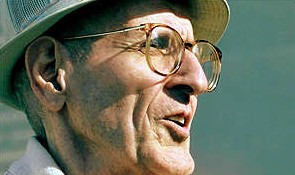 Jack Kevorkian
Homicide · USA · 1990
Jack Kevorkian (born May 26, 1928) was a controversial American pathologist. He…
130 victims
Jack Kevorkian
Homicide · USA · 1990
Jack Kevorkian (born May 26, 1928) was a controversial American pathologist. He…
130 victims
 David Koresh
Homicide · USA · 1993
David Koresh (born Vernon Wayne Howell; August 17, 1959 – April 19, 1993) led t…
79 victims
David Koresh
Homicide · USA · 1993
David Koresh (born Vernon Wayne Howell; August 17, 1959 – April 19, 1993) led t…
79 victims
 Edward Charles Allaway
Homicide · USA · 1976
Edward Charles Allaway Edward Charles Allaway was found not guilty by reason of…
7 victims
Edward Charles Allaway
Homicide · USA · 1976
Edward Charles Allaway Edward Charles Allaway was found not guilty by reason of…
7 victims
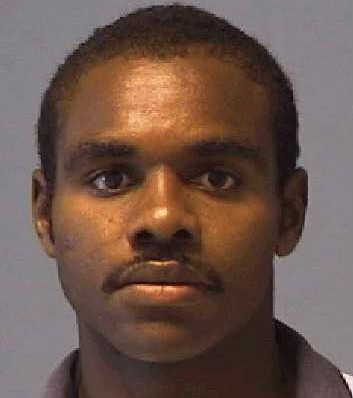 Clinton Bankston
Homicide · USA · 1987
15 August 1987 — Ann Morris (63), her sister Sally Nicholson (59), and Sally’s…
5 victims
Clinton Bankston
Homicide · USA · 1987
15 August 1987 — Ann Morris (63), her sister Sally Nicholson (59), and Sally’s…
5 victims
 John Patrick Henretta
Murderer · USA · 1988
John Patrick Henretta was sentenced to death in Tennessee on April 6, 2002. · N…
2 victims
John Patrick Henretta
Murderer · USA · 1988
John Patrick Henretta was sentenced to death in Tennessee on April 6, 2002. · N…
2 victims
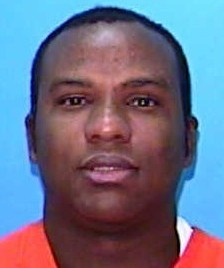 Ernest Whitfield
Murderer · USA · 1995
Ernest Whitfield was convicted and sentenced to death for the June 19, 1995 mur…
1 victim
Ernest Whitfield
Murderer · USA · 1995
Ernest Whitfield was convicted and sentenced to death for the June 19, 1995 mur…
1 victim
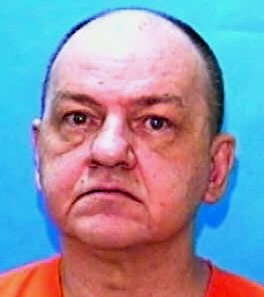 Burley Gilliam
Murderer · USA · 1982
Burley Gilliam, Jr. was born on 08/13/48. Joyce Marlowe was last seen alive on…
1 victim
Burley Gilliam
Murderer · USA · 1982
Burley Gilliam, Jr. was born on 08/13/48. Joyce Marlowe was last seen alive on…
1 victim
 Anthony Spears
Murderer · USA · 1992
Defendant: Anthony Spears (Caucasian). He lived near San Diego. · Victim: Jeane…
1 victim
Anthony Spears
Murderer · USA · 1992
Defendant: Anthony Spears (Caucasian). He lived near San Diego. · Victim: Jeane…
1 victim
- Gender
- male
- Country
- USA
- Location
- Bexar County, Texas, USA
- Date of birth
- August 22, 1958
- Age at first offence
- 26
- Characteristics
- mentally retarded, rape
- Victim profile
- Rebecca, 18 (his estranged wife) and Rachel Gutierrez, 14 (his wife's niece)
- Method of murder
- Strangulation
- Date(s) of murder
- January 27, 1984
- Years active
- 1984
- Date of arrest
- —
- Status
-
Executed
Executed by lethal injection in Texas on January 17, 1995
Case record: Mario Marquez
Status / outcome
Mario Marquez was executed by lethal injection in Texas on January 17, 1995. During the execution, Marquez gave a last statement: “Thank you for being my Lord Jesus and Savior and I am ready to come home. Amen.”
Timeline
- January 10, 1994 — United States Court of Appeals, Fifth Circuit heard an appeal in Mario Marquez, Petitioner-appellant, v. James A. Collins, Director, Texas Department of Criminal Justice, Institutional Division, et al., respondents-appellees (No. 92-56-42).
- January 11, 1984 — Marquez pleaded guilty to four separate indictments for burglary and an earlier theft in 1977.
- July 12, 1984 — A hearing was held on a motion for withdrawal of appellant's counsel because of appellant's inability to pay.
- October 18, 1984 — A pretrial hearing was held on appellant's motion to suppress certain oral statements made while in custody.
- November 26, 1984 — A trial judge made findings just prior to instructing the jury on punishment, ordering the defendant to be handcuffed and shackled for the remainder of the trial; the prosecutor also made closing argument statements referenced in the appeal.
- Jan. 17, 1995 — Mario Marquez was put to death by lethal injection shortly after midnight.
- 12:21 am — A doctor examined the body and pronounced Mario Marquez dead.
People
- Mario Marquez — offender; also identified as Mario Marquez (#776); petitioner-appellant in a federal habeas case.
- Rachel — Mario Marquez’s wife’s 14-year-old niece, who was murdered; the bodies were found at the Gutierrez home in a San Antonio housing project.
- Rebecca — Mario Marquez’s 18-year-old estranged wife, who was murdered.
- Dudley Sharp — author of “Mental Retardation and the Death Penalty” (October 18, 2001) who discussed the Mario Marquez execution.
- Robert McGlasson — a lawyer quoted in connection with arguments about executing mentally retarded people; also identified as Marquez’s lawyer in connection with comments on “Nightline.”
- Edwin Springer — prosecutor in Marquez’s case.
- Raymond Bonnet — author of “Argument Escalates on Executing Retarded” (July 23, 2001).
- Ted Koppel — witness to the execution via the ABC News program “Nightline.”
- Maria Elena Castellanos — quoted criticizing the execution.
- Jimmy Dunne — quoted about the execution.
- Marta Glass — leading death penalty abolitionist in Texas, quoted.
- Allen Harris — author of “Outrage follows execution of Mario Marquez in Texas.”
- Robert L. Mcglasson — attorney for Mario Marquez, whose issued statement was reprinted.
- Ernest P. McCarver — mentioned as the death row inmate in another case; his I.Q. is described.
- Timothy Derning — psychologist quoted about issues with confessions by mentally retarded people.
- August Siemon — Atlanta lawyer quoted about a Georgia retardation law and an earlier execution.
- Michael Donovan — prosecutor mentioned in connection with another case (Luis Mata) and quoted in an affidavit.
- Governor Perry — governor of Texas referenced regarding vetoes and comments about whether anyone mentally retarded was executed.
- Gov. Bob Holden — governor of Missouri referenced regarding signing legislation prohibiting the execution of the mentally retarded.
- Harold Babich — not present; no direct quotation or fact was provided in the provided text attributed to this name.
- James A. Collins — Director, Texas Department of Criminal Justice, Institutional Division; respondent-appellee in the federal appeal.
- Patrick E. Higginbotham — circuit judge in the Fifth Circuit opinion.
- Smith — circuit judge in the Fifth Circuit opinion.
- DeMOSS — circuit judge in the Fifth Circuit opinion.
- Detective Anton Michalec — testified about remarks made by appellant at the police station shortly after his arrest.
- Edward Garcia — referenced as a state’s attorney who made closing argument statements.
- Lieutenant Billhartz — Bexar County Sheriff’s Department; testified about threats and actions supporting restraints.
- MR. STEVENS — referenced as appellant’s side during testimony; identified only as “MR. STEVENS.”
- MR. SPRINGER — referenced as adding to the court’s findings; identified as part of the prosecution in the shackling discussion.
- The Court (trial judge) — referenced as making factual findings at the punishment phase.
- Warden — stood near the head of the condemned during execution; prison chaplain stood by his feet.
- Doctor — examined the body at 12:21 am and pronounced death.
- Chaplains and executioners — described in the execution narrative (executioners were invisible behind one-way glass).
Background
Marquez’s last statement was given immediately before execution: “Thank you for being my Lord Jesus and Savior and I am ready to come home. Amen.”
Supporters of HB236 held a public rally at the capital in Austin in spring 2001 and invoked Mario Marquez’s case as one of those cases “exactly that kind of murderer which HB236 was designed to protect.”
Marquez was described as angry that his wife was leaving him, and the record discussed that, in retaliation, he murdered his wife’s 14-year-old niece, Rachel, and his 18-year-old estranged wife, Rebecca.
A United States Court of Appeals, Fifth Circuit federal habeas petition described Marquez’s claims that included due process issues about being handcuffed and forced to wear leg irons during sentencing, limits on presenting mitigating evidence, jury consideration of mitigating evidence contrary to Penry v. Lynaugh, and the jury’s consideration of prior unadjudicated offenses without proof beyond a reasonable doubt.
The offence
Marquez murdered Rachel and Rebecca. The assaults were described as beatings and rapes orally, anally, and vaginally, followed by strangling them to death. The record stated that blood loss from both victims indicated that they were alive during these acts.
Rebecca was described as being sodomized with a large perfume bottle forced into her anus.
The narrative stated that Marquez waited for his mother-in-law to return home, then beat and sexually assaulted her and presented the two brutalized bodies of the two girls to her as trophies for his anger. It was also stated that there was little doubt Marquez was also going to murder his mother-in-law, but his continued assault was interrupted and he fled.
A New York Times description stated that Marquez was accused of raping and strangling his 14-year-old niece and, also, in the attack, was accused of raping and strangling his estranged wife, but he was never tried for the crime.
A New York Times description stated that Marquez’s lawyers argued that he should be spared from execution because he was retarded; the state argued he was not “so mentally retarded he didn’t know right from wrong.”
Marquez did not deny the crimes for which he was convicted and executed, in the New York Times description.
Investigation / evidence
The federal habeas opinion described police testimony about oral statements made while in custody shortly after Marquez’s arrest.
Detective Anton Michalec testified about remarks made by appellant at the police station, including the following verbatim exchange and testimony fragments:
- Detective Anton Michalec testified:
- “He just told me in his own words that he felt that the officer should have shot him when he apprehended him and just gotten it over with then and there.”
- “No, sir. Q. What did he say? A.
- “Q. Did he specifically mention that he wanted to hang himself? A. Yes, ma’am. It would not be in my report if he didn't.”
- “A. Yes. Q. Did he say whether or not he told the officer that the officer was yellow for not shooting him? A. No, sir.”
- “Q. A. Yes, ma'am.
The federal habeas opinion also noted that evidence was presented showing Marquez was the subject of a prior outstanding arrest warrant for robbery involving a bodily injury; it was described that the outstanding warrant was issued three weeks before the murder in the instant case.
Arrest / custody / courtroom restraint facts
A federal habeas opinion described that during the afternoon session of the first day of the punishment phase, the trial judge ordered that appellant be handcuffed and shackled for the remainder of the trial.
The trial court made justification findings as follows, quoted verbatim from the federal opinion:
“THE COURT: ... I will go ahead and make my findings of fact at this time. The defendant has been found guilty of choking the complainant to death. At the same time he choked his former wife to death. The defendant while in jail has carried deadly weapons on his person. The Defendant while in jail stabbed a fellow inmate with a ballpoint pen. The Defendant while in jail choked a fellow prisoner. In 1983 the Defendant attempted to murder a uniformed officer driving a marked autombiles [sic] while trying to evade arrest for four burglaries. The Defendant endangered the lives of many innocent people while trying to evade arrest by driving on the wrong side of the freeway. Since being found guilty of capital murder while being transferred from the courtroom the Defendant attacked a television cameraman by knocking his television camera to the floor and on the same occasion, spit on another cameraman or spit on a camera. In fact, since being found guilty of capital murder the Defendant threatened prosecutor Ed Garcia in the courtroom. The Defendant on numerous occasions since being found guilty of capital murder has threatened to run and cause the officers to have to shoot him and kill him. Unless his legs are chained there is a danger he will do so. The Defendant is young, powerful and very quick and there is a grave danger he might grab the firearms of an officer and kill officers of the court and onlookers unless he is kept in handcuffs.”
The federal opinion continued with verbatim dialogue:
“MR. SPRINGER: May I add something to the court's findings, Your Honor? THE COURT: Yes, sir. MR. SPRINGER: I believe that the Court was correct that the Defendant did have the leg brace on at the time that he assaulted the cameraman. THE COURT: That failed to restrain him from assaulting a cameraman who was anywhere from three to five feet away and while counsel for Defendant has frequently referred to the situation as being a circus atmosphere, the court finds that no such atmosphere has existed either in the courtroom or in the hall except that which was brought on by the Defendant himself when he attacked the cameraman. In fact, two disputes took place in the hall and the court immediately removed people that [sic] engaged the defendant in an argument. And there has been absolutely no circus atmosphere tolerated and none will be tolerated. All right. Anything else? MR. SPRINGER: Yes. I believe that the Defendant has told the court that he was thinking about committing suicide and has told the bailiffs and everybody he wasn't afraid of the needle and he was not afraid to die, which shows that he is an extremely dangerous individual. THE COURT: Well, the court adopts those statements as part of the findings and there is at least one more in the courtroom that has four young children that [sic] is an officer of the court whose life would be in danger. There's several others with children to be raised. There's numerous officers of the court, bystanders, people whose lives would be in danger if this Defendant were allowed to not be handcuffed. There is no doubt in this court's mind that he is a grave danger to the people in this courtroom as well as to himself.”
A verbatim excerpt also included the following exchange during the July 12, 1984 hearing on a motion for withdrawal of appellant’s counsel:
“THE COURT: Obviously you don't have the money so I'm going to appoint a lawyer to represent you. MR. MARQUEZ : That's okay, sir, because I ain't got to talk to him. I ain't got to talk to no State's attorney. I would rather be dead than talk to a State's attorney. THE COURT: That may be exactly the problem you face. You understand you are charged with capital murder which could result in the death penalty for you? MR. MARQUEZ : That's okay.THE COURT: So its not one of these things that can be taken lightly. It is a very-- MR. MARQUEZ : Anyway I was going to take my life last night. I was about to do it last night. THE COURT: I see you didn't do it. All right. I want to thank you all very much.”
A verbatim excerpt was also included from the federal habeas opinion regarding Edward Garcia’s closing argument on November 26, 1984:
“After the altercation that was had Monday at the doorway 1 when Mr. Marquez was brought in and sat down by the bailiffs, he was cursing in Spanish and he said something to the effect that 'I'm tired of people treating me like an animal.' And I was sitting to his left and Mr. Marquez looked at me and glared at me and said, 'That goes for that guy sitting at the table there.'”
Lieutenant Billhartz’s testimony about leg irons and handcuffs was included in the federal opinion with verbatim statements:
“THE COURT: All right. Have you been supervising the handling of the Defendant, Mario Marquez , through the time he has been charged with the capital offense? MR. BILLHARTZ: Yes, I have. THE COURT: All right. Let me ask you this. In your opinion are the threats and actions of the Defendant such that you feel it is necessary that he be handcuffed and have leg irons during the rest of this trial? MR. BILLHARTZ: Yes, I believe they are.”
“Q. [by appellant's counsel]: Are you familiar with the leg brace Mr. Marquez is wearing right now? A. Yes, I am. Q. What is the purpose of that leg brace? A. To keep a person from running. Q. Okay. Do you have any information that Mr. Marquez has actually run off anytime during this trial? A. Not yet, but he's made statements to the effect. Q. Okay. But no actual running? MR. STEVENS: That's all we have. THE COURT: If he were not handcuffed, would there not be a danger of his grabbing the pistol of one of these bailiffs. MR. BILLHARTZ: I think that is true. THE COURT: And would the lives of all the court officers be endangered? MR. BILLHARTZ: It would.”
The federal opinion stated that Marquez was not displayed to the jury in leg irons and handcuffs prior to their convicting him of capital murder.
Trial
A federal habeas opinion described that Marquez urged that his conviction of capital murder and sentence of death imposed by a Texas jury must be set aside for four constitutional errors:
- due process and a fundamentally fair trial issues because he was handcuffed behind his back and forced to wear leg irons during the sentencing phase, and the district court failed to hold a required hearing with no justification for the restraints;
- trial counsel precluded from presenting mitigating evidence due to the structure of the Texas capital sentence jury questions;
- the jury was precluded from considering mitigating evidence contrary to Penry v. Lynaugh;
- the trial judge allowed the jury to consider prior unadjudicated offenses during sentencing without requiring the jury to find beyond a reasonable doubt that the state proved their factual basis, denying rights under the Fifth, Eighth, and Fourteenth Amendments.
The federal habeas opinion stated that it affirmed the district court’s dismissal of Marquez’s petition and vacated the stay pending appeal.
It also described the Texas Court of Criminal Appeals’s direct appeal disposition about the trial restraints and referenced Marquez v. State, 725 S.W.2d 217, 226-231 and that certiorari was denied.
The federal habeas opinion described the issue of the jury being refused a “provocation” question:
- Marquez wanted the jury to consider whether he perpetrated physical and sexual violence in response to his wife’s infidelity.
- Under Texas law, the federal opinion stated there was no provocation “by the deceased” for the murder of his niece.
- The federal opinion stated the jury could have concluded Marquez killed in an angry response to infidelity and would be unlikely to be dangerous in the future.
The federal habeas opinion also addressed the argument that it was unconstitutional to allow evidence of various misdeeds unrelated to the murder without a jury obligation to find beyond a reasonable doubt; it stated it had rejected that claim in the past and declined to reconsider.
Sentencing / penalty phase
A federal habeas opinion described the Texas capital sentencing scheme issues raised by Marquez and the limitations on presenting mitigating evidence. It stated that the court could not reach merits of Marquez’s claims because he made the tactical decision not to present the mitigating evidence that he based his appeal on.
The federal habeas opinion stated that at the time of trial, the only use the jury could make of his evidence would have been adverse to his case, and he had no reason to believe he was entitled to a special instruction.
The federal opinion also described that the issue submitted to the jury addressed future dangerousness and that Penry did not require a sentencer to give effect to mitigating evidence in whatever manner the defendant desired.
Appeals / post-conviction
Federal habeas petition (Fifth Circuit)
Mario Marquez filed a first federal habeas petition urging constitutional errors regarding his capital murder conviction and death sentence.
The Fifth Circuit opinion stated that the Texas Court of Criminal Appeals had rejected Marquez’s contentions on direct appeal regarding trial restraints and that it rejected the federal contentions for essentially the same reasons.
The Fifth Circuit opinion addressed each of Marquez’s four claims as set out in the petition and concluded:
- It affirmed the district court’s dismissal of Marquez’s petition.
- It vacated the stay pending appeal.
U.S. Supreme Court / clemency references in the narrative
A New York Times description stated that the United States Supreme Court rejected the appeal “on Monday without comment and without any recorded dissent.”
Aftermath
A New York Times description said Marquez died by injection just after midnight. It identified him as a sixth-grade dropout and gave an IQ of 65 for Marquez in that description; it also described his lawyers’ arguments and the prosecution’s position as to whether he knew right from wrong.
The New York Times narrative described that Marquez’s lawyers argued that retarded people should not be put to death and included the verbatim quote from Robert McGlasson:
- “The public in the country overwhelmingly does not want mentally retarded people to be executed,” one lawyer, Robert McGlasson, said.
- “We believe there is plenty of evidence now to show that evolution has come about.”
The New York Times narrative included the verbatim quote from Edwin Springer:
- “He's a very dangerous individual,” Mr. Springer said.
- “The defendant was not ‘so mentally retarded he didn't know right from wrong.’”
The New York Times narrative discussed prior Supreme Court reasoning in 1989, mentioning the decision in Johnny Paul Penry and Alabama execution of Horace Dunkins, but those are discussed as part of broader debate rather than as outcomes tied to Mario Marquez.
Execution narrative (Nightline)
The “Huntsville Execution From Nightline Jan. 17, 1995” segment provided detailed steps and a verbatim quote from the execution witness.
It stated that it was five minutes before midnight when witnesses were escorted into a holding room and that there were two kinds of witnesses, some who had seen an execution before and some first-timers.
The segment described the execution chamber and restraints and said Texas law required executions be carried out on the specified day but before sunrise.
It stated that a microphone was suspended over Marquez’s head so that his final words could be heard in the observation room.
The segment included the following verbatim statements attributed to Marquez:
- “I hold nothing against anyone,”
- “not even the prosecutors.”
- “I just want to come home to Him.”
- “Thank you, Lord Jesus.”
It also stated that when the signal was given, Marquez released “a short explosion of breath, like an involuntary cough.”
The segment stated that after several minutes the doctor examined the body and at 12:21 am pronounced Mario Marquez dead.
Other details
Mentioned relationships and victims
Marquez murdered his wife’s 14-year-old niece, Rachel, and his 18-year-old estranged wife, Rebecca, and later assaulted and presented their bodies to his mother-in-law.
Defendant background details described in narrative
The New York Times described that Marquez was a sixth-grade dropout and provided a range of IQ information in different passages (including IQ 65 in one passage and IQ of 65 to 70, compared with normal IQ of about 100 in another passage).
The narrative described lawyers’ arguments that Marquez suffered from severe brain damage as the result of beatings by his father using sticks, whips and clubs.
The narrative stated Marquez turned to sniffing paint and taking drugs after being abandoned to the streets at age 12.
Mentioned procedural events relevant to trial restraints
The federal habeas opinion described that the state trial judge had evidence before ordering shackling, including that Marquez fled police in an automobile and exchanged gunfire with pursuing police while going the wrong way on a major thoroughfare at speeds up to 100 mph; it also described juvenile charges including “robbery by assault, strongarm, ungovernable, unlawfully carrying a knife, paint sniffing and burglary of a nonhabitation.”
It also described that the trial judge had knowledge that bailiffs were each armed and that the defendant had threatened to run and that the bailiffs would have to shoot him.
Spotted an error, or have more information about this case?