Charles Walker
Murderer Brian Kevin Rosenfeld
Murderer · USA · 1985
Brian Kevin Rosenfeld Brian Kevin Rosenfeld was sentenced to three concurrent l…
23 victims
Brian Kevin Rosenfeld
Murderer · USA · 1985
Brian Kevin Rosenfeld Brian Kevin Rosenfeld was sentenced to three concurrent l…
23 victims
 Marvin Gray
Murderer · USA · 1975
Marvin Gray was convicted killer who claimed responsibility for 23 slayings and…
23 victims
Marvin Gray
Murderer · USA · 1975
Marvin Gray was convicted killer who claimed responsibility for 23 slayings and…
23 victims
 Yahweh ben Yahweh
Murderer · USA · 1980
Yahweh ben Yahweh was born and legally named Hulon Mitchell Jr. (October 27, 19…
23 victims
Yahweh ben Yahweh
Murderer · USA · 1980
Yahweh ben Yahweh was born and legally named Hulon Mitchell Jr. (October 27, 19…
23 victims
 Russell Ellwood
Murderer · USA · 1991
Russell Ellwood was a former taxi driver. Authorities suspected him of killing…
20 victims
Russell Ellwood
Murderer · USA · 1991
Russell Ellwood was a former taxi driver. Authorities suspected him of killing…
20 victims
 Rodney Alcala
Serial killer · USA · 1977
Rodney James Alcala (born August 23, 1943) was also known as Rodrigo Jacques Al…
100 victims
Rodney Alcala
Serial killer · USA · 1977
Rodney James Alcala (born August 23, 1943) was also known as Rodrigo Jacques Al…
100 victims
 Jesse Caleb Compton
Murderer · USA · 1997
Jesse Caleb Compton Jesse Caleb Compton was sentenced to death in 1998. · June…
1 victim
Jesse Caleb Compton
Murderer · USA · 1997
Jesse Caleb Compton Jesse Caleb Compton was sentenced to death in 1998. · June…
1 victim
 Armin Meiwes
Murderer · Germany · 2001
Armin Meiwes was a German man who became known as the “Rotenburg Cannibal” or “…
1 victim
Armin Meiwes
Murderer · Germany · 2001
Armin Meiwes was a German man who became known as the “Rotenburg Cannibal” or “…
1 victim
 Dale Shackelford
Murderer · USA · 1999
Dale Carter Shackelford was convicted for the 1999 slayings of Donna Fontaine a…
2 victims
Dale Shackelford
Murderer · USA · 1999
Dale Carter Shackelford was convicted for the 1999 slayings of Donna Fontaine a…
2 victims
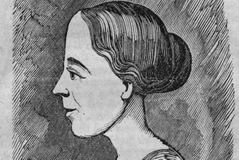 Mary Runkle
Murderer · USA · 1847
Mary Runkle was convicted of first-degree murder for the death of her husband,…
1 victim
Mary Runkle
Murderer · USA · 1847
Mary Runkle was convicted of first-degree murder for the death of her husband,…
1 victim
 Terry Lee Hankins
Murderer · USA · 2000
Terry Lee Hankins was convicted by a jury of capital murder and was sentenced t…
5 victims
Terry Lee Hankins
Murderer · USA · 2000
Terry Lee Hankins was convicted by a jury of capital murder and was sentenced t…
5 victims
- Gender
- male
- Country
- USA
- Location
- St. Clair County, Illinois, USA
- Date of birth
- 1940
- Age at first offence
- 43
- Characteristics
- robbery, alcohol
- Victim profile
- Kevin Paule, 21, and his fiancee Sharon Winker, 25
- Method of murder
- Shooting
- Date(s) of murder
- June 18, 1983
- Years active
- 1983
- Date of arrest
- —
- Status
-
Executed
Executed by lethal injection in Illinois on September 12, 1990
Case record: Charles Walker
Background
Charles Walker was born circa 1940 and was executed on September 12, 1990. He was a death row inmate at the Menard Correctional Center in Chester, Illinois.
Walker pleaded guilty to two counts of murder and one count of armed robbery in the Circuit Court for St. Clair County, Illinois.
Appointed counsel filed legal actions on Walker’s behalf, even though Walker opposed those actions and refused to sign an affidavit in support of a motion to proceed in forma pauperis.
Walker later moved to terminate further proceedings on his behalf and informed his appointed counsel that he wanted to be executed. Walker also wrote a letter to the district court stating that he did not want anyone undertaking legal action on his behalf.
The offence
Walker murdered Kevin Paule, 21, and Kevin Paule’s fiancée, Sharon Winker, 25, of Mascoutah, Illinois.
The killings occurred while the couple fished in a St. Clair County, Illinois creek on June 18, 1983, near Mascoutah in southwestern Illinois.
Walker was described as looking for beer money and robbing them of $40. The couple was shot.
Walker tied the couple to a tree and shot them and robbed them. Walker expressed that a thirst for alcohol and money led him to kill Kevin Paule and Sharon Winker.
Investigation
No investigation-specific details appeared in the provided material.
Arrest
No arrest-specific details appeared in the provided material.
Trial
Walker pleaded guilty in the Circuit Court for St. Clair County, Illinois to two counts of murder and one count of armed robbery.
Following a jury sentencing hearing, the circuit court sentenced Walker to death on the murder counts and to thirty years imprisonment on the armed robbery count.
Sentencing
On December 20, 1985, the Illinois Supreme Court affirmed Walker’s conviction and death sentence.
The circuit court sentenced Walker to death on the murder counts and to thirty years imprisonment on the armed robbery count after the jury sentencing hearing.
Appeals
Walker moved to terminate further proceedings on his behalf.
- On December 27, 1985, Walker moved to terminate further proceedings on his behalf, informing his appointed counsel that he wanted to be executed.
- On February 6, 1986, the Illinois Supreme Court denied Walker’s motion to terminate further proceedings and denied his counsel’s petition for rehearing.
- Counsel filed a petition for writ of certiorari in the United States Supreme Court, despite Walker opposing the action and refusing to sign an affidavit in support of a motion to proceed in forma pauperis.
- On December 1, 1986, the Supreme Court denied the certiorari petition: Walker v. Illinois, 479 U.S. 995, 107 S.Ct. 598, 93 L.Ed.2d 598 (1986), reh’g denied, 479 U.S. 1047, 107 S.Ct. 913, 93 L.Ed.2d 862 (1987).
On February 19, 1987, the Illinois Supreme Court remanded Walker’s case to the Circuit Court for St. Clair County to determine whether Walker:
- was mentally competent to waive further legal actions on his behalf;
- had made a knowing and intelligent waiver of any such further legal actions; and
- was fit to be executed.
After a June 24, 1987 hearing at which court-appointed counsel represented Walker, the circuit court ruled that Walker was mentally competent to waive further legal efforts on his behalf and was fit to be executed.
On September 28, 1987, however, the Illinois Supreme Court directed the circuit court to conduct another hearing on Walker’s mental condition because Walker’s appointed counsel at the June 24 hearing did not oppose the state’s position that Walker was competent and fit for execution.
On November 20, 1987, the circuit court held the second hearing and again found Walker mentally competent to waive further legal efforts on his behalf and fit for execution.
On January 19, 1988, the Illinois Supreme Court concluded that Walker was mentally competent to waive further legal actions on his behalf, had made a knowing and intelligent waiver of any such further legal actions, and was fit to be executed, and set Walker’s execution date for May 10, 1988.
On March 15, 1988, appellants filed a next-friend habeas corpus petition pursuant to 28 U.S.C. Sec. 2242, after which Walker refused to join. The petition consisted of two claims:
- appellants challenged in their individual capacities the constitutionality of the Illinois death penalty statute; and
- appellants asserted as next-friends of Walker that Walker’s conditions of confinement on death row violated several constitutional provisions and that those conditions, coupled with the chronic effects of Walker’s alcoholism, caused Walker involuntarily to waive further legal efforts on his behalf.
After an initial hearing, on April 19, 1988, the district court:
- dismissed appellants’ constitutional challenge to the Illinois death penalty statute for lack of standing; and
- stayed Walker’s execution pending an evidentiary hearing on whether Walker suffered from an overborne will which substantially affected his capacity, thereby rendering his decision to abandon further relief involuntary.
The court appointed an expert to perform a psychiatric evaluation of Walker, appointed counsel to represent Walker, and granted the parties leave to hire their own experts to perform separate evaluations.
Timeline
- June 18, 1983 — Kevin Paule, 21, and Sharon Winker, 25, were shot while fishing in a St. Clair County, Illinois creek near Mascoutah, after Walker robbed them of $40.
- June 24, 1987 — A hearing was held on Walker’s mental condition at which court-appointed counsel represented Walker; the circuit court ruled Walker was mentally competent to waive further legal efforts and fit to be executed.
- September 12, 1990 — Charles Walker was executed by lethal injection in Illinois.
- May 10, 1988 — Walker’s execution date was set by the Illinois Supreme Court.
Other details
People involved in the habeas corpus proceedings
In the United States Court of Appeals, Seventh Circuit matter, petitioners-appellants were Miriam Wilson, Nadine Schnurstein, Ronald Barrow, Gloria Abbey-Lyles, and Patricia Vader, individually and as next friends acting on behalf of Charles Walker. The respondent-appellee was Michael Lane, Director of the Illinois Department of Corrections. The panel included BAUER, Chief Judge, and WOOD, Jr. and KANNE, Circuit Judges.
The appeal was argued December 28, 1988 and decided March 15, 1989. Rehearing and rehearing en banc were denied April 19, 1989.
Expert testimony on voluntariness and mental condition
At the August 8, 1988 hearing, the evidentiary dispute included testimony from:
- Dr. Curtis L. Barrett, who testified that Walker’s chronic alcoholism had so impaired his judgment that, but for the disease, Walker would be making every effort to save his life.
- Dr. Robert E. Becker, who testified that Walker’s decision making was best explained by his antisocial personality, not chronic alcoholism, and that Walker was mentally capable of voluntarily waiving further review of his death sentence.
The district court found Dr. Becker to be “the more credible expert” who offered “a more reasonable explanation of Walker’s actions.”
The district court was influenced by its opportunity to examine Walker on the stand. The court stated that Walker was “credible, lucid, and rational” in explaining his decision to waive further review of his guilty plea and death sentence.
The district court found that “petitioners’ original basis for their petition, that the conditions of confinement have caused Walker’s will to be overborne, rendering his decision involuntary, is without merit.”
The district court concluded that:
- “Walker's waiver of the right to further review was made freely and rationally”; and
- “under the totality of the circumstances, Walker's decision is the product of both rational intellect and unconstrained will.”
The district court specifically found that “Walker has the capacity to knowingly waive his right to further review of his death sentence, and the same is done voluntarily.”
As a result, the district court denied appellants standing to pursue Walker’s post-conviction remedies on his behalf and the dismissal included the citation “697 F.Supp. 1500.”
Walker’s testimony about review and confinement
Walker testified that he still desired not to pursue any further review of his sentence and that he had made this decision and told his family of it the night before he was sentenced. He did not waver in that decision.
Walker stated that he would not change his opinion even if he were guaranteed an opportunity for pardon at age 70 or 75. He understood the federal review options available to him and was aware of the efforts being made on his behalf by the petitioners.
Walker stated that “there was ‘no possibility, hope or dream’” of being a free man, and that there was no sense in being imprisoned for 10-25 years and then dying when the end result would be death.
The district court found that Walker’s decision was “in part, based on the quality of his life due to the fact, not conditions, of confinement and the sheer lack of possibility of freedom during his lifetime.” (Emphasis added.)
Standing and appeal disposition
Appellants argued that they had standing as next-friends to file habeas corpus and as individuals to challenge the constitutionality of the Illinois death penalty statute. The appellate court analyzed the next-friend standard and the issue of standing to assert third-party rights.
The appellate court concluded that appellants lacked standing as individuals to attack the constitutionality of the Illinois death penalty statute after upholding the district court’s ruling that Walker waived voluntarily further legal efforts on his behalf. The dismissal was affirmed, stating: “For these reasons, the district court's dismissal of appellants' petition is AFFIRMED.”
Walker’s letter to the district court
Walker wrote a letter to the district court stating that he did not want anyone undertaking legal action on his behalf. The text of the letter was:
Dear Sir: In regards to the Habeas Corpus filed in my case (Cause No. 88-3180). This is to affirm that I don't want any one speaking or acting on my behalf. Before I was sentenced I had told my sister that if I was sentenced to death, that one appeal had to be filed according to law but after that I was going to stop my appeals and ask for an execution date. The conditions on death row or any place else has nothing to do with my decision. The people who signed that writ has only known me the short time I've been here.
Supreme Court events shortly before execution
Fewer than eight hours before the execution, the Supreme Court refused to issue an injunction blocking it. The vote was 6 to 1.
The order of denial noted that Justice Thurgood Marshall would have granted the injunction because he opposed capital punishment in all circumstances. One seat on the court was open, and Justice Harry Blackmun took no part in the case.
The Supreme Court also rejected an emergency appeal from two other Illinois death row inmates who sought a delay until their case could be heard.
Last statement at execution
Walker’s last statement was:
"I'm guilty. I can accept my punishment. I'm sorry I done it, yeah, but it's done." — Charles Walker, executed in Illinois on Sept. 12, 1990
Execution and equipment failure
Walker was executed in Stateville Prison in 1990 by the State of Illinois by lethal injection at the age of 50.
The material stated that, “Because of equipment failure and human error, Walker suffered excruciating pain during his execution.”
It stated that Gary Sutterfield, an engineer from the Missouri State Prison retained by the State of Illinois to assist with Walker’s execution, said a kink in the plastic tubing going into Walker’s arm stopped the deadly chemicals from reaching Walker. It also stated that the intravenous needle was inserted pointing at Walker’s fingers instead of his heart, prolonging the execution.
Statements about alcohol and motive
Walker said he was thirsty for alcohol and money when he killed Kevin Paule and Sharon Winker.
He told others that a thirst for alcohol and money led him to kill them and that he accepted his punishment.
Execution sequence and Illinois death penalty context
The material stated that Walker became the first person to be executed in Illinois since 1962.
It stated that the United States Supreme Court voided all state death penalty laws in 1972 because they were “haphazard and racially discriminatory.”
It stated that revised state death penalty law went into effect on June 27, 1977 allowing executions to continue in Illinois.
It also stated that Walker was the 139th person executed in the United States since the High Court’s 1976 ruling allowing states to resume use of the death penalty and that Illinois was the 16th state to resume executions since that ruling. It stated that Oklahoma became the 15th on Monday.
Administrative and procedural details in the Seventh Circuit matter
The Seventh Circuit matter included procedural references to next-friend standing and the requirement that a next friend may not file a petition for a writ of habeas corpus on behalf of a detainee if the detainee himself could file the petition, and it discussed the need for explanation of why the detainee did not sign and verify the petition.

Spotted an error, or have more information about this case?