David Dene Martin
Murderer Ervil LeBaron
Murderer · USA · 1972
Ervil Morrell LeBaron (1925 to August 16, 1981) was the leader of a polygamous…
35 victims
Ervil LeBaron
Murderer · USA · 1972
Ervil Morrell LeBaron (1925 to August 16, 1981) was the leader of a polygamous…
35 victims
 Brian Kevin Rosenfeld
Murderer · USA · 1985
Brian Kevin Rosenfeld Brian Kevin Rosenfeld was sentenced to three concurrent l…
23 victims
Brian Kevin Rosenfeld
Murderer · USA · 1985
Brian Kevin Rosenfeld Brian Kevin Rosenfeld was sentenced to three concurrent l…
23 victims
 Marvin Gray
Murderer · USA · 1975
Marvin Gray was convicted killer who claimed responsibility for 23 slayings and…
23 victims
Marvin Gray
Murderer · USA · 1975
Marvin Gray was convicted killer who claimed responsibility for 23 slayings and…
23 victims
 Yahweh ben Yahweh
Murderer · USA · 1980
Yahweh ben Yahweh was born and legally named Hulon Mitchell Jr. (October 27, 19…
23 victims
Yahweh ben Yahweh
Murderer · USA · 1980
Yahweh ben Yahweh was born and legally named Hulon Mitchell Jr. (October 27, 19…
23 victims
 Jeffery Daugherty
Serial killer · USA · 1976
Jeffrey Joseph Daugherty was executed by electrocution in Florida on November 7…
5 victims
Jeffery Daugherty
Serial killer · USA · 1976
Jeffrey Joseph Daugherty was executed by electrocution in Florida on November 7…
5 victims
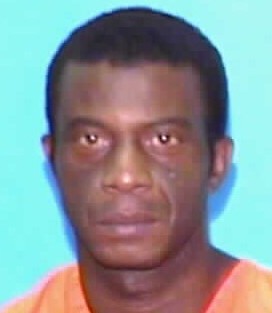 Bruce Douglas Pace
Murderer · USA · 1988
Defendant: Bruce Douglas Pace · Date of birth: 12/12/59 · Case number (trial co…
1 victim
Bruce Douglas Pace
Murderer · USA · 1988
Defendant: Bruce Douglas Pace · Date of birth: 12/12/59 · Case number (trial co…
1 victim
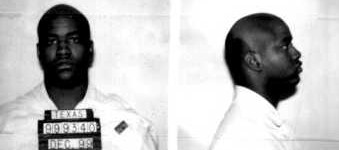 Geno Capoletti Wilson
Homicide · USA · 1998
Name: Geno Capoletti Wilson TDCJ Number: 999340 Date of Birth: 05/24/1981 Date…
1 victim
Geno Capoletti Wilson
Homicide · USA · 1998
Name: Geno Capoletti Wilson TDCJ Number: 999340 Date of Birth: 05/24/1981 Date…
1 victim
 Arturo Daniel Aranda
Murderer · USA · 1976
Arturo Daniel Aranda was sentenced to death on May 18, 1979. Aranda Arturo, a 7…
1 victim
Arturo Daniel Aranda
Murderer · USA · 1976
Arturo Daniel Aranda was sentenced to death on May 18, 1979. Aranda Arturo, a 7…
1 victim
 Harvey Lee Green
Murderer · USA · 1983
Harvey Lee Green was a death row inmate in North Carolina. He was executed by l…
2 victims
Harvey Lee Green
Murderer · USA · 1983
Harvey Lee Green was a death row inmate in North Carolina. He was executed by l…
2 victims
 Roger Leroy Johnson
Mass murderer · USA · 2001
Roger Leroy Johnson was a 48-year-old California man suspected of killing a gra…
4 victims
Roger Leroy Johnson
Mass murderer · USA · 2001
Roger Leroy Johnson was a 48-year-old California man suspected of killing a gra…
4 victims
- Gender
- male
- Country
- USA
- Location
- Terrebonne Parish, Louisiana, USA
- Date of birth
- ???
- Characteristics
- jealous rage
- Victim profile
- Bobby Todd, Terry Hebert, Anne Tierney, and Sandra Brake
- Method of murder
- Shooting (Colt Python .357 magnum pistol)
- Date(s) of murder
- August 14, 1977
- Years active
- 1977
- Date of arrest
- —
- Status
-
Executed
Executed by electrocution in January 4, 1985
Case overview
David Dene Martin was executed by electrocution on January 4, 1985. Martin had been convicted of a quadruple murder committed on August 14, 1977.
The victims were Bobby Todd, Terry Hebert, Anne Tierney, and Sandra Brake. All four were shot to death in Todd's mobile home near Houma.
Background
Martin's wife, Gloria Pitre, told him that she was having an affair with Todd. The other three victims—Hebert, Tierney, and Brake—were strangers who had been present when Martin burst in and began shooting.
Martin was an active Seventh-Day Adventist. During the investigation and trial, evidence and testimony described Martin as involved in a counseling service for runaway youths and people with drug problems and as an active church member.
At his execution, Martin made no final statement.
At a Pardon Board clemency hearing the afternoon before his death, Martin said:
"To take someone's life is out of character for me. It is not David Martin. I am devastated at what I have done, but I can't remember it. My life has been dedicated to saving lives, helping people, not destroying people. "I know I wouldn't willfully take another person's life. Something bad went down. But it wasn't David Martin. I wasn't right. I don't know. I don't know. That's all."
The offence
On August 11, 1977, Martin’s wife Gloria began to work in a restaurant lounge owned by Bobby Todd. The next day she had sexual relations with Todd, and the following day she informed Martin of this fact. She refused Martin's request that she quit working for Todd.
That night, Martin stole a friend’s Colt Python .357 magnum pistol. The firearm was loaded with hollow-point bullets, and Martin later purchased an additional box of shells. On August 13, Martin visited his next-door neighbor, Raymond Rushing. Martin told Rushing he was going to shoot Todd and explained that he was jealous of his wife’s relationship with Todd.
On August 14, Martin told another friend, Chester Golden, that his wife was working at Todd's restaurant and would not quit. Martin indicated he had “a bone to pick” with Todd and said he had waited the last two nights outside Todd’s restaurant for an opportunity to “get” Todd. Martin showed Golden the stolen pistol and told Golden that because he had stolen the gun from a felon, its theft would not be reported. Golden told Martin that he “looked pretty drug out” and had lost weight. Martin replied that he had been up for two nights and had not been eating.
That evening, Martin drove to the vicinity of the trailer in which Todd lived. He parked down the road from the trailer so he could approach it in the guise of a hitchhiker on foot. He entered the trailer and confronted Todd, who offered him a roll of bills. Martin ignored the money. Martin said, “I just want you to know my name,” and shot Todd twice in the chest. Martin then shot the three other persons in the trailer: Todd's bodyguard and two nude females. Martin inflicted multiple bullet wounds on each of the four.
One of the women was first wounded in the abdomen. She told Martin she was in pain and begged him to "finish" her. Martin shot her in the head and killed her.
Martin took the rolls of money “to make it look like a robbery,” and left.
Around 8:00 p.m., Martin returned to Golden’s home. He was excited and asked Golden to take a ride with him. During the ride, Martin told Golden he had killed four people at the restaurant. Martin said he had not touched anything and, although the authorities might suspect him, they had no proof that he committed the murders.
Martin confessed to four more people that night. He told Pamela Wilson that he had thrown the gun in a bayou. Martin was arrested a short time later.
The sheriff who made the arrest told reporters for a local newspaper that Martin appeared “strung out on dope” at the time.
Investigation and arrest
After the shootings, Martin was arrested a short time later. The arrest was made by a sheriff, who told reporters for a local newspaper that Martin appeared “strung out on dope” at the time.
Martin also told Pamela Wilson that he had thrown the gun in a bayou.
Trial
Guilt phase
On April 10, 1978, a Louisiana jury convicted Martin of four counts of first degree murder.
Sentencing phase
The next day, after a separate sentencing hearing, the jury unanimously recommended that Martin be sentenced to death on each count.
Louisiana law required the sentencing jury to find at least one aggravating circumstance specified in La. Code Crim. Proc. Ann. art. 905.4 before imposing the death sentence. Martin's jury found two:
- He “knowingly created a risk of death or great bodily harm to more than one person,” id. art. 905.4(d).
- He committed the offenses “in an especially heinous, atrocious or cruel manner,” id. art. 905.4(g).
On direct appeal, the Louisiana Supreme Court affirmed the convictions and sentence by a vote of four to three. The court denied rehearing by the same margin. The United States Supreme Court denied Martin's petition for a writ of certiorari.
Evidence and defenses raised
Drug-related issues and alleged intoxication
Martin's counsel pursued a defense that Martin had not committed the murders rather than a drug-related intoxication defense.
Martin told his lawyers he had taken drugs on the night of the murders. Lead counsel arranged for Martin to be examined by Dr. Byrd, a psychiatrist. Dr. Byrd testified that Martin had taken PCP on the night in question. Dr. Byrd discussed a “drug-related” defense with lead counsel and concluded that the effect of PCP would raise “substantive and serious questions” about Martin’s ability to formulate logical thoughts on or about the night of the murders. Dr. Byrd also concluded the murders were “inconsistent with [Martin's] past history, except in the presence of a toxin such as LCD [sic] or PCP.” He concluded a drug-related defense would be medically “valid and credible,” but believed an intelligent decision required additional evaluation of Martin and further investigation of the drugs Martin had taken that night. These investigations were never pursued because Martin’s counsel did not communicate further with Dr. Byrd.
Martin called Dr. Richard Garey at the federal habeas hearing. Dr. Garey testified that one common effect of PCP was “an amnesiac response, that is they don't remember either completely--complete amnesia, or it's fragmented, they remember part of what went on during their trip. And a lot of times they don't remember completely, and if it's fragmented, they'll remember things that happened an hour before but not two hours before.” He added, “they seldom remember the event in very clear detail.” He testified it is possible for an individual under PCP to remember an event for a short time and then forget, but said “it's not common,” and that it happens “in approximately 10 percent of the cases.”
Lead counsel did not research whether voluntary intoxication was a defense to first degree murder in Louisiana. Local counsel testified that he “got into” the question, but his testimony exhibited confusion about the legal questions. Local counsel testified that, to the best of his recollection, voluntary intoxication was not a defense. Local counsel indicated that counsel chose not to pursue intoxication because they were uncomfortable with the defense and because it would have required Martin to admit the murders.
Lead counsel later explained his decision:
“One, I was convinced that the defense of diminished capacity because of drugs was really not a defense that was there. I was not--I mean no one indicated to me any factors that would indicate that at the time of the offense Mr. Martin was intoxicated as a result of drug use .... One thing that concerned me in that regard was the incident involving Mr. and Mrs. Martin's child and the birth of their child. There had been a child born to Mr. and Mrs. Martin with ... brain damage. It appeared that those complications may very well have been related to drug use on the part of either Mr. Martin or Mrs. Martin. And I was concerned that ... any suggestion that [Martin] might have, either inadvertently or through negligence or engaging himself in unlawful activities such as the use of drugs, had been responsible for the serious complications to his child, may have seriously prejudiced Mr. Martin in the eyes of the jury. Moreover, local counsel indicated that he and lead counsel were uncomfortable with the intoxication defense because, to invoke it, Martin would have to admit that he committed the murders. Counsel chose instead to pursue the defense that Martin had not committed the murders. Lead counsel explained that, in his opinion, the physical evidence showed the victims 'could not have been shot in that small trailer.' Local counsel explained that he and lead counsel believed the defense to be tenable because the state's case would be 'straight out circumstantial.'”
Alternative emotional-turmoil theory
Martin argued he was denied relief because trial counsel failed to present evidence of severe emotional turmoil in the months before the murders. The evidence described included that Martin’s daughter had been injured at birth and that he questioned his spiritual convictions, that he was unemployed and had encountered severe financial difficulties, and that his wife was having an affair with Todd.
The reviewing court concluded that counsel could not be faulted for failing to pursue a manslaughter theory because the evidence did not support it. It referenced Louisiana’s provocation rule in La. Rev. Stat. Ann. § 14:31 (West 1974), including:
"Provocation shall not reduce a homicide to murder if the jury finds that the offender's blood had actually cooled, or that an average person's blood would have cooled, at the time the offense was committed."
Appeals
Louisiana Supreme Court and certiorari
The Louisiana Supreme Court affirmed Martin’s convictions and sentence on direct appeal and denied rehearing by a four-to-three vote and the same margin.
State post-conviction relief
Martin sought post-conviction relief in Louisiana courts. His first petition was dismissed by a state district court on February 9, 1981. He then returned to the Louisiana Supreme Court, which denied Martin relief with two justices dissenting.
Federal habeas corpus and appeal
After exhausting state remedies, Martin filed a petition for writ of habeas corpus in federal district court on February 10, 1981. The district court stayed his execution and referred the case to a magistrate. On August 12, 1981, the district court denied Martin relief in a thirty-nine page opinion.
Martin appealed.
On appeal, the court addressed claims of effective assistance of counsel, including counsel’s failure to investigate an intoxication defense. The appellate court found no constitutional error that would justify relief and affirmed the district court’s denial of the writ.
The appellate court also addressed Martin’s claims regarding the disclosure of grand jury testimony and pretrial statements, and claims challenging the sufficiency and consideration of aggravating circumstances, the jury instructions, juror excusal under Witherspoon, and proportionality and review practices.
The appellate court concluded:
“We do not find constitutional error in the proceedings that resulted in Martin's death sentence. We conclude, therefore, that the state may carry out its judgment. For these reasons, the judgment is AFFIRMED.”
Outcome
Martin’s conviction and death sentence were affirmed on appeal. Martin was executed by electrocution on January 4, 1985.
Other details
Marriage and family details
Culpepper testified that Martin married Gloria Pitre in December 1976 and that they had a baby girl in December 1976. Complications during childbirth resulted in brain damage to the baby girl, and Culpepper testified that Martin and his wife were “quite upset.” Culpepper also testified that Martin blamed himself for the damage, and that other evidence suggested the difficulty might have been remedied by experienced medical attention. Martin left the church shortly after the birth of his daughter.
Martin’s brother Dale testified that Martin went to public school until about the tenth grade and then dropped out. Dale Martin believed David obtained a G.E.D. degree and went to college for about a year. Dale described Martin as generous and unselfish and stated that he had never been convicted of any crime. Dale also testified that Martin blamed himself for his daughter’s injury and never recovered from the incident.
Mary Edith Hill testified that she was an assistant cashier and branch manager at a Houma bank, had known Martin for about three years by the time of the trial, and was impressed with him. She testified that Martin and his wife were house parents at a home for girls and that "[t]hey were always trying to help everyone less fortunate than they were." Hill loaned Martin money on several occasions and said he was repaid. She considered him generous and nonviolent.
Seventh-Day Adventist involvement
Donald Culpepper testified that Martin moved to the area in 1979 and became involved in a counseling service for runaway youths and people with drug problems. Culpepper testified that Martin actively participated in the work of the clinic and counseled young people with drug problems. Culpepper testified that Martin impressed him as a diligent and faithful worker and that Martin became an active member of the Seventh-Day Adventist Church.
Culpepper testified that Martin participated in building a new church and that Martin continued working on the church even though he had a cast on his leg.
Citation information included in the appellate text
The appellate caption included: 711 F.2d 1273 David Dene Martin, Petitioner-Appellant, v. Ross Maggio, Jr., Warden, Louisiana State Penitentiary, and William J. Guste, Jr., Attorney General of the State of Louisiana, Respondents-Appellees. No. 81-3494 Federal Circuits, 5th Cir. August 15, 1983 Appeal from the United States District Court for the Eastern District of Louisiana.
The panel was BROWN, RUBIN and REAVLEY, Circuit Judges, and the decision was labeled PER CURIAM.
Spotted an error, or have more information about this case?