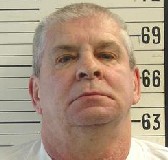
John Patrick Henretta
Murderer Brian Kevin Rosenfeld
Murderer · USA · 1985
Brian Kevin Rosenfeld Brian Kevin Rosenfeld was sentenced to three concurrent l…
23 victims
Brian Kevin Rosenfeld
Murderer · USA · 1985
Brian Kevin Rosenfeld Brian Kevin Rosenfeld was sentenced to three concurrent l…
23 victims
 Yahweh ben Yahweh
Murderer · USA · 1980
Yahweh ben Yahweh was born and legally named Hulon Mitchell Jr. (October 27, 19…
23 victims
Yahweh ben Yahweh
Murderer · USA · 1980
Yahweh ben Yahweh was born and legally named Hulon Mitchell Jr. (October 27, 19…
23 victims
 Russell Ellwood
Murderer · USA · 1991
Russell Ellwood was a former taxi driver. Authorities suspected him of killing…
20 victims
Russell Ellwood
Murderer · USA · 1991
Russell Ellwood was a former taxi driver. Authorities suspected him of killing…
20 victims
 Robert Martines Perez
Murderer · USA · 1994
Name: Robert Martines Perez · Other name used in proceedings: Robert Martinez P…
15 victims
Robert Martines Perez
Murderer · USA · 1994
Name: Robert Martines Perez · Other name used in proceedings: Robert Martinez P…
15 victims
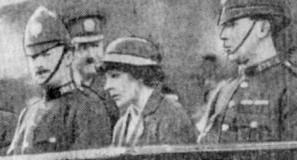 Susan Newell
Murderer · USA · 1923
Susan Newell (1893–1923) was convicted in Glasgow of the murder of newspaper bo…
1 victim
Susan Newell
Murderer · USA · 1923
Susan Newell (1893–1923) was convicted in Glasgow of the murder of newspaper bo…
1 victim
 Dr. Harold Shipman
Serial killer · United Kingdom · 1974
Harold Fredrick Shipman was an English doctor who was convicted as a serial kil…
15 victims
Dr. Harold Shipman
Serial killer · United Kingdom · 1974
Harold Fredrick Shipman was an English doctor who was convicted as a serial kil…
15 victims
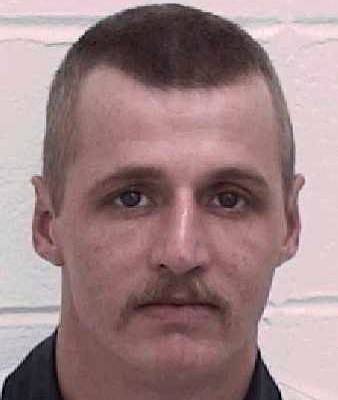 Timothy Pruitt
— · USA · 1992
Timothy Pruitt was sentenced to death in Lumpkin County in October 1996 for the…
1 victim
Timothy Pruitt
— · USA · 1992
Timothy Pruitt was sentenced to death in Lumpkin County in October 1996 for the…
1 victim
 Antoinette Frank
Murderer · USA · 1995
Defendant: Antoinette Frank (born April 30, 1971) Role: New Orleans police offi…
3 victims
Antoinette Frank
Murderer · USA · 1995
Defendant: Antoinette Frank (born April 30, 1971) Role: New Orleans police offi…
3 victims
- Gender
- male
- Country
- USA
- Location
- Crawford County, Pennsylvania / Bradley County, Tennessee, USA
- Date of birth
- February 12, 1943
- Age at first offence
- 45
- Characteristics
- convicted rapist, rape, robbery
- Victim profile
- ??? / Frances Rose Crabtree, 32 (Salvation Army Thrift Store worker)
- Method of murder
- St abbing with knife
- Date(s) of murder
- September 19, 1988 / November 30, 1988
- Years active
- 1988
- Date of arrest
- August 20, 1997
- Status
-
Sentenced to death
Sentenced to death in Tennessee on April 6, 2002
Case record: John Patrick Henretta
Status / legal outcome
John Patrick Henretta was sentenced to death in Tennessee on April 6, 2002.
Timeline
- November 30, 1988 — Frances Rose Crabtree was working alone as a sales clerk at the Salvation Army Thrift Store in Cleveland, Tennessee; Henretta and his co-defendant stopped in Cleveland and decided to rob the Salvation Army Thrift Store after it closed.
- Between 4:30 and 5:00 p.m. — Frances Rose Crabtree spoke with her sister by telephone from the store and they made plans to meet at church at 7:00 that night.
- 4:30 to 5:00 p.m. (store closure) — The store closed; Henretta and Goodhart waited and then returned back by the store.
- 5:00 to 6:00 p.m. (approximate window per statement) — Henretta’s sworn statement placed the killings in this time window after the store had closed.
- December 3, 1988 — Henretta and Michael Goodhart were arrested together outside of Little Rock, Arkansas.
- Early 1994 — Lieutenant Danny Chastain learned of an unsolved November 1988 homicide via a National Crime Information Center teletype and followed up after receiving a letter from Michael Goodhart.
- February 1994 — Lieutenant Chastain and TBI Agent Brooks Wilkins traveled to Texas to speak further with Michael Goodhart and then went to Leavenworth, Kansas, where Henretta was incarcerated at Leavenworth Federal Correctional Facility.
- February 11, 1994 — Henretta met with Lieutenant Chastain and Agent Wilkins at Leavenworth; samples of blood, saliva, and hair were obtained; he signed a waiver of his Miranda rights and gave a sworn statement.
- March 8, 1994 — Samples of Henretta’s blood, saliva, and hair were sent to the FBI for DNA analysis.
- April 1997 — DNA analysis was completed and revealed that Henretta’s DNA matched DNA found on Frances Rose Crabtree’s skirt and on the vaginal swabs taken from Frances Rose Crabtree.
- August 20, 1997 — Henretta was indicted for premeditated murder, felony murder in the perpetration of robbery, two counts of aggravated robbery, two counts of aggravated rape, and two counts of aggravated kidnapping; the State filed notice it would seek the death penalty on the same date.
- October 3, 1997 — Henretta was transferred from Leavenworth to the Bradley County jail for arraignment.
- November 3, 1997 — Henretta was returned to Leavenworth.
- April 2002 — The case was tried.
- October 4, 2011 — The Tennessee Supreme Court set Henretta’s execution date at October 4, 2011.
- September 30, 2010 — The Supreme Court of Tennessee upheld Henretta’s death sentence in the appeal described.
Background
On November 30, 1988, Frances Rose Crabtree, a thirty-two year old mother of two minor children, was working alone as a sales clerk at the Salvation Army Thrift Store in Cleveland, Tennessee. Between 4:30 and 5:00 p.m., Ms. Crabtree spoke with her sister by telephone from the store, and they made plans to meet at church at 7:00 that night. When Ms. Crabtree failed to meet her sister at church, her sister and some friends went to the store to search for her. Ms. Crabtree’s car was still parked at the store, the front door of the store was locked, and her lunch box and coat were lying on the checkout counter in the front part of the store, but Ms. Crabtree was not located.
Henretta and his accomplice, Michael Goodhart, were on the run for crimes committed in Pennsylvania.
The offence
On the evening of the robbery and murder, the police discovered signs of the robbery and the location of the body inside the store. In the middle section of the store, officers discovered an empty cash register drawer, scattered receipts, an empty money bag, and one of Ms. Crabtree’s shoes. In a cluttered storage room at the rear of the store, officers found Ms. Crabtree’s body near a large pool of blood. She was partially covered by a bed cover and was clothed in a blouse, bra, and skirt.
Ms. Crabtree had been stabbed three times in the neck—twice on the left side and once on the right. One of the wounds to the left side of her neck had not cut any large veins or arteries; however, the other wound to that side of the neck had severed the jugular vein. The wound to the right side of Ms. Crabtree’s neck was fatal and had severed the carotid artery, the jugular vein, and cut through the ligaments holding the backbone together, exposing the spinal cord. Medical examination confirmed that Ms. Crabtree died from loss of blood as the result of these wounds.
Ms. Crabtree’s panties and purse containing $420 in cash were missing along with store proceeds in the amount of $189.60. No murder weapon was found.
Subsequent Tennessee Bureau of Investigation (“TBI”) laboratory examination of vaginal swabs taken from Ms. Crabtree, her skirt, and the bed cover that had been draped over her body revealed the presence of sperm, suggesting that Ms. Crabtree may have been raped. This evidence, along with samples of her blood, saliva, and hair, was sent to the Federal Bureau of Investigation (“FBI”) for deoxyribonucleic acid (“DNA”) analysis.
In Henretta’s signed sworn statement, he admitted that he and Michael Goodhart had entered the store after it closed, that they grabbed Ms. Crabtree, and that both he and Goodhart raped her. He also stated that he stabbed her once in the neck with a knife and described her being poked by Goodhart to make sure she was dead. He stated that they took Ms. Crabtree’s purse and panties and that he believed they burned the items in Alabama and threw the purse in a trash can by the Waterfront in Memphis. He stated that they left town and went to Arkansas and that they stayed in a motel in Brickley, Arkansas where they were busted by the FBI. He stated that the lights were not on when they got in and that they were never turned on. He stated that Goodhart moved the cash register drawer and that he did not.
“We (Michael Goodhart and myself) left Pennsylvania and we were on the run. I was on Parole out of Penn. We went to Florida, Georgia, and Alabama. We were coming back from Florida at this time. We stopped in Tennessee and I did not know the Town. We got there around noon or lunch time. We were still driving the stolen Toyota from Penn. We were drinking and stuff at some bar down the corner from the Salvation Army Store. We hung around about two hours or so and went back by the store and hung around till she closed at 4:30 or 5:00 PM. Goodhart opened up the back door after hiding in the store. I came in the back door. We went in and we both grabbed her back at the store room entrance. We told her to lay down and Goodhart st [sic] sex with her first and I went and got her purse. There was money in the purse. There was $300.00 to $340.00 dollars in the purse. There was another $100.00 in a money bag in one dollar bills. After I got her purse I went back and had sex with her. She was not putting up a struggle or screaming. We both had knifes [sic], there [sic] were about twelve inches long. The black handle knife found in the car when we were arrested was the knife that was used in this murder. I believe This [sic] was my knife. She got up right as I got done having sex with her and Goodhart wanted to take her with us. She said that we could not go out the back door because there was a police station right out the back door. So I asked Goodhart what he wanted to do—I said do you want me to kill her. He said yes. So I took my knife with my right hand and struck her one time in the neck. Goodhart asked me if she was dead and he poked her with his knife to make sure. We took her purse and panties and hose and everything and put it in a bag. I think we burned it in Alabama. I believe we threw her purse in a trash can by the Waterfront in Memphis. About five minutes before we left, I moved her and turned her over and covered her up with I guess a white blanket. We left out the back of the store and got in the car and left. We left town and went to Arkansas. We traveled on the Interstate. The clothes were burned the next day. I covered her up because I knew what I did was wrong. We stayed in a motel in Brickley [sic], Arkansas where we were busted by the FBI. The original deal in this was to just rob her. That was what we intended to do. We did not go in with the idea to kill her. The lights were not on when we got in and they were never turned on. Goodhart was the one that moved the cash register drawer. I did not. The lady was wearing a blue jean skirt, pink top, she was a nice looking lady.”
In addition to the statement, Henretta drew and signed an accurate map of the layout of the store showing where Ms. Crabtree was killed and other details of the crime scene.
Henretta told officers that he would be willing to come to Tennessee and plead guilty in return for a life sentence if the death penalty was not sought.
Investigation
The murder remained unsolved for the next several years. In early 1994, Lieutenant Danny Chastain of the Cleveland Police Department saw a National Crime Information Center teletype from police in Philadelphia, Pennsylvania, directed to any Tennessee police agency having an unsolved November 1988 homicide involving a female store employee whose throat had been cut. Lieutenant Chastain learned that this teletype was prompted by a letter that had been received by a federal judge in Philadelphia from an individual identified as Michael Goodhart, who was then incarcerated in Bastrop County Federal Correctional Facility in Texas.
Lieutenant Chastain telephoned Mr. Goodhart, who advised him that the murder he had witnessed had occurred between 5:00 and 6:00 p.m. in a thrift store after the store had closed and that the murderer was presently incarcerated. Further investigation revealed that Mr. Goodhart and Henretta had been traveling together at the time of the thrift store murder and that after the murder, on December 3, 1988, they had been arrested together outside of Little Rock, Arkansas.
Henretta and Goodhart were wanted by the FBI for a kidnapping at knifepoint that had occurred on or about the day after Thanksgiving of 1988. The narrative also stated that Henretta had previously been convicted of homicide and rape and was currently a suspect in yet another homicide.
In February 1994, Lieutenant Chastain and TBI Agent Brooks Wilkins traveled to Texas to speak further with Michael Goodhart and then went to Leavenworth, Kansas, where Henretta was incarcerated at the Leavenworth Federal Correctional Facility (“Leavenworth”). Upon presentation of their affidavit to a Leavenworth County judge, they were issued a search warrant to obtain samples of Henretta’s blood, saliva, and hair.
On February 11, 1994, Lieutenant Chastain and Agent Wilkins met with Henretta at Leavenworth, accompanied by an FBI agent assigned to the penitentiary, a forensic scientist with the Kansas Bureau of Investigation, and a corrections officer employed by the penitentiary. Agent Wilkins had a copy of the search warrant and advised Henretta they were there to investigate a murder that had occurred in Tennessee in 1988 and explained that the purpose was to collect blood, hair, and saliva samples. After the samples were taken, Agent Wilkins advised Henretta that the investigation concerned the murder of Frances Rose Crabtree in Cleveland, Tennessee, in November of 1988. Henretta expressed willingness to talk, signed a waiver of his Miranda rights, and provided the sworn statement quoted above.
The blood, saliva, and hair samples were received by the TBI laboratory for testing and were sent to the FBI on March 8, 1994, for DNA analysis. The analysis was completed in April of 1997 and revealed that Henretta’s DNA matched DNA found on Ms. Crabtree’s skirt and on the vaginal swabs taken from Ms. Crabtree.
Arrest / custody movements
After the murder, on December 3, 1988, Henretta and Michael Goodhart were arrested together outside of Little Rock, Arkansas. The narrative also stated that the two were wanted by the FBI for a kidnapping at knifepoint on or about the day after Thanksgiving of 1988. Henretta was incarcerated at Leavenworth Federal Correctional Facility, and later was transferred to the Bradley County jail for arraignment and then returned to Leavenworth.
On October 3, 1997, Henretta was transferred from Leavenworth to the Bradley County jail for arraignment and was thereafter returned to Leavenworth on November 3, 1997.
Charges / indictment
On August 20, 1997, Henretta was indicted for:
- premeditated murder,
- felony murder in the perpetration of robbery,
- two counts of aggravated robbery,
- two counts of aggravated rape,
- two counts of aggravated kidnapping.
On August 20, 1997, the State filed notice that it would seek the death penalty.
Trial
The case was tried in April of 2002. During the guilt/innocence phase, Henretta presented no witness testimony but entered documentary evidence showing that he had been sentenced to imprisonment for life without possibility of parole in Pennsylvania.
Defense counsel conceded that Henretta committed the charged crimes of robbery, rape, and murder, and told the jury:
“You have heard proof that John Patrick Henretta robbed, raped, and murdered Rose Crabtree. You have not heard from me, nor will you ever, or from Mr. Henretta, anything to the contrary. Those are true.”
Defense counsel advised the jury:
“this case ... is only about sentencing.”
The jury convicted Henretta of:
- premeditated murder in the first degree,
- felony murder in the first degree,
- two counts of robbery with a deadly weapon,
- two counts of aggravated rape,
The trial court merged the premeditated murder conviction and the felony murder conviction into a single conviction and merged the convictions of robbery with a deadly weapon, aggravated rape, and aggravated kidnapping into a single conviction for each offense.
Sentencing
During the subsequent sentencing phase, the State asserted four statutory aggravating factors.
First, the State presented proof that “the defendant was previously convicted of one or more felonies, other than the present charge, which involve the use or threat of violence to the person,” Tenn. Code Ann. § 39-2-203(i)(2) (1982). In that regard, the State established that:
- On October 11, 1974, Henretta was convicted of a rape occurring in Crawford County, Pennsylvania on July 17, 1974.
- On June 17, 1991, Henretta was convicted of a second degree murder occurring in Lawrence County, Pennsylvania on September 19, 1988, and of a rape occurring in that county on November 14, 1988.
- On July 7, 1989, Henretta was convicted of a kidnapping occurring on November 23, 1988.
Second, for the aggravating circumstance that “the murder was especially heinous, atrocious, or cruel in that it involved torture or depravity of mind,” Tenn. Code Ann. § 39-2-203(i)(5), the State relied on proof adduced during the guilt phase pertaining to the nature of the wounds inflicted upon Ms. Crabtree and other circumstances of her murder.
Third, for the aggravating circumstance that “the murder was committed for the purpose of avoiding, interfering with, or preventing a lawful arrest or prosecution of the defendant or another,” Tenn. Code Ann. § 39-2-203(i)(6), the State relied upon proof introduced during the guilt phase as to the close proximity of the police station, showing that Ms. Crabtree was murdered to prevent her from summoning the police.
Henretta was sentenced to death in Tennessee on April 6, 2002.
Appeals
The Tennessee Supreme Court upheld Henretta’s death sentence. The Supreme Court rejected all of the issues raised in Henretta’s automatic appeal and concluded that none of the issues presented entitled Henretta to relief. The Court affirmed the decision of the Court of Criminal Appeals and held that the sentence was not imposed arbitrarily and was not excessive or disproportionate.
The Tennessee Supreme Court authored a unanimous opinion by Justice Sharon G. Lee.
The Supreme Court set Henretta’s execution date at October 4, 2011.
Other details
Henretta and Michael Goodhart decided to rob the Salvation Army Thrift Store after it closed. During the robbery, both Henretta and Goodhart raped the victim. Before leaving the store, Henretta stabbed the victim in the neck, leaving her to bleed to death on the storeroom floor. The murder remained unsolved until 1994, when the Cleveland Police Department learned of the letter Goodhart wrote to a Pennsylvania federal judge providing details of the crime.
The narrative also stated that Henretta and Goodhart had been traveling together at the time of the thrift store murder and that they had been arrested together on December 3, 1988, outside of Little Rock, Arkansas.
Spotted an error, or have more information about this case?