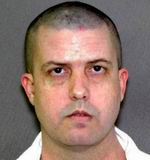
Jerry Martin
Murderer Joshua Wayne Andrews
Murderer · USA · 2000
Joshua Wayne Andrews was a serial killer accused of killing several people in V…
5 victims
Joshua Wayne Andrews
Murderer · USA · 2000
Joshua Wayne Andrews was a serial killer accused of killing several people in V…
5 victims
 Juan Carlos Alvarez
Murderer · USA · 1998
Juan Carlos Alvarez, born on March 9, 1977, in San Luis, Mexico, was a Hispanic…
5 victims
Juan Carlos Alvarez
Murderer · USA · 1998
Juan Carlos Alvarez, born on March 9, 1977, in San Luis, Mexico, was a Hispanic…
5 victims
 Leon Davis Jr.
Murderer · USA · 2007
Leon Davis Jr. was sentenced to death on April 29, 2011, for the execution-styl…
5 victims
Leon Davis Jr.
Murderer · USA · 2007
Leon Davis Jr. was sentenced to death on April 29, 2011, for the execution-styl…
5 victims
 Raymond Lee Oyler
Murderer · USA · 2006
Raymond Lee Oyler was convicted for starting the 2006 Esperanza fire in Riversi…
5 victims
Raymond Lee Oyler
Murderer · USA · 2006
Raymond Lee Oyler was convicted for starting the 2006 Esperanza fire in Riversi…
5 victims
 Terry Lee Hankins
Murderer · USA · 2000
Terry Lee Hankins was convicted by a jury of capital murder and was sentenced t…
5 victims
Terry Lee Hankins
Murderer · USA · 2000
Terry Lee Hankins was convicted by a jury of capital murder and was sentenced t…
5 victims
 Carl Folk
Murderer · USA · 1953
Carl J. Folk was executed by asphyxiation-gas in Arizona on March 4, 1955. Carl…
1 victim
Carl Folk
Murderer · USA · 1953
Carl J. Folk was executed by asphyxiation-gas in Arizona on March 4, 1955. Carl…
1 victim
 Mario José Redondo LLenas
Murderer · Dominican Republic · 1996
Mario José Redondo Llenas was convicted in connection with the murder of twelve…
1 victim
Mario José Redondo LLenas
Murderer · Dominican Republic · 1996
Mario José Redondo Llenas was convicted in connection with the murder of twelve…
1 victim
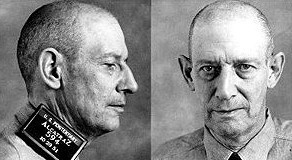 Robert Stroud
Murderer · USA · 1909
Robert Stroud, known to the public as the “Birdman of Alcatraz,” was a federal…
2 victims
Robert Stroud
Murderer · USA · 1909
Robert Stroud, known to the public as the “Birdman of Alcatraz,” was a federal…
2 victims
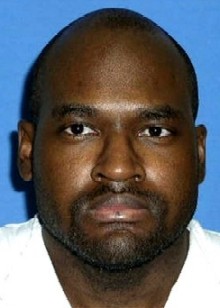 Sean Derrick O'Brien
Murderer · USA · 1993
Name: Sean Derrick O'Brien Sean Derrick O'Brien was executed by lethal injectio…
2 victims
Sean Derrick O'Brien
Murderer · USA · 1993
Name: Sean Derrick O'Brien Sean Derrick O'Brien was executed by lethal injectio…
2 victims
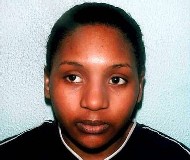 Kemi Adeyoola
Homicide · United Kingdom · 2005
Kemi Adeyoola was convicted of murdering 84-year-old Anne Mendel. Adeyoola had…
1 victim
Kemi Adeyoola
Homicide · United Kingdom · 2005
Kemi Adeyoola was convicted of murdering 84-year-old Anne Mendel. Adeyoola had…
1 victim
- Gender
- male
- Country
- USA
- Location
- Walker County, Texas, USA
- Date of birth
- March 28, 1970
- Age at first offence
- 37
- Characteristics
- kidnapping, rape, armed robbery, carjacking, domestic violence, drug dealer, abuse
- Victim profile
- Susan Canfield, 59 (Correctional officer)
- Method of murder
- Martin drove a truck into the horse of a female correctional officer causing her fall and resulting in her death
- Date(s) of murder
- September 24, 2007
- Years active
- 2007
- Date of arrest
- Same day
- Status
-
Executed
Sentenced to death on February 17, 2009; executed by lethal injection on December 3, 2013
Case overview
Jerry Duane Martin was an inmate at the Texas Department of Criminal Justice (“TDCJ”) Wynne Unit in Huntsville, Texas. On September 24, 2007, he and fellow inmate John Falk escaped from a penal institution work detail, stole a city truck, and drove into horseback correctional officer Susan Canfield, causing her death. A Walker County jury convicted Martin of capital murder and sentenced him to death.
People
- Jerry Duane Martin — defendant (inmate)
- John Ray Falk, Jr. — co-defendant (inmate)
- Susan Canfield — victim, Texas Department of Criminal Justice correctional officer on horseback; age 59
- Joe Jeffcoat — Wynne Unit correctional officer who oversaw Martin’s work squad
- Field Sergeant Larry Grissom — supervising sergeant
- Officer Susan Canfield — “high rider,” patrolling outside the prison fence; carried a .357 revolver and a .223 rifle
- Larry Horstman — City of Huntsville sign shop employee who testified about the truck
- Jay Miller — fire hydrant technician with the Service Center who followed the truck, called 9–1–1, and testified about the chase
- Walker County Deputy Brian Smallwood — observed Martin and Falk run to a red truck and pursued them
- Huntsville Police Sergeant Ron Cleere — observed the inmates and pursued them; fired at tires and at Martin
- Huntsville Police Lieutenant Daryl Slaven — apprehended Falk behind the Walmart
- Tracy Dyer — Dallas County Medical Examiner who testified about Canfield’s injuries
- Richard Posey — veterinarian who testified about Canfield’s horse injuries and euthanization
- John Norton — spokesman for the Collin County Sheriff’s Department (prior-offense context)
- R.D. McCommas — deputy involved in the 1994 domestic disturbance incident (prior-offense context)
- Jimmy Warnell — Collin County sheriff’s negotiator (prior-offense context)
- Eric Albritton — appellate counsel for Martin’s 1994 convictions
- Frank Aubuchon — prison classification expert
- Dr. Roger Saunders — forensic clinical psychologist
- Stephen Rogers — TDCJ State Classification Office employee
- A.P. Merillat — Texas Special Prosecution Unit Senior Criminal Investigator
- Keith Price — criminal justice and sociology professor; former Texas prison warden
- Michelle Lyons — TDCJ spokeswoman
- Christina Melton Crain — Texas Board of Criminal Justice Chairwoman
- Daryl Slaven — Huntsville Police Lieutenant (apprehension)
- Daryl Slaven — also appears as Lieutenant Daryl Slaven apprehended Falk behind Walmart
- Carrie Doak — juror; husband worked in the Texas prison system and was stabbed by an inmate
- Lori Ann Jenkins — juror; provided affidavit testimony during motion for new trial hearing
- Monica Cooke, Jerel Thornhill, Brenda Green, Pegene Parker, Matthew Winn, Thomas Davis, James Nash — jurors who testified at the motion for new trial hearing
- Jason Clark — TDCJ spokesman (escape context)
- Terri Langford, Mark Babineck, Melanie Markley, Steve McVicker, Renee Lee, Susan Carroll, Mike Glenn — journalists quoted or credited for reporting in the provided material
- Steven Reis, Daniel Shinder — individuals quoted about John Falk’s prior case (capital-murder context)
- Keller, P.J. — joined concurrence line in the appellate opinion (as listed)
Timeline
- February 17, 2009 — Martin was sentenced to death.
- September 24, 2007 — Martin and John Falk escaped from the Wynne Unit work detail; Martin stole a truck and drove into Officer Susan Canfield’s horse, killing Canfield.
- December 2009 — a jury found Martin guilty of capital murder and sentenced him to death by a Walker County jury.
- June 14, 2013 — the trial court held a hearing to determine if Martin’s decision to waive further review was intelligently and voluntarily made.
- June 27, 2012 — Martin filed an application for writ of habeas corpus in the convicting court; he expressed his desire to waive habeas review.
- September 16, 2013 — the 278th Judicial District Court of Walker County set Martin’s execution date for December 3, 2013.
- October 31, 2012 — the Texas Court of Criminal Appeals affirmed Martin’s conviction and sentence on direct appeal.
- December 3, 2013 — Martin was executed by lethal injection.
- Tuesday, December 3, 2013 — media advisory said Martin was scheduled for execution after 6 p.m.
- December 4, 2013 — Associated Press item described Martin’s execution as taking place Tuesday evening.
- December 5, 2007 — Houston Chronicle described a report faulting officer actions leading to Canfield’s death.
- September 26, 2007 — Houston Chronicle described the escape investigation and policy compliance issues.
- September 25, 2007 — Houston Chronicle described the escape, prior allegations about relocation, and details of the chase and carjacking.
- September 24, 2007 — Houston Chronicle described capture of the second escapee and additional details of the incident.
Background
Martin was incarcerated at TDCJ Wynne Unit in Huntsville, Texas for felony offenses. At the time of Canfield’s killing, he was serving a 50-year sentence for attempted capital murder, a 40-year sentence for another attempted capital murder, a 10-year sentence for aggravated assault, and a 10-year sentence for failure to appear. He and co-defendant John Falk were minimum custody inmates assigned to agricultural work outside the main prison perimeter.
The Wynne Unit onion patch was outside the main perimeter fence of the prison and adjacent to the City of Huntsville Service Center property. The Service Center was separated from prison property by chain-link fence in some portions and barbed-wire fence in others.
Four squads had been turned out to work that day, each consisting of twenty inmates with a single armed guard on horseback. Each guard carried a .357 revolver with six bullets. An armed supervising sergeant accompanied the squads in the fields, and a separate “high rider” guard patrolled outside the prison fence on Service Center property as the last line of defense in an escape attempt.
Officer Susan Canfield served as the high rider. Canfield carried a .357 revolver with six bullets and a .223 rifle with four rounds.
The offence
Escape and confrontation in the onion patch
On September 24, 2007, Martin and fellow inmate John Falk were assigned to the same work squad that morning to hoe and aerate the onion patch. Martin was part of squad number five, assigned to the portion of the onion field closest to the Service Center. Officer Joe Jeffcoat oversaw Martin’s squad.
Falk was assigned to the row in their squad’s section farthest from the fence, and Martin voluntarily took the row next to him. Jeffcoat testified that Martin and Falk were friends and that they usually worked together without problems.
After the squads had worked for a while, Martin approached Jeffcoat and asked him to hold his watch because it had broken. When Martin got about 20 feet from Jeffcoat, Jeffcoat heard something to his left and saw Falk walking toward him. When Jeffcoat turned back, Martin was already at his side reaching for Jeffcoat’s .357 revolver. Martin and Jeffcoat struggled over the gun; Jeffcoat yelled for help. Falk started shoving Jeffcoat out of his saddle.
Martin was able to get the gun as Jeffcoat came off his horse on top of him. Jeffcoat began wrestling again, but Falk came around and Martin tossed the gun to Falk. Jeffcoat let go and started after Falk, but Falk pointed the gun at him. Field Sergeant Larry Grissom yelled for Jeffcoat to get down; Jeffcoat complied.
Martin and Falk then fled through the barbed-wire fence and onto Service Center property. Grissom and other guards focused on apprehending Falk because Falk had the gun. Martin ran in another direction.
Gunfight involving the high rider and taking a rifle
At this point, Canfield, the high rider, engaged in a gun fight with Falk. Canfield advanced on Falk while firing her revolver. When Canfield expended her bullets, Falk ran at her as she tried to remove her rifle from its scabbard. Falk and Canfield struggled for the weapon. Canfield attempted to turn her horse away from Falk; once Falk jabbed the stolen revolver in her ribs, Canfield ceased struggling and Falk took the rifle. Falk backed away.
Vehicle theft and striking the horse
During the gunfight, Martin ran to a truck parked outside the Service Center sign shop. Larry Horstman testified that it was a one-ton flat-bed pick-up truck with toolboxes on the side, usually parked about 10 feet from the sign shop door, with keys left in it. Jeffcoat testified the truck was parked in the same spot when he worked in the onion field.
Martin got into the truck and sped straight toward Canfield. Horstman testified he heard the truck take off “real fast.” Other witnesses testified the truck was “floorboarded,” “going as fast as it could go,” and “being revved at high rpms,” with acceleration marks as it hit Canfield and her horse just after Falk backed away.
Canfield and her horse went up onto the hood of the truck. Canfield’s back and shoulders hit the windshield and her head struck the roof. Canfield was launched into the air and came down on her head, shoulder, and neck.
The appellate opinion recorded that there was no evidence Martin tried to brake before hitting Canfield, and witnesses testified there was enough room in the Service Center lot for Martin to have avoided hitting Canfield. The opinion further recorded that Martin did turn toward the Service Center exit while, or immediately after, striking Canfield with the truck.
After striking Canfield and her horse, Martin stopped the truck. Falk ran to the passenger side and got in. Jeffcoat testified they then “took off as fast as the truck could go.”
Chase, carjacking, and shooting
Jay Miller followed the truck as it left the Service Center lot. Miller called 9–1–1 and remained on the phone during the chase. Miller testified that at one point the truck’s passenger sat up in the windowsill and pointed a rifle at him, and that the passenger fired at Miller, but Miller’s vehicle was not hit. Miller continued to chase them on and off the highway until the truck pulled into a parking lot and the inmates got out and ran into nearby woods.
Walker County Deputy Brian Smallwood arrived at a bank to see Martin and Falk run to a red truck in the drive-thru lane. Falk entered through the driver’s door and shoved the female driver over. Martin, who now had the rifle, jumped into the bed of the truck. Huntsville Police Sergeant Ron Cleere also observed this and got out of his vehicle with his gun drawn, but the inmates drove off before he could attempt to stop them.
Cleere fired at the truck’s tires seven times, hitting one, but the truck did not stop. Smallwood and Cleere pursued the red truck. Falk drove onto the interstate, exited after only 3/4 of a mile, and pulled onto a grassy field next to woods because the right front tire was shredded. Smallwood pulled his car into a ditch 50 yards away from the red truck.
Martin stood up in the bed of the truck and pointed the rifle at Smallwood. Smallwood heard a shot as he opened his door and fired at Martin as Martin ran into the woods. Cleere arrived and fired at Martin as well. Falk got out of the truck and ran for the woods too.
Cleere later saw Martin again on the edge of the woods using the base of a tree to steady the rifle. Cleere went to retrieve his own rifle from his car, but when he returned he did not see Martin. Martin stood up and Cleere fired at him with his rifle, and Martin got away. Officers set up a perimeter around the wooded area.
The appellate opinion stated that the owner of the truck was unharmed. Huntsville Police Lieutenant Daryl Slaven apprehended Falk behind the Walmart on the other side of the wooded area after Falk heard the police car, stopped, and put his hands in the air.
Search, evidence recovery, and discovery of Martin
Authorities searched for Martin in the wooded area on horseback and using dogs. The rifle was found lying in the woods with three rounds still in it. After approximately two hours, Martin’s boots and some clothing were found hidden in the dirt of a creek bed. Martin was eventually discovered hiding in a tree wearing only his underwear.
Victim impact and medical evidence
Dallas County Medical Examiner Tracy Dyer testified that Canfield died from a significant impact that caused an unsurvivable hinge fracture to her skull which went from ear to ear. Dyer opined, after viewing photos of damage to the truck, that it would have taken a “significant amount of velocity” for Canfield’s body to have caused the dent at the top of the windshield. Dyer noted Canfield also sustained a depressed skull fracture and external injuries including bruising and lacerations to her head, hands, arms, trunk, and legs.
Veterinarian Richard Posey testified that Canfield’s horse had extensive injuries from a bullet wound plus trauma to its left hip, scrapes on its hips and hock, and a swollen joint on its front leg from the impact. The horse had to be put down.
Investigation and contemporaneous reporting details
A TDCJ incident review report concluded that “Employee failure to follow established post orders provided the opportunity for this incident to occur,” and reported that the employee involved had since resigned.
The contemporaneous reporting described policy issues including that mounted guards were required to stay 30 feet away from inmates while they were on foot, and that this requirement was not followed.
Reporting also described that:
- the escape began when one escapee was allowed to approach a male correctional officer on horseback to ask him to hold his watch,
- the officer tried to take the watch and was overpowered,
- Martin and Falk took the male guard’s weapon and stole a city truck with keys in the ignition,
- the inmates drove into Canfield’s horse, she fell, and she died instantly,
- the horse had to be euthanized after a bullet wound was discovered.
The provided material also described that prison field work was suspended during the investigation, and that Texas Rangers and the TDCJ independent investigator’s office were reviewing the escape to determine what occurred and what could have prevented it.
Arrest and recapture
Falk was apprehended behind the Walmart after he stopped and put his hands in the air. Martin was located after authorities searched on horseback and using dogs, with his boots and clothing found in a creek bed dirt area and Martin discovered hiding in a tree wearing only his underwear.
Prior criminal history (for punishment phase)
At the time of Canfield’s killing, Martin was serving multiple sentences, and the punishment-phase evidence included details of prior attempted capital murder and aggravated assault offenses against peace officers.
On August 15, 1994, police were called to Martin’s mother’s home regarding a domestic disturbance with shots fired. When Deputy R.D. McCommas arrived, Martin got into a red truck and drove off. McCommas pursued him in a marked car with lights and siren activated, with two other county sheriff’s cars and a DPS trooper involved. Reporting and the appellate opinion described Martin driving 60 to 70 mph on a two-lane country road and driving through yards adjacent to homes.
McCommas saw Martin waving a gun through the back window of the truck. The DPS trooper radioed that “shots had been fired.” McCommas could see the trooper returning fire. Martin eventually turned into a maize field and positioned his truck so that it faced back toward the road. Martin got out of the truck holding a gun to his head. A stand-off lasted several hours. Negotiators and sharp shooters arrived, but officers were ordered not to return fire if Martin fired his weapon.
A sheriff’s negotiator attempted to get Martin to surrender and turn over his gun. The negotiator spoke with Martin behind a bulletproof shield. Martin threatened to kill the negotiator and fired a shot in close proximity. Martin fired other shots, including one coming close to McCommas. Martin was eventually arrested, and no one was harmed.
After his arrest, Martin was released on bond posted by his uncle. Martin fled Texas and failed to make his court appearance. He was arrested in Kansas in 1997 and returned to Texas to face charges including aggravated assault, two attempted capital murders, and failure to appear.
Trial
Charges and conviction
Martin was charged with capital murder under Texas law, specifically committing murder while escaping or attempting to escape from a penal institution.
The appellate opinion stated that in December 2009 the jury convicted Martin of capital murder, and the jury answered the special issues under Texas Code of Criminal Procedure Article 37.071, sections 2(b) and 2(e). The trial court then sentenced Martin to death.
Sufficiency of evidence on direct appeal
On direct appeal, Martin challenged the sufficiency of the evidence on:
- whether Canfield’s death occurred while he was escaping,
- whether he intentionally or knowingly caused Canfield’s death,
- future dangerousness.
The appellate court held the evidence sufficient to show Martin killed Canfield while escaping from the Wynne Unit. The appellate court applied a “common-sense definition” of escape as implying the process is not complete until the inmate “get[s] away” or is able to “break away, get free, or get clear,” and found Martin murdered Canfield while he was in the literal process of escaping.
The appellate court also held that a rational jury could infer intent to cause Canfield’s death. The court noted evidence including that:
- Martin and Falk worked together to effectuate their escape,
- Canfield was the only obstacle to getting away,
- the truck engine was “wide open,” “revved up at high rpms,” and “floorboarded,”
- there was no evidence of braking or swerving near impact,
- there was a clear space over 40 feet on either side of Canfield that Martin could have used to avoid collision,
- when Martin turned, it was toward the exit.
For future dangerousness, the appellate court held the evidence supported the jury’s finding, including the offense circumstances (escape, car chase, kidnapping and the shooting encounter) and prior sentences for attempted capital murder and aggravated assault against peace officers. The court also described punishment-phase evidence including a letter Martin sent to his older brother, John, discussing the escape and death penalty.
Martin’s direct appeal also included arguments about juror misconduct and jury instructions on escape, plus complaints about allegedly coercive punishment deliberation instructions and other jury-charge definitions. The appellate court overruled all points of error and affirmed.
Appeals
Direct appeal
The Texas Court of Criminal Appeals affirmed Martin’s conviction and sentence on October 31, 2012.
The appellate opinion described Martin’s points of error, including juror misconduct related to juror Carrie Doak’s negative response to juror questionnaire question 79 about prison system employment and an affidavit and hearing testimony about her husband being stabbed by an inmate while he worked in the prison system.
The appellate opinion also addressed an objection to jury instructions regarding escape. It found that the State did not have to prove the statutory offense of “escape,” because the capital-murder statute required a factual circumstance of being “while escaping,” and that instructing on the offense of escape as it would apply for capital murder would have been error.
The appellate opinion addressed punishment deliberations where the jury had returned “yes” to special issue one and was “no” to special issue two after continuing deliberations following notes requesting guidance. The appellate court found no reversible coercion error.
The appellate opinion also addressed multiple constitutional challenges to Texas’s death-sentencing scheme and to the “12-10 rule.”
Habeas waiver
Martin filed an application for writ of habeas corpus in the convicting court on June 27, 2012 but expressed his desire to waive habeas review. On June 14, 2013, the trial court held a hearing to determine whether Martin’s decision to waive appeal was intelligently and voluntarily made. The trial court concluded that Martin “made a knowing, voluntary, uncoerced intelligent decision to end his appeals,” recommended that he be permitted to end further habeas actions, and the Texas Court of Criminal Appeals agreed and dismissed pending application, holding all claims raised were waived.
Sentencing
A Walker County jury convicted Martin of capital murder in December 2009 and set punishment at death based on the jury’s answers to the special issues under Texas Code of Criminal Procedure Article 37.071. The trial judge sentenced him to death.
Outcome
Martin was executed by lethal injection on December 3, 2013.
Media advisory / execution account (provided material)
On Tuesday, December 3, 2013, a media advisory stated: AUSTIN – Pursuant to a court order by the 278th District Court of Walker County, Texas, Jerry Duane Martin is scheduled for execution after 6 p.m. on December 3, 2013.
An Associated Press item described Martin’s final statement at 6:15 p.m. and stated that a doctor pronounced him dead at 6:27 p.m., some eleven minutes after those final words. It reported that Martin said: “I did not murder your loved one. It was an accident. I didn't mean for it to happen. I take full responsibility.”
The same account described Martin’s brief use of “Jesus” as lethal dosage was applied.
Aftermath
A contemporaneous reporting account described a memorial/support symbol including a rider-less horse among the Texas Department of Criminal Justice shows of support at the execution.
An Associated Press item included quotes from Canfield’s husband, Charles, about what to remember about Susan Canfield and her respect for others and love of her job.
Other details
Letter quoted in appellate opinion
The appellate opinion quoted a letter Martin sent to his older brother, John, two weeks after Canfield’s death. The quoted portion began: “Well I'm sure by now that you have heard the news about my escape from the Wynne farm. I wasn't gone for more than a few hours until I was recaptured. There was a shootout with the police, a couple of high speed chaces [sic], and a death. You will never know the resolve, the desperate courage it took for me to wrestle an armed guard off his horse - and take his gun away frome [sic] him, while having three other armed guards on horses shooting at you. One of those three lost there [sic] life, and as a result I now have to face the death penalty becaus [sic] of it. I do not expect you to fully understand my reasonings - you would have to walk a mile in my shoes to understand what drove me to make such a decision. I exhausted every reasonable means of appealing my case - through the State - as well as through my own family, you encluded [sic]. I begged you to speak to Robert Looper & Jimmy Warnell [the officers he was convicted of attempting to shoot]. For "four" years I have been reaching out to my family to help - It makes no difference now . . . This is not something that happen [sic] overnight John . . . surely in your heart you knew it would someday come down to this - what other choice did I have? 25 years is a long-long time to do brother. I barely had 12 done and the next thirteen were overwhelming. I did only what was to be reasonably expected of me to do - win, loose [sic] or draw, I tried for freedom. I lost. * * * I am a real outlaw brother. My prison record speaks for its self [sic]. Now I'm gona [sic] die an outlaws [sic] death.”
Statements about juror question 79 (verbatim elements)
The appellate opinion recorded question 79 in the juror questionnaire as: “79. Have you, a family member, or friend ever been employed, served in, or been a member of, any local, state, federal, or other law enforcement agency, including, but not limited to, any police department, any Sheriff's Office, office of any District or County Attorney, Attorney General's office, or any prison system?”
Additional procedural notes in appellate opinion
The appellate opinion described that:
- Direct appeal was automatic under Article 37.071.
- The Court reviewed twenty points of error and found them without merit, affirming the judgment and sentence of death.
- The trial court denied motions including for new trial and overruled the relevant points of error.
Co-defendant capture and apprehension details
The material described that the police apprehended Falk shortly after 10:30 a.m. escape, and Martin was captured about 2 p.m. while hiding in a tree, and that they were taken to the Huntsville Police Department after capture.
Spotted an error, or have more information about this case?