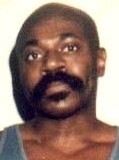
Ernest Martin
Murderer Brian Kevin Rosenfeld
Murderer · USA · 1985
Brian Kevin Rosenfeld Brian Kevin Rosenfeld was sentenced to three concurrent l…
23 victims
Brian Kevin Rosenfeld
Murderer · USA · 1985
Brian Kevin Rosenfeld Brian Kevin Rosenfeld was sentenced to three concurrent l…
23 victims
 Marvin Gray
Murderer · USA · 1975
Marvin Gray was convicted killer who claimed responsibility for 23 slayings and…
23 victims
Marvin Gray
Murderer · USA · 1975
Marvin Gray was convicted killer who claimed responsibility for 23 slayings and…
23 victims
 Yahweh ben Yahweh
Murderer · USA · 1980
Yahweh ben Yahweh was born and legally named Hulon Mitchell Jr. (October 27, 19…
23 victims
Yahweh ben Yahweh
Murderer · USA · 1980
Yahweh ben Yahweh was born and legally named Hulon Mitchell Jr. (October 27, 19…
23 victims
 Russell Ellwood
Murderer · USA · 1991
Russell Ellwood was a former taxi driver. Authorities suspected him of killing…
20 victims
Russell Ellwood
Murderer · USA · 1991
Russell Ellwood was a former taxi driver. Authorities suspected him of killing…
20 victims
 Eric Allen Patton
Murderer · USA · 1994
Eric Allen Patton — defendant; convicted killer; former handyman · Charlene Kau…
1 victim
Eric Allen Patton
Murderer · USA · 1994
Eric Allen Patton — defendant; convicted killer; former handyman · Charlene Kau…
1 victim
 Kia Levoy Johnson
Murderer · USA · 1993
Kia Levoy Johnson was convicted of capital murder of William Matthew Rains in t…
1 victim
Kia Levoy Johnson
Murderer · USA · 1993
Kia Levoy Johnson was convicted of capital murder of William Matthew Rains in t…
1 victim
 Kimberly Hricko
Murderer · USA · 1998
Kimberly Michelle Hricko — surgical technician; defendant. · Stephen Hricko — v…
1 victim
Kimberly Hricko
Murderer · USA · 1998
Kimberly Michelle Hricko — surgical technician; defendant. · Stephen Hricko — v…
1 victim
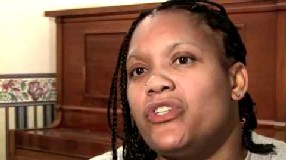 Sabrina Butler
Murderer? · USA · 1989
Sabrina Butler was an African-American woman who was seventeen when her nine mo…
0 victims
Sabrina Butler
Murderer? · USA · 1989
Sabrina Butler was an African-American woman who was seventeen when her nine mo…
0 victims
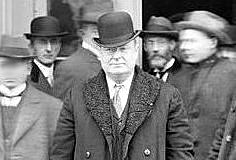 Albert Patrick
Murderer · USA · 1900
Albert Patrick was convicted in New York, New York for the murder of William M.…
1 victim
Albert Patrick
Murderer · USA · 1900
Albert Patrick was convicted in New York, New York for the murder of William M.…
1 victim
- Gender
- male
- Country
- USA
- Location
- Cuyahoga County, Ohio, USA
- Date of birth
- September 22, 1960
- Age at first offence
- 23
- Characteristics
- armed robbery, robbery, abuse
- Victim profile
- Robert Robinson, 70 (store owner)
- Method of murder
- Shooting
- Date(s) of murder
- January 21, 1983
- Years active
- 1983
- Date of arrest
- Same day
- Status
-
Executed
Executed by lethal injection in Ohio on June 18, 2003
Case identification
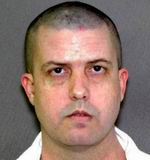
Ernest Martin was convicted of the aggravated murder of Robert Robinson during a robbery and was executed by lethal injection in Ohio on June 18, 2003.
Timeline
- December 20, 1982 — Security guard Ernel Foster was robbed of his .38 caliber Smith & Wesson revolver, Model 10, Serial No. D431784, while waiting at a bus stop on East 93rd Street and Kinsman Avenue.
- February 1, 1983 — Foster was summoned to the police station to view a line-up composed of six black males, and he identified Ernest Martin; Foster later identified Martin in the courtroom as the man who had taken his weapon.
- Early hours of January 21, 1983 — Josephine Pedro testified that Martin revealed a plan to rob Robinson’s Drug Store; Pedro attempted to dissuade Martin, and Martin threatened her if she did not cooperate.
- January 21, 1983 — Martin shot to death Robert Robinson, owner of Robinson’s Drug Store in Cleveland, after Pedro entered the store and the door was locked again; Martin stole between $38 and $39 from the store.
- Several days after January 21, 1983 — Police again questioned Pedro and Martin, and they put together a story that Pedro had gone to the store to get cough medicine when Robinson was shot and that Martin only came after she had been gone for an unusually long time.
- January 29, 1983 — Police arrested Pedro and Martin for the murder of Robinson.
- February 13, 1983 — A letter dated February 13, 1983, was introduced into evidence in which Martin asked Pedro to “tell the truth” and implicate a man named “Slim” for the murder-robbery of Robinson.
- February 17, 1983 — An additional letter dated February 17, 1983, was introduced into evidence in which Martin again asked Pedro to implicate “Slim.”
- Mid-December 1982 — Antoinette Henderson testified that she lived with Pedro for about five or six months until the middle of December 1982.
- February 1981 — Martin wrote a letter to Pedro while in jail in February 1981 for another offense.
- July 8, 1983 — The trial court sentenced Martin to death.
- July 13, 1983 — Martin filed a motion for a new trial.
- May 9, 1984 — The motion for a new trial was denied.
- May 23, 1984 — The court filed its required judgment entry and separate opinion under R.C. 2929.03(F), finding that aggravating circumstances outweighed mitigating factors.
- May 24, 1984 — The trial court filed its opinion on the motion for a new trial.
- August 5, 1983 — Martin appealed his conviction to the court of appeals.
- September 27, 1984 — The court of appeals affirmed the sentence of the trial court and issued a separate opinion under R.C. 2929.05(A).
- February 7, 2002 — The United States Court of Appeals for the Sixth Circuit affirmed the denial of Martin’s habeas corpus petition (280 F.3d 594; 2002 U.S. App. LEXIS 1827; 2002 FED App. 0050P (6th Cir.)).
- June 18, 2003 — Martin was executed by lethal injection at the Southern Ohio Correctional Facility in Lucasville, Ohio; he was pronounced dead at 10:11 a.m.
- June 6, 2003 — Martin dropped a claim that he was mentally retarded after a psychologist hired by his attorneys determined he was not mentally retarded.
- Tuesday, June 17, 2003 — Martin was transferred to the maximum-security prison where he was scheduled to be executed.
- Friday (after Governor Bob Taft’s refusal of clemency) — Governor Bob Taft refused clemency.
Background
Martin revealed a plan to rob Robinson’s Drug Store to his girlfriend, Josephine Pedro, in the early hours of January 21, 1983. Pedro testified that she attempted to dissuade Martin, but Martin threatened her if she did not cooperate in the robbery.
Martin also had interactions with Josephine Pedro involving letters written while he was in jail, including letters dated February 13, 1983 and February 17, 1983 that asked her to “tell the truth” and implicate a man named “Slim.”
A woman who lived with Pedro, Antoinette Henderson, testified she heard Martin say he was going to rob Robinson’s store and that Martin threatened her with a gun, warning her that she had better not tell anyone of his plan.
The offence
On January 21, 1983, Martin shot and killed Robert Robinson, owner of Robinson’s Drug Store in Cleveland.
Robert Robinson let Josephine Pedro into the store to buy cold medicine, and Martin planned to follow her in to rob the premises. Martin wore gray pants, tennis shoes, and a waist-length black leather jacket. Martin covered his face with a brown knit cap with holes cut for his eyes to avoid identification.
At approximately 12:45 a.m., Pedro arrived at the store and knocked on the door. When Robinson unlocked the door to let her in, Robinson locked the door again before Martin gained entrance. After Robinson locked the door, two shots were fired through the door, fatally wounding him.
After firing the shots, Martin allegedly went to the apartment to change his clothes and returned to the store to finish the robbery. An employee at the drugstore, Monty Parkey, was in the back room at the time of the shooting. Parkey called an ambulance and the police, and instructed Pedro to go to Robinson’s house to get Mrs. Robinson.
Martin stole between $38 and $39 from the store.
Investigation and policing
Pedro complied with Parkey’s instruction and upon returning was interviewed by the police. She gave the police her name and address and stated she knew nothing about the shooting. Martin was also present during that interview and talked to the police.
After completing the interview, Pedro returned to her apartment. When Pedro reached the apartment, she called her neighbor, Larry Kidd. Martin returned approximately thirty-five minutes later. Pedro asked Martin whether the evening’s events had been worth it. Martin showed her a pile of bills under a blanket, took them into the bathroom, and explained that he had stolen between $38 and $39 from the store. Martin then drove Kidd and Pedro to an “after hours” spot for drinks.
Several days after the shooting, the police again questioned Pedro and Martin, after which they put together a story that Pedro had gone to the store to get cough medicine when the deceased was shot and that Martin only came to the store after she had been gone for an unusually long time.
On January 29, 1983, police returned and arrested Pedro and Martin for the murder of Robinson.
After several days in jail, Pedro told the police she helped set up the robbery by going to the store and that Martin shot Robert Robinson. Soon afterward, Martin’s father contacted Pedro asking her to change her statement, and while visiting Martin in jail, Martin’s father again asked Pedro to change her story.
Evidence concerning the weapon and identification
Ernel Foster, a security guard, was robbed of his .38 caliber Smith & Wesson revolver, Model 10, Serial No. D431784, on December 20, 1982, while waiting at a bus stop on East 93rd Street and Kinsman Avenue. Foster chased the offender for a block and a half and was able to see his face, noting the offender’s hair was in small braids.
On February 1, 1983, Foster viewed a line-up composed of six black males and identified Martin, noting that Martin’s hair was braided in the same manner. Foster later identified Martin in the courtroom as the man who had taken his weapon.
Josephine Pedro testified that Martin had threatened her with a gun earlier that year, telling her that he had stolen the weapon from a security guard at East 93rd and Kinsman. Pedro wrote down the serial number of the gun on the back of an envelope box. The number was identical to Foster’s weapon except that the letter “D” had been purposely transformed into a “9,” which Pedro testified Martin did to make the number sequence look like a telephone number in order to ward off suspicion.
Witnesses and related testimony
Josephine Pedro testified to Martin’s threats and to the plan for her to go into Robinson’s Drug Store to attempt to buy medicine for a cold, after which Martin planned to follow her in and rob the premises.
Monty Parkey testified he was in the back room at the time of the shooting, called an ambulance and the police after hearing the shots, and instructed Pedro to go to Robinson’s house to get Mrs. Robinson.
Antoinette Henderson testified she lived with Pedro for about five or six months until the middle of December 1982, and during December she heard Martin say he was going to rob Robinson’s store. She testified Martin threatened her with a gun and warned her not to tell anyone.
Ernest Martin’s brother, Erwin, made public comments about justice and defense resources, including:
- “There are two different justices out there.”
- “There really are. We didn't have any money so we didn't have any defense. Justice is not blind, she's peeking.”
E.J. Rieves-Bey lived across the street from the victim’s store and witnessed someone running away after hearing shots. Within two weeks of the killing, he gave a statement to Cleveland police describing the man he saw fleeing as “5'10" and 170 lbs,” roughly matching Martin. Approximately a month later, he told a court-appointed investigator that the man was “About six foot, two maybe three . . . Maybe about 180, 200 pounds.” He also stated: “I know he's taller than Ernest Martin, and Ernest Martin is smaller, way smaller.”
The state subpoenaed Rieves-Bey to testify at trial, but he arrived just as jury deliberations began. The state sought to reopen its case to present his testimony, but the defense successfully objected and deliberations continued.
At the hearing on Martin’s motion for a new trial, Rieves-Bey described the fleeing man as “about six foot, 200 pounds.” He also stated the man was wearing “a black coat, and a brown mask and sort of a hat.” He testified that several minutes after he saw the fleeing man, he saw Martin walking toward the crime scene, and that he was wearing “[a] brown long coat, lighter, a brown coat.” Rieves-Bey later gave a 1997 deposition for purposes of Martin’s habeas action and insisted that Martin “wasn't the man” that he saw fleeing the scene. During the deposition he admitted that his cocaine addiction had impaired his memory and that he could not remember giving testimony in 1983 about the case.
Trial
During trial, the defense presented no witnesses and sought to introduce into evidence written statements of Pedro and Henderson. The court denied the request, finding the written statements were not inconsistent as alleged by the defense.
The jury found Martin guilty of the aggravated robbery of Ernel Foster and of the aggravated robbery and aggravated murder of Robert Robinson with the specification of being the principal offender of the aggravated murder while committing or attempting to commit aggravated robbery.
After the mitigation hearing, the jury recommended that Martin receive the death penalty. On July 8, 1983, the trial court sentenced Martin to death.
Martin filed a motion for a new trial on July 13, 1983. On May 9, 1984, the motion was denied. On May 23, 1984, the court filed its required judgment entry and separate opinion under R.C. The following day, the trial court filed its opinion on the motion for a new trial.
Martin appealed his conviction to the court of appeals on August 5, 1983. The court of appeals affirmed the sentence on September 27, 1984.
Sentencing
Martin received a death sentence on July 8, 1983 after the jury recommended death at the mitigation hearing.
The trial judge later found that the aggravating circumstances outweighed the mitigating factors.
Appeals and post-conviction proceedings
Martin pursued federal habeas corpus relief under 28 U.S.C. § 2254(a). The Sixth Circuit Court of Appeals reviewed claims of prosecutorial misconduct, ineffective assistance of counsel, and sufficiency of the evidence, including procedural default issues, and affirmed the denial of habeas relief.
Martin’s ineffective assistance of trial counsel claims included allegations of counsel’s failure to challenge a warrantless arrest, investigate and prepare for trial, interview witnesses, subpoena Rieves-Bey, cross-examine witnesses effectively, prepare for mitigation, object to jury instructions, object to the use of presentence investigation and psychiatric clinic reports at mitigation, and other alleged failures at both trial and mitigation.
Martin also claimed ineffective assistance of appellate counsel regarding the transcript of proceedings on his motion for a new trial being part of the record on direct appeal.
Martin also alleged prosecutorial misconduct based on improper comments about his failure to testify, including the prosecutor’s statement in closing argument:
- “Everybody available testified . . . . Everybody could identify the defendant as the perpetrator of the crime. Everybody testified, and there is not indications [ sic ] when the police officer testified that anyone other than the defendant committed the crime.”
In response to Martin’s habeas claims, the Sixth Circuit affirmed.
Outcome
Martin was executed by lethal injection in Ohio on June 18, 2003 at the Southern Ohio Correctional Facility in Lucasville, Ohio, and was pronounced dead at 10:11 a.m.
Aftermath
Martin issued a final statement in the death chamber that prison officials said was the longest final statement since Ohio resumed executions in 1999. The statements were not recorded, but excerpts were transcribed as follows:
“I know that God is in control and those who are here are not responsible. Just as Jesus Christ was lied on and slandered, so I have been treated the same way. I have no hatred. I know God is in control and I pray that he will forgive us of our sins, forgive the media people watching of their sins and all that they have done. As the Bible says, let those without sin cast the first stone. God forgave us all.
“To my family, I love you all. I know I did not live a good life. Thank God for allowing my sister and nephew to be here and brother Morgan for his support. Hug Momma for me. Take care family. Take care media. God bless you all.”
In a written statement prepared for execution, Martin said:
“Jesus Christ was put to death on the false testimony of those who received money in exchange for the lies they told. Just the same, the state of Ohio has succeeded in its quest for my life by way of perjured testimony and false witnesses who were paid to tell the lies they did. However, there has never been any hate nor desire of revenge in my heart for them, for I know God will repay those for each and every one of their sins that have gone forgotten.”
Martin’s family did not release a final statement. The widow of Robert Robinson did not witness the execution.
On June 17, 2003, Martin requested a special meal of a cheeseburger, french fries, apple pie, and Pepsi.
Martin was transferred to the maximum-security prison where he was scheduled to be executed. He spoke on the phone with his mother, Frances Martin, and visited with his son, Darnell Reese, and his daughter, Laketta Tate. He also visited with his sister, Debra Reese, brother, Curtis Martin, and Charles Morgan, a spiritual adviser.
The official Andrea Dean, spokesperson for the Ohio Department of Execution, stated there were no execution witnesses representing Robert Robinson’s family, and said it was the first time that had happened since Ohio resumed executions in 1999.
Other details
Martin made multiple claims through appeals and proceedings, including claims that he had been mentally retarded and should not be executed, and claims about alleged inadequate legal help.
Martin’s claim of mental retardation was dropped after a psychologist hired by his attorneys determined he was not mentally retarded, and the U.S. Supreme Court refused to stop the execution.
In one clemency refusal, Governor Bob Taft wrote:
“There is no doubt that Mr. Martin is guilty of the murder of Robert Robinson, although he has persistently refused to take responsibility for his actions.”
Timothy Payne, an assistant public defender representing Martin, said:
“I don't think that this case is appropriate for capital punishment,”
“The killing, if Martin did it, ‘wasn't planned and it was at night through a glass door.’”
Martin’s public defender also commented that capital punishment was “freakishly and arbitrarily applied.”
Spotted an error, or have more information about this case?