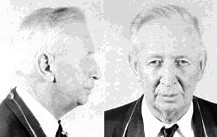
Carl Folk
Murderer Gary Duane Rardon
Murderer · USA · 1962
Gary Duane Rardon killed a man in 1962 and later served 4 years for manslaughte…
4 victims
Gary Duane Rardon
Murderer · USA · 1962
Gary Duane Rardon killed a man in 1962 and later served 4 years for manslaughte…
4 victims
 Frank Lee Smith
Murderer · USA · 1960
Frank Lee Smith died in prison on January 30, 2000. He was exonerated on Decemb…
3 victims
Frank Lee Smith
Murderer · USA · 1960
Frank Lee Smith died in prison on January 30, 2000. He was exonerated on Decemb…
3 victims
 George Sitts
Murderer · USA · 1945
George Sitts was executed by the State of South Dakota on April 8, 1947 for the…
3 victims
George Sitts
Murderer · USA · 1945
George Sitts was executed by the State of South Dakota on April 8, 1947 for the…
3 victims
 China Arnold
Murderer · USA · 2005
China Arnold (born March 29, 1980, in Dayton, Ohio) was a defendant in a murder…
1 victim
China Arnold
Murderer · USA · 2005
China Arnold (born March 29, 1980, in Dayton, Ohio) was a defendant in a murder…
1 victim
 Ottis Toole
Serial killer · USA · 1961
Ottis Elwood Toole (sometimes misspelled as “Otis”) was an American serial kill…
65 victims
Ottis Toole
Serial killer · USA · 1961
Ottis Elwood Toole (sometimes misspelled as “Otis”) was an American serial kill…
65 victims
 Lois Nadean Smith
Murderer · USA · 1982
Lois Nadean Smith was convicted of the July 4, 1982 murder of 21-year-old Cindy…
1 victim
Lois Nadean Smith
Murderer · USA · 1982
Lois Nadean Smith was convicted of the July 4, 1982 murder of 21-year-old Cindy…
1 victim
 Michael Hance
Mass murderer · USA · 2011
Michael Hance, 51, was shot and killed by the police on August 7, 2011, after h…
7 victims
Michael Hance
Mass murderer · USA · 2011
Michael Hance, 51, was shot and killed by the police on August 7, 2011, after h…
7 victims
 David Bieber
Murderer · United Kingdom · 2003
David Francis Bieber (born 3 February 1966) was known under the alias Nathan Wa…
1 victim
David Bieber
Murderer · United Kingdom · 2003
David Francis Bieber (born 3 February 1966) was known under the alias Nathan Wa…
1 victim
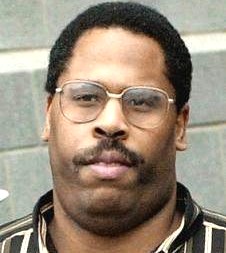 Kendall François
Serial killer · USA · 1996
Kendall François was born July 26, 1971. He lived in Poughkeepsie, New York. He…
8 victims
Kendall François
Serial killer · USA · 1996
Kendall François was born July 26, 1971. He lived in Poughkeepsie, New York. He…
8 victims
- Gender
- male
- Country
- USA
- Location
- Navajo County, Arizona, USA
- Date of birth
- August 30, 1898
- Age at first offence
- 55
- Characteristics
- rape, robbery, torture
- Victim profile
- Betty Faye Allen
- Method of murder
- Strangulation
- Date(s) of murder
- December 2, 1953
- Years active
- 1953
- Date of arrest
- Same day
- Status
-
Executed
Executed by asphyxiation-gas in Arizona on March 4, 1955
Case record: Carl J. Folk
Status
Carl J. Folk was executed by asphyxiation-gas in Arizona on March 4, 1955.
Background
Carl J. Folk was approximately 53 years of age.
In 1930, he was convicted in DeKalb County, Indiana, of “Committing a crime while armed with a Pistol.” According to the investigating officer, Folk tied up a young man and his girl friend with ropes and was in the process of getting the girl friend into the backseat “for perhaps some immoral acts, or rape,” when the boy was able to get loose and engaged in a struggle with the defendant. Folk fled, leaving his gun, and was later apprehended and sentenced to the prison of the State of Indiana for one to five years.
In July 1949, Folk was arrested for the crimes of rape and contributory delinquency. Before he was tried, on a complaint by the District Attorney’s office at Albuquerque, New Mexico, he was committed to the New Mexico State Insane Asylum, Las Vegas, New Mexico. The attorney who defended him in the insanity hearing was also his attorney in the criminal case. He was in the New Mexico hospital from November 1, 1949, to February 4, 1950, when he was released to the custody of his wife and was not under treatment or returned to the hospital since that date. As early as December 3, 1949, he was released to his wife for a weekend, and he was released to her for various weekends thereafter until he was finally released without being returned after February 4, 1950.
At least one doctor’s statement with regard to Folk’s case received careful scrutiny from another psychiatrist, and that psychiatrist stated that the doctor’s diagnosis was based on “such slim reasoning that it appeared to be a matter of only wishful thinking.” Folk was declared sane in April 1953 based on testimony given in November 1952 stating that he had completely recovered.
Before the sanity declaration, he was tried for the crimes of rape and contributory delinquency and was convicted, but the conviction was reversed by the Supreme Court of New Mexico on the grounds that the lower court should have submitted to the jury the question of whether or not the defendant was able to cooperate with his counsel at the time of trial. He was later allowed to plead guilty to the crime of contributory delinquency. The charge of rape was dismissed, and the judge gave him a sentence of five years with the time for the execution of the sentence indefinitely suspended.
Carl J. Folk left Texas to go to Albuquerque to complete a business deal.
The offence
Carl J. Folk saw the victim, Betty Faye Allen, with her husband, Raymond Bruce Allen, and their small ten month old child at a service station close to Klines Corners, New Mexico. Folk remarked that the Allens had “A fine trailer.” The Allens were traveling in a fine trailer house with a pickup and were on their way from Pennsylvania to California to make a new home.
Folk passed the Allens on two or three occasions between Klines Corners and Albuquerque. About the same hour that the Allens arrived in Gallup, New Mexico, between 5:00 p.m. and 6:00 p.m., Folk entered a store near Chambers, Arizona, called Young’s Store, on December 1, 1953. At Young’s Store, he attempted to purchase some small cotton rope, but the proprietor did not have any in stock.
Folk next appeared at a place called Navajo, about 20 or 15 miles west of Chambers toward Holbrook, at about 8:00 p.m. He arrived at Navajo heading back toward Gallup in an easterly direction at a time when the Allens had just left Navajo and Folk could not have helped seeing them. It appeared that Folk was probably on his way back trying to locate the Allens at the time that he saw them leave Navajo as he was headed toward Gallup. He told the service station attendant that he was actually going to Holbrook. He gave an excuse for coming back that he thought he was about out of gas, but he only bought $2.00 worth of gasoline.
The Allens proceeded westward, arriving at Good Water, Navajo County, Arizona, about 9:00 p.m. They ate at the restaurant there and went to bed.
Sometime after 11:00 p.m. on December 1, 1953, Folk, after apparently having placed his own car off the road about 600 feet through a fence on a side road (the side road being about one half mile west of Good Water), returned to where the trailer was parked at Good Water and entered the trailer house with some ropes. He told the Allens that it was a stick up and ordered them to roll over as he was going to tie them up. He tied them, hand and foot, by the ankles and on the wrists with their hands behind them and had them laying on their stomachs. He asked for the pickup truck keys and made several trips in and out of the trailer to get the keys adjusted and get the trailer hooked up to the pickup and to check on the Allens.
Before he left Good Water, Folk had sexual relations with Mrs. Allen. Folk proceeded with the trailer house and pickup to the point one-half mile west of Good Water where he had turned off the road with his own car. During this period of time, he stopped and reentered the trailer house on a couple of occasions to check on the Allens. When he came to the road where he had turned off with his own car, he was unable to make the turn with the trailer house and pickup, and as a result parked the trailer house and pickup in the borrow pit by the road which led to his own car, which he left parked at a distance of only about 600 feet. He then reentered the trailer house, found Mr. Allen was about loose or was loose, retied him very tightly, and placed him in the front of the trailer house.
During the night, Folk apparently raped or attempted to rape Mrs. Allen on several occasions. He burned her with heat burns in several places upon her body and caused abrasion burns to exist upon her body in various places. During this period of time, he demanded from Mrs. Allen information as to where more money was, insisting that he knew that they had some more money. Mrs. Allen screamed and groaned on many occasions, stating that Folk was spreading her too far and asking for help. Throughout this time, Mr. Allen was tied and helpless in the other end of the trailer.
Folk apparently did most of the burning in the neighborhood of 5:15 a.m. or after, because about that time Mrs. Allen screamed for help from her husband and told him he had to get help. Mr. Allen was able to get his feet loose despite his hands being very swollen because of loss of circulation from the ropes. He was able to stop a truck, and three truck drivers came along and cut Mr. Allen loose. Mr. Allen ran to his pickup, got a gun, and when Folk came out of the trailer house, Mr. Allen shot at him six times but hit Folk only once.
Mr. Allen entered the trailer house and found his wife lying on the floor in the nude, apparently lifeless. Mrs. Allen had been nude throughout the entire evening and had gone to bed nude as was her custom. She had a sheet wrapped tightly around her neck and was dead.
The time when the truck drivers were stopped was a quarter to seven on December 2, 1953. The doctor’s autopsy showed that Mrs. Allen had been killed by strangulation. The doctor testified that a definite mark left on her throat was the place where pressure was applied, and that the vaginal area showed signs of edema and trauma.
The evidence included a rag saturated with kerosene found in the trailer house, and kerosene on the sheets on the bed and on the mattress. These findings made it appear that Folk intended to kill Allen and the child after killing Mrs. Allen, then burn the trailer house, leave the trailer house, get in his car, and leave so that no trace would be left of his brutality and the crimes he had committed during the night.
When Folk found that Allen was gone, he was upset in his time schedule. When he went out to look for Allen, he was surprised at seeing Allen completely untied and was immediately shot by Allen.
Folk’s packet contained the billfold and the money belonging to the Allens.
Investigation
The doctor’s autopsy established that Mrs. Allen had been killed by strangulation and identified a definite mark on her throat as the place where pressure was applied. The doctor also testified that the vaginal area showed signs of edema and trauma. The evidence was presented as conclusive as to Folk’s guilt.
The evidence included kerosene present on a rag saturated with kerosene found in the trailer house, and kerosene on the sheets on the bed and on the mattress.
Arrest and custody
No separate arrest date for the December 1953 offences was included.
Trial
Folk had been tried for the crimes of rape and contributory delinquency prior to his declaration of sanity in April 1953. He was convicted, but the Supreme Court of New Mexico reversed the conviction because the lower court should have submitted to the jury the question of whether or not he was able to cooperate with his counsel at the time of trial. The charge of rape was dismissed. The judge sentenced him to five years and indefinitely suspended the time for the execution of the sentence.
Folk was declared sane in April of 1953 based on testimony given in November of 1952 that he had completely recovered. In the context of sanity at trial, the defendant vouched for his own competency by acting as a witness in the trial and at no time was anything mentioned regarding any incapacity “as of the time of the trial.”
Appeals
The Supreme Court of New Mexico reversed Folk’s conviction for the crimes of rape and contributory delinquency on the grounds that the lower court should have submitted to the jury the question of whether or not he was able to cooperate with his counsel at the time of trial. The charge of rape was later dismissed after Folk was allowed to plead guilty to contributory delinquency.
Sentencing
For the 1930 conviction in DeKalb County, Indiana, Folk received a sentence to the prison of the State of Indiana for one to five years.
For the later plea to contributory delinquency, the judge gave Folk a sentence of five years and indefinitely suspended the time for the execution of the sentence.
Folk’s execution occurred by asphyxiation-gas in Arizona on March 4, 1955.
Timeline
- 1930 — Folk was convicted in DeKalb County, Indiana, of “Committing a crime while armed with a Pistol.”
- July 1949 — Folk was arrested for rape and contributory delinquency.
- November 1, 1949 — Folk was committed to the New Mexico State Insane Asylum, Las Vegas, New Mexico.
- December 3, 1949 — Folk was released to his wife for a weekend.
- February 4, 1950 — Folk was released to the custody of his wife and had not been returned to the hospital since that date.
- April 1953 — Folk was declared sane based on testimony given in November 1952.
- November 1, 1953 — The Allens arrived at Good Water, Navajo County, Arizona, and went to bed after eating at a restaurant there.
- December 1, 1953 — Folk attempted to purchase cotton rope at Young’s Store near Chambers, Arizona, and later entered and robbed the trailer at Good Water; the assault and killings occurred during the night.
- Quarter to seven on December 2, 1953 — Truck drivers were stopped and three drivers cut Mr. Allen loose.
- March 4, 1955 — Folk was executed by asphyxiation-gas in Arizona.
Other details
Folk’s defence in the insanity hearing used the same attorney as in the criminal case. At least one doctor’s diagnosis was criticized as being based on “such slim reasoning that it appeared to be a matter of only wishful thinking.” At Young’s Store near Chambers, Arizona, Folk attempted to buy cotton rope but it was not in stock. The Allens traveled from Pennsylvania to California to make a new home. Mrs. Allen’s customary nudity at bedtime was described as she had gone to bed nude and was nude throughout the evening. Mr. Allen shot at Folk six times and hit Folk only once. Mrs. Allen’s body had a sheet wrapped tightly around her neck. The narrative included kerosene-soaked materials intended to support the appearance of an intended burning after the killings.

Spotted an error, or have more information about this case?