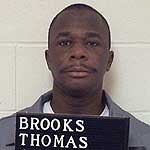
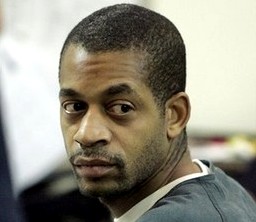
Thomas Brooks
Murderer Brian Kevin Rosenfeld
Murderer · USA · 1985
Brian Kevin Rosenfeld Brian Kevin Rosenfeld was sentenced to three concurrent l…
23 victims
Brian Kevin Rosenfeld
Murderer · USA · 1985
Brian Kevin Rosenfeld Brian Kevin Rosenfeld was sentenced to three concurrent l…
23 victims
 Russell Ellwood
Murderer · USA · 1991
Russell Ellwood was a former taxi driver. Authorities suspected him of killing…
20 victims
Russell Ellwood
Murderer · USA · 1991
Russell Ellwood was a former taxi driver. Authorities suspected him of killing…
20 victims
 Robert Martines Perez
Murderer · USA · 1994
Name: Robert Martines Perez · Other name used in proceedings: Robert Martinez P…
15 victims
Robert Martines Perez
Murderer · USA · 1994
Name: Robert Martines Perez · Other name used in proceedings: Robert Martinez P…
15 victims
 Billy Frank Vickers
Murderer · USA · 1993
Billy Frank Vickers Vickers was executed by lethal injection in Texas on Januar…
14 victims
Billy Frank Vickers
Murderer · USA · 1993
Billy Frank Vickers Vickers was executed by lethal injection in Texas on Januar…
14 victims
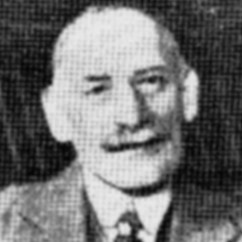 Harold Greenwood
Murderer? · United Kingdom · 1919
Harold Greenwood (1874 – 17 January 1929) was an English solicitor who was accu…
1 victim
Harold Greenwood
Murderer? · United Kingdom · 1919
Harold Greenwood (1874 – 17 January 1929) was an English solicitor who was accu…
1 victim
 Stuart Hazell
Murderer · United Kingdom · 2012
Stuart Hazell was the partner of Christine Sharp. · Stuart Hazell was the forme…
1 victim
Stuart Hazell
Murderer · United Kingdom · 2012
Stuart Hazell was the partner of Christine Sharp. · Stuart Hazell was the forme…
1 victim
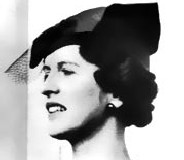 Florence Ransom
Murderer · United Kingdom · 1940
Florence Ransom was a middle-aged woman who was described as physically beautif…
3 victims
Florence Ransom
Murderer · United Kingdom · 1940
Florence Ransom was a middle-aged woman who was described as physically beautif…
3 victims
 Brett Cowan
Murderer · Australia · 2003
Brett Peter Cowan (born 18 August 1969) was sentenced in the Supreme Court of Q…
1 victim
Brett Cowan
Murderer · Australia · 2003
Brett Peter Cowan (born 18 August 1969) was sentenced in the Supreme Court of Q…
1 victim
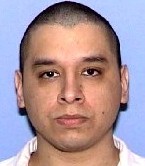 Joseph Christopher Garcia
Murderer · USA · 2000
Joseph Christopher Garcia (TDCJ Number 999441) was convicted of capital murder…
2 victims
Joseph Christopher Garcia
Murderer · USA · 2000
Joseph Christopher Garcia (TDCJ Number 999441) was convicted of capital murder…
2 victims
- Gender
- male
- Country
- USA
- Location
- St. Louis County, Missouri, USA
- Date of birth
- 1967
- Age at first offence
- 26
- Characteristics
- kidnapping, attempted rape
- Victim profile
- Cassidy Senter, 10
- Method of murder
- Beating with blows from a wooden bed slat to her head
- Date(s) of murder
- December 1, 1993
- Years active
- 1993
- Date of arrest
- February 3, 1994
- Status
-
Died in custody
Sentenced to death in 1994; died in prison on May 16, 2000
Case overview
Thomas Brooks, Jr. was convicted in the State of Missouri, Respondent, v. Thomas Brooks, Jr., Appellant case (960 S.W.2d 479; Mo. banc 1997) of the class A felony of murder in the first degree, in violation of 565.020, RSMo 1994, and he received a death sentence. He was also convicted of armed criminal action, kidnapping, and attempted forcible rape, and he appealed his first degree murder conviction, his sentence, and the overruling of his Rule 29.15 post-conviction motion.
People
- Thomas Brooks, Jr. — defendant and appellant.
- Cassidy Senter — victim; ten-year-old girl.
- Rhonda Senter — Cassidy’s mother.
- Michael Goldbeck — resident of the home on Tall Tree Court where Cassidy and her mother lived in the lower half of the home.
- Mr. and Mrs. Hanneke — neighbors on Spring Forest Lane next door to Cassandra Quinn.
- Cassandra Quinn — Brooks’ sister.
- Pauline Diemer — venireperson who was the sole African-American member of the venire remaining after other venirepersons were struck for cause during the death penalty qualification process.
- Denise Johnson — previously occupied Quinn’s home; left behind a pink floral comforter and pink curtains.
- William Ostendorf — detective who testified at trial.
- Dr. Eric Engum — defence expert witness called during the penalty phase.
- Ann K. Covington — judge who authored the opinion; opinion vote: AFFIRMED.
- James R. Hartenbach — circuit judge of St. Louis County on appeal from the circuit court.
- chief justice of the supreme court of the state of Missouri — designated Greene County for jurors to be summoned.
Timeline
- December 1, 1993 — Cassidy Senter returned home from school; she visited briefly with Michael Goldbeck, then headed up Tall Tree Court toward a friend’s house at about 3:30 p.m.; she was last seen at an intersection where Tall Tree Court became Spring Forest Lane.
- about 3:30 p.m. — Mr. and Mrs. Hanneke heard a noise and followed the sound to identify it; they found a yellow alarm and a pen near their property line; the alarm was buzzing.
- A few minutes after 5:00 p.m. — Rhonda Senter returned from work and learned Cassidy had never arrived at the friend’s house; after searching in vain, Michael Goldbeck telephoned the police.
- December 7, 1993 — a detective began re-interviewing people in the neighborhood where the alarm was found; the detective spoke to Brooks’ sister and learned where Brooks could be found.
- December 8, 1993 — Brooks arranged a local rental from a U-Haul rental company in Hazelwood for a twenty-four hour period.
- December 9, 1993 — two persons walking in the city of St. Louis discovered Cassidy Senter’s body in an alley; the body was wrapped in two bed comforters and a pink curtain and arranged with her jacket and sweater pulled above her chest and her jeans pulled down over her ankles, inside out; a neighbor of Cassandra Quinn saw a U-Haul truck backing out of the driveway at Cassandra Quinn’s home; police found a positive match between tire tracks left where the body was discovered and the tires on the U-Haul truck Brooks rented.
- December 9, 1993 — police conducted a ground and air search almost immediately after receiving information that Cassidy’s personal alarm was found on the Hannekes’ lawn.
- February 3, 1993 — Brooks was arrested.
- May 16, 1995 — the chief justice designated Greene County as the county from which jurors would be summoned.
- May 16, 2000 — Thomas Brooks, Jr. died in prison at the Moberly Prison from an undisclosed illness.
- 12/23/97 — Handdown date of the Missouri Supreme Court opinion.
Background
Cassidy Senter and her mother, Rhonda Senter, lived in the lower half of Michael Goldbeck’s home on Tall Tree Court in Hazelwood, St. Louis County. Cassandra Quinn resided on Spring Forest Lane next door to the Hannekes. The opinion stated that Cassandra Quinn was Brooks’ sister.
The offence
On December 1, 1993, Cassidy Senter, a ten-year-old girl, returned home from school. The jury convicted Brooks of:
- Murder in the first degree under 565.020, RSMo 1994 (class A felony of murder in the first degree), for which he was sentenced to death.
- Armed criminal action, section 571.015, RSMo 1994.
- Kidnapping, section 565.110, RSMo 1994.
- Attempted forcible rape, section 566.030, RSMo Supp. 1993.
In the State Supreme Court’s summary, the opinion described that Brooks kidnapped a ten-year-old girl, attempted to rape her, and beat her to death with blows from a wooden bed slat to her head while she attempted to fend off his attack. The opinion further described that he left her body to decompose behind a freezer in his sister’s basement before dumping her body in an alley. The opinion stated that he admitted killing her.
Investigation
After Rhonda Senter returned from work and learned Cassidy had never arrived at the friend’s house, Mr. Goldbeck and Ms. Senter searched in vain for Cassidy. Mr. Goldbeck then telephoned the police. The police instituted a ground and air search almost immediately and continued it for days.
On December 7, 1993, a detective re-interviewed people who lived in the neighborhood where the alarm was found and learned where Brooks could be found.
Alarm and discovery
The opinion described that the Hannekes found a yellow alarm and a pen near their property line and that the alarm was buzzing. Police received word that Cassidy’s personal alarm was found on the Hannekes’ lawn.
Body and injuries
On December 9, 1993, two persons walking in the city of St. Louis discovered Cassidy Senter’s body in an alley. The child was wrapped in two bed comforters and a pink curtain. Her jacket and sweater were pulled above her chest. Her jeans were pulled down over her ankles, inside out. A sheet was looped around each of her ankles and then tied in the middle to hold the ankles together.
The autopsy examination revealed decomposition on the upper portion of Cassidy Senter’s body. There were at least four tears to the scalp and multiple fractures in the skull. The opinion listed bruises on her chin, right cheek, right shoulder, breast bone, abdomen each side of her chest wall, and on the upper back at the base of the neck, along with numerous other bruises over her body.
The physician opined that there were at least five blows to the head, and concluded that Cassidy died from head injuries. The condition of Cassidy’s scalp indicated she was alive when she received many of her injuries. It appeared that Cassidy lived less than an hour after the blows were sustained.
Tire tracks and U-Haul
Examination of tire tracks left where the body was discovered revealed and concluded to a U-haul truck. The opinion described that a comparison of the tire tracks left where the body was discovered to the tires on the U-Haul truck Brooks rented revealed a positive match between several of the tires and the tracks.
Evidence from Quinn’s home and forensic matches
Police discovered that Denise Johnson, who had occupied Quinn’s home prior to Quinn’s occupancy, had left behind a pink floral comforter and pink curtains similar to the ones found on Cassidy’s body.
The opinion described that police conducted a search of Brooks’ sister’s home. Hair and fiber evidence taken from the home and from Cassidy’s body and the wrappings in which she was found revealed several matches. Fibers from the residence matched fibers taken from morgue sheets, both comforters, the curtain, and the victim’s panties, socks, jacket, and blouse.
DNA testing revealed that Cassidy’s blood matched that found in stains on the basement floor at Cassandra Quinn’s home. A bed slat taken from the basement of Quinn’s home was consistent with having caused the injuries suffered by Cassidy. Paint from the U-Haul dolly matched paint samples taken from the sheets, comforters, and clothing found on Cassidy in color, texture, chemical composition. The opinion stated that the forensic evidence recited represented only a portion of the forensic evidence presented at trial.
Arrest
Brooks was arrested on February 3, 1993.
Admission to detectives
Brooks agreed to talk to a detective. He initially denied any involvement in Cassidy’s death and eventually responded to certain questions and changed his statement more than once. Ultimately, the opinion described his final version of events:
- He had been on the telephone when he noticed Cassidy walking up the yard to his sister’s house.
- When he opened the door, Cassidy asked if his nephews were at home.
- Brooks grabbed Cassidy by the hand and dragged her down the basement steps; Cassidy fell down the steps.
- The fall activated the personal alarm, which Brooks stated he picked up, took back upstairs, and threw into the street.
- He returned downstairs and told Cassidy to pull her pants down; she was screaming and searching for a way out.
- Brooks stated that he decided to kill Cassidy because he realized that if he let her go, she would say that he tried to rape her.
- He found a bed slat on the floor and hit Cassidy in the head four times until she dropped.
- He covered the body with bedding and drapery, then left for work.
- Brooks stated that Quinn told him the next day that she did not want to know anything about the body in her basement; she wanted him to get rid of it.
- Some time later, Brooks returned to Quinn’s house and moved the body from where it had fallen to behind the freezer in an attempt to conceal it.
The opinion also described that on December 8 Brooks rented the U-Haul truck, drove it to work, worked his shift, then went to Quinn’s house where he removed the body with a two-wheel dolly and drove it to the place where the body was later recovered.
Trial
The opinion stated that the jury returned guilty verdicts on all counts charged.
During the penalty phase, the state introduced additional evidence of prior convictions along with the testimony of Cassidy’s mother and Cassidy’s elementary school principal. Brooks did not testify at trial or at the penalty phase.
During the penalty phase, appellant’s relatives testified regarding abuse, neglect, and trauma he suffered as a child. Two psychologists explained how childhood abuse and Brooks’ low intelligence contributed to his commission of the crime.
The jury returned a verdict finding that the death penalty was the appropriate punishment for the murder of Cassidy Senter.
Sentencing
The jury’s verdict resulted in a death sentence. The opinion described that the jury found the existence of all four statutory aggravating circumstances.
Aggravating circumstances and jury instruction content
Instruction No. 18 was accepted by the court and submitted to the jury. The opinion reproduced the instruction text. It stated:
In determining the punishment to be assessed under Count I against the defendant for the murder of Cassidy Senter, you must first unanimously determine whether one or more of the following statutory aggravating circumstances exist:
- Whether the defendant was convicted of robbery first degree on October 22, 1985, in the Circuit Court of the City of St. Louis of the State of Missouri.
- Whether the murder of Cassidy Senter involved torture and depravity of mind and whether, as a result thereof, the murder was outrageously and wantonly vile, horrible, and inhuman. You can make a determination of depravity of mind only if you find:
- That the defendant committed repeated and excessive acts of physical abuse upon Cassidy Senter and the killing was therefore unreasonably brutal; and
- That the defendant's selection of the person he killed was random and without regard to the victim's identity and that defendant's killing of Cassidy Senter thereby exhibited a callous disregard for the sanctity of all human life.
- Whether the murder of Cassidy Senter was committed while the defendant was engaged in the perpetration of kidnapping.
- Whether the murder of Cassidy Senter was committed after the defendant had engaged in the perpetration of attempted rape of Cassidy Senter.
You are further instructed that the burden rests upon the state to prove at least one of the foregoing circumstances beyond a reasonable doubt.
On each circumstance that you find beyond a reasonable doubt, all twelve of you must agree as to the existence of that circumstance.
Therefore, if you do not unanimously find from the evidence beyond a reasonable doubt that at least one of the foregoing statutory aggravating circumstances exist, you must return a verdict fixing the punishment of the defendant at imprisonment for life by the Department of Corrections without eligibility for probation or parole.
The opinion stated that the jury found the existence of all four statutory aggravating circumstances.
Appeals
The Supreme Court of Missouri affirmed. The defendant appealed:
- his first degree murder conviction,
- his sentence,
- and the overruling of his Rule 29.15 post-conviction motion.
Change of venue
Brooks requested a change of venue from St. Louis County to Greene County based principally on extensive media coverage and on demographic differences. The trial court changed venue to Greene County under section 494.505 RSMo. Because Greene County was not in the same circuit as St. Louis County or in an adjoining circuit, the chief justice designated Greene County by order of May 16, 1995 as the county from which jurors would be summoned.
At the commencement of trial, Brooks objected to the choice of Greene County as the county from which jurors were drawn, noting that Greene County was not demographically the same as St. Louis County and that approximately ninety persons on the venire panel were white except for three appearing to be African-American.
The Supreme Court held Brooks presented no proof of discriminatory purpose in the transfer of venue to Greene County and failed to prove that the transfer mechanism resulted in systematic exclusion of African-Americans on jury venires. It denied the point.
Batson challenge
Brooks challenged the state’s peremptory strike of venireperson Pauline Diemer. The opinion explained the three-step Batson inquiry and stated that Ms. Diemer was the only African-American remaining on the venire after other African-American venirepersons were struck for cause during death penalty qualification.
The prosecutor offered three factors:
- Ms. Diemer had no children.
- Ms. Diemer had some knowledge of DNA, and the prosecutor expressed concern that “a little knowledge” about DNA typing methods could be even more harmful than none at all.
- Ms. Diemer gave a weak response about her ability to impose the death penalty.
The Supreme Court rejected the Batson challenge, concluding Brooks failed to show the reasons were pretextual and that other venirepersons were similarly situated.
Motion for mistrial after courtroom outburst
The opinion described that Rhonda Senter “screamed” at Brooks from the audience in the presence of the jury: “You'll burn in hell for this.”
Brooks moved for a mistrial. The trial court denied the mistrial and ordered that Rhonda Senter not be allowed back in the courtroom during testimony that might provoke emotions. The Supreme Court held that no private communication with the jury occurred and that the trial court properly exercised discretion in minimizing any prejudicial impact and was able to determine the circumstances and impact.
Motion for mistrial after handcuffing in jury view
Brooks moved for mistrial after deputies handcuffed him in the jury’s view while verdicts were being read. The Supreme Court held the trial court did not abuse its discretion in refusing to grant a mistrial and found minimal threat of prejudice given the limited visibility and subsequent proceedings. The opinion stated Brooks’ counsel stated he understood neither the trial court nor the state was responsible and that the bad faith claim was without foundation.
Cross-examination with prison records during penalty phase
During the penalty phase, the defence called Dr. Eric Engum, and the prosecutor cross-examined him about whether he was provided Brooks’ prison records and whether he was aware of an allegation that Brooks sexually assaulted his cell mate while awaiting trial.
The opinion included details of Dr. Engum’s responses and explained the Supreme Court’s reasons for rejecting objections, including that the state was cross-examining a defense expert, not introducing the records into evidence, and that the court found good faith basis for the cross-examination based on the prison records.
Aggravating circumstance instruction challenges
Brooks challenged Instruction No. 18. The Supreme Court addressed and denied his arguments, including arguments regarding:
- robbery as an assaultive crime for depravity of mind,
- limiting constructions for depravity of mind,
- the wording regarding when the murder occurred after attempted rape,
- and the claim that invalid aggravators made the verdict unguided.
The Supreme Court stated all aggravating circumstances submitted to the jury were valid and that Missouri was a non-weighing state in which only one valid statutory aggravating circumstance needed to exist.
Rule 29.15 post-conviction evidentiary hearing
The Supreme Court upheld the denial without evidentiary hearing because the motion and the files and record conclusively showed Brooks was not entitled to relief under Rule 29.15(g) (1988). It stated requirements for an evidentiary hearing include alleging facts not conclusions, raising matters not refuted by the record, and showing prejudice.
The opinion discussed multiple subclaims, including:
- counsel not calling Brooks’ mother,
- failure to submit a jury questionnaire,
- ineffective assistance allegations relating to investigating mental health professionals for mitigation,
- discrimination claims specific to Brooks’ case,
- and Brady claims characterized as patently frivolous and speculative and conclusional.
The Supreme Court also rejected instructional error claims as properly raised on direct appeal rather than post-conviction proceedings.
Admission of photographs
Brooks challenged admission of crime scene and morgue photographs, arguing they were gruesome, cumulative, and unduly inflammatory. The Supreme Court stated the trial court did not abuse discretion, described the relevance of the photographs to attempt elements of attempted rape, deliberation, and aggravating circumstance findings, and stated probative value outweighed prejudicial effect.
Proportionality review and sentence excessiveness
The Supreme Court conducted the death penalty sentence review and rejected claims of passion and prejudice and claims about proportionality review methodology. It held the death sentence was not imposed under passion, prejudice, or arbitrary factors and was not excessive or disproportionate.
Outcome
The Supreme Court of Missouri affirmed the judgments. The opinion author was Ann K. Covington, Judge, and it stated all concur.

Spotted an error, or have more information about this case?