
Rommel Broom
Murderer Brian Kevin Rosenfeld
Murderer · USA · 1985
Brian Kevin Rosenfeld Brian Kevin Rosenfeld was sentenced to three concurrent l…
23 victims
Brian Kevin Rosenfeld
Murderer · USA · 1985
Brian Kevin Rosenfeld Brian Kevin Rosenfeld was sentenced to three concurrent l…
23 victims
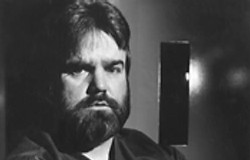 Marvin Gray
Murderer · USA · 1975
Marvin Gray was convicted killer who claimed responsibility for 23 slayings and…
23 victims
Marvin Gray
Murderer · USA · 1975
Marvin Gray was convicted killer who claimed responsibility for 23 slayings and…
23 victims
 Yahweh ben Yahweh
Murderer · USA · 1980
Yahweh ben Yahweh was born and legally named Hulon Mitchell Jr. (October 27, 19…
23 victims
Yahweh ben Yahweh
Murderer · USA · 1980
Yahweh ben Yahweh was born and legally named Hulon Mitchell Jr. (October 27, 19…
23 victims
 Russell Ellwood
Murderer · USA · 1991
Russell Ellwood was a former taxi driver. Authorities suspected him of killing…
20 victims
Russell Ellwood
Murderer · USA · 1991
Russell Ellwood was a former taxi driver. Authorities suspected him of killing…
20 victims
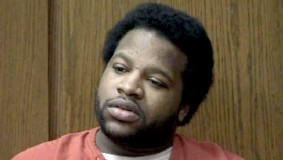 Peter Lucas Moses
Murderer · USA · 2010
Peter Lucas Moses led a small sect called the Black Hebrews in Durham. Prosecut…
2 victims
Peter Lucas Moses
Murderer · USA · 2010
Peter Lucas Moses led a small sect called the Black Hebrews in Durham. Prosecut…
2 victims
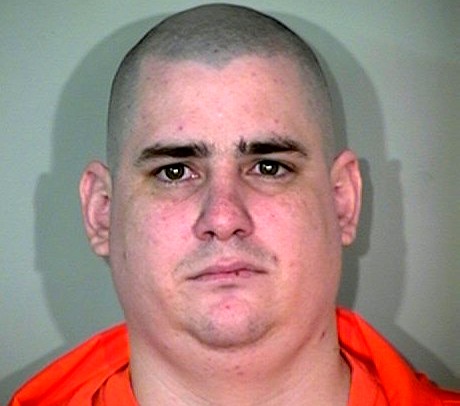 Kenneth Laird
Homicide · USA · 1992
Kenneth Laird was a juvenile who was tried as an adult. Two weeks before the mu…
1 victim
Kenneth Laird
Homicide · USA · 1992
Kenneth Laird was a juvenile who was tried as an adult. Two weeks before the mu…
1 victim
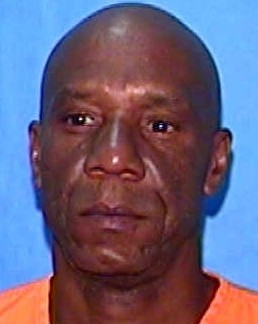 Etheria Jackson
Murderer · USA · 1985
Defendant: Etheria Jackson · Live-in girlfriend: Linda Riley · Trial judge: The…
1 victim
Etheria Jackson
Murderer · USA · 1985
Defendant: Etheria Jackson · Live-in girlfriend: Linda Riley · Trial judge: The…
1 victim
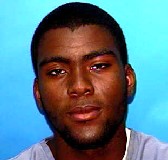 Tronneal Mangum
Homicide · USA · 1997
Tronneal Mangum was a 14-year-old male. He was a student and became the younges…
1 victim
Tronneal Mangum
Homicide · USA · 1997
Tronneal Mangum was a 14-year-old male. He was a student and became the younges…
1 victim
- Gender
- male
- Country
- USA
- Location
- Cuyahoga County, Ohio, USA
- Date of birth
- J une 4, 1956
- Age at first offence
- 28
- Characteristics
- kidnapping, rape
- Victim profile
- Tryna Middleton, 14
- Method of murder
- St abbing with knife
- Date(s) of murder
- September 21, 1984
- Years active
- 1984
- Date of arrest
- December 6, 1984
- Status
-
Execution stayed for one week after lethal injection attempt failed on 15 September 2009; further stays were granted while courts considered whether a second attempt would be constitutional
Case record: Romell Broom
Other details
Romell Broom was an American convicted of murder, kidnap and rape. He was born 4 June 1956.
Romell Broom was scheduled for execution in Ohio on 15 September 2009. After his final appeals were denied, the state prepared to execute Broom. Execution team members began searching for suitable veins to insert an IV for lethal injection, but after two hours they were unable to complete the process. Broom offered to move around so the guards could find a second suitable vein, but it was to no avail. The execution was called off, and a stay was granted for one week. Further stays were granted by the courts considering whether it would be constitutional to attempt his execution a second time.
Broom had convictions for robbery, aggravated robbery and four counts of kidnap of a male child. He was also convicted in a separate incidence of raping a female child.
Timeline
- 15 September 2009 — Romell Broom’s execution was attempted by lethal injection; execution was called off after two hours due to inability to complete IV access; a one-week reprieve was issued
- 17 September 2009 — A federal court case hearing was discussed as part of efforts to block a second execution attempt, with Judge Gregory L. Frost scheduled to hold a hearing on 30 November 2009
- 18 September 2009 — Judge Gregory L. Frost issued a stay against another attempt to put Broom to death next week, with the stay expiring on 28 September (as described in reporting)
The offence
On 21 September 1984, Tryna Middleton, Tammy Sims and Bonita Callier were at a high school football game. Middleton was fourteen years old and a ninth-grade student at the high school.
After the football game, the three girls began walking home. They noticed a car they thought looked suspicious, walked away from it, and went down a different street. A car without its lights on then came towards the girls and stopped in front of them. The driver exited the car and ran past the girls. Once the girls passed the parked car, they heard footsteps behind them and an assailant tried to grab all of them. During the struggle, the assailant said, "Come here, bitch," and pulled out a knife. Middleton was not able to get away from the assailant, but Sims and Callier escaped. They ran to a nearby house where the homeowner allowed them to call their mothers and the police. Sims and Callier described the car and the assailant to the police.
Approximately two hours later, Middleton’s body was found in a parking lot. She had been stabbed in the chest and abdomen, and sperm cells were found in her rectum and vagina. Five of the stabbings perforated Middleton’s heart and lungs, causing almost instantaneous death. Middleton also had a wound on her right arm that was described as the result of Middleton’s efforts to defend herself. Sims and Callier were shown a series of photographs but were unable to identify a suspect at that point.
There were two other incidents in the same area involving young girls.
On 18 September 1984, Venita McKenney was walking home when a car passed her and then stopped. When McKenney walked past the car, the driver got out and grabbed her. The driver threatened McKenney with a knife and called her a "bitch." Residents who lived nearby heard the noise, and McKenney was able to escape into their home.
On 6 December 1984, the incident involved Melinda Grissom. A car followed Grissom as she was walking home, and as she turned a street corner, a man passed her and then grabbed her from behind. The assailant began hitting Grissom and threw her into the car as she struggled and screamed. Grissom’s younger sister observed what happened and summoned the girls’ mother. The mother ran outside barefoot and grabbed the locked car door on the driver’s side. The icy road made the car’s wheel spin and slowed its progress, allowing the mother to hold on to the car, pound the window, and push the car with her hip so that the car bumped into a parked car. As the mother held on to the car, Grissom escaped through the passenger door which she had unlocked. Two young men who witnessed the commotion got the license plate number of the car and gave it to the mother, who ran outside and grabbed the locked car door on the driver’s side. As her mother held on to the car, Grissom was able to escape through the passenger door which she had unlocked.
After the police were called, they traced the license plate number to William Broom, Romell Broom’s father. When the police arrived, the engine was still warm. Romell Broom admitted he had been driving the car. Both Grissom and her mother identified Broom as the assailant. The other two witnesses also identified Broom in a line-up.
The similarities between these three incidents led the police to bring in witnesses from the McKenney and Middleton cases to view a line-up. The victims and witnesses independently identified Broom from the line-up. Sims and Callier also identified him in a photo array.
The police discovered that Broom had been driving his girlfriend’s car before it was wrecked on 6 November 1984. Sims identified Broom’s girlfriend’s car as the car from the night of the Middleton incident. Callier stated that it was the same kind and color as the car used during the incident.
Tests revealed that the sperm discovered in Middleton’s vagina belonged to a person with type B blood, which was described as the blood type of approximately twelve percent of the population. Broom’s blood was type B. Hair evidence connected Broom to the crime.
Investigation
A Cuyahoga County grand jury issued an indictment charging Broom with the following:
- Aggravated murder of Middleton with specifications for murder committed during the course of a kidnaping and rape
- Rape of Middleton
- Kidnaping of Middleton
- Kidnaping of Sims
- Kidnaping of Callier
- Kidnaping of Grissom
- Kidnaping of McKenney
- Felonious assault of Grissom
Counts Six through Eight were severed, and Broom was tried on the first five counts in proceedings that began on 16 September 1985.
Trial
The jury found Broom guilty on each of the charges. At the end of the penalty phase, the jury recommended a sentence of death.
Broom was sentenced to death in October 1985 for aggravated murder. In addition, Broom was sentenced to 54-80 years of incarceration for the remaining counts.
In the trial-level account of identification, after the incident involving Melinda Grissom, the police took Broom for purposes of identification to the hospital where Grissom was being treated. Broom argued that the show-up procedure was unnecessarily suggestive and conducive to irreparable mistaken identification.
In the context of other acts evidence, the state trial court permitted evidence regarding incidents involving Venita McKenney and Melinda Grissom. The Ohio Supreme Court noted that Broom had been positively identified either in a lineup or a showup and in the courtroom by both of the victims and numerous witnesses to those two incidents. The jury had been given a carefully drafted limiting instruction explaining that the evidence concerning those two incidents was admitted only for the purpose of considering whether those acts tended to show intent, motive, scheme, plan or system for the September 21 kidnapping, rape, and murder of Tryna Middleton and the attempted kidnapping of Tammy Sims and Bonita Callier.
At trial, Broom asserted that it was a case of "mistaken identity because he allegedly was with someone else the night that Tryna died."
The state appellate court affirmed the conviction. The state supreme court affirmed the appellate court’s judgment.
Sentencing
The jury recommended death at the end of the penalty phase. Broom was additionally sentenced to 54-80 years of incarceration for the remaining counts.
Appeals
Broom filed a petition for postconviction relief, which was dismissed on 24 April 1997. The state court of appeals affirmed the dismissal. The state supreme court denied Broom leave to appeal.
Broom filed a federal habeas petition on 21 June 1999 in the United States District Court for the Northern District of Ohio.
The district court held an evidentiary hearing in January 2002 on the ineffective-assistance-of-counsel claim and the Brady claim. On 28 August 2002, the district court filed an order and opinion denying habeas relief as to each of the issues presented.
A certificate of appealability was granted as to admission of other acts testimony, ineffective assistance of counsel during the mitigation phase, Brady violation, inadequate time for Broom’s counsel to prepare for trial, and denial of the suppression of the "show-up" identification by the Grissoms.
Broom filed a timely notice of appeal. The Sixth Circuit issued a certificate of appealability for the additional issue of prosecutorial misconduct.
The Sixth Circuit affirmed the district court’s judgment denying Broom habeas relief.
Investigation to conviction: Sixth Circuit discussion (procedural and substantive issues)
Broom appealed the district court’s denial of his petition for a writ of habeas corpus filed pursuant to 28 U.S.C. § 2254. The Sixth Circuit described that it reviewed six issues: Brady violation, admission of other acts testimony, ineffective assistance of counsel at the mitigation phase, prosecutorial misconduct, denial of a continuance, and denial of the suppression of a "show-up" identification.
In the Brady analysis, Broom’s Brady claim was based on the fact that certain police reports were not made available to Broom’s counsel prior to trial but were later obtained as a result of Ohio Public Records Act requests and as part of federal habeas discovery. The state argued the Brady claim was procedurally defaulted because the police reports were not used and the Brady claim was not presented during Broom’s state postconviction relief proceedings.
The Sixth Circuit addressed procedural default, including analysis of cause and prejudice. The Sixth Circuit discussed Broom’s arguments that Steckman foreclosed use of records obtained while his petition for state postconviction relief was pending, as well as arguments about state delay and postconviction judge instructions, and a due diligence argument. The Sixth Circuit concluded that Broom did not show the requisite cause to excuse the procedural default of his Brady claim, so it affirmed the district court’s judgment denying habeas relief as to that issue.
For admission of other acts evidence, the Sixth Circuit described the Supreme Court’s framework regarding evidence of other crimes or acts, including Rule 404(b), and held that the state supreme court’s decision was not objectively unreasonable in concluding that the evidence was admissible.
For ineffective assistance of counsel at the mitigation phase, the Sixth Circuit described Broom’s claims about counsel’s investigation, mitigation expert services, failure to secure further psychiatric evaluation after Broom did not open up, and alleged effects of cross-examination of Broom’s father regarding prior convictions, and a residual doubt factor. The Sixth Circuit stated the Strickland framework and concluded that Broom could not satisfy the prejudice prong. The Sixth Circuit noted that additional evidence identified by Broom was cumulative and did not substantially differ from evidence already presented. It also noted that the information regarding Broom’s prior rape conviction was independently revealed to the jury.
For prosecutorial misconduct, the Sixth Circuit described Broom’s examples, including statements in the guilt phase and sentencing phase, and discussed the standard for determining whether prosecutors’ comments made the proceedings fundamentally unfair. The Sixth Circuit agreed with the district court that the Ohio Supreme Court’s analysis was not an unreasonable application of Darden and Donnelly, and it affirmed denial of habeas relief as to prosecutorial misconduct.
For denial of a continuance, the Sixth Circuit discussed trial counsel’s request for additional time, including reasons related to difficulty obtaining records and information necessary for the mitigation hearing, and difficulty establishing a working relationship with Broom. The Sixth Circuit held that the Ohio Supreme Court reasonably applied Ungar and affirmed denial of habeas relief as to this issue.
For the "show-up" identification, the Sixth Circuit discussed the Ohio Supreme Court’s conclusion that the show-up was unnecessary and suggestive, and that reliability was determined under Neil v. Biggers factors. The Sixth Circuit affirmed denial of habeas relief regarding this issue.
Outcome
Spotted an error, or have more information about this case?