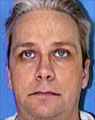
Rex Warren Mays
Murderer Brian Kevin Rosenfeld
Murderer · USA · 1985
Brian Kevin Rosenfeld Brian Kevin Rosenfeld was sentenced to three concurrent l…
23 victims
Brian Kevin Rosenfeld
Murderer · USA · 1985
Brian Kevin Rosenfeld Brian Kevin Rosenfeld was sentenced to three concurrent l…
23 victims
 Russell Ellwood
Murderer · USA · 1991
Russell Ellwood was a former taxi driver. Authorities suspected him of killing…
20 victims
Russell Ellwood
Murderer · USA · 1991
Russell Ellwood was a former taxi driver. Authorities suspected him of killing…
20 victims
 Robert Martines Perez
Murderer · USA · 1994
Name: Robert Martines Perez · Other name used in proceedings: Robert Martinez P…
15 victims
Robert Martines Perez
Murderer · USA · 1994
Name: Robert Martines Perez · Other name used in proceedings: Robert Martinez P…
15 victims
 Billy Frank Vickers
Murderer · USA · 1993
Billy Frank Vickers Vickers was executed by lethal injection in Texas on Januar…
14 victims
Billy Frank Vickers
Murderer · USA · 1993
Billy Frank Vickers Vickers was executed by lethal injection in Texas on Januar…
14 victims
 Jacqueline Williams
Murderer · USA · 1995
Jacqueline Annette Williams was sentenced to death on May 11, 1998, for the mur…
3 victims
Jacqueline Williams
Murderer · USA · 1995
Jacqueline Annette Williams was sentenced to death on May 11, 1998, for the mur…
3 victims
 Michele Anderson
Mass murderer · USA · 2007
Michele Kristen Anderson was charged in connection with the Carnation Massacre,…
6 victims
Michele Anderson
Mass murderer · USA · 2007
Michele Kristen Anderson was charged in connection with the Carnation Massacre,…
6 victims
 LaShanda Armstrong
Murderer · USA · 2011
LaShanda Armstrong was 25 when she drove a minivan into the Hudson River, killi…
3 victims
LaShanda Armstrong
Murderer · USA · 2011
LaShanda Armstrong was 25 when she drove a minivan into the Hudson River, killi…
3 victims
 James Demouchette
Murderer · USA · 1976
James Demouchette was executed by lethal injection in Texas on September 22, 19…
3 victims
James Demouchette
Murderer · USA · 1976
James Demouchette was executed by lethal injection in Texas on September 22, 19…
3 victims
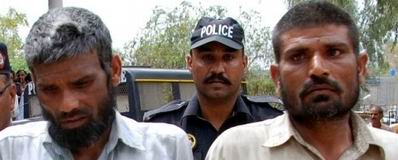 Arif and Farman Ali
Cannibals · Pakistan · 2011
Mohammad Arif Ali and Mohammad Farman Ali were brothers from the town of Darya…
0 victims
Arif and Farman Ali
Cannibals · Pakistan · 2011
Mohammad Arif Ali and Mohammad Farman Ali were brothers from the town of Darya…
0 victims
- Gender
- male
- Country
- USA
- Location
- Harris County, Texas, USA
- Date of birth
- January 21, 1960
- Age at first offence
- 32
- Characteristics
- rape
- Victim profile
- Kristin Michelle Wiley, 7 , and her playmate Kynara Carriero, 10
- Method of murder
- St abbing with knife
- Date(s) of murder
- July 20, 1992
- Years active
- 1992
- Date of arrest
- February 1994
- Status
-
Executed
Executed by lethal injection in Texas on September 24, 2002
Background
Rex Warren Mays was a Texas death row prisoner. He was scheduled to be executed after 6 p.m. on September 24, 2002. He was 42 at the time of execution.
Rex Mays sometimes performed as Uh-Oh the Clown. He had held a number of jobs, including as a clown. He had been fired from his job earlier on July 20, 1992, and he told his wife that he had been fired after the murders. In a final statement, Mays requested parole and said he wanted to go home to be with the lord.
The offence
On the afternoon of July 20, 1992, 14-year-old Jeremy Garza found the bloody bodies of his 10-year-old sister, Kristin Michelle Wiley, and her 7-year-old best friend, Kynara Lorin Carreiro, in his bedroom.
Both girls were naked from the waist down and were stabbed about 20 times. One account described Kristin as stabbed 18 times and Kynara as stabbed 23 times. Autopsies revealed that both girls died of stab wounds to the neck and head. They also suffered vaginal trauma, but no semen was found. Prosecutors said police were sexually assault allegations but that Mays never confessed to those claims. Another account stated each was also stabbed in the eyes.
Mays lived next door to Jeremy Garza and Kristin Wiley. After he had been fired earlier that day, he drove home, parked a few houses down the street from his own residence, and walked to his neighbor’s house.
Mays reported that he heard loud music from within the Wiley home, pushed open the unlocked front door, and called for Kristin Wiley. He saw Kristin and Kynara running away from him. He asked them to lower the volume on the stereo. Kynara answered: "No, we're not going to turn it down! Just get out of the house!" Mays then began stabbing both girls with a knife he took from the kitchen.
When Mays was certain they were dead, he crawled out of the house through a window leading to the backyard and was about to climb over the privacy fence when he remembered that he left his car parked down the street. He re-entered the Wiley house through the same window and walked out through the front door. Upon reaching his car, he placed the murder weapon and his bloody shirt in a duffle bag kept in his car. He then drove home, parked his car in his garage, told his wife that he had been fired, and showered to wash away blood that had splattered onto his legs.
Continuing from the next day, Mays washed his bloody clothes, threw the knife into a nearby ravine, and placed the duffle bag in the garbage.
Investigation
After the bodies were discovered, emergency personnel arrived and Mays watched from his driveway, sitting on a lawn chair and drinking a soda. He allowed the children’s mother to use his telephone. He also invited several law enforcement officers into his house for refreshments.
Investigators found blood on the privacy fence that separated Mays’ backyard from the Wiley’s. Blood traces from Mays’ laundered clothing revealed DNA that linked to the victims’ DNA.
The investigation into the murders was badly sidetracked in its first hours by the Wileys’ next-door neighbor, who gave investigators descriptions of suspects that did not exist. Mays later admitted that he had lied in telling investigators he had seen two men, one black and one Hispanic, climbing over his fence just before the girls’ bodies were discovered. Mays told detectives he did not get a good look at the Hispanic and helped a police artist come up with a composite of the black suspect, which became the focus of the probe.
Soon after he was found to be lying, Mays was asked by his landlord to move out.
A bloody handprint on the fence between Mays’ house and the Wiley house initially seemed to corroborate Mays’ story, but by the time the blood was subjected to tests to determine its type, it was useless as a print.
Dane Sever, who owned the house that Rex Mays rented, noticed a spot that looked like blood in the hallway near the bathroom after Mays had moved out. Detectives already had searched the house at least twice—once with Mays’ consent before he moved out and once afterward—but the spot apparently was missed. Sever notified detectives, but no one examined it for almost three weeks.
An anonymous caller told investigators within days that the murder weapon could be found beside a deep drainage ditch behind the houses on the north side of Fair Forest, but the area was not searched by detectives.
After a suggestion from a detective two weeks later that someone might want to look along the bayou, Kynara’s father and step-father, Bob Carreiro and Pat Taylor, organized three searches and found a steak knife on the edge of the bayou near Taylor’s house. Detectives said the knife may have been the murder weapon, but by the time it was found no blood or fingerprints could be found on it. A source familiar with the investigation said Mays told detectives in his confession where the knife could be found, and the location was accurate.
Mays was arrested as prime suspect after confession following polygraph failures. According to procedural descriptions, Detective Bob Valerio of the Harris County Sheriff’s Department tried to solve the case for the next year and a half, befriending Mays and spending time with him. After months of talking with investigators, Mays finally agreed to take a polygraph examination, failed the test, and confessed.
Arrest
Mays admitted to investigators he had lied early in the investigation about seeing two men climbing over his fence. He later confessed after months of talking with investigators and after failing a polygraph examination.
The families waited 19 months for the arrest that finally came after Mays’ confession and subsequent confirmation of suspicion.
Trial
Procedural history
On April 12, 1994, Mays was indicted for capital murder in the 176th District Court of Harris County, Texas. He pleaded "not guilty."
Trial on the merits began Sept. 5, 1995. On Sept. 12, 1995, the jury returned a verdict of "guilty."
Following a separate punishment hearing, the same jury answered "yes" to the future dangerousness special issue and found that no mitigating circumstance warranted that Mays be sentenced to life imprisonment. Consequently, on Sept.18, 1995, the trial court assessed punishment at death.
Evidence presented at trial
Mays confessed in a written statement and described leaving his workplace at about 2:45 p.m. on July 20, 1992. He said he parked his car a few houses down the street from his residence and walked to his neighbor’s house. He described hearing loud music, entering through an unlocked front door, and chasing and stabbing Kristin and Kynara after they refused to turn down the stereo.
Investigators presented DNA evidence from blood traces on Mays’ laundered clothing that linked to the victims’ DNA. Blood traces were also found on the privacy fence separating Mays’ backyard from the Wiley’s.
One account stated no semen was found despite vaginal trauma. Another stated Mays was sexually assaulted allegations but he never confessed to those claims.
Confession details and quotations
Kynara’s response to Mays’ request to lower the volume on the stereo was: "No, we're not going to turn it down! Just get out of the house!"
In a final statement, Mays requested parole and said: "Warden, just give me parole and let me go home to be with the lord."
Sentencing
On Sept.18, 1995, the trial court assessed punishment at death after the jury found future dangerousness and found no mitigating circumstance warranted a life sentence.
Appeals
In February 1997, the Texas Court of Criminal Appeals abated Mays’ appeal and remanded the case to the trial court for factual findings and conclusions of law regarding the admissibility of Mays’ written confession. After the trial court filed its findings of fact and conclusions of law, the Court of Criminal Appeals affirmed Mays’ conviction and sentence in an unpublished opinion.
Mays petitioned for a writ of certiorari in the United States Supreme Court, but the petition was denied on Oct. 12, 1999. In that same year, the Court of Criminal Appeals denied his state petition for habeas relief.
On March 31, 2000, Mays filed his federal habeas petition. The federal district court denied both relief and a certificate of appealability on Feb. 22, 2001. On Jan. 3, 2002, the Fifth Circuit also denied Mays’ request for a certificate of appealability. On or about July 2, 2002, Mays filed a petition for certiorari to the Fifth Circuit. The Supreme Court denied Mays’ petition for certiorari review on Sept. 12, 2002.
Outcome
Mays was executed by lethal injection in Texas on September 24, 2002.
One account described that he was pronounced dead at 6:19 p.m., and another described that he was pronounced dead eight minutes later after lethal drugs took effect at 6:11 p.m.
During his final statement, he said in a prayer form: "I'm going to a better place." and "I'm just mad for one reason: I'm going to a better place, and y'all have to go through this hell on earth." Another description stated: "I'm ready to go," and "I'm going to a better place." In a final statement that came in the form of a prayer, Mays requested "forgiveness for the ones that need to be forgiven" and said:
"Dear Lord, I ask you right now to be with each of (his personal witnesses) and lift them up and be on solid ground,"
"I am going to go see Jesus tonight and reserve a special place for each one of you."
"Just remember the good things and not the bad,"
A separate report stated: "Warden, just give me parole and let me go home to be with the lord."
Other details
Mays described his motive as being upset about losing his job and concerned about telling his wife. He also described being confronted by the girls and said he killed them using techniques learned in the Marines.
A sheriff’s statement described the only motive Mays gave was being upset over losing his job with an Exxon contractor.
Mays sometimes performed as Uh-Oh the Clown at children’s birthday parties.
In one account, witnesses offered during the punishment phase testified that Mays was an unloved misfit caught in an abusive, alcoholic family. His aunt testified that Mays’ mother would beat him for "breathing." Mays’ attorney argued that Mays’ life should be spared based on childhood circumstances and described "Violence was normal," as something the family used to resolve conflict.
An FBI behavioral analyst, Alan Brantley, testified that Mays was a continuing threat to society, and Mays said that children evoked strong emotional responses of anger and sexuality in him, which made him a continuing threat to society.
During his execution, families of Kristin Wiley and Kynara Carreiro witnessed the execution. Following the execution, members of the pro-death penalty group Justice For All released 17 pink and two Barbie balloons into the sky.
Spotted an error, or have more information about this case?