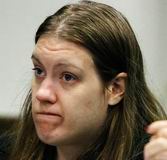
Michele Anderson
Mass murderer Jennifer San Marco
Mass murderer · USA · 2006
Jennifer San Marco (December 6, 1961 – January 30, 2006) was a former US Postal…
7 victims
Jennifer San Marco
Mass murderer · USA · 2006
Jennifer San Marco (December 6, 1961 – January 30, 2006) was a former US Postal…
7 victims
 Judy Kirby
Mass murderer · USA · 2000
Judy Kirby was found guilty of murder for intentionally causing a head-on crash…
7 victims
Judy Kirby
Mass murderer · USA · 2000
Judy Kirby was found guilty of murder for intentionally causing a head-on crash…
7 victims
 Khoua Her
Mass murderer · USA · 1998
Khoua Her pleaded guilty and received a sentence of 50 years in prison with no…
6 victims
Khoua Her
Mass murderer · USA · 1998
Khoua Her pleaded guilty and received a sentence of 50 years in prison with no…
6 victims
 Mary Ann Holder
Mass murderer · USA · 2011
Mary Ann Holder carried out a shooting spree and committed suicide by shooting…
5 victims
Mary Ann Holder
Mass murderer · USA · 2011
Mary Ann Holder carried out a shooting spree and committed suicide by shooting…
5 victims
 Susan Hendricks
Mass murderer · USA · 2006
Susan Hendricks was accused of killing four members of her own family in order…
5 victims
Susan Hendricks
Mass murderer · USA · 2006
Susan Hendricks was accused of killing four members of her own family in order…
5 victims
 Angelica Alvarez
Mass murderer · USA · 2006
Angelica Alvarez was 27 years old. She was described as an Elkhart County mothe…
4 victims
Angelica Alvarez
Mass murderer · USA · 2006
Angelica Alvarez was 27 years old. She was described as an Elkhart County mothe…
4 victims
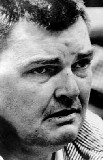 Simon Peter Nelson
Mass murderer · USA · 1978
Simon Peter Nelson was a man whose wife had left him. He had six children and s…
6 victims
Simon Peter Nelson
Mass murderer · USA · 1978
Simon Peter Nelson was a man whose wife had left him. He had six children and s…
6 victims
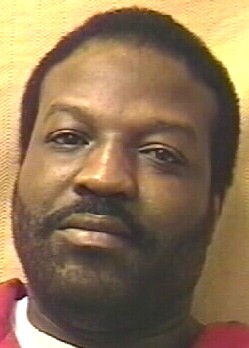 David Junior Ward
Murderer · USA · 1991
David Junior Ward was the defendant. He was tried in connection with the robber…
1 victim
David Junior Ward
Murderer · USA · 1991
David Junior Ward was the defendant. He was tried in connection with the robber…
1 victim
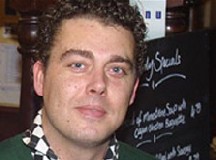 Mark Dixie
Murderer · United Kingdom · 2005
Mark Philip Dixie — defendant Sally Anne Bowman — victim; British model Lewis S…
1 victim
Mark Dixie
Murderer · United Kingdom · 2005
Mark Philip Dixie — defendant Sally Anne Bowman — victim; British model Lewis S…
1 victim
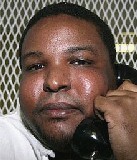 Robert Lee Thompson
Murderer · USA
December 5, 1996 — Robert Lee Thompson and Sammy Butler entered a 7-Evenings fo…
3 victims
Robert Lee Thompson
Murderer · USA
December 5, 1996 — Robert Lee Thompson and Sammy Butler entered a 7-Evenings fo…
3 victims
- Gender
- female
- Country
- USA
- Location
- Carnation, King County, Washington, USA
- Date of birth
- 1978
- Age at first offence
- 29
- Characteristics
- financial gain, domestic violence, disputes
- Victim profile
- Her parents, Wayne, 60, and Judith Anderson, 61; her brother, Scott, and his wife, Erica, both 32; and the couple's two children, Olivia, 5, and Nathan, 3.
- Method of murder
- Shooting ( .357-caliber Magnum handgun)
- Date(s) of murder
- December 24, 2007
- Years active
- 2007
- Date of arrest
- 2 days after
- Status
-
In prison awaiting trial. King County Prosecutor Dan Satterberg announced on October 15, 2008 he will seek the death penalty
Background
Michele Kristen Anderson was charged in connection with the Carnation Massacre, a mass murder that occurred on December 24, 2007, near Carnation, Washington, a small rural town 25 miles east of Seattle. The murders took place in the home of Wayne Scott Anderson and Judy Anderson.
Six people were killed:
- Wayne Scott Anderson, 60, a Boeing engineer
- Judy Anderson, 61, postal worker and wife of Wayne Scott Anderson
- Scott Anderson, 32, son of Wayne and Judy
- Erica Anderson, 30, wife of Scott
- Olivia Anderson, 6-year-old daughter of Scott and Erica
- Nathan Anderson, 3-year-old son of Scott and Erica
Investigators arrested and indicted Michele Kristen Anderson and her boyfriend, Joseph Thomas McEnroe, both aged 29, as the perpetrators of the killings. Michele Anderson was the younger sister of Scott and a daughter of Wayne and Judy.
Investigators did not pinpoint a motive for the slayings but believed that a dispute over money may have led to the killings. Court papers said the suspects waived their right to appear in court and admitted the killing.
Anderson and McEnroe were held without bail and were scheduled for arraignment at 8:30 a.m. Jan. 9. Prosecutors said the only other sentence allowed for an aggravated-murder conviction was life in prison without parole.
The offence
On Christmas Eve, Michele Anderson and Joseph McEnroe armed themselves with handguns and walked to Michele Anderson’s parents’ house, determined to kill them, according to police documents released in the slaying of six family members.
Police alleged that within 30 minutes of arriving, Anderson shot her father, Wayne Anderson, 60, with a 9 mm handgun and McEnroe shot him with a .357-caliber Magnum. Police alleged McEnroe then shot Judith Anderson, 61, twice. The suspects then dragged the bodies from the home to a backyard shed. A short time later, Scott and Erica Anderson, both 32, arrived with their two children, ages 6 and 3. Police alleged McEnroe shot the parents and then shot both children in the head. Police alleged that Michele Anderson also shot her brother and his wife.
Prosecutors alleged the pair hid the bodies and, when Scott and Erica arrived with their children, executed them, with McEnroe apologizing as he shot the children in the head.
Michele Anderson told police that she was tired "of everybody stepping on her," and she had decided that if her family did not start showing her respect by Dec. 24, she would kill them all. According to the 16-page charges, she told police that she had lent her brother Scott Anderson money and it had not been repaid. The relationship between the once-close siblings had soured after Scott Anderson married Erica, and Michele was angry that her parents, Judy and Wayne Anderson, were pressuring her to pay rent for the trailer she shared with McEnroe on their wooded Carnation property.
As it grew dark on Dec. 24, Anderson and McEnroe armed themselves with handguns they had purchased from a pawnshop over the summer and drove 200 yards from their trailer to Wayne and Judy Anderson's small white house, according to reports. Michele Anderson encountered Wayne Anderson first and fired her 9 mm handgun at her father but apparently missed him. Hearing the shot, Judy Anderson and McEnroe ran into the room, where McEnroe shot Wayne Anderson in the head. Prosecutors said McEnroe shot Judy Anderson while she screamed, and she fell to the floor. The documents said she continued to scream "so he apologized to her and then shot her again, this time in the head," according to the documents.
According to the documents, Michele confronted her brother when he arrived, and he charged her when she pulled out the gun; she told detectives she thought she shot him at least twice and as many as four times and that she also shot Erica twice before Erica scrambled over the couch and tried to call for help that never arrived.
After the couple allegedly killed all six family members, they dragged the bodies to an outdoor shed, used blankets and towels to clean up blood and burned evidence in a fire pit, according to documents and information from Satterberg.
Satterberg said Michele Anderson and McEnroe intended to escape to Canada when they returned to the crime scene to pretend they discovered the bodies. After being interviewed separately by deputies, they were booked.
Victims’ last moments and quotations
Erica Anderson was shot twice during a Christmas Eve ambush at her in-laws’ rural Carnation home. Court documents described that Erica Anderson managed to crawl over the back of a couch and dial 911 on a cordless phone, but Joseph McEnroe walked up, pulled the phone from her hand, and removed the batteries.
The court documents said McEnroe “allowed [Erica] to huddle with her children before he shot [her] in the head.” The documents also said McEnroe made sure to mention that he apologized to Erica after she pleaded with him not to shoot her, saying '... You don't have to do this,' and that McEnroe recalled how he looked at her and said, '... Yes, we do.' Prosecuting Attorney Dan Satterberg said McEnroe shot 5-year-old Olivia Anderson in the head "at very close range." Prosecutors said Olivia Anderson was shot at very close range.
The documents reported that McEnroe then turned to 3-year-old Nathan Anderson. The boy had picked up the batteries McEnroe had torn from the phone and held them up in one hand. McEnroe told detectives the child gave him "... the look of complete comprehension ... as if he understood." McEnroe then shot Nathan in the head as well, according to the documents.
The documents said: "I didn't want them to turn us in," and that McEnroe explained this, according to the documents.
Investigation
Police alleged that the killings included a planned ambush and execution of the Anderson family. Court documents characterized the events as a planned ambush and execution at the Andersons’ parents’ home.
A 911 call was made from the house at 5:13 p.m. Monday and lasted about 10 seconds. The dispatcher did not hear anyone talking but told investigators there was "a lot of yelling in the background," which sounded more like party noise than angry, heated arguing. After the call was disconnected, the dispatcher placed two calls to the home; the calls immediately went to voice mail.
Two deputies were sent out at 5:19 p.m. and arrived at 5:45 p.m. They encountered a locked gate and did not proceed further onto the property. The dispatcher's log reported: "Gate is locked, unable to gain access."
Detectives did not establish a firm sequence of the evening’s events; however, the 911 call appeared to have come near the end of the slayings.
The King County Sheriff's Office launched an internal investigation to determine why two deputies who were dispatched to check on the call from the Anderson home turned away at a locked gate and never checked on the residence. King County Sheriff Sue Rahr said: "We're looking into that right now," and "I'm very concerned about that." Police believed all the victims were dead by the time the deputies arrived at the property, Rahr said.
The bodies were discovered on Dec. 26 after being found until then, according to the narrative about deputies not checking the residence. The bodies were discovered Wednesday morning by a co-worker of one victim who had stopped by the house after Judy Anderson failed to show up for her job as a mail carrier in Carnation.
Arrest
Anderson and McEnroe were arrested shortly after six members of Anderson’s family were found slain in her parents’ Carnation home. They were arrested Wednesday afternoon on suspicion of homicide after they showed up at the crime scene on a wooded property about three miles from Carnation, where the suspects were apparently living in a mobile home adjacent to Anderson’s parents’ house.
It was unclear why Anderson and McEnroe returned to the home Wednesday as it swarmed with detectives and crime-scene investigators, or why police became suspicious of them, but the sheriff’s spokesman John Urquhart said they did not come to turn themselves in. Urquhart said: "I don't know what brought them here, [but] they arrived after we got here. They came to our attention and were arrested," he said.
Trial
Arraignment and court proceedings
A King County Superior Court judge denied a defense motion from attorneys representing Michele Anderson to provide her with a TV or radio and an extra hour out of her jail cell each day.
Anderson had been in administrative segregation for the majority of her time awaiting trial. She had not spoken to her defense team in about a year and had refused to be interviewed by a defense psychologist for the past five years. During arguments on the motion, Judge Jeffrey Ramsdell said he sympathized with the defense’s desperation and frustration with Anderson’s unwillingness to talk, but ruled there was no factual or Constitutional basis to grant their request.
The defense motion sought additional external stimulation for Anderson in hopes it would help stabilize her mental health and therefore prompt her to engage with her attorneys, David Sorenson and Colleen O’Connor, and help them launch a defense.
Competency evaluations
Western State evaluators deemed Michele Anderson mentally competent to stand trial by September 21, 2011. She had been examined earlier that summer by mental health experts; it was the second time since her arrest that she had been evaluated and deemed competent.
Colleen O'Connor told Superior Court Judge Jeffrey Ramsdell during a July hearing that Anderson was highly emotional and unable to assist in her defense for her upcoming trial on six counts of aggravated murder.
Ramsdell had not declared her competent to stand trial at that point.
Plea efforts and legal restrictions
Michele Anderson said she was trying to plead guilty to aggravated first-degree murder for months. In June 2008, she stated that a requirement in state law made it impossible for her to do so because the King County prosecuting attorney was still deciding whether to seek the death penalty against her.
Anderson claimed her public defenders had silenced her. In a telephone interview from the King County Jail, she admitted to fatally shooting six members of her family, including two young children, during a holiday celebration at her parents' Carnation home.
Anderson said she wanted to waive her trial and face the death penalty. She said: "I'm a different kind of person." "Life in prison is not enough punishment for me. I want the most severe punishment, which would be the death penalty. I want to waive my trial."
Anderson said she had been telling her attorneys for months that she wanted to plead guilty to the slayings, but that they told her she could not. Her attorneys, Cindy Arends and Kevin Dolan, could not speak on the record, citing attorney-client confidentiality.
A King County judge ordered Anderson to undergo a competency evaluation in May to determine whether she was capable of assisting in her defense at trial. Her attorneys had asked for the evaluation in a sealed motion and sought to close the courtroom so they could argue their case. Superior Court Judge Jeffrey Ramsdell said he would not close the courtroom.
The defense was required to submit a mitigation packet by July 10. The mitigation packet was described as a compilation of mental-health history and other evidence persuading King County Prosecutor Dan Satterberg not to seek the death penalty. Satterberg would have until Aug. 4 to make a decision. Anderson said: "My lawyers also said that a mitigation packet is a requirement, and that's also a lie." "There are no mitigating factors. I've been evaluated by three doctors and I've been found competent. My lawyers are trying to force me into a life sentence because they're opposed to that."
Anderson said she had been ordered not to contact the media and until recently had been prevented from making calls from the King County Jail, where she had been since her arrest. She said: "They're trying to keep me from speaking out."
She also said that a state law dictated: "Except with the consent of the prosecuting attorney, during the period in which the prosecuting attorney may file the notice of special sentencing proceeding, the defendant may not tender a plea of guilty to the charge of aggravated first degree murder nor may the court accept a plea of guilty to the charge of aggravated first degree murder or any lesser included offense."
Anderson sent a letter to The Times stating she wanted help suing her lawyers.
Sentencing
King County Prosecutor Dan Satterberg announced on October 15, 2008 that he would seek the death penalty.
Michele Anderson and Joseph McEnroe each faced the death penalty if convicted. Prosecutors officially served notice of intent to seek the death penalty at a hearing in King County Superior Court. Michele Anderson and McEnroe did not attend the hearing on the advice of their attorneys.
Satterberg said he found that there were not sufficient reasons to keep the death penalty from being considered by the juries that would ultimately hear the matters. Satterberg said: "Given the magnitude of these alleged crimes, the slaying of three generations of a family, and particularly the slaying of two young children, I find that there are not sufficient reasons to keep the death penalty from being considered by the juries that will ultimately hear these matters,"
Satterberg said he weighed the death-penalty decision for 10 months, and made it with input from surviving family members, law enforcement and defense attorneys. Satterberg said there was no trial date set.
Anderson’s lawyer Stephan Illa said Anderson no longer wanted the death penalty after Satterberg’s announcement. Illa said: "Now that the prosecutor has decided to seek the death penalty, Ms. Anderson and her defense team will fight to save her life," and called it "a very costly mistake," and said it would likely involve two separate capital trials, at least half a dozen defense lawyers and associated legal expenses. Illa said: "The background and mental health history of this defendant make her an inappropriate candidate for a death sentence," and said he was confident that a jury would agree.
One of McEnroe’s lawyers, Kathryn Ross, said she was disappointed and that she believed there was sufficient mitigating evidence to merit not seeking the death penalty for McEnroe. Ross said: "We think there is sufficient mitigating evidence to merit not seek the death penalty," but also said Dan Satterberg had never met McEnroe, and any future jury would learn more about him than Satterberg had in making his decision. Ross declined to discuss what factors might have weighed against the death penalty.
Appeals
No trial date had been set since several issues in the case were on appeal.
Outcome
Anderson remained in prison awaiting trial. She was held without bail.
Aftermath
During June 2008 reporting, Anderson expressed that she wanted to be punished in the most severe way possible with a death sentence and said she had been trying to plead guilty for months.
In 2013, a judge denied Anderson’s motion for TV or radio and an extra hour out of her jail cell each day.
Other details
Public statements and confessions
In a June 2008 jailhouse interview, Anderson told The Seattle Times she was guilty and deserved to be executed.
In an interview with The Seattle Times in 2008, Anderson confessed to the slayings and said she wanted to be executed.
On October 16, 2008, Michele Anderson told KOMO-TV: "I need to be executed for everything that I've done." "Deciding that I want to die was the most difficult decision I've ever had to make, and I was able to make it without a second thought because I know what I've done and I want to take responsibility for it."
Attorneys and judges mentioned
- David Sorenson and Colleen O’Connor were named as defense attorneys during proceedings related to Anderson’s request for TV and radio in jail.
- Judge Jeffrey Ramsdell was named in multiple court proceedings, including the denial of Anderson’s motion and hearings about competency.
- Prosecutor Dan Satterberg made the death-penalty announcement and served notice of intent to seek the death penalty.
- Stephan Illa was named as one of Anderson’s lawyers.
Dates and procedural context
- On December 29, 2007, reporting described court documents filed Friday with details of victims’ last moments and the charging posture.
- A Dec. 29, 2007 account said Anderson and McEnroe were charged Friday with six counts of aggravated first-degree murder and were being held without bail, and that they would be arraigned at 8:30 a.m. Jan. 9.
- On June 27, 2008, reporting described Anderson’s attempt to plead guilty and the state law restriction.
- On August 6, 2013, a judge denied a defense motion for TV or radio and an extra hour out of jail cell each day.
- On September 21, 2011, evaluators found Anderson mentally competent to stand trial.
Other quoted material and people mentioned
Several community members were quoted or identified in relation to the arrests and family background. Family friend Mark Bennett was quoted saying: "I didn't want to believe what I heard and saw." "so I drove over."
Mark Bennett also said: "I didn't think it's fully set in yet."
A former neighbor, Susan Malin, said Judy Anderson was "very nice, very sweet."
Another neighbor, Deborah Van Westrienen, said most people in the quiet neighborhood of secluded homes "mostly keep to themselves," choosing to live a country lifestyle where "you never hear anything but coyotes."
Corissa McGehe described the couple’s paranoia and said: "They said numerous times that they feared for their lives." "They felt that they only had each other, that they could only trust each other. There was this paranoia about them."
Neighbor Ryan Westberg was quoted saying he heard Anderson yelling at McEnroe: "You have no job, you have no money, you have no life!"
Westberg’s assessment of McEnroe was quoted as "total loser."
A neighbor, Stephanie Ammons, described Anderson yelling and then apologizing, saying Anderson would "yell and scream" but then "calm down and apologize."
Stephanie Ammons said Anderson often referred to herself as the "black sheep" of her family.
Chandler described Anderson’s background in high school and said: "Scott was the only person she really trusted because they went through their abusive childhood together," and said: "He was planning on marrying Anderson and change his last name because of a disagreement with his family."
Cherrie Provo said: "It's a horrible, sad thing."
Nikki Larson said: "Everybody's in a state of shock." "There’s been a lot of speculation and worry." "In a small community like this, someone here is going to know them."
Spotted an error, or have more information about this case?